


 Visualizar em escala
 Enviar
 Compartilhar
 Ver detalhes
 Guia de Obras do Aluno

 Baixar imagem
 Semelhantes
 Raio X
 Apresentação de slides
 Estatísticas
Uma Sinfonia
 Acrílico sobre tela
- Arte de Parede
- Romantic Symbolism
 1884
1884 22.0 x 31.0 cm
 Museu Smithsonian de Arte Americana
Uma obra-prima de Frederick Stuart Church que captura um momento de expressão musical e conexão entre pessoas em um jardim tranquilo. Uma sinfonia da natureza e da arte!
 Ver mais
Frederick Stuart Church (1842-1923) was an American illustrator renowned for allegorical animal depictions. Explore his charming works featured in Harper's, Century Magazine & more. Discover the art of a master of empathy and whimsical storytelling.
Giclée / Impressão de Arte
Impressão giclée ou em tela de qualidade de museu, com produção rápida e opções flexíveis de acabamento. ( Encomendar reprodução pintada à mão Ver Imagem Digital)




P118B $10

P118H $10

P118W $10

P438Z $10

P508JH $12

P508YH $12

P805H $10

P805Z $10

P919BZ $10

P919G $10

P919XJ $10

P959ZH $10

P968JZ $12

W106C $8

W218G $10

W218JH $8

W218Y $10

W307PJ $10

W316G $10

W316PJ $8

W316Y $10

W398PJ $8

W4111J $10

W500HY $15

W500JH $15

W692G $12

W849H $8

W940BG $15

W953PJ $8




Padrão
sob medida
CM
INCH
Escolha entre os nossos tamanhos pré-definidos que respeitam as proporções originais da obra de arte.
Loading sizes...

largura
altura
Você pode inserir suas próprias dimensões para se ajustar a uma moldura ou espaço específico. Se o tamanho selecionado não corresponder às proporções da imagem original, iremos recortar a obra de arte ou estender a imagem com uma borda espelhada ou preenchimento sólido. Um mockup digital será enviado para sua aprovação antes do início da produção.
Por favor, observe que a visualização na tela não reflete o recorte ou a extensão real. Apenas o mockup mostrará com precisão a composição final.
Embora tamanhos personalizados estejam disponíveis, recomendamos selecionar uma dimensão da lista predefinida para preservar as proporções originais.
Entrega mundial () em 2 semanas, em vez das 4/5 semanas padrão. (26 Setembro)

Envio expresso gratuito para todo o mundo

Tela de Linho Premium

Seguro de transporte total

Garantia de Reembolso de Impostos Alfandegários

Garantia de Fidelidade de Cor

Política de Devolução em 100 Dias (Apenas para Defeitos)

Garantia de reembolso de 100%

Desconto para múltiplas unidades
 A opção de vidro está disponível apenas para tamanhos inferiores a 110 cm

Uma Sinfonia
Giclée / Impressão de Arte
Dimensões da Reprodução
-


Preço Total
$ 69
Uma Sinfonia do Século XIX
A obra "Uma Sinfonia", atribuída ao renomado pintor Frederick Stuart Church, é um testemunho da beleza estética e da profunda carga simbólica que caracterizaram o período romântico americano. Criada em 1884, esta gravura sobre pergaminho apresenta uma cena intrigante: um homem sentado em um banco, acompanhado por duas outras pessoas, dedicado à execução do violão. A imagem não apenas captura um momento de expressão musical, mas também convida o espectador a refletir sobre temas universais como conexão humana e busca pela beleza transcendental. Church, considerado um dos principais ilustradores da época, dominou uma técnica meticulosa que combinava desenho preciso com impressão em placas de cobre, utilizando métodos inovadores para o seu tempo. Sua habilidade excepcional permitiu que ele reproduzisse animais com uma riqueza de detalhes impressionante, atribuindo-lhes significados morais e alegóricos que enriquecem a interpretação da obra. Essa abordagem artística refletia as preocupações filosóficas e religiosas do século XIX, onde a natureza era vista como um símbolo da ordem divina e um instrumento para transmitir mensagens espirituais. O contexto histórico em que "Uma Sinfonia" foi produzida é fundamental para compreender sua importância cultural. O período romântico americano testemunhou uma explosão de criatividade artística e intelectual, impulsionada por ideias iluministas e pela influência das obras de artistas europeus como Eugène Delacroix e Caspar David Friedrich. Os artistas românticos buscavam transmitir emoções intensas e explorar temas relacionados à liberdade, ao amor, à morte e à natureza selvagem, desafiando as normas estéticas tradicionais e abrindo caminho para novas formas de expressão artística. A composição da obra é marcada por uma atenção excepcional aos detalhes técnicos e pela utilização de luz e sombra para criar uma atmosfera envolvente. Church empregou uma técnica inovadora que combinava desenho livre com impressão em placas de cobre, utilizando métodos avançados para o seu tempo e buscando alcançar resultados estéticos superiores aos obtidos por artistas anteriores. Essa abordagem artística refletia as preocupações científicas e tecnológicas do século XIX, onde os artistas estavam constantemente experimentando novas técnicas e materiais para ampliar seus horizontes criativos. Em última análise, "Uma Sinfonia" permanece como uma obra de arte poderosa que continua a inspirar artistas e amantes da beleza em todo o mundo. Sua imagem evocativa captura um instante de conexão humana e expressão artística, convidando o espectador a contemplar os valores universais da liberdade, da beleza e da espiritualidade. Uma reprodução de alta qualidade desta gravura pode enriquecer qualquer espaço interior, trazendo consigo uma sensação de calma e serenidade que remetem à estética romântica e à filosofia oriental.Biografia do Artista
The Visionary Soul of an American Master
In the vibrant tapestry of late nineteenth-century American art, few threads are as intricately woven or as whimsically colored as those spun by Frederick Stuart Church. Born in Grand Rapids, Michigan, on December 1, 1842, Church was a man whose life trajectory defied the conventional paths laid out by his prominent lineage. The son of a distinguished lawyer and politician, his early years were marked by a departure from the structured world of commerce. At just thirteen, he abandoned formal schooling to join the American Express Company in Chicago—a move intended by his parents to steer him toward a stable business career. Yet, the call of destiny was far more profound than the lure of ledger books. The onset of the Civil War provided a transformative crucible; serving in the Union Army, Church experienced a depth of human experience that would later infuse his work with a unique sense of empathy and moral weight.
A Symphony of Allegory and Animal Grace
Church’s artistic legacy is most profoundly felt in his mastery of the allegorical depiction. He possessed a rare, almost supernatural ability to imbue the animal kingdom with human emotion and moral complexity. His illustrations, which graced the pages of prestigious publications such as Harper's and Century Magazine, were never merely decorative; they were narratives of the soul. Through his delicate use of line and color, a tiger was rarely just a predator, and a bird was never just a creature of flight. Instead, they became vessels for exploring themes of innocence, power, and the delicate balance of nature. In works like Maiden with Flamingos or his evocative etchings such as A Symphony, one finds a serene yet tension-filled world where every tilt of a head or outstretched paw tells a story of profound significance.
His technique often danced between the realms of Impressionism and fine line illustration, creating a dreamlike atmosphere that captivated the Gilded Age audience. His fascination with certain motifs—such as the majestic tiger or the delicate songbird—allowed him to explore the duality of existence: the predator and the prey, the powerful and the vulnerable. This era of his work reflected the broader cultural shifts of the time, capturing a sense of lightness and whimsy while simultaneously touching upon deeper, often more somber, social allegories. To look upon a Church original is to enter a realm where the boundaries between the natural world and the human psyche dissolve into a beautiful, symbolic haze.
Legacy of an American Illustrator
The historical significance of Frederick Stuart Church lies in his ability to bridge the gap between commercial illustration and fine art. He elevated the medium of the periodical illustration to a level of high symbolism, proving that even within the constraints of mass media, an artist could achieve profound depth. His life, spanning from the mid-nineteenth century through the dawn of the twentieth, mirrored the evolution of the American identity itself—moving from the ruggedness of the Civil War era to the sophisticated, ornamental elegance of the Gilded Age.
Today, his work remains a testament to the power of empathy in art. His ability to find the "human" within the animal and the "divine" within the mundane continues to resonate with collectors and historians alike. As we revisit his catalog, we see more than just beautiful images; we encounter the enduring spirit of an artist who believed that through the lens of nature, we might most clearly see ourselves.
- Key Artistic Milestones:
- Enrolled at the National Academy of Design under Lemuel Wilmarth.
- Became a prominent contributor to Harper's Weekly and Century Magazine.
- Developed a signature style blending Romanticism with animal allegory.
- Championed an independent, American-centric approach to artistic training.

Frederick Stuart Church
1842 - 1924
Informações Rápidas
- Artistic Movement Or Style: Illustrator; Victorian Animal Art
- Artists Or Movements Influenced By This Artist: Aesops Fables
- Artists Who Influenced This Artist: Walter Shirlaw
- Date Of Birth: December 1, 1842
- Date Of Death: February 18, 1923
- Full Name: Frederick Stuart Church
- Nationality: American
- Notable Artworks:
- Supremacy
- Dreamers
- Two Birds
- Place Of Birth: Grand Rapids, Michigan
Artigos Relacionados

The Intricate World of Etching: A Historical Survey of Technique, Aesthetic Evolution, and Enduring Artistic Impact
Explore the rich history of etching, from its origins to modern practice. Discover techniques, key artists like Rembrandt, and insights for collectors. A comprehensive guide by TopImpressionists.
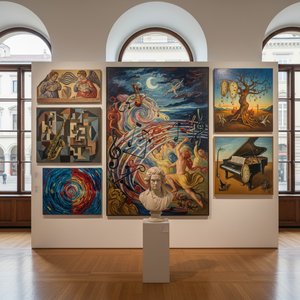
Harmonies on Canvas: Exploring the Visual Representation of Music in Art History
Explore the fascinating history of music's visual representation in art! From ancient symbolism to modern abstraction, discover how artists have captured sound and emotion on canvas. Expert insights & stunning examples.

As 10 Gravuras Mais Icônicas da História da Arte | TopImpressionists
Descubra as 10 gravuras mais influentes da história, de Rembrandt a Goya! Explore a técnica, o contexto e a beleza atemporal dessas obras-primas. Encontre reproduções de alta qualidade para decorar sua casa com arte clássica em TopImpressionists.com.

Animalia: A Presença Duradoura dos Animais na Arte e no Design de Interiores
Explore a rica história da representação animal na arte e como ela inspira o design de interiores. Descubra simbolismos, tendências e artistas que celebram a beleza do reino animal.

Etching: A Historical Survey of Technique, Aesthetic Qualities & Enduring Artistic Significance
Explore the rich history of etching, from its origins to Rembrandt's masterful innovations. Discover the technique, aesthetic qualities & enduring legacy of this captivating art form. Expert insights for collectors and enthusiasts.
Explore obras de arte organizadas por temas, estilos e características.
