


 Visualizar em escala
 Enviar
 Compartilhar
 Ver detalhes
 Guia de Obras do Aluno

 Baixar imagem
 Semelhantes
 Raio X
 Apresentação de slides
 Estatísticas
Three Top Sergeants


George Luks's 'Three Top Sergeants' (1925) captures camaraderie among musicians in a dynamic, realist style reflecting the Ashcan School. A vibrant depiction of urban life and musical passion.
 Ver mais
George Luks (1867-1933): um pintor da Escola Ashcan que retratou a vida urbana e social dos EUA com realismo e intensidade. Explore suas obras icônicas!
Reprodução em Óleo Feita à Mão
Óleo sobre tela pintado à mão no tamanho e moldura de sua escolha, feito sob encomenda pelos nossos artistas. ( Alternar para Impressão Ver Imagem Digital)




P118B €10

P118H €10

P118W €10

P438Z €10

P508JH €12

P508YH €12

P805H €10

P805Z €10

P919BZ €10

P919G €10

P919XJ €10

P959ZH €10

P968JZ €12

W106C €8

W218G €10

W218JH €8

W218Y €10

W307PJ €10

W316G €10

W316PJ €8

W316Y €10

W398PJ €8

W4111J €10

W500HY €15

W500JH €15

W692G €12

W849H €8

W940BG €15

W953PJ €8




Padrão
sob medida
CM
INCH
Escolha entre os nossos tamanhos pré-definidos que respeitam as proporções originais da obra de arte.
Loading sizes...

largura
altura
Digite a largura e a altura de que necessita, para se ajustar à sua moldura ou à sua parede. Esta obra é pintada à mão, por isso, para um tamanho com uma proporção diferente, o artista pode pintar um pouco mais ao redor da imagem ou cortar um pouco — você escolhe. Enviamos-lhe uma maquete digital para aprovação antes de a pintura começar. A imagem exibida nesta página não mostra o resultado real — apenas a maquete mostra.
Exemplos do que pode ser personalizado: Substituir o rosto pela foto do cliente; Adicionar um animal de estimação (ex: substituir gato por cão); Incluir uma mensagem oculta no fundo; Alterar a paisagem ou elementos do fundo.
Após o pedido, a equipa TopImpressionists.com enviará um e-mail ao cliente para solicitar instruções e fornecer uma prévia do esboço.
Após o pedido, a equipa TopImpressionists.com enviará um e-mail ao cliente para solicitar instruções e fornecer uma prévia do esboço.
Entrega mundial () em 3 a 4 semanas, em vez das 5 semanas padrão. (22 Outubro). Sem comprometer a qualidade.

Envio expresso gratuito para todo o mundo

Tela de Linho Premium

Seguro de transporte total

Garantia de Reembolso de Impostos Alfandegários

Garantia de Fidelidade de Cor

Política de Devolução em 100 Dias (Apenas para Defeitos)

Garantia de reembolso de 100%

Desconto para múltiplas unidades
 A opção de vidro está disponível apenas para tamanhos inferiores a 110 cm

Three Top Sergeants
Técnica de Reprodução
Dimensões da Reprodução
-


Preço Total
€ 236
A Snapshot of Urban Grit: George Benjamin Luks’s “Three Top Sergeants”
George Benjamin Luks's "Three Top Sergeants," painted in 1925, isn’t merely a depiction of three men playing musical instruments; it’s a vibrant distillation of early 20th-century American life—a raw, honest portrayal of camaraderie and the shared pursuit of joy amidst the often-grim realities of urban existence. The painting immediately draws the eye with its dynamic composition and bold use of color, a hallmark of Luks's distinctive style within the Ashcan School movement. It’s a scene brimming with energy, capturing a fleeting moment of connection against a backdrop of shadowed intimacy.
Luks, born in Williamsport, Pennsylvania, to Polish and German immigrant parents, brought a deeply rooted empathy for the working class to his art. His early life, shaped by witnessing poverty and hardship, instilled within him an acute awareness of human resilience and the importance of community. This background profoundly influenced his artistic vision, leading him to eschew idealized representations in favor of gritty realism that exposed the complexities and struggles of everyday people. His time as a vaudeville performer further honed his observational skills and understanding of human behavior – elements he expertly translated onto canvas.
The Ashcan School and Luks’s Distinctive Style
“Three Top Sergeants” firmly places itself within the context of the Ashcan School, an American art movement that emerged in New York City around the turn of the 20th century. Rejecting the academic traditions of the time, Ashcan artists sought to depict contemporary urban life with unflinching honesty and a rejection of romanticized notions. Luks’s work is characterized by its loose brushwork, vibrant color palette, and focus on ordinary subjects—street musicians, dockworkers, and immigrants—often rendered in dynamic poses and engaging compositions. He deliberately avoided polished surfaces, opting for a more immediate and visceral impact.
Notice the artist's masterful use of light and shadow. The scene is bathed in a muted, almost theatrical darkness, drawing attention to the figures illuminated by the warm glow emanating from their instruments. This strategic lighting not only creates visual interest but also subtly suggests a sense of intimacy and shared experience—a private moment of connection within the bustling city.
A Symphony of Instruments and Human Connection
The composition itself is meticulously crafted to convey a feeling of lively interaction. The three men – one playing a pipe organ, another a guitar, and the third a violin – are clustered closely together, their faces animated with concentration and enjoyment. Each instrument contributes to the overall musical narrative, while simultaneously symbolizing different facets of human expression. The pipe organ represents authority and tradition, the guitar embodies spontaneity and passion, and the violin evokes elegance and refinement.
The painting’s title, “Three Top Sergeants,” hints at a deeper layer of meaning. Sergeants were often associated with military precision and order, yet here they are relaxed, unbuttoned, and engaged in a shared activity—a deliberate subversion of expectations that underscores Luks's broader critique of societal norms. It’s a subtle commentary on the potential for harmony and connection to exist even within seemingly rigid structures.
Symbolism and Emotional Resonance
Beyond its immediate depiction, “Three Top Sergeants” resonates with themes of community, shared passion, and the enduring power of human connection. The act of playing music together transcends social barriers and creates a space for mutual understanding and appreciation. The painting’s raw energy and emotional intensity invite viewers to contemplate their own experiences of belonging and the importance of finding joy amidst adversity.
Reproductions of this powerful work offer a remarkable opportunity to bring Luks's evocative vision into any setting, adding a touch of urban grit and soulful warmth. It’s a testament to the artist’s ability to capture the essence of human experience with both honesty and grace—a timeless reminder that even in the midst of chaos, moments of connection can illuminate our lives.
Perguntas e Respostas
Qual é o formato de "Three Top Sergeants"?
"Three Top Sergeants" de George Luks é uma composição em Landscape. As proporções valem a pena ser conferidas antes de escolher o tamanho da impressão.
"Three Top Sergeants" está disponível como uma impressão fine art?
"Three Top Sergeants" está disponível como uma impressão fine art em tela de algodão ou papel canvas de arquivo. Os pedidos são feitos em sua página de Impressão Fine Art, no tamanho de sua escolha.
Posso ver "Three Top Sergeants" como um slideshow em tela cheia?
O diaporama de "Three Top Sergeants" pode ser visualizado na página Apresentação de slides da obra.


Biografia do Artista
A Vida Forjada no Crucible da Realidade Americana
George Benjamin Luks, um nome sinônimo da energia crua e da verdade sem adornos do início do século XX na América, foi muito mais do que apenas um pintor; ele foi um cronista de uma era. Nascido em Williamsport, Pensilvania, em 1867, filho de imigrantes europeus – seu pai, um médico e farmacêutico polonês, sua mãe, uma musicista alemã – a criação de Luks o imbuía com uma profunda empatia pelas lutas e triunfos do povo comum. Essa sensibilidade se tornaria a característica definidora de sua visão artística. Sua vida inicial não foi nada convencional; antes de se dedicar à tela e ao pincel, ele e seu irmão percorriam os palcos como artistas de vaudeville, aprimorando uma habilidade de observação e um entendimento do caráter humano que mais tarde se provariam inestimáveis. Era um mundo de momentos fugazes, gestos exagerados e emoção crua – um campo de treinamento para capturar a essência da vida em si. Esse período o inspirou a amar a performance e o espetáculo, elementos sutilmente tecidos nas composições dinâmicas de suas pinturas.Estudos Europeus e a Escola Ashcan
A educação artística formal de Luks começou na Pennsylvania Academy of the Fine Arts, mas foram suas viagens subsequentes à Europa que realmente moldaram sua sensibilidade estética. Ele se imergiu nas obras dos Mestres da Idade de Ouro – Velázquez e Hals ressoavam particularmente com ele – absorvendo sua maestria sobre a luz, a sombra e o caráter. No entanto, ele não estava apenas imitando; estava sintetizando essas influências em algo exclusivamente seu. Ao retornar aos Estados Unidos, Luks encontrou trabalho como ilustrador de jornais, primeiro em Filadélfia e depois em Nova York City. Essa experiência se mostrou crucial. Expostos às ruas movimentadas, populações diversas e realidades cruéis da vida urbana – temas que dominariam sua produção artística por anos –, ele conectou-se com um círculo de artistas semelhantes: Robert Henri, John Sloan, William Glackens – todos compartilhando uma rejeição às convenções acadêmicas e um desejo de retratar o mundo como viam, honestamente e sem pretensão. Essa coletividade de espírito deu origem ao que se tornou conhecido como a Escola Ashcan, um movimento que desafiou as normas artísticas estabelecidas e celebrou a beleza no mundano.Capturando o Pulso da Vida Urbana
As pinturas de Luks são caracterizadas por seu pincel vigoroso, composições ousadas e retrato sem rodeios da vida urbana. Ele não se esquivava de retratar a pobreza, as dificuldades e as desigualdades sociais que afligiam a América no início do século XX. Seus temas eram frequentemente retirados das ruas de Nova York City – motoristas de táxi, artistas de rua, trabalhadores e pessoas comuns em seus empreendimentos diários. Por exemplo, *The Cabby* é uma representação poderosa de um trabalhador, seu rosto gravado pelo cansaço, mas irradiando uma dignidade silenciosa. Da mesma forma, *Sulky Boy* captura a vulnerabilidade e a introspecção da juventude com notável sensibilidade. A técnica dele era tão distinta quanto sua matéria-prima. Ele empregou um estilo impasto espesso, aplicando a tinta abundantemente na tela, criando uma superfície texturizada que parecia vibrar de energia. Seu uso da cor era frequentemente atenuado, refletindo as realidades sujas da vida urbana, mas pontuado por flashes de brilho que atraíam o olhar do espectador.Uma Voz para os Desrepresentados e um Legado Duradouro
Como membro dos "Oito", Luks desempenhou um papel crucial na desafiar o mundo da arte estabelecido e abrir caminho para o modernismo americano. A exposição independente do grupo em 1908 foi um momento decisivo, gerando controvérsia, mas também atraindo atenção para sua abordagem inovadora à pintura. Luks não estava simplesmente documentando a realidade; ele buscava transmitir seu peso emocional, seu drama inerente. Ele queria que suas pinturas fossem sentidas tanto quanto vistas. Além de suas realizações artísticas, Luks foi um fervoroso defensor da arte e dos artistas americanos. Ensinou na Art Students League, inspirando gerações de jovens pintores a abraçar suas próprias vozes e perspectivas únicas. Sua influência pode ser vista no trabalho de inúmeros artistas subsequentes que procuraram capturar o espírito da vida urbana. George Benjamin Luks morreu em 1933, deixando para trás um corpo de trabalho que continua a ressoar com os espectadores de hoje. Suas pinturas não são meros documentos históricos; são testemunhos poderosos da condição humana, lembranças das lutas e triunfos daqueles cujas histórias poderiam ter sido esquecidas. **Ele permanece uma figura vital na história da arte americana**, um campeão do realismo e uma voz para os desrepresentados.
George Luks
1867 - 1933 , Estados Unidos da América
Informações Rápidas
- Artistic Movement Or Style: Ashcan School, Realismo
- Artists Or Movements Influenced By This Artist: ['American Modernism']
- Artists Who Influenced This Artist:
- Velázquez
- Hals
- Manet
- Date Of Birth: 1867
- Date Of Death: 1933
- Full Name: George Benjamin Luks
- Nationality: Americano
- Notable Artworks:
- The Cabby
- Sulky Boy
- Place Of Birth: Williamsport, EUA
Artigos Relacionados

Capturing the Grey Light: A Journey Through the Soulful Atmosphere of the Hague School
Explore the evocative beauty of the Hague School. Discover how Dutch masters captured the soulful 'grey light' through atmospheric realism and tonalism, paving the way for Impressionism. A deep dive into the misty landscapes and emotional depth of this legendary art movement.
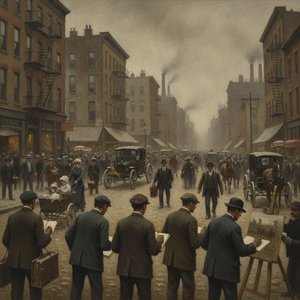
The Ashcan School: Capturing the Raw, Unfiltered Soul of Urban Life through American Realism
Discover the raw beauty of the Ashcan School. Explore how masters like Bellows and Henri captured the gritty, vibrant soul of early 20th-century New York through profound American Realism and evocative urban landscapes.
Explore obras de arte organizadas por temas, estilos e características.