


 Visualizar na parede
 Compartilhar
 Compartilhar
 Detalhes
 Guia
Guia

 Baixar imagem
 Semelhantes
 Raio X
 Ver diaporama
 Estatísticas
Two Comanche Girls
 Oil On Canvas
- WallArt
- American Romanticism
 1834
1834- 19th Century
 74.0 x 61.0 cm
Capture the proud spirit of Two Comanche Girls with this evocative 1834 portrait by George Catlin; discover this historic American masterpiece today.
 Ler mais
George Catlin (1796-1872): pintor icônico que documentou a vida e cultura dos nativos americanos no Velho Oeste com obras vibrantes e significativas.
Giclée / Impressão de Arte
Impressão giclée ou em tela de qualidade de museu, com produção rápida e opções flexíveis de acabamento. ( Comprar pintura feita à mão Alternar para Imagem Digital)




P118B €10

P118H €10

P118W €10

P438Z €10

P508JH €12

P508YH €12

P805H €10

P805Z €10

P919BZ €10

P919G €10

P919XJ €10

P959ZH €10

P968JZ €12

W106C €8

W218G €10

W218JH €8

W218Y €10

W307PJ €10

W316G €10

W316PJ €8

W316Y €10

W398PJ €8

W4111J €10

W500HY €15

W500JH €15

W692G €12

W849H €8

W940BG €15

W953PJ €8




Tamanho padrão
personalizado
CM
INCH
Escolha entre os nossos tamanhos pré-definidos que respeitam as proporções originais da obra de arte.
Loading sizes...

largura
altura
Insira a largura e a altura desejadas para se ajustarem à sua moldura ou parede. Uma impressão pode ser apenas cortada, nunca ampliada além da imagem original; portanto, um tamanho com proporções diferentes resultará na perda de parte da imagem. Enviamos uma maquete digital para sua aprovação antes de realizarmos a impressão. A imagem exibida nesta página não mostra o corte real — apenas a maquete o faz.
Entrega mundial () em 2 semanas, em vez das 4/5 semanas padrão. (26 Outubro)

Envio expresso gratuito para todo o mundo

Tela de Linho de Alta Qualidade

Seguro de transporte completo

Garantia de Reembolso de Impostos Alfandegários

Garantia de Fidelidade Cromática

Política de Devolução em 100 Dias (Apenas para Defeitos)

Garantia de reembolso de 100%

Oferta de desconto por quantidade
 A opção de vidro está disponível apenas para tamanhos inferiores a 110 cm

Two Comanche Girls
Giclée / Impressão de Arte
Tamanho da Reprodução
-


Preço Total
€ 61
A Glimpse into Vanishing Worlds: The Spirit of Two Comanche Girls
To stand before George Catlin's depiction of "Two Comanche Girls" is not merely to observe a painting; it is to step across the threshold of time, into a moment suspended between vibrant cultural life and inevitable change. Painted in 1834, this work transcends simple portraiture. It is a profound ethnographic document imbued with the dignity and resilience of a people whose way of life was rapidly transforming under the relentless march of history. The composition centers on two magnificent Comanche women, their presence commanding attention. Their gaze, directed outward toward the viewer, is not passive; it carries the weight of tradition, a palpable sense of pride, perhaps even defiance, that resonates across the centuries.
The Artistry and Technique of Catlin
George Catlin, an artist whose career spanned the volatile intersection of American expansion and indigenous cultures, employed a masterful technique to capture this scene. While the details suggest meticulous observation—the drape of the traditional garments reaching gracefully to their ankles, the careful rendering of every facial nuance—the overall effect is one of immediacy. His skill allowed him to document not just figures, but an entire ecosystem of culture. The inclusion of surrounding elements—a watchful child near the teepee, another figure on the periphery, and a loyal dog resting nearby—grounds the portrait in reality. These secondary subjects enrich the narrative, suggesting the rhythm of daily life around the central, powerful tableau.
Historical Resonance and Cultural Depth
The year 1834 places this painting at a critical juncture for Native American tribes. Catlin’s dedication to recording these cultures was both an artistic endeavor and, perhaps, a poignant act of preservation. The scene evokes the richness of life before overwhelming external pressures reshaped the landscape. Viewing it today allows us a privileged, if filtered, window into Comanche society—a world rich with ceremony, community, and deep connection to the land. It compels us to consider what we risk losing when history moves too quickly.
Symbolism and Emotional Echoes for the Modern Collector
For the contemporary collector or designer seeking art that speaks volumes without uttering a word, this piece offers immense emotional depth. The symbolism here is potent: it speaks of enduring spirit, maternal strength, and cultural continuity. When considering a high-quality reproduction of "Two Comanche Girls," one acquires more than just wall decor; one acquires a conversation starter, an object imbued with narrative weight. It serves as a powerful reminder to pause, to look closely, and to appreciate the beauty found in steadfast tradition.
Perguntas e Respostas
Onde posso baixar "Two Comanche Girls", de George Catlin?
Um download está disponível para "Two Comanche Girls": a página de Download da obra oferece download de imagem digital em alta resolução.
Que tema e atmosfera combinam em "Two Comanche Girls", de George Catlin?
"Two Comanche Girls", de George Catlin retrata native american, portraiture, teepee, cultural life, frontier scene, indigenous people, em uma atmosfera Nostalgic. O tema e a ambientação descrevem, juntos, a obra.
Em que fase da carreira de George Catlin se situa "Two Comanche Girls", considerando a sua data?
"Two Comanche Girls", criado em 1834, pertence ao Early Career da carreira de George Catlin.
Biografia do Artista
Early Life and the Call of the Frontier
George Catlin, born in Wilkes-Barre, Pennsylvania, in 1796, was destined for a life profoundly shaped by the frontier—a world both alluringly romantic and relentlessly challenging. His childhood wasn’t one of quiet refinement but rather steeped in tales spun by his mother, Polly Sutton, a woman who bore the indelible mark of her own harrowing experience: capture during an Indian raid. These narratives, filled with vivid descriptions of wilderness survival and the clash between cultures, ignited within young Catlin a deep fascination with the West—a land perceived as simultaneously dangerous and imbued with a unique, almost mythical quality. Initially pursuing a career in law, he found himself drawn to a different path, one that resonated far more deeply than the confines of a courtroom. He abandoned legal practice after only two years, driven by an artistic impulse and a growing conviction that the traditions and appearances of Native American tribes deserved meticulous documentation—a sense of urgency born from the realization that westward expansion threatened to irrevocably erase these vibrant cultures. His early work focused on engravings depicting scenes along the Erie Canal, demonstrating his burgeoning technical skill and attention to detail – qualities that would later become hallmarks of his ambitious projects. These initial endeavors weren’t merely exercises in draftsmanship; they were a crucial foundation, honing his observational abilities and solidifying his commitment to visual storytelling as a means of preserving a vanishing world.Documenting a Vanishing World: The Indian Gallery
Catlin's most enduring legacy is undoubtedly “The Indian Gallery,” an extraordinary collection comprising over 500 paintings dedicated to portraying the diverse life and culture of Native American tribes across North America. Beginning in the 1830s, he embarked on five extensive expeditions into the heart of the West—traveling up the Missouri River and venturing into territories inhabited by tribes such as the Mandan, Sioux, Blackfeet, and Choctaw. This wasn’t simply a matter of observation; Catlin immersed himself within these communities, participating in ceremonies, witnessing daily life, and forging genuine relationships with tribal leaders. He sought to capture not just physical likenesses but also the essence of their traditions, beliefs, and social structures. His paintings are remarkable for their realism—a departure from the often-stereotyped depictions prevalent at the time—and vibrant colors, conveying a sense of dignity and complexity rarely seen in artistic representations of Native Americans. Works like Sham Fight, Mandan Boys (1832-1833) capture the playful energy and communal spirit of young warriors, while portraits such as Medicine Buffalo of the Sioux (1839) reveal a powerful leader radiating authority and wisdom. Catlin’s meticulous attention to detail—including elaborate backgrounds that provide context for his subjects—demonstrates his commitment to providing a comprehensive and nuanced portrayal of Native American life. He believed, passionately, that documenting these cultures was an urgent task, a race against time as the West relentlessly encroached upon their territories.Challenges and Recognition: A Life Dedicated to Preservation
Despite the artistic merit and historical significance of The Indian Gallery, Catlin’s journey wasn't without its considerable obstacles. He faced persistent challenges in gaining recognition and securing financial support for his work—a reflection of the prevailing prejudices against Native Americans at the time. Initially envisioning a donation of the collection to the U.S. government as a means of ensuring its preservation, his proposals were repeatedly rejected. Undeterred by these setbacks, Catlin took his gallery on an extensive tour, exhibiting it first in London, then Paris, and Brussels during the 1840s and 50s. These European exhibitions garnered considerable acclaim, introducing audiences to a world previously known only through secondhand accounts and often-biased narratives. He also published several influential books detailing his travels and observations, including *Manners, Customs, and Condition of the North American Indians* (1841) and *Last Rambles Amongst the Indians of the Rocky Mountains and the Andes* (1868), further solidifying his reputation as a leading authority on Native American culture. However, financial difficulties persisted throughout his life, casting a shadow over his achievements. In a desperate attempt to recoup some of his investment, he recreated over 400 paintings in a smaller “cartoon collection,” but this effort ultimately proved insufficient. This period was marked by a poignant irony—a man dedicated to preserving a culture facing imminent extinction found himself struggling for his own survival.Style and Techniques
Catlin’s artistic style evolved significantly throughout his career, reflecting both the influences of European art traditions and his direct engagement with Native American cultures. Initially trained in engraving, he quickly mastered oil painting, developing a distinctive approach characterized by bold colors, dynamic compositions, and meticulous detail. He frequently employed a technique known as “flat perspective,” flattening the background to emphasize his subjects and create a sense of immediacy. His portraits were particularly notable for their psychological depth—Catlin sought not just to capture physical likenesses but also to convey the inner character and spirit of his sitters. He was deeply influenced by the Romantic movement, which emphasized emotion, individualism, and the sublime beauty of nature. However, unlike many Romantic artists who idealized the wilderness, Catlin presented a more complex and nuanced view—acknowledging both the allure and the dangers of the frontier. His use of color was particularly striking, often employing vibrant hues to capture the richness of Native American clothing, adornments, and landscapes. Furthermore, he meticulously researched tribal customs and traditions, incorporating them into his paintings to ensure accuracy and authenticity.Legacy and Historical Significance
George Catlin died in 1872, leaving behind a legacy that continues to resonate today. While his work wasn’t fully appreciated during his lifetime, it has since been recognized as an invaluable historical record of Native American life before the sweeping changes brought about by westward expansion. His paintings offer a rare and intimate glimpse into cultures that were often misrepresented or ignored in mainstream narratives—a testament to his dedication and vision. Works like Prairie Meadows Burning (1832) capture not only the landscape but also the profound connection between Native Americans and their environment, while portraits such as Little Wolf, A Famos Warrior (1844) symbolize strength and resilience in the face of adversity. Catlin’s meticulous documentation provides invaluable insights into tribal customs, social structures, religious beliefs, and artistic traditions—information that would have been lost to history without his tireless efforts. He wasn't simply an artist; he was a chronicler, a witness, and a passionate advocate for a vanishing way of life—a legacy that continues to inspire and inform our understanding of American history and culture.
George Catlin
1796 - 1872 , Estados Unidos da América
Dados Rápidos
- Artistic Movement Or Style: Pintura Fronteira
- Artists Or Movements Influenced By This Artist: ['Impressionismo']
- Artists Who Influenced This Artist:
- Peale
- Sully
- Date Of Birth: 1796
- Date Of Death: 1872
- Full Name: George Catlin
- Nationality: Americano
- Notable Artworks:
- Sham Fight
- Prairie
- Pipestone
- Buffalo
- Dança do Águia
- Place Of Birth: Wilkes-Barre, EUA
Artigos Relacionados

Georges Seurat: As 25 Obras-Primas do Mestre do Pontilhismo | TopImpressionists
Descubra as 25 obras-primas de Georges Seurat, o mestre do pontilhismo! Explore a história, cores vibrantes e técnica inovadora por trás de seus quadros mais famosos. Encontre reproduções de arte exclusivas para decorar sua casa com TopImpressionists.com.

Realismo Americano: 10 Obras-Primas que Moldaram a Arte e Decoram o Lar
Descubra as 10 obras-primas do Realismo Americano! Explore a história de Hopper, Homer e Cassatt. Encontre reproduções de arte com qualidade museológica para decorar sua casa. Inspire-se em cores vibrantes e atmosferas únicas. Explore a coleção completa na TopImpressionists.com.

John George Brown: Capturing American Life & Sentiment in 19th-Century Genre Painting
Explore the captivating genre paintings of John George Brown, celebrated for his realistic depictions of 19th-century American life. Discover his legacy & find museum-quality reproductions at TopImpressionists.
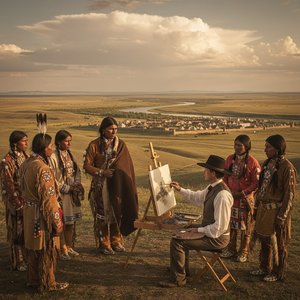
George Catlin: Witnessing & Representing Indigenous Life on the American Frontier
Explore the captivating art of George Catlin, renowned for his vivid portraits & landscapes documenting Native American life on the frontier. Discover a vanishing world through stunning paintings and historical context.

Georges Braque: As 25 Obras-Primas Essenciais para Amantes da Arte Moderna | TopImpressionists
Descubra as 25 obras-primas de Georges Braque, pioneiro do Cubismo! Explore a história, cores e técnicas por trás de seus quadros mais famosos. Encontre reproduções de arte exclusivas para decorar sua casa com elegância em TopImpressionists.com.
Explore obras de arte organizadas por temas, estilos e características.

