


 Visualizar em escala
 Enviar
 Compartilhar
 Ver detalhes
 Guia de Obras do Aluno

 Baixar imagem
 Semelhantes
 Raio X
 Apresentação de slides
 Estatísticas
Winter Afternoon


George Bellows’ "Winter Afternoon" captures a serene NYC landscape—a frozen river, snow-laden trees, and two figures enjoying the quiet beauty of winter. A masterpiece of realism.
 Ver mais
George Bellows: um pintor realista icônico que capturou a vida urbana e o mundo do boxe nos EUA. Suas obras refletem a modernidade e os desafios da época, com estilo vibrante e inovador.
Reprodução em Óleo Feita à Mão
Óleo sobre tela pintado à mão no tamanho e moldura de sua escolha, feito sob encomenda pelos nossos artistas. ( Alternar para Impressão Ver Imagem Digital)




P118B €10

P118H €10

P118W €10

P438Z €10

P508JH €12

P508YH €12

P805H €10

P805Z €10

P919BZ €10

P919G €10

P919XJ €10

P959ZH €10

P968JZ €12

W106C €8

W218G €10

W218JH €8

W218Y €10

W307PJ €10

W316G €10

W316PJ €8

W316Y €10

W398PJ €8

W4111J €10

W500HY €15

W500JH €15

W692G €12

W849H €8

W940BG €15

W953PJ €8




Padrão
sob medida
CM
INCH
Escolha entre os nossos tamanhos pré-definidos que respeitam as proporções originais da obra de arte.
Loading sizes...

largura
altura
Digite a largura e a altura de que necessita, para se ajustar à sua moldura ou à sua parede. Esta obra é pintada à mão, por isso, para um tamanho com uma proporção diferente, o artista pode pintar um pouco mais ao redor da imagem ou cortar um pouco — você escolhe. Enviamos-lhe uma maquete digital para aprovação antes de a pintura começar. A imagem exibida nesta página não mostra o resultado real — apenas a maquete mostra.
Exemplos do que pode ser personalizado: Substituir o rosto pela foto do cliente; Adicionar um animal de estimação (ex: substituir gato por cão); Incluir uma mensagem oculta no fundo; Alterar a paisagem ou elementos do fundo.
Após o pedido, a equipa TopImpressionists.com enviará um e-mail ao cliente para solicitar instruções e fornecer uma prévia do esboço.
Após o pedido, a equipa TopImpressionists.com enviará um e-mail ao cliente para solicitar instruções e fornecer uma prévia do esboço.
Entrega mundial () em 3 a 4 semanas, em vez das 5 semanas padrão. (22 Outubro). Sem comprometer a qualidade.

Envio expresso gratuito para todo o mundo

Tela de Linho Premium

Seguro de transporte total

Garantia de Reembolso de Impostos Alfandegários

Garantia de Fidelidade de Cor

Política de Devolução em 100 Dias (Apenas para Defeitos)

Garantia de reembolso de 100%

Desconto para múltiplas unidades
 A opção de vidro está disponível apenas para tamanhos inferiores a 110 cm

Winter Afternoon
Técnica de Reprodução
Dimensões da Reprodução
-


Preço Total
€ 236
Winter Afternoon: A Frozen Moment of American Realism
George Wesley Bellows’ “Winter Afternoon,” painted in 1909, isn't merely a depiction of a snowy landscape; it’s a carefully constructed tableau of quiet contemplation and subtle human connection. Housed within the Norton Museum of Art in West Palm Beach, this oil on canvas transports us to a serene winter scene—a frozen body of water reflecting the muted tones of a snow-laden sky and surrounding trees. Yet, beyond the picturesque beauty lies a deeper resonance, rooted in Bellows’ masterful command of realism and his keen observation of American life.
Bellows, a pivotal figure in the Ashcan School movement, rejected idealized romanticism in favor of portraying the gritty realities of urban America. His work often captured the energy and dynamism of New York City, but “Winter Afternoon” offers a respite from that frenetic pace, presenting instead a moment of stillness. The composition is deliberately restrained—a simple, almost austere arrangement—drawing our attention to the details: the delicate tracery of branches against the snow-covered sky, the subtle variations in texture created by Bellows’ brushstrokes, and the two figures positioned within the scene.
The Figures and Their Narrative
Crucially, “Winter Afternoon” isn't a solitary landscape; it features two individuals enjoying the winter day. While the exact identities of these figures remain enigmatic—a deliberate choice by Bellows, perhaps—their posture suggests a comfortable companionship, a shared appreciation for the beauty of the moment. They are positioned near the left side of the image, seemingly engaged in conversation or simply basking in the quietude of the scene. The placement invites us to imagine their story, adding an element of narrative depth to what might otherwise be a purely observational piece.
The presence of these figures elevates the painting beyond a simple landscape study. It speaks to the human need for connection and shared experience—a theme that resonates powerfully across time and cultures. Bellows’ ability to imbue a seemingly ordinary scene with such emotional weight is a testament to his artistic skill and sensitivity.
Technique and Style: A Masterclass in Realism
Bellows' technique in “Winter Afternoon” is characterized by a remarkable blend of observation and expressive brushwork. He meticulously rendered the textures of the snow, ice, and trees—the crispness of the snowflakes, the smoothness of the frozen water, the rough bark of the branches—creating a palpable sense of tactile reality. His use of color is equally deliberate, employing muted tones of gray, blue, and white to evoke the cold, stark beauty of winter.
However, Bellows doesn’t simply aim for photographic accuracy. He employs loose, gestural brushstrokes—particularly evident in the depiction of the sky and trees—to convey a sense of movement and atmosphere. These expressive marks add dynamism to the composition, preventing it from feeling static or lifeless. The interplay between meticulous detail and spontaneous brushwork is what defines Bellows’ distinctive style – a hallmark of his realism.
Historical Context and Legacy
"Winter Afternoon" was painted during a period of significant social and artistic change in America. The Ashcan School, to which Bellows belonged, challenged the prevailing academic traditions of art by depicting everyday life—often with unflinching honesty and a critical perspective. Bellows’ work reflected the growing urbanization of the United States and the increasing awareness of social inequalities.
Despite his early death in 1925, Bellows' legacy endures. His paintings continue to be celebrated for their raw emotional power, their masterful technique, and their insightful portrayal of American life. Reproductions of “Winter Afternoon,” available through platforms like TopImpressionists.com, offer a beautiful way to experience the enduring appeal of this iconic work of art.
Perguntas e Respostas
Qual é o sentimento geral de "Winter Afternoon" de George Wesley Bellows?
"Winter Afternoon" possui uma atmosfera Calm.
Que atmosfera "Winter Afternoon" de George Wesley Bellows traz a um ambiente?
Com sua atmosfera Calm, "Winter Afternoon" é sugerida para um(a) Living Room.
"Winter Afternoon" está livre de direitos autorais?
A informação de direitos autorais para "Winter Afternoon" de George Wesley Bellows: a obra está em em domínio público - seus direitos autorais expiraram. Isso determina se reproduções da imagem podem ser feitas livremente.
Obras Relacionadas


Biografia do Artista
A Bold Vision of American Life: The World of George Bellows
George Wesley Bellows, um nome sinônimo da energia bruta e da modernidade em ascensão na América do início do século XX, emergiu como uma figura central na pintura realista. Nascido em Columbus, Ohio, em 12 ou 19 de agosto de 1882, sua jornada de promessa atlética a reconhecimento artístico é um testemunho do poder da paixão e da dedicação inabalável. Mesmo antes da educação formal, o jovem George demonstrava um talento inerente para desenho, preenchendo cadernos com esboços que prenunciavam o olhar atento e a habilidade em desenvolvimento dentro dele. Sua criação não se concentrava apenas na arte; ele se destacava nos esportes, jogando tanto baseball quanto basquete na Universidade Estadual de Ohio – uma dualidade que influenciaria profundamente sua perspectiva artística, imbuindo seu trabalho com um senso de movimento dinâmico e fisicalidade. Essa formação atlética lhe conferiu não apenas disciplina, mas também apreciação pela forma humana em ação, um tema que se tornaria central em seus quadros mais celebrados. Ele abandonou a universidade pouco antes de se formar, impulsionado por uma irresistível atração para Nova York e a promessa de treinamento artístico.Forjando um Caminho: A Escola Ashcan e Além
Chegando a Nova York em 1904, Bellows encontrou mentoria com Robert Henri, uma figura proeminente da Escola Ashcan. Esse grupo de artistas – incluindo John Sloan, William Glackens e George Luks – deliberadamente se afastou das convenções acadêmicas, optando por retratar a realidade crua da vida urbana: cortiços lotados, ruas movimentadas e as lutas cotidianas dos trabalhadores. Bellows abraçou essa ética com entusiasmo, inicialmente refletindo o pincel solto e o compromisso com o realismo social de Henri. No entanto, ele não estava satisfeito em simplesmente replicar o estilo de seu mestre; possuía uma ambição de forjar sua própria voz artística distinta. Ele estabeleceu um estúdio com o colega artista Edward Keefe em 1906, marcando o início de um período prolífico de experimentação. Seus primeiros trabalhos, exibidos em 1908, foram recebidos com reações mistas – alguns críticos os consideraram grosseiros, enquanto outros reconheceram sua ousada audácia e espírito inovador. O assunto de seus quadros era frequentemente controverso para a época, desafiando as concepções prevalecentes sobre o que constituía “arte aceitável”. Ele não hesitou em retratar os aspectos menos glamourosos da vida urbana, capturando cenas de pobreza, trabalho e lazer com honestidade implacável.O Domínio da Arena: Boxe e Espectáculo Urbano
Embora o conjunto de obras de Bellows abrangesse uma ampla gama de assuntos – retratos, paisagens, paisagens marítimas –, ele é talvez mais conhecido por suas representações poderosas de lutas de boxe. Esses não eram apenas eventos esportivos para ele; eram microcosmos de drama humano, encarnando temas de luta, resiliência e os instintos primais que impulsionam a competição. Ele frequentava clubes de boxe fumarentos, estudando meticulosamente os movimentos dos lutadores, o olhar intenso de seus olhos e a energia bruta da multidão. Quadros como *Both Members of This Club* (1909) e *Stag at Sharkey’s* (1909) são exemplos magistrais de sua capacidade de capturar essa atmosfera, utilizando iluminação dramática, composições dinâmicas e um senso palpável de tensão. As cenas de boxe não eram simplesmente sobre o esporte em si; elas eram metáforas para as batalhas da vida, refletindo o darwinismo social prevalecente na sociedade americana da época. Além do boxe, Bellows também encontrou inspiração em outros espectáculos de vida urbana – paradas, circos e ruas movimentadas – todos oferecendo oportunidades para explorar temas de movimento, energia e a experiência coletiva.Evolução do Estilo e Legado Duradouro
À medida que Bellows amadurecia como artista, seu estilo passou por uma evolução sutil, mas significativa. Embora tenha mantido seu compromisso com o realismo, ele começou a se afastar da pincelada solta de seus primeiros anos, adotando uma estética mais estilizada caracterizada por curvas suaves, formas monumentais e um senso aumentado de drama. Essa mudança é evidente em obras posteriores como *Dempsey and Firpo* (1924), uma tela monumental que captura o momento climático de uma lendária luta de boxe com intensidade arrebatadora. Ele também experimentou com a litografia, produzindo uma série de impressões marcantes que demonstravam sua maestria na linha e no tom. Apesar de alcançar um sucesso considerável durante sua vida – incluindo a eleição para a Academia Nacional de Design em 1913 –, Bellows permaneceu comprometido em desafiar as fronteiras artísticas e as normas convencionais. Sua morte prematura em 1925, aos 42 anos, interrompeu uma carreira promissora, mas seu legado perdura como um dos pintores realistas mais importantes da América – um retrato poderoso e sem compromisso da vida americana no início do século XX – um mundo repleto de energia, conflito e o espírito duradouro da humanidade. Sua influência pode ser vista nas gerações posteriores de artistas que procuraram capturar a dinâmica e a complexidade da vida urbana moderna. George Bellows não pintava apenas quadros; ele documentava uma era.Principais Obras & Reconhecimento
- *Both Members of This Club* (1909) – Uma obra seminal que captura a atmosfera de um clube de boxe.
- *Stag at Sharkey’s* (1909) – Outro quadro icônico que retrata uma luta de boxe, conhecido por sua iluminação dramática e composição.
- *Men of the Docks* (1912) – Uma representação poderosa dos trabalhadores da costa, mostrando a habilidade de Bellows em capturar fisicalidade e textura.
- *The Germans Arrive* (1918) – Uma série de litografias que retratam as atrocidades cometidas durante a Primeira Guerra Mundial, demonstrando seu engajamento com questões sociais e políticas.
- *Dempsey and Firpo* (1924) – Uma tela monumental que captura o momento climático de uma luta de boxe lendária, mostrando o estilo evoluído de Bellows e sua maestria na composição.

George Wesley Bellows
1882 - 1925 , Estados Unidos da América
Informações Rápidas
- Artistic Movement Or Style: Realismo, Ashcan
- Artists Or Movements Influenced By This Artist: ['Ashcan School']
- Artists Who Influenced This Artist: ['Robert Henri']
- Date Of Birth: 1882
- Date Of Death: 1925
- Full Name: George Wesley Bellows
- Nationality: Americano
- Notable Artworks:
- Both Members
- Stag Sharkey
- Men Docks
- Place Of Birth: Columbus, EUA
Artigos Relacionados
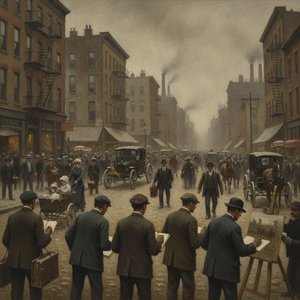
The Ashcan School: Capturing the Raw, Unfiltered Soul of Urban Life through American Realism
Discover the raw beauty of the Ashcan School. Explore how masters like Bellows and Henri captured the gritty, vibrant soul of early 20th-century New York through profound American Realism and evocative urban landscapes.

The Unvarnished Truth: A Cultural Journey Through the Soul of American Realism
Explore the profound beauty of American Realism. From the Ashcan School's urban grit to intimate portraits, discover how artists captured the authentic soul of a nation through unvarnished truth and masterful observation.
Explore obras de arte organizadas por temas, estilos e características.
