

Shown: · With its frame:
 Visualizar na parede
 Compartilhar
 Compartilhar
 Detalhes
 Guia
Guia

 Baixar imagem
 Semelhantes
 Raio X
 Ver diaporama
 Q&A
Q&A Estatísticas

€ 239
Reprodução em Óleo Feita à Mão
Óleo sobre tela pintado à mão no tamanho e moldura de sua escolha, feito sob encomenda pelos nossos artistas. ( Alternar para Impressão Alternar para Imagem Digital)
Esta obra está protegida por direitos autorais
A obra de arte exibida nesta página é protegida por leis de direitos autorais, o que significa que não podemos criar ou vender legalmente uma reprodução idêntica. Esta proteção é aplicada por meio de acordos internacionais, tais como a Convenção de Berna e pelas leis nacionais, incluindo as estabelecidas por Lei de Direitos Autorais dos EUA - Título 17.
Como uma alternativa respeitosa e legal, oferecemos obras de arte personalizadas e pintadas à mão, inspiradas na obra original. Nossos artistas profissionais e experientes estudam cuidadosamente o estilo, a atmosfera e a essência artística da obra original para criar uma peça nova e única que evoque a mesma sensação — permanecendo como uma criação original por direito próprio.
Este método cumpre plenamente as regulamentações de direitos autorais, pois não envolve a cópia ou duplicação da obra protegida. Em vez disso, trata-se de uma reinterpretação criativa — uma nova pintura que é influenciada pela original, mas não idêntica a ela.
 Leia mais
Size
·Tamanho padrão
personalizado
CM
INCH
Escolha entre os nossos tamanhos pré-definidos que respeitam as proporções originais da obra de arte.
Loading sizes...

largura
altura
Insira a largura e a altura desejadas para se ajustarem à sua moldura ou parede. Como esta obra é pintada à mão, para um tamanho com proporções diferentes, o artista poderá pintar um pouco mais ao redor da imagem ou reduzir ligeiramente a composição — você escolhe. Enviamos uma maquete digital para sua aprovação antes de iniciar a pintura. A imagem exibida nesta página não representa o resultado real — apenas a maquete mostra o resultado final.
Finish
·
White €1

Blurside €1

Extended €1

P118B €10

P118H €10

P118W €10

P438Z €10

P508JH €12

P508YH €12

P805H €10

P805Z €10

P919BZ €10

P919G €10

P919XJ €10

P959ZH €10

P968JZ €12

W106C €8

W218G €10

W218JH €8

W218Y €10

W307PJ €10

W316G €10

W316PJ €8

W316Y €10

W398PJ €8

W4111J €10

W500HY €15

W500JH €15

W692G €12

W849H €8

W940BG €15

W953PJ €8

H24-GOLD €30

H24-SILVER €30

H36-GOLD €45

H36-SILVER €45
Shipped in a protective tube, ready for your own framer.
Above 105 cm the frame is shipped as a kit for a professional framer — read the details.
Extras
optionalWhat do the extras include?
Examples of what can be changed: Replace face with customer photo; Add pet (e.g., replace cat with dog); Include hidden message in background; Change background landscape or elements.
After order, TopImpressionists.com team will email client for instructions and provide a mockup preview
After order, TopImpressionists.com team will email client for instructions and provide a mockup preview
Entrega mundial () em 3 a 4 semanas, em vez das 5 semanas padrão. (1 Novembro). Sem comprometer a qualidade.
Verniz de Proteção
Etiqueta de identificação
Detalhes da Placa de Bronze Gravada
This elegant plaque features the artist's name and the title of the artwork, finely engraved for a timeless presentation.
It is made from bronze with a refined, elegant finish. The text is precisely laser-engraved for a sharp and permanent result. Measuring 9x2 cm, the plaque is compact yet easy to read. It's built to be durable and scratch-resistant, offering a professional, museum-quality look. Mounting is simple thanks to the included adhesive backing.
Detalhes da Placa de Acrílico Transparente
The plaque includes essential engraved details such as the artist's name, the title of the artwork, the date it was created, the type of media used-like oil on canvas or watercolor-a brief description of the piece, and a QR code that links to the complete artwork information.
It is crafted from clear acrylic, offering a sleek, modern appearance. The text is UV-engraved in black to ensure strong visual contrast. With a size of 10x15 cm, it ensures optimal readability. It comes equipped with two metal hooks for secure wall mounting. The plaque is designed to be weather-resistant, making it suitable for various environments, and it includes interactive features that work seamlessly with smartphone scanning.
Detalhes da Placa de Acrílico Preto
This elegant plaque includes engraved information such as the artist's name, the title of the artwork, the date it was created, the type of media used (like oil on canvas or watercolor), a short description of the artwork, and a QR code for quick access to more information.
The plaque itself is made from refined black acrylic with a premium finish. The text is laser-engraved in white for high contrast and readability. Its size is 10x15 cm, designed to be easy to read. It comes with two metal hooks for professional mounting. The design is sleek and fits any interior style. It is also weather-resistant and durable, with built-in digital integration for mobile compatibility.
A opção de vidro está disponível apenas para tamanhos inferiores a 110 cm
 A opção de vidro está disponível apenas para tamanhos inferiores a 110 cm
- Envio expresso gratuito para todo o mundo
- Tela de Linho de Alta Qualidade
- Seguro de transporte completo
- Garantia de Reembolso de Impostos Alfandegários
- Garantia de Fidelidade Cromática
- Política de Devolução em 100 Dias (Apenas para Defeitos)
- Garantia de reembolso de 100%
- Oferta de desconto por quantidade


Descrição do Item
Explore Georges Braque's masterful still lifes—featuring serene landscapes and subtle color palettes—in *The Poetry of Things*, a London exhibition celebrating his enduring legacy beyond Cubism.
Biografia do Artista
Georges Braque: O revolucionário pintor cubista francês! Explore suas obras inovadoras, incluindo 'Casas em L'Estaque' e colagens marcantes. Uma figura essencial da arte moderna.
About the painting
A Quiet Revolution in Still Life
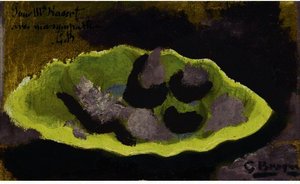
To gaze upon Georges Braque’s “Dead Nature” is to witness a profound moment of stillness within the turbulent currents of modern art history. Created in 1930, this work serves as a masterful testament to the artist's ability to find complexity within simplicity. While at first glance the painting appears to be a humble arrangement of fruit and glass, it is, in truth, a sophisticated exploration of how we perceive the physical world. Braque does not merely present a bowl of fruit; he invites the viewer into a reconstructed reality where the boundaries between object and space begin to dissolve. For the discerning collector or interior designer, this piece offers a captivating focal point that brings an intellectual depth and a sense of timelessness to any curated space.
The composition centers on a ceramic bowl, rendered in soft greenish-yellow tones, which holds a collection of fruit that seems to pulse with a muted, internal light. Beside it, a glass vessel catches the ambient light, its transparency interrupted by the rhythmic application of paint. Braque’s mastery lies in his ability to use geometric planes—subtle cubes and cylinders—to overlap and intersect, disrupting traditional perspective. This technique, a hallmark of his Cubist evolution, forces the eye to move across the canvas, discovering new facets of form with every glance. The interplay of light and shadow is not merely decorative but structural, creating a sense of weight and presence that anchors the entire composition.
The Alchemy of Texture and Tone
Braque’s technical prowess is most evident in his deliberate use of color and texture to evoke emotion. He moves away from the vibrant, almost aggressive palettes of his earlier Fauvist influences, opting instead for a harmonious arrangement of earthy ochres, deep umbers, and subtle creams. These muted tones create a sophisticated atmosphere that feels both grounded and ethereal. The artist employs delicate glazing techniques to build layers of depth, allowing light to seemingly trapped beneath the surface of the paint. This creates a tactile quality; one can almost feel the coolness of the glass and the matte smoothness of the ceramic bowl.
The emotional impact of “Dead Nature” is one of contemplative peace. There is no frantic movement here, only the quiet dignity of objects existing in a state of permanent repose. For those looking to decorate a sanctuary-like environment—perhaps a study, a library, or a minimalist living area—this artwork provides a sense of stability and intellectual rigor. It does not demand attention through loud colors but earns it through its nuanced textures and the subtle tension between its fragmented shapes. It is a piece that rewards slow looking, offering new layers of meaning to anyone willing to linger before its surface.
A Legacy of Visionary Thought
Understanding “Dead Nature” requires acknowledging the historical weight Braque carried as a pioneer of the Cubist movement. Alongside Pablo Picasso, Braque dismantled the "window onto the world" that had defined Western art since the Renaissance. He replaced it with a multidimensional experience, prioritizing how an object is known by the mind rather than just how it is seen by the eye. This painting represents a mature stage of this journey, where the radical experiments of his youth have settled into a refined, poetic language of form.
Owning a high-quality reproduction of such a seminal work allows for the integration of art history into the modern home. It is more than a decorative element; it is an invitation to participate in the dialogue of the avant-garde. Whether placed in a contemporary setting with clean lines or nestled within a classic, traditional interior, “Dead Nature” acts as a bridge between the revolutionary spirit of the early 20th century and the aesthetic sensibilities of today. It remains a profound symbol of how art can transform the mundane into the extraordinary.
Perguntas e Respostas
Por que o status de direitos autorais de "Dead nature" é como é?
O status de direitos autorais de "Dead nature" - ainda protegido por direitos autorais - decorre do falecimento do artista em 1963.
Como "Dead nature" se posiciona entre os temas recorrentes de Georges Braque?
"Dead nature" retrata bowl, ceramics, reflection, dots, contrast, composition, monochrome, enquanto os temas recorrentes de Georges Braque são geometric abstraction, picasso collaboration, formal exploration, minimalist aesthetic, cubist legacy. A comparação entre ambos revela como a obra se relaciona com os temas habituais do artista.
Como posso visualizar "Dead nature", de Georges Braque em formato de apresentação de slides?
Um slideshow está disponível: a página Apresentação de imagens de "Dead nature", de Georges Braque.
Quick facts and art quiz
About Georges Braque

Georges Braque
1882 - 1963, França
Biografia do Artista
Early Life and Artistic Foundations
Georges Braque, nascido em Argenteuil, França, em 1882, embarcou em um caminho profundamente entrelaçado com a evolução do cenário artístico moderno. Sua criação dentro de uma família de pintores e decoradores de casas lhe infundiu não apenas uma maestria técnica dos materiais, mas também uma apreciação precoce pela forma e estrutura. Embora inicialmente seguisse os passos de seu pai no mesmo ofício, as inatas inclinações artísticas de Braque logo o levaram a um treinamento formal na École des Beaux-Arts em Le Havre, marcando o início de sua jornada para se tornar um dos pintores mais influentes do século XX. Essa base—uma combinação de artesanato prático e estudo acadêmico—se provou crucial ao longo de seu posterior trabalho em deconstruir e reimaginar as convenções artísticas tradicionais.
Em 1902, Braque se mudou para Paris, continuando seus estudos na Académie Humbert, imergindo-se no vibrante ambiente artístico da cidade. Foi aqui que ele encontrou artistas como Marie Laurencin e Francis Picabia, forjando conexões que moldariam seu desenvolvimento inicial. Suas primeiras obras refletiam as influências predominantes do Impressionismo e Pós-Impressionismo, mas um encontro crucial com as cores ousadas e a liberdade expressiva do Fauvismo em 1905 acendeu uma nova direção em sua exploração artística.
The Embrace of Fauvism and the Dawn of Cubism
A adoção de princípios Fauvistas por Braque—caracterizada por cores intensas, não naturalísticas e expressão emocional—é vividamente exemplificada em pinturas como The Patience. Este período viu-o trabalhando ao lado de artistas como Henri Matisse e André Derain, experimentando com paletas vibrantes e formas simplificadas. No entanto, o envolvimento de Braque com o Fauvismo não era meramente imitativo; ele infundiu-o com uma sensibilidade única, temperando a exuberância descontrolada do movimento com uma abordagem mais restrita e analítica.
Um ponto de virada chegou em 1907 com sua exposição à retrospectiva da obra de Paul Cézanne. A ênfase de Cézanne na forma geométrica e nas múltiplas perspectivas impactou profundamente Braque, preparando o cenário para sua colaboração revolucionária com Pablo Picasso. Começando em 1908, esses dois titãs artísticos embarcaram em um período de intenso intercâmbio intelectual que daria origem ao Cubismo—um movimento revolucionário que abalou as noções tradicionais de representação.
Juntos, Braque e Picasso desenvolveram o Cubismo Analítico, desmembrando objetos em formas geométricas fragmentadas e apresentando múltiplas perspectivas simultaneamente. Obras como Houses at L'Estaque demonstram esta fase inicial, mostrando uma ruptura radical com a perspectiva convencional e um foco na estrutura subjacente das formas. Sua paleta se tornou deliberadamente acinzentada, enfatizando a forma sobre a cor, à medida que buscavam representar a totalidade da presença de um objeto em vez de apenas sua aparência.
Innovation Through Fragmentation and Collage
A parceria entre Braque e Picasso continuou a expandir os limites da expressão artística, levando ao desenvolvimento do Cubismo Sintético por volta de 1912. Esta fase viu a introdução do *papier collé*—a incorporação de materiais do mundo real, como recortes de jornais, papel de parede e tecido, em pinturas. Esta inovação desafiou a hierarquia tradicional entre pintura e escultura, borrando as linhas entre arte e vida.
O uso pioneiro de *papier collé* por Braque marcou um ponto de virada significativo em sua evolução artística. Ao integrar fragmentos de objetos cotidianos em suas composições, ele interrompeu o espaço ilusório tradicional da pintura e introduziu um novo nível de materialidade e textura. Esta técnica não apenas expandiu as possibilidades formais da arte, mas também refletiu um crescente interesse na relação entre representação e realidade.
Later Years and Enduring Legacy
Após a guerra, o estilo de Braque evoluiu além das rígidas limitações do Cubismo, incorporando elementos da composição clássica e um renovado interesse pela natureza morta. Embora mantivesse as influências geométricas que haviam definido seu trabalho anterior, ele desenvolveu uma abordagem mais sutil e contemplativa à pintura. Suas paisagens e interiores posteriores são caracterizadas por sua atmosfera serena e harmonias sutis de cor.
Ao longo de sua carreira, Braque permaneceu comprometido em explorar os princípios fundamentais da forma, espaço e representação. Continuou a experimentar com diferentes materiais e técnicas, expandindo as fronteiras da expressão artística até sua morte em 1963. Sua influência nas gerações posteriores de artistas é imensurável, moldando o curso da arte moderna e inspirando inúmeros pintores, escultores e colagistas.
O legado de Georges Braque transcende suas obras individuais; ele alterou fundamentalmente nossa compreensão de como percebemos e representamos o mundo ao nosso redor. Sua colaboração com Picasso, combinada com sua própria visão artística única, selou seu lugar como um verdadeiro pioneiro da arte moderna—um mestre que ousou desafiar as convenções e redefinir as possibilidades da pintura.
Influences and Notable Works
- Influenced By: Henri Matisse, André Derain, Paul Cézanne
- Key Works: Houses at L'Estaque, The Patience, Violin and Palette, Mandola
- Impact on Art History: Revolutionized 20th-century art through Cubism; challenged traditional notions of perspective and representation.
Quick facts about Georges Braque
- Artistic Movement Or Style: Cubismo, Fauvismo
- Artists Or Movements Influenced By This Artist: ['Pablo Picasso']
- Artists Who Influenced This Artist:
- Henri Matisse
- André Derain
- Date Of Birth: 13 de maio de 1882
- Date Of Death: 31 de agosto de 1963
- Full Name: Georges Braque
- Nationality: Francês
- Notable Artworks:
- Casas em L'Estaque
- A Paciência
- Place Of Birth: Argenteuil, França
Explore obras de arte organizadas por temas, estilos e características.


Georges Braque
Dead nature
() ·
With its frame: · Hand-painted in oil on linen
Total