


 Visualizar na parede
 Compartilhar
 Compartilhar
 Detalhes
 Guia
Guia

 Baixar imagem
 Semelhantes
 Raio X
 Ver diaporama
 Q&A
Q&A Estatísticas
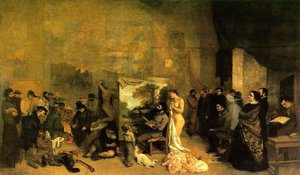
The Painter's Studio
 Oil On Canvas
- WallArt
- Contemporary Realism
 1855
1855 361.0 x 598.0 cm
 Musée d'Orsay
 Ler mais
Obtenha um arquivo pronto para impressão que vai muito além da visualização na web. Cada imagem digital que vendemos provém de um arquivo mestre de alta resolução em nosso banco de dados — geralmente entre 5.000 e 15.000 pixels de largura — para que você possa imprimir em grandes formatos, realizar cortes precisos ou reproduzir detalhes minuciosos com total confiança.
Nenhum arquivo sai do nosso estúdio sem passar por um cuidadoso processo de revisão. Um especialista digital verifica as cores em relação à pintura original e as corrige se necessário, aumentando então a clareza e o detalhe com ferramentas profissionais de retoque — sempre mantendo a fidelidade às pinceladas e ao estilo do artista. O resultado é uma imagem que se assemelha à pintura, e não a um scan com filtros.
Aprovação antes da finalização: nosso especialista enviará a imagem por e-mail em até 72 horas para sua revisão. Não ficou satisfeito? Solicite melhorias ou correções, ou peça o reembolso caso a qualidade não atenda às suas expectativas.
Esta é a qualidade em que confiam editoras, estúdios de design, galerias e gráficas.
Imagem Digital
Baixe um arquivo de alta resolução para exibição pessoal, impressão e projetos criativos. ( Alternar para Impressão Comprar pintura feita à mão)
Incluído em cada compra de imagem digital
Entrega Digital Especializada e Garantida
Ao escolher o TopImpressionists.com, você não está apenas adquirindo uma imagem — você está recebendo uma obra de arte digital profissionalmente aprimorada, elaborada com precisão e com garantia de satisfação. Aqui está tudo o que acompanha seu pedido, automaticamente:

Entrega rápida por e-mail
O seu arquivo de imagem digital em alta resolução será enviado por e-mail em até 72 horas após o pedido — pronto para uso imediato.

Arquivo Digital com IA Otimizado
Sua obra de arte é otimizada profissionalmente por meio de ferramentas avançadas de IA e edição manual, garantindo o máximo de detalhes, clareza e precisão de cores.

Reenvio gratuito vitalício
Apagou ou perdeu o seu ficheiro acidentalmente? Não se preocupe – nós reenviamos para si a qualquer momento, gratuitamente.

Sem Taxas de Importação - Sempre
Desfrute da sua obra de arte instantaneamente, sem taxas alfandegárias, impostos ou custos de entrega — downloads digitais são sempre isentos de taxas.

Garantia de Fidelidade de Cores
Garantimos que sua imagem digital reflita as cores originais com a maior fidelidade possível, utilizando ferramentas profissionais e gerenciamento de cores.

Garantia de satisfação de 100 dias
Se não estiver satisfeito com a sua imagem digital, nós a revisaremos ou reembolsaremos 100% dentro de 100 dias — sem perguntas.

Garantia de Reembolso 100%
Não está satisfeito? Receba o reembolso total em até 100 dias após o recebimento do seu arquivo digital — sem perguntas.

Descontos para pedidos em lote
Compre 3 imagens, economize 10% - Compre 5, economize 15% - Compre 10+, economize 20%. Ideal para projetos criativos, galerias e agências.
A Bold Declaration of Realism: Gustave Courbet’s “The Painter’s Studio”
Dr. Steven Zucker begins his exploration of Gustave Courbet's monumental canvas, "The Painter’s Studio," at the Musée d’Orsay in Paris, highlighting its significance as a pivotal moment in artistic history and rejecting from the official exposition. This expansive oil painting—measuring 361 x 598 cm—immediately commands attention with its sheer scale and uncompromising depiction of everyday life, marking a decisive break from the idealized landscapes and mythological narratives favored by earlier generations of artists.- Subject Matter: The scene portrays a bustling studio inhabited by Courbet himself and several prominent figures representing diverse social strata – intellectuals, artists, and patrons. These individuals engage in conversation and activity, creating an atmosphere of intellectual ferment and artistic ambition.
- Style & Technique: Courbet’s masterful brushwork characterizes the painting's style, employing a technique known as Impasto—thickly applied paint—to imbue the canvas with palpable texture and depth. This deliberate disregard for academic conventions underscores his commitment to portraying reality without embellishment or romantic sentimentality.
- Historical Context: Created in 1855 during the Second Industrial Revolution, “The Painter’s Studio” reflects the broader societal shifts of its time. The painting's rejection from the Paris World Fair served as a catalyst for Courbet to organize his own exhibition, "The Pavilion of Realism," demonstrating defiance against artistic hierarchies and asserting the primacy of observation.
Allegorical Layers: Decoding Symbolism
Beyond its immediate visual impact, “The Painter’s Studio” is laden with symbolic representations that delve into themes of artistic struggle, social hierarchy, and the role of inspiration. At the center stands Courbet himself, absorbed in his work while facing away from a nude model—a deliberate gesture signifying his rejection of Academic art's preoccupation with idealized beauty. This compositional choice powerfully communicates Courbet’s belief that true artistry stems from confronting uncomfortable truths and embracing the complexities of human experience.- The Model: The nude figure embodies Academic ideals – purity, grace, and perfection—representing precisely what Courbet sought to dismantle through his unflinching realism.
- The Figures Around the Table: The intellectuals and artists gathered around the table represent the influential figures who championed Courbet’s vision. Their presence underscores the importance of intellectual discourse and artistic collaboration in shaping cultural values.
A Legacy of Influence
Courbet's audacious act of self-promotion solidified his position as a champion of Realism, profoundly impacting subsequent art movements. Artists like Impressionists and Cubists drew inspiration from Courbet’s pioneering approach to depicting the world around them—abandoning illusion for direct observation and prioritizing expressive brushwork over meticulous detail. “The Painter’s Studio” remains an enduring testament to Courbet's artistic conviction and continues to inspire artists and collectors alike, reminding us that art can serve as a powerful vehicle for social commentary and intellectual exploration.Emotional Resonance
Ultimately, "The Painter’s Studio" transcends mere visual representation; it evokes a palpable sense of atmosphere—one brimming with ambition, contemplation, and perhaps even defiance. Courbet's masterful use of color and texture invites viewers to immerse themselves in the scene, fostering an emotional connection to the artist’s unwavering commitment to portraying reality without compromise. It stands as a timeless masterpiece, capturing not only the visual splendor of 19th-century Paris but also the enduring spirit of artistic rebellion.Perguntas e Respostas
"The Painter's Studio", de Gustave Courbet é uma obra de tons claros ou escuros?
"The Painter's Studio" apresenta um brilho geral de deep_shadow, com uma luminância de Dark.
Como o contraste e a harmonia se combinam em "The Painter's Studio"?
A composição cromática de "The Painter's Studio", de Gustave Courbet combina um contraste Bold com uma harmonia Strong Color Unity.
Qual é a saturação e a intensidade de "The Painter's Studio", de Gustave Courbet?
As cores de "The Painter's Studio", de Gustave Courbet apresentam uma saturação Muted com uma intensidade Monochromatic.
Obras Relacionadas




Biografia do Artista
A Rebel’s Brush: The Life and Legacy of Gustave Courbet
Jean Désiré Gustave Courbet (1819–1877) stands as a monumental figure in the history of art, recognized unequivocally as the progenitor of Realism—a movement that irrevocably altered the trajectory of nineteenth-century painting. More than simply capturing visual impressions; his artistic endeavor was imbued with profound social and political convictions, fueled by an unwavering dedication to portraying reality without embellishment or sentimentality. Born in Ornans, France, a modest village nestled in Burgundy, Courbet’s upbringing instilled within him a spirit of independence that would become synonymous with his revolutionary approach to artmaking.Early Life and Artistic Training
Courbet's familial circumstances fostered an environment conducive to artistic pursuits. His mother, a woman of considerable intellect and conviction, actively encouraged his burgeoning talent—a nurturing gesture that defied the prevailing societal expectations for young men during his era. Despite initial reservations from some family members regarding his unconventional ambitions, Courbet persevered in his pursuit of formal training at the École des Beaux-Arts in Paris in 1839. However, he swiftly recognized the limitations imposed by the academy’s rigid doctrines and Romantic idealism—a disillusionment that propelled him toward forging his own distinctive artistic path. While acknowledging influences from luminaries like Eugène Delacroix and Théodore Géricault – artists who championed dramatic emotion and historical narrative – Courbet deliberately distanced himself from these stylistic conventions, prioritizing observation over imagination and truthfulness above tradition.The Birth of Realism: Challenging Artistic Conventions
Courbet’s artistic breakthrough arrived with his unwavering commitment to Realism—a movement that fundamentally questioned the accepted aesthetic standards of his time. Rejecting the idealized depictions favored by Romantic painters, he turned his gaze toward the everyday lives of ordinary people—particularly those engaged in labor and rural existence. This decision wasn't merely stylistic; it represented a bold assertion about the inherent dignity and significance of subjects often marginalized within artistic discourse. Early canvases explored landscapes and portraits, yet soon Courbet’s focus shifted decisively towards scenes depicting working-class life—executed on monumental scales traditionally reserved for grand historical or religious paintings. Critics initially scorned his audacious choice, perceiving it as disrespectful to established hierarchies and conventions. Yet, Courbet remained steadfast in his conviction that art should reflect the realities of human experience, unburdened by preconceived notions of beauty or grandeur. The Stone Breakers (1849), tragically destroyed during World War II, epitomized this ethos—a stark portrayal of two laborers toiling under oppressive conditions, their faces obscured by exhaustion and grime. The painting’s deliberate lack of idealized features served as a powerful rebuke to the prevailing artistic preoccupation with heroic narratives and sublime landscapes. Courbet's technique mirrored his philosophical stance: he favored an impasto style—applying paint thickly onto the canvas—that emphasized the materiality of the medium itself, mirroring the textures and colors of the subjects he depicted. This approach was revolutionary in its rejection of academic polish and celebrated instead the raw beauty of unfiltered observation.Major Works and Artistic Philosophy
Courbet’s oeuvre encompasses a remarkable range of artistic endeavors, reflecting his multifaceted intellect and unwavering dedication to exploring diverse themes. Among his most iconic creations are A Burial at Ornans (1850–51), a monumental canvas depicting a rural funeral—a scene rendered with unflinching realism that provoked considerable controversy among Parisian audiences accustomed to idealized representations of death and mourning. The painting’s sheer scale—typically reserved for historical canvases—combined with its uncompromising depiction of human emotion challenged the conventions of academic artmaking. Courbet deliberately eschewed sentimentalism, presenting mourners as ordinary individuals grappling with grief—a poignant reminder that beauty could be found in confronting uncomfortable truths. Furthermore, The Painter’s Studio (1855) stands as a symbolic meditation on artistic identity and engagement with contemporary social issues—a work imbued with Courbet's conviction that art should serve as a catalyst for societal transformation. Like his landscapes—particularly View in the Forest of Fontainebleau (1855)—Courbet’s paintings were characterized by meticulous attention to detail, capturing the natural world without romantic embellishment. His artistic philosophy extended beyond mere visual representation; it encompassed a profound belief in the transformative power of art to illuminate human experience and provoke critical reflection.Legacy and Historical Significance
Gustave Courbet's influence on subsequent generations of artists is undeniable—a testament to his enduring legacy as a pioneer of Realism and a champion of artistic freedom. While acknowledging influences from earlier masters like Caravaggio for their dramatic realism and masterful use of light and shadow, Courbet’s impact transcended stylistic imitation. He fundamentally reshaped the landscape of art by liberating painters from the constraints of Romantic idealism—encouraging them to embrace new perspectives on depicting the world around them. His unwavering advocacy for social justice resonated deeply with artists who sought to utilize their work as a vehicle for political commentary and reform. Courbet’s participation in the Salon des Refusés in 1863—an audacious act of defiance against the official Salon’s censorship—solidified his reputation as an iconoclastic rebel and cemented his place among the most influential figures in nineteenth-century art history. He died in Paris in 1877, leaving behind a body of work that continues to inspire awe and provoke debate—a legacy characterized by uncompromising honesty, artistic innovation, and an unwavering commitment to portraying reality without compromise.- Pioneer of Realism
- Challenged academic conventions
- Influenced Impressionism & Post-Impressionism
- Advocate for artistic freedom

Gustave Courbet
1819 - 1877 , França
Breve Biografia
- Artistic Movement Or Style: Realismo
- Artists Or Movements Influenced By This Artist:
- Impressionismo
- Post-Impressionismo
- Artists Who Influenced This Artist:
- Caravaggio
- Delacroix
- Géricault
- Date Of Birth: 31 Jul 1819
- Full Name: Gustave Courbet
- Nationality: Francês
- Notable Artworks:
- A Ponte da Inundação em Optevoz
- O Château du Chillon
- A Onda
- Place Of Birth: Orléans, França