


 Visualizar em escala
 Enviar
 Compartilhar
 Ver detalhes
 Guia de Obras do Aluno

 Baixar imagem
 Semelhantes
 Raio X
 Apresentação de slides
 Estatísticas
The Wave


Experience the raw power of nature through Gustave Courbet's dramatic Realist seascape The Wave where crashing ocean swells meet jagged rocks in a visceral display of strength that invites you to bring this masterpiece home.
 Ver mais
Gustave Courbet (1819-1877): Um artista revolucionário que desafiou normas acadêmicas e inspirou o Impressionismo com obras como 'A Burial at Ornans'. Explore sua arte realista e impacto histórico.
Reprodução em Óleo Feita à Mão
Óleo sobre tela pintado à mão no tamanho e moldura de sua escolha, feito sob encomenda pelos nossos artistas. ( Alternar para Impressão Ver Imagem Digital)




P118B €10

P118H €10

P118W €10

P438Z €10

P508JH €12

P508YH €12

P805H €10

P805Z €10

P919BZ €10

P919G €10

P919XJ €10

P959ZH €10

P968JZ €12

W106C €8

W218G €10

W218JH €8

W218Y €10

W307PJ €10

W316G €10

W316PJ €8

W316Y €10

W398PJ €8

W4111J €10

W500HY €15

W500JH €15

W692G €12

W849H €8

W940BG €15

W953PJ €8




Padrão
sob medida
CM
INCH
Escolha entre os nossos tamanhos pré-definidos que respeitam as proporções originais da obra de arte.
Loading sizes...

largura
altura
Digite a largura e a altura de que necessita, para se ajustar à sua moldura ou à sua parede. Esta obra é pintada à mão, por isso, para um tamanho com uma proporção diferente, o artista pode pintar um pouco mais ao redor da imagem ou cortar um pouco — você escolhe. Enviamos-lhe uma maquete digital para aprovação antes de a pintura começar. A imagem exibida nesta página não mostra o resultado real — apenas a maquete mostra.
Exemplos do que pode ser personalizado: Substituir o rosto pela foto do cliente; Adicionar um animal de estimação (ex: substituir gato por cão); Incluir uma mensagem oculta no fundo; Alterar a paisagem ou elementos do fundo.
Após o pedido, a equipa TopImpressionists.com enviará um e-mail ao cliente para solicitar instruções e fornecer uma prévia do esboço.
Após o pedido, a equipa TopImpressionists.com enviará um e-mail ao cliente para solicitar instruções e fornecer uma prévia do esboço.
Entrega mundial () em 3 a 4 semanas, em vez das 5 semanas padrão. (21 Outubro). Sem comprometer a qualidade.

Envio expresso gratuito para todo o mundo

Tela de Linho Premium

Seguro de transporte total

Garantia de Reembolso de Impostos Alfandegários

Garantia de Fidelidade de Cor

Política de Devolução em 100 Dias (Apenas para Defeitos)

Garantia de reembolso de 100%

Desconto para múltiplas unidades
 A opção de vidro está disponível apenas para tamanhos inferiores a 110 cm

The Wave
Técnica de Reprodução
Dimensões da Reprodução
-


Preço Total
€ 235
The Visceral Majesty of the Untamed Sea
In the heart of Gustave Courbet’s The Wave, one does not merely observe a seascape; one experiences a collision of elemental forces. Completed in 1869, this masterpiece captures the precise moment when the ocean’s immense weight meets the unyielding resistance of jagged stone. The water, rendered in deep, brooding shades of indigo and emerald, surges forward with a terrifying beauty that commands immediate attention. There is no attempt to soften the blow or romanticize the spray; instead, Courbet presents an unflinching gaze at the sea's raw, kinetic energy. For the discerning collector, this painting offers more than just a visual subject—it provides a window into the sublime, evoking a profound sense of awe and a visceral respect for the untamable power of the natural world.A Manifesto of Realism and Texture
Beyond its dramatic subject, The Wave serves as a bold declaration of artistic independence. During an era when the Parisian art establishment favored polished, idealized landscapes, Courbet chose a path of radical honesty. His technique is far from the smooth, invisible brushwork of the Academy; rather, it is characterized by a thick, expressive application of paint that mirrors the very turbulence he depicts. By utilizing a palette dominated by dark, saturated tones and heavy textures, he captures the salt-sprayed atmosphere and the churning foam with remarkable tactile depth. This commitment to Realism—the refusal to embellish or sentimentalize—allows the viewer to feel the weight of the tide. It is this very authenticity that makes a high-quality reproduction a transformative element in any interior, bringing a sense of grounded, historical gravity to a modern space.The Eternal Dance of Resilience and Change
The symbolism embedded within this tempestuous scene resonates far beyond the shoreline. The crashing wave acts as a potent metaphor for the relentless flux of life and the overwhelming forces of nature that dwarf human endeavor. Yet, amidst the chaos of the surging tide, the dark, anchored rocks provide a striking counterpoint of permanence and resilience. This tension between the ephemeral and the enduring creates a narrative depth that continues to captivate art lovers and designers alike. To hang such a work is to invite a conversation about strength, endurance, and the beautiful chaos of existence into one's home. It is a piece that does not merely decorate a wall; it anchors a room with its historical significance and its enduring emotional resonance.Perguntas e Respostas
"The Wave" de Gustave Courbet é uma composição em formato retrato, paisagem ou quadrada?
"The Wave" de Gustave Courbet possui um formato Landscape. O formato descreve as proporções da composição.
Qual nível de contraste apresenta "The Wave" de Gustave Courbet?
"The Wave" de Gustave Courbet apresenta um contraste Gentle entre suas áreas claras e escuras.
Quão intensas são as cores de "The Wave"?
A cor de "The Wave" possui Muted de saturação e Monochromatic de intensidade.
Obras Relacionadas


Biografia do Artista
A Rebel’s Brush: The Life and Legacy of Gustave Courbet
Jean Désiré Gustave Courbet (1819–1877) stands as a monumental figure in the history of art, recognized unequivocally as the progenitor of Realism—a movement that irrevocably altered the trajectory of nineteenth-century painting. More than simply capturing visual impressions; his artistic endeavor was imbued with profound social and political convictions, fueled by an unwavering dedication to portraying reality without embellishment or sentimentality. Born in Ornans, France, a modest village nestled in Burgundy, Courbet’s upbringing instilled within him a spirit of independence that would become synonymous with his revolutionary approach to artmaking.Early Life and Artistic Training
Courbet's familial circumstances fostered an environment conducive to artistic pursuits. His mother, a woman of considerable intellect and conviction, actively encouraged his burgeoning talent—a nurturing gesture that defied the prevailing societal expectations for young men during his era. Despite initial reservations from some family members regarding his unconventional ambitions, Courbet persevered in his pursuit of formal training at the École des Beaux-Arts in Paris in 1839. However, he swiftly recognized the limitations imposed by the academy’s rigid doctrines and Romantic idealism—a disillusionment that propelled him toward forging his own distinctive artistic path. While acknowledging influences from luminaries like Eugène Delacroix and Théodore Géricault – artists who championed dramatic emotion and historical narrative – Courbet deliberately distanced himself from these stylistic conventions, prioritizing observation over imagination and truthfulness above tradition.The Birth of Realism: Challenging Artistic Conventions
Courbet’s artistic breakthrough arrived with his unwavering commitment to Realism—a movement that fundamentally questioned the accepted aesthetic standards of his time. Rejecting the idealized depictions favored by Romantic painters, he turned his gaze toward the everyday lives of ordinary people—particularly those engaged in labor and rural existence. This decision wasn't merely stylistic; it represented a bold assertion about the inherent dignity and significance of subjects often marginalized within artistic discourse. Early canvases explored landscapes and portraits, yet soon Courbet’s focus shifted decisively towards scenes depicting working-class life—executed on monumental scales traditionally reserved for grand historical or religious paintings. Critics initially scorned his audacious choice, perceiving it as disrespectful to established hierarchies and conventions. Yet, Courbet remained steadfast in his conviction that art should reflect the realities of human experience, unburdened by preconceived notions of beauty or grandeur. The Stone Breakers (1849), tragically destroyed during World War II, epitomized this ethos—a stark portrayal of two laborers toiling under oppressive conditions, their faces obscured by exhaustion and grime. The painting’s deliberate lack of idealized features served as a powerful rebuke to the prevailing artistic preoccupation with heroic narratives and sublime landscapes. Courbet's technique mirrored his philosophical stance: he favored an impasto style—applying paint thickly onto the canvas—that emphasized the materiality of the medium itself, mirroring the textures and colors of the subjects he depicted. This approach was revolutionary in its rejection of academic polish and celebrated instead the raw beauty of unfiltered observation.Major Works and Artistic Philosophy
Courbet’s oeuvre encompasses a remarkable range of artistic endeavors, reflecting his multifaceted intellect and unwavering dedication to exploring diverse themes. Among his most iconic creations are A Burial at Ornans (1850–51), a monumental canvas depicting a rural funeral—a scene rendered with unflinching realism that provoked considerable controversy among Parisian audiences accustomed to idealized representations of death and mourning. The painting’s sheer scale—typically reserved for historical canvases—combined with its uncompromising depiction of human emotion challenged the conventions of academic artmaking. Courbet deliberately eschewed sentimentalism, presenting mourners as ordinary individuals grappling with grief—a poignant reminder that beauty could be found in confronting uncomfortable truths. Furthermore, The Painter’s Studio (1855) stands as a symbolic meditation on artistic identity and engagement with contemporary social issues—a work imbued with Courbet's conviction that art should serve as a catalyst for societal transformation. Like his landscapes—particularly View in the Forest of Fontainebleau (1855)—Courbet’s paintings were characterized by meticulous attention to detail, capturing the natural world without romantic embellishment. His artistic philosophy extended beyond mere visual representation; it encompassed a profound belief in the transformative power of art to illuminate human experience and provoke critical reflection.Legacy and Historical Significance
Gustave Courbet's influence on subsequent generations of artists is undeniable—a testament to his enduring legacy as a pioneer of Realism and a champion of artistic freedom. While acknowledging influences from earlier masters like Caravaggio for their dramatic realism and masterful use of light and shadow, Courbet’s impact transcended stylistic imitation. He fundamentally reshaped the landscape of art by liberating painters from the constraints of Romantic idealism—encouraging them to embrace new perspectives on depicting the world around them. His unwavering advocacy for social justice resonated deeply with artists who sought to utilize their work as a vehicle for political commentary and reform. Courbet’s participation in the Salon des Refusés in 1863—an audacious act of defiance against the official Salon’s censorship—solidified his reputation as an iconoclastic rebel and cemented his place among the most influential figures in nineteenth-century art history. He died in Paris in 1877, leaving behind a body of work that continues to inspire awe and provoke debate—a legacy characterized by uncompromising honesty, artistic innovation, and an unwavering commitment to portraying reality without compromise.- Pioneer of Realism
- Challenged academic conventions
- Influenced Impressionism & Post-Impressionism
- Advocate for artistic freedom

Gustave Courbet
1819 - 1877 , França
Informações Rápidas
- Artistic Movement Or Style: Realismo
- Artists Or Movements Influenced By This Artist:
- Impressionismo
- Post-Impressionismo
- Artists Who Influenced This Artist:
- Caravaggio
- Delacroix
- Géricault
- Date Of Birth: 31 Jul 1819
- Full Name: Gustave Courbet
- Nationality: Francês
- Notable Artworks:
- A Ponte da Inundação em Optevoz
- O Château du Chillon
- A Onda
- Place Of Birth: Orléans, França
Artigos Relacionados

Katsushika Hokusai: As 25 Obras-Primas que Definem um Mestre da Arte Japonesa
Descubra as 25 obras-primas de Katsushika Hokusai, o mestre do ukiyo-e! Explore a história por trás de 'A Grande Onda' e outras gravuras japonesas icônicas. Encontre reproduções de arte exclusivas para decorar sua casa com elegância em TopImpressionists.com.
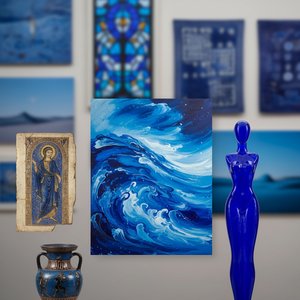
The Allure of Azure: Exploring the Symbolic & Aesthetic Depths of Blue in Art History
Explore the rich history of blue in art! Discover its symbolism, from ancient pigments to modern masterpieces by Kandinsky & Seurat. Uncover the psychological impact and cultural meanings behind this captivating hue.

The Allure of the Horizon: A Comprehensive Exploration of Seascape Art Through History & Emotion
Explore the captivating world of seascape art! Discover its history, key artists & movements – from Dutch Masters to Impressionism. Expert insights for collectors and enthusiasts at TopImpressionists.

Serene Blue Backgrounds: Discover Soulful Art to Transform Your Space with Timeless Elegance
Transform your home with soulful blue art. From serene Monet impressions to modern textured sculptures, discover curated masterpieces designed to inspire calm. Explore expert art consultations and bespoke hand-painted reproductions to create your personal sanctuary.

As 10 Obras Mais Famosas em Tons de Azul Ardósia | TopImpressionists.com
Descubra as 10 pinturas mais emblemáticas em tons de azul ardósia! Explore a história, artistas como Monet e Van Gogh, e o significado da cor na arte. Encontre reproduções de alta qualidade para decorar sua casa com TopImpressionists.com.
Explore obras de arte organizadas por temas, estilos e características.


