


 Visualizar na parede
 Compartilhar
 Compartilhar
 Detalhes
 Guia
Guia

 Baixar imagem
 Semelhantes
 Raio X
 Ver diaporama
 Estatísticas
Girl at a Table


Hermann Max Pechstein's 'Girl at a Table,' painted in 1910, showcases bold colors and expressive lines. Featuring Lotte Kaprolat as his model, this masterpiece embodies Pechstein’s refined artistic sensibilities.
 Ler mais
Explore a arte expressionista de Hermann Max Pechstein (1881-1955). Membro fundamental do Die Brücke, suas pinturas apresentam cores ousadas, nus, paisagens e cenas da Alemanha pós-Primeira Guerra. Descubra seu legado!
Giclée / Impressão de Arte
Impressão giclée ou em tela de qualidade de museu, com produção rápida e opções flexíveis de acabamento. ( Comprar pintura feita à mão Alternar para Imagem Digital)




P118B €10

P118H €10

P118W €10

P438Z €10

P508JH €12

P508YH €12

P805H €10

P805Z €10

P919BZ €10

P919G €10

P919XJ €10

P959ZH €10

P968JZ €12

W106C €8

W218G €10

W218JH €8

W218Y €10

W307PJ €10

W316G €10

W316PJ €8

W316Y €10

W398PJ €8

W4111J €10

W500HY €15

W500JH €15

W692G €12

W849H €8

W940BG €15

W953PJ €8




Tamanho padrão
personalizado
CM
INCH
Escolha entre os nossos tamanhos pré-definidos que respeitam as proporções originais da obra de arte.
Loading sizes...

largura
altura
Insira a largura e a altura desejadas para se ajustarem à sua moldura ou parede. Uma impressão pode ser apenas cortada, nunca ampliada além da imagem original; portanto, um tamanho com proporções diferentes resultará na perda de parte da imagem. Enviamos uma maquete digital para sua aprovação antes de realizarmos a impressão. A imagem exibida nesta página não mostra o corte real — apenas a maquete o faz.
Entrega mundial () em 2 semanas, em vez das 4/5 semanas padrão. (28 Outubro)

Envio expresso gratuito para todo o mundo

Tela de Linho de Alta Qualidade

Seguro de transporte completo

Garantia de Reembolso de Impostos Alfandegários

Garantia de Fidelidade Cromática

Política de Devolução em 100 Dias (Apenas para Defeitos)

Garantia de reembolso de 100%

Oferta de desconto por quantidade
 A opção de vidro está disponível apenas para tamanhos inferiores a 110 cm

Girl at a Table
Giclée / Impressão de Arte
Tamanho da Reprodução
-


Preço Total
€ 61
A Portrait of Confidence: Exploring Hermann Max Pechstein’s ‘Girl at a Table’
Hermann Max Pechstein (1881–1955), a pivotal figure in German Expressionism, produced countless canvases that grapple with themes of modernity and psychological depth. Among his most celebrated works is “Girl at a Table,” painted in 1910 – a piece that transcends mere representation to embody the spirit of its time and Pechstein’s distinctive artistic vision. This essay delves into the intricacies of this painting, examining its stylistic elements, technical innovations, historical significance, and enduring emotional resonance.- Style & Context: “Girl at a Table” firmly establishes itself within the Expressionist movement, rejecting Impressionistic ideals for a bold embrace of emotion and distortion. Born in Zwickau, Pechstein’s formative years were marked by poverty and hardship – experiences that profoundly influenced his artistic sensibilities. The painting emerged during a period of intense social upheaval following World War I, mirroring anxieties about societal change and the fragility of human existence. It reflects the broader Expressionist preoccupation with portraying inner turmoil alongside external realities.
- Composition & Technique: Pechstein’s masterful use of color is immediately striking. He employs vibrant hues—primarily reds and yellows—to imbue the scene with an energetic dynamism that contrasts sharply with the muted tones characteristic of earlier artistic traditions. The painting utilizes thick impasto, applying paint directly onto the canvas in textured layers, creating a palpable physicality that conveys both visual richness and emotional intensity. This technique is particularly evident in the depiction of the table cloth and highlights Pechstein’s commitment to conveying tactile sensations.
- Subject Matter & Symbolism: The central figure—a young woman seated at a table—commands immediate attention. Her gaze directs outwards, suggesting contemplation and perhaps even defiance. The inclusion of two bowls on the table adds subtle symbolic layers, hinting at nourishment and reflection – concepts crucial to understanding Pechstein’s artistic concerns. Furthermore, the woman's posture exudes confidence and composure, mirroring the broader Expressionist desire to portray individuals confronting existential dilemmas with courage and conviction.
- Historical Significance: “Girl at a Table” stands as a testament to Pechstein’s engagement with contemporary social issues. It captures the anxieties of a generation grappling with disillusionment after the horrors of war, yet simultaneously celebrates beauty and vitality. The painting's stylistic innovations—particularly its bold color palette and expressive brushwork—challenged prevailing artistic conventions and paved the way for subsequent developments in Expressionist art.
- Emotional Impact: Ultimately, “Girl at a Table” succeeds in conveying a profound sense of psychological complexity. Pechstein’s ability to capture subtle nuances of emotion – trust, contemplation, and perhaps even vulnerability—elevates the painting beyond mere visual spectacle. It invites viewers to contemplate themes of identity, resilience, and the human condition, ensuring its enduring relevance as an artwork that speaks to our deepest sensibilities.
The Folkwang Museum’s acquisition of this masterpiece underscores its importance within German art history.
Perguntas e Respostas
Qual é a luminosidade de "Girl at a Table", de Hermann Max Pechstein?
A luminância registrada para "Girl at a Table", de Hermann Max Pechstein é Gentle Luminance.
O que retrata "Girl at a Table" e qual é a sua atmosfera?
"Girl at a Table" apresenta woman, table, chair, bowl, smile, red lips, painting, e o seu estado de espírito registrado é Elegant.
As cores de "Girl at a Table", de Hermann Max Pechstein são vibrantes ou suaves?
"Girl at a Table", de Hermann Max Pechstein apresenta uma saturação Clear Color Presence e uma intensidade Vivid.
Obras Relacionadas


Biografia do Artista
O Pulso Vibrante do Expressionismo Alemão
Nascido no coração industrial de Zwickau, em 1881, Hermann Max Pechstein emergiu de uma origem operária para se tornar uma das figuras mais imponentes da vanguarda do início do século XX. Sua jornada pela alma da arte moderna não começou com grandes pretensões acadêmicas, mas através de uma conexão profunda com o artesanato e as texturas cruas da vida. Como filho de um trabalhador têxtil, as primeiras sensibilidades de Pechstein foram moldadas pelo mundo rítmico e tátil da indústria, uma base que mais tarde se manifestaria em seu uso audacioso e desinibido de linha e cor. Sua formação formal na Real Academia de Artes Aplicadas e na Real Academia de Belas Artes em Dresden proporcionou-lhe um rigor técnico que o distinguia de muitos de seus contemporâs; ele foi, singularmente, o único membro do lendário grupo Die Brücke a ter passado por um treinamento acadêmico tão abrangente.
A trajetória da carreira de Pechstein foi irrevogavelmente alterada em 1906, quando um encontro casual em uma exposição em Dresden o apresentou a Erich Heckel e ao crescente coletivo conhecido como Die Brücke. Esta irmandade de artistas buscava construir uma ponte entre o passado e uma nova e visceral modernidade, removendo os vernizes polidos do academicismo para revelar a verdade emocional subjacente. O trabalho de Pechstein durante este período começou a vibrar com uma energia recém-descoberta, abandonando as persistentes influências decorativas da Art Nouveau em favor de algo muito mais primal. Suas viagens pela Itália e França atuaram como um poderoso catalisador, onde as paletas ensolaradas dos Fauves e a clareza estrutural dos mestres do Renascimento fundiram-se em sua mente, resultando em um estilo caracterizado por formas simplificadas e uma aplicação intensa e pura de pigmento.
Um Legado Forjado em Cor e Conflito
À medida que sua reputação crescia, as telas de Pechstein tornaram-se janelas para o espírito mutável da Alemanha pós-Primeira Guerra Mundial. Sua arte nunca foi meramente decorativa; era uma exploração profunda da existência humana, capturada através de cenas de dançarinos animados, paisagens tranquilas e retratos íntimos. Em obras como Girl at a Table, pode-se testemunhar seu domínio de linhas expressivas e um uso sofisticado da cor que insufla vida ao tema, frequentemente utilizando modelos como Lotte Kaprolat para ancorar suas abstrações visionárias no calor humano. Sua habilidade de capturar a vitalidade do cotidiano — desde o movimento rítmico em sua série Dancers até as atmosferas vibrantes e banhadas pelo sol de suas cenas insulares — consolidou seu status como um mestre do idioma expressionista.
No entanto, o brilho da visão de Pechstein encontrou uma escuridão profunda durante a ascensão do regime nazista. Seu compromisso com a honestidade emocional e a experimentação formal levou o Estado a rotular sua obra como Arte Degenerada. Este período de perseguição viu mais de 300 de suas pinturas serem retiradas dos museus alemães, um golpe devastador tanto para o artista quanto para o tecido cultural de sua nação. Apesar dessa tentativa sistemática de apagar sua contribuição, o espírito de Pechstein permaneceu inabalável. Ele continuou a pintar através da turbulência da guerra e das convulsões políticas, deixando um legado que serve como testemunho da resiliência do impulso criativo. Hoje, reconhecemos Max Pechstein não apenas como um pintor, mas como um pioneiro que ousou usar a cor como uma linguagem de libertação, garantindo que o pulso vibrante do Expressionismo Alemão continue a ressoar pelos corredores da história da arte.

Hermann Max Pechstein
1881 - 1955
Dados Rápidos
- Artistic Movement Or Style: Cubismo, Surrealismo
- Artists Or Movements Influenced By This Artist: ['Georges Braque']
- Artists Who Influenced This Artist:
- Paul Cézanne
- Arte africana
- Date Of Birth: 25 de outubro de 1881
- Date Of Death: 8 de abril de 1973
- Full Name: Pablo Diego José Francisco de Paula Juan Nepomuceno María de los Remedios Cipriano de la Santísima Trinidad Ruiz y Picasso
- Nationality: Espanhol
- Notable Artworks:
- Guernica
- Les Demoiselles d’Avignon
- A Mulher Chorando
- Moça no Espelho
- Place Of Birth: Málaga, Espanha
Artigos Relacionados

Expressionismo Alemão: 10 Obras-Primas que Moldaram a Arte Moderna | TopImpressionists
Descubra as 10 obras-primas do Expressionismo Alemão que revolucionaram a arte moderna. Explore a paixão de Munch, Kirchner e Kandinsky! Reproduções de museu em TopImpressionists.com. Explore a coleção online.

Cubismo Expressionista: 10 Obras-Primas que Moldaram a Arte Moderna | TopImpressionists
Descubra as 10 obras-primas do Cubismo Expressionista que revolucionaram a arte moderna! Explore Picasso, Braque e outros mestres. Reproduções de alta qualidade para decorar sua casa com estilo. Explore a coleção completa em TopImpressionists.com
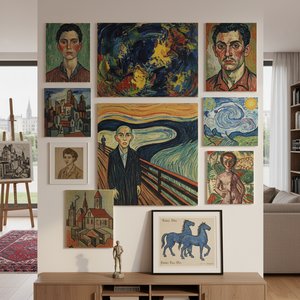
Expressionismo: 10 Obras-Primas que Moldaram a Arte Moderna | TopImpressionists
Descubra as 10 obras-primas do Expressionismo que revolucionaram a arte moderna! Explore a emoção, cores vibrantes e histórias de Munch, Kirchner, Kandinsky e outros artistas icônicos. Encontre reproduções de alta qualidade em TopImpressionists.com.

Top 10 Obras de Arte Audazes para Decorar com Impacto | TopImpressionists.com
Descubra 10 obras de arte audazes que inspiram e transformam! Explore a história por trás de Van Gogh, Picasso, Monet e outros mestres. Encontre reproduções de alta qualidade para decorar sua casa com impacto. TopImpressionists.com: Arte para todos os estilos.

Egon Schiele: As 25 Obras-Primas que Definem um Gênio Expressionista | TopImpressionists
Descubra as 25 obras-primas de Egon Schiele, o mestre expressionista austríaco. Explore a vida, técnica e simbolismo por trás de seus retratos icônicos e nus impactantes. Encontre reproduções de arte exclusivas para decorar sua casa com emoção e estilo em TopImpressionists.com
Explore obras de arte organizadas por temas, estilos e características.
