


 Visualizar em escala
 Enviar
 Compartilhar
 Ver detalhes
 Guia
Guia

 Baixar imagem
 Semelhantes
 Raio X
 Apresentação de slides
 Estatísticas
Mulher Pentando o Cabelo


Descubra ‘Mulher Pentando o Cabelo’ de Edgar Degas, uma obra-prima pastel serena que captura a intimidade e a elegância impressionista. Explore sua técnica, composição e beleza atemporal.
 Ver mais
Edgar Degas: um revolucionário artista francês, conhecido por seus deslumbrantes bailarinas, cenas parisienses e técnicas inovadoras – um mestre da arte moderna.
Giclée / Impressão de Arte
Impressão giclée ou em tela de qualidade de museu, com produção rápida e opções flexíveis de acabamento. ( Encomendar reprodução pintada à mão Ver Imagem Digital)




P118B $10

P118H $10

P118W $10

P438Z $10

P508JH $12

P508YH $12

P805H $10

P805Z $10

P919BZ $10

P919G $10

P919XJ $10

P959ZH $10

P968JZ $12

W106C $8

W218G $10

W218JH $8

W218Y $10

W307PJ $10

W316G $10

W316PJ $8

W316Y $10

W398PJ $8

W4111J $10

W500HY $15

W500JH $15

W692G $12

W849H $8

W940BG $15

W953PJ $8




Padrão
sob medida
CM
INCH
Escolha entre os nossos tamanhos pré-definidos que respeitam as proporções originais da obra de arte.
Loading sizes...

largura
altura
Você pode inserir suas próprias dimensões para se ajustar a uma moldura ou espaço específico. Se o tamanho selecionado não corresponder às proporções da imagem original, iremos recortar a obra de arte ou estender a imagem com uma borda espelhada ou preenchimento sólido. Um mockup digital será enviado para sua aprovação antes do início da produção.
Por favor, observe que a visualização na tela não reflete o recorte ou a extensão real. Apenas o mockup mostrará com precisão a composição final.
Embora tamanhos personalizados estejam disponíveis, recomendamos selecionar uma dimensão da lista predefinida para preservar as proporções originais.
Entrega mundial () em 2 semanas, em vez das 4/5 semanas padrão. (23 Setembro)

Envio expresso gratuito para todo o mundo

Tela de Linho Premium

Seguro de transporte total

Garantia de Reembolso de Impostos Alfandegários

Garantia de Fidelidade de Cor

Política de Devolução em 100 Dias (Apenas para Defeitos)

Garantia de reembolso de 100%

Desconto para múltiplas unidades
 A opção de vidro está disponível apenas para tamanhos inferiores a 110 cm

Mulher Pentando o Cabelo
Giclée / Impressão de Arte
Dimensões da Reprodução
-


Preço Total
$ 69
A Moment Frozen in Pastel Light: Edgar Degas’ Woman Combing Her Hair
Edgar Degas, uma figura perpetuamente debatida nos anais do Impressionismo, se destaca como um artista profundamente afinado em capturar momentos fugazes da vida cotidiana. Ao contrário de seus pares que buscavam destilar paisagens em impressões cintilantes – Monet, Renoir – Degas perseguiu incansavelmente o realismo, embora permeado por uma sensibilidade inegável à luz e ao movimento. Sua obra-prima, “Mulher Pentinando o Cabelo”, exemplifica essa abordagem paradoxal, residindo na Coleção Ordrupgaard da Dinamarca e oferecendo um vislumbre da observação meticulosa do artista sobre a condição humana.
- Assunto: A pintura retrata uma mulher envolvida no ato íntimo de pentear seu longo cabelo. Essa cena aparentemente simples – uma mulher cuidando de sua higiene pessoal – tornou-se um motivo recorrente ao longo da obra de Degas, refletindo sua fascinação em retratar a vida e os rituais domésticos das mulheres.
- Estilo & Técnica: Degas resistiu deliberadamente à categorização como Impressionista, preferindo em vez disso uma fusão de Realismo e Impressionismo. Ele alcançou esse efeito principalmente através do pastel, aplicando inúmeras camadas de pigmento para criar uma textura de superfície veluda que captura as sutis nuances da luz e da sombra. A técnica é notavelmente inovadora, priorizando a gradação tonal sobre paletas de cores ousadas – uma ruptura deliberada com as tendências artísticas prevalecentes.
- Composição: A composição da pintura concentra-se no rosto da mulher, posicionado proeminentemente contra um cenário de cabelo esvoaçante iluminado por tons pastel difusos. Duas aves pousadas estrategicamente nos cantos esquerdo e superior direito contribuem para o dinamismo visual, realçando sutilmente a sensação de tranquilidade e contemplação inerente à cena.
O contexto histórico em torno de “Mulher Pentinando o Cabelo” é crucial para entender a visão artística de Degas. Executada em 1890, surgiu durante um período de mudança social significativa – o crescente movimento feminista desafiou os papéis de gênero e expectativas tradicionais. A representação da mulher por Degas – seu olhar para baixo, sua postura transmitindo concentração silenciosa – pode ser interpretada como um reflexo dessas atitudes sociais em evolução.
Além de suas qualidades estéticas, “Mulher Pentinando o Cabelo” ressoa com um impacto emocional mais profundo. O meio pastel se presta maravilhosamente para transmitir ternura e vulnerabilidade, capturando as sutis expressões emocionais que caracterizam a interação humana. É um retrato não apenas da aparência, mas da vida interior – um testemunho da capacidade de Degas de destilar estados psicológicos complexos em formas visuais aparentemente simples.
Considerada ao lado de outras obras celebradas de Degas – “Mulher Sentada em um Balcão”, “Três Mulheres nas Corridas” e “Mulher Sentada Pentinando o Cabelo” expostas no Musée d’Orsay – este desenho pastel destaca sua herança duradoura como um artista que ousou explorar as complexidades da experiência humana com honestidade e brilhantismo artístico inabaláveis. Sua beleza silenciosa continua a inspirar colecionadores e designers de interiores, oferecendo um lembrete atemporal da profunda compreensão de Degas do espírito humano.
Obras Relacionadas


Biografia do Artista
A Life Immersed in Movement
Edgar Degas, born Hilaire-Germain-Edgar De Gas in Paris on July 19, 1834, stands as a captivating enigma within the annals of art history. Often categorized alongside the Impressionists—Monet, Renoir, and others who revolutionized painting in the late 19th century—Degas fiercely resisted this label, preferring to identify himself as a realist. This commitment stemmed from his unwavering dedication to meticulous observation of the world around him, translating it onto canvas with an honesty that was both startling and profoundly insightful. His early life unfolded within the comfortable confines of a bourgeois upbringing; his father, a banker, and his mother, hailing from a Creole family in New Orleans, afforded him access to education and artistic training—though he often felt constrained by the rigid expectations of academic tradition. Initially enrolled at the Lycée Louis-le-Grand, Degas’s true education began when he immersed himself in the Louvre, meticulously copying works by masters like Raphael and Michelangelo, honing his skills and igniting a lifelong passion for classical art. However, this early training wasn't simply about imitation; it was a springboard for constant questioning and reevaluation of artistic norms—a defining characteristic that would shape his entire career. He possessed an independent spirit, refusing to be confined by convention, and this rebellious streak fueled his unique artistic vision.Beyond Impressionism: A Distinct Artistic Voice
While contemporaries like Monet chased the ephemeral beauty of light outdoors, capturing fleeting moments in plein air, Degas largely maintained a studio-based practice. His process involved constructing scenes from careful observation and memory, often working from sketches and studies made at a distance. This deliberate approach allowed him to analyze forms and compositions with an unparalleled level of detail. His subject matter deliberately shifted away from the historical or mythological themes favored by many academic painters, instead focusing on the vibrant, often gritty reality of Parisian life. He found inspiration in the everyday experiences of ordinary people: laundresses hauling their heavy loads, cabaret singers captivating audiences with their performances, milliners crafting elaborate hats, and, most famously, dancers—particularly those performing at the Paris Opera Ballet. Degas didn’t merely paint beautiful ballerinas; he sought to capture the grueling reality of their profession – the endless rehearsals, the physical strain, the fleeting moments of grace amidst a world of relentless labor. His compositions were frequently unconventional, cropping figures in unexpected ways and utilizing asymmetrical arrangements that created a sense of dynamism and immediacy. He was a master of capturing movement, not through blurred lines or hazy effects, but through precise observation and careful rendering of form. Works like *Dancer, A Group of Dancers*, *Women Combing Their Hair*, and *The Dance Class* exemplify this dedication to portraying the human figure in motion and revealing the complexities of modern life. He wasn’t interested in superficial beauty; he sought to expose the truth beneath the surface.Influences and Artistic Development
Degas's artistic journey was a rich tapestry woven from diverse influences. His early training instilled in him a deep respect for classical principles, particularly the work of Jean-Auguste-Dominique Ingres, whose emphasis on draftsmanship and precise form profoundly impacted his style. However, he also drew inspiration from Realist painters like Gustave Courbet, who challenged academic conventions and championed the depiction of contemporary life with unflinching honesty. A pivotal moment in his development occurred through his association with Camille Pissarro, a leading Impressionist who encouraged him to experiment with new techniques and broadened his artistic horizons. Degas was particularly captivated by Japanese prints—Ukiyo-e—which exerted a significant influence on his compositions, inspiring him to embrace asymmetrical arrangements, flattened perspectives, and bold patterns. He also keenly observed photography, recognizing its potential as a tool for studying movement and capturing fleeting moments in time. This willingness to incorporate diverse influences into his work – from classical art to Japanese prints to the burgeoning field of photography – is what truly distinguishes Degas and contributes to the unique character of his art. He wasn’t afraid to borrow from different sources, synthesizing them into something entirely new.Major Achievements and Legacy
Edgar Degas died in Paris on September 27, 1917, leaving behind a remarkably diverse body of work that continues to captivate and inspire audiences worldwide. His innovative approach to composition, his masterful draftsmanship, and his unflinching portrayal of modern life have had a profound impact on the course of art history. He wasn’t simply a painter of dancers or racehorses; he was a keen observer of human nature, a master of form and movement, and a true innovator who redefined the possibilities of art. His influence can be seen in the work of Pablo Picasso and Henri Matisse, among others, demonstrating his lasting legacy as a pivotal figure in the transition from realism to modernism. Museums across the globe—including the Musée d'Orsay and the Musée de l’Orangerie in Paris—house significant collections of his paintings, pastels, sculptures, and prints, ensuring that his artistic vision will continue to be appreciated for generations to come.- A Master of Line: Degas's exceptional draftsmanship set him apart.
- Modern Life as Subject: He focused on contemporary Parisian scenes, breaking from tradition.
- Influence on Future Artists: His work profoundly impacted Picasso and Matisse.
Key Works
Among his most celebrated works are *Dancer and Tambourine*, a vibrant depiction of a ballerina in mid-performance; *The Ballet Class*, offering an intimate glimpse into the rigorous training of young dancers; *Degas in a Green Jacket*, capturing a candid moment of leisure; *The Collector*, showcasing a portrait of a wealthy art collector; and *Women Combing Their Hair*, a study of domestic life. These works, along with countless others, reveal Degas’s remarkable ability to capture the essence of his subjects – their beauty, their struggles, and their humanity.
hilaire-germain-edgar degas
1834 - 1917 , França
Informações Rápidas
- Artistic Movement Or Style: Impressionismo, Realismo
- Artists Or Movements Influenced By This Artist:
- Picasso
- Matisse
- Artists Who Influenced This Artist:
- Ingres
- Courbet
- Pissarro
- Date Of Birth: 1834
- Date Of Death: 1917
- Full Name: Hilaire-Germain Edgar Degas
- Nationality: Francês
- Notable Artworks:
- Dançarina e Tamborim
- A Aula de Dança
- Degas no Casaco Verde
- O Colecionador
- Mulheres penteando seus cabelos
- Place Of Birth: Paris, França
Artigos Relacionados

Soft Light & Velvet Touch: The Ethereal Magic of Pastel Artistry in Impressionist Masterpieces
Discover the ethereal beauty of pastel art through an Impressionist lens. Explore how masters like Monet and Renoir captured light and velvet textures, and learn to curate a collection of luminous, museum-quality masterpieces for your home.
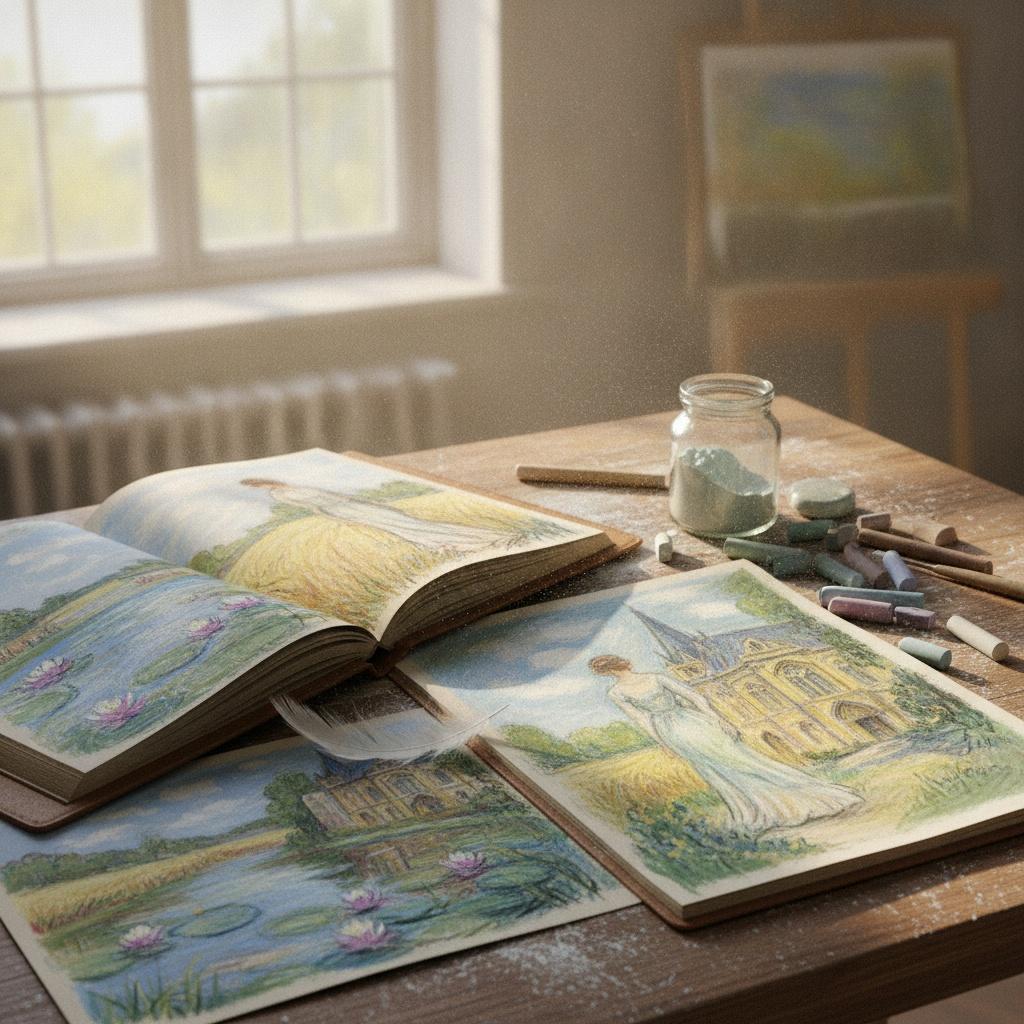
The Soft Magic of Chalk: Capturing Light, Texture, and the Ethereal Soul of Impressionist Masterpieces
Discover the ethereal beauty of pastel and chalk art. Explore how Impressionist masters like Van Gogh and Degas captured light and texture to create timeless, soulful masterpieces for the discerning collector.
Explore obras de arte organizadas por temas, estilos e características.


