


 Visualizar na parede
 Compartilhar
 Compartilhar
 Detalhes
 Guia
Guia

 Baixar imagem
 Semelhantes
 Raio X
 Ver diaporama
 Estatísticas
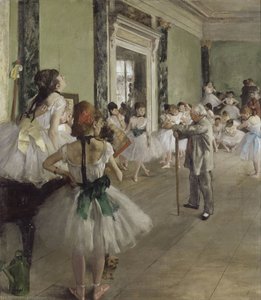
The Dance Class
 Oil On Canvas
- WallArt
- Realist Impressionism
 1873
1873- 19th Century
 72.0 x 88.0 cm
Captured in exquisite monochrome by Degas during the Impressionist era, ‘The Dance Class’ portrays a ballet studio brimming with youthful energy and focused movement—a testament to artistic observation and unwavering realism.
 Ler mais
Edgar Degas: um revolucionário artista francês, conhecido por seus deslumbrantes bailarinas, cenas parisienses e técnicas inovadoras – um mestre da arte moderna.
Obtenha um arquivo pronto para impressão que vai muito além da visualização na web. Cada imagem digital que vendemos provém de um arquivo mestre de alta resolução em nosso banco de dados — geralmente entre 5.000 e 15.000 pixels de largura — para que você possa imprimir em grandes formatos, realizar cortes precisos ou reproduzir detalhes minuciosos com total confiança.
Nenhum arquivo sai do nosso estúdio sem passar por um cuidadoso processo de revisão. Um especialista digital verifica as cores em relação à pintura original e as corrige se necessário, aumentando então a clareza e o detalhe com ferramentas profissionais de retoque — sempre mantendo a fidelidade às pinceladas e ao estilo do artista. O resultado é uma imagem que se assemelha à pintura, e não a um scan com filtros.
Você aprova antes de finalizar: nosso especialista envia a imagem por e-mail em até 72 horas para sua revisão. Não ficou satisfeito? Peça melhorias ou correções, ou solicite um reembolso caso a qualidade não atenda às expectativas.
Esta é a qualidade em que confiam editoras, estúdios de design, galerias e gráficas.
Imagem Digital
Baixe um arquivo de alta resolução para exibição pessoal, impressão e projetos criativos. ( Alternar para Impressão Comprar pintura feita à mão)
Incluído em cada compra de imagem digital
Entrega Digital Especializada e Garantida
Ao escolher o TopImpressionists.com, você não está apenas adquirindo uma imagem — você está recebendo uma obra de arte digital profissionalmente aprimorada, elaborada com precisão e com garantia de satisfação. Aqui está tudo o que acompanha seu pedido, automaticamente:

Entrega rápida por e-mail
O seu arquivo de imagem digital em alta resolução será enviado por e-mail em até 72 horas após o pedido — pronto para uso imediato.

Arquivo Digital com IA Otimizado
Sua obra de arte é otimizada profissionalmente por meio de ferramentas avançadas de IA e edição manual, garantindo o máximo de detalhes, clareza e precisão de cores.

Reenvio gratuito vitalício
Apagou ou perdeu o seu ficheiro acidentalmente? Não se preocupe – nós reenviamos para si a qualquer momento, gratuitamente.

Sem Taxas de Importação - Sempre
Desfrute da sua obra de arte instantaneamente, sem taxas alfandegárias, impostos ou custos de entrega — downloads digitais são sempre isentos de taxas.

Garantia de Fidelidade de Cores
Garantimos que sua imagem digital reflita as cores originais com a maior fidelidade possível, utilizando ferramentas profissionais e gerenciamento de cores.

Garantia de satisfação de 100 dias
Se não estiver satisfeito com a sua imagem digital, nós a revisaremos ou reembolsaremos 100% dentro de 100 dias — sem perguntas.

Garantia de Reembolso 100%
Não está satisfeito? Receba o reembolso total em até 100 dias após o recebimento do seu arquivo digital — sem perguntas.

Descontos para pedidos em lote
Compre 3 imagens, economize 10% - Compre 5, economize 15% - Compre 10+, economize 20%. Ideal para projetos criativos, galerias e agências.
A Glimpse into the Soul of the Studio
In the quiet, focused atmosphere of a Parisian rehearsal hall, Edgar Degas captures something far more profound than a mere ballet lesson. The Dance Class is not just a depiction of movement; it is an intimate study of the discipline, exhaustion, and quiet anticipation that define the life of a dancer. As we gaze upon this masterpiece, we are transported to 1873, stepping into a world where the soft rustle of tulle and the rhythmic breathing of young women fill the air. Degas, a master of observing the unvarnished truth, avoids the grand, theatrical spectacle often associated with the opera, choosing instead to present a candid snapshot of preparation. The composition draws the eye through a labyrinth of bodies—some stretching limbs, others adjusting ribbons or resting momentarily—creating a sense of lived-in reality that feels as though we have just walked through the studio door.
The emotional resonance of the piece lies in its ability to balance the grace of the ballet with the grueling physical labor behind it. There is a palpable tension between the elegance of the tutus and the weary, slumped shoulders of dancers caught in moments of repose. For the collector or the lover of fine art, this painting offers a window into the Belle Époque, capturing a period of intense cultural transformation. Degas’s ability to find beauty in the mundane—in the tilt of a head or the way light catches a stray strand of hair—makes this work an enduring symbol of human aspiration and the relentless pursuit of perfection.
Mastery of Light and Realist Precision
While often whispered about in the same breath as the Impressionists, Degas’s technique in The Dance Class reveals a soul deeply rooted in Realism. He does not rely on the fleeting, broken light of Monet; rather, he employs a purposeful, structured brushstroke that lends weight and volume to the dancers' forms. The palette is a sophisticated arrangement of muted tones, punctuated by the delicate pinks and soft whites of the costumes, which allows the viewer to focus on the subtle interplay of shadow and depth within the studio space. This careful use of tonal variation creates an atmospheric dimension, making the confined room feel expansive yet intimate.
The composition itself is a marvel of classical arrangement disguised as spontaneity. By utilizing architectural elements—such as the staircase and the arched doorway—Degas directs our gaze in a sweeping motion across the canvas. This prevents the eye from resting too long on any single figure, instead encouraging a continuous journey through the scene. For interior designers seeking to anchor a room with a sense of movement and history, this painting provides a dynamic focal point. It possesses a unique ability to breathe life into a space, offering a sophisticated narrative that complements both classical and contemporary decor with its timeless elegance and profound psychological depth.
Perguntas e Respostas
Qual é a luminosidade de "The Dance Class", de Hilaire-Germain-Edgar Degas?
"The Dance Class", de Hilaire-Germain-Edgar Degas possui uma luminância Dark. A luminância descreve quanta luz as cores parecem refletir.
Em que parte da casa uma reprodução de "The Dance Class" ficaria bem?
O espaço recomendado para "The Dance Class", de Hilaire-Germain-Edgar Degas é uma Living Room. A sugestão pode, naturalmente, ser adaptada ao seu interior.
Onde posso comprar uma reprodução pintada à mão de "The Dance Class", de Hilaire-Germain-Edgar Degas?
Você pode encomendar uma reprodução pintada à mão de "The Dance Class", de Hilaire-Germain-Edgar Degas diretamente em sua página de Reprodução Pintada à Mão: uma reprodução a óleo pintada à mão sobre tela de linho, feita sob encomenda.
Obras Relacionadas




Biografia do Artista
A Life Immersed in Movement
Edgar Degas, born Hilaire-Germain-Edgar De Gas in Paris on July 19, 1834, stands as a captivating enigma within the annals of art history. Often categorized alongside the Impressionists—Monet, Renoir, and others who revolutionized painting in the late 19th century—Degas fiercely resisted this label, preferring to identify himself as a realist. This commitment stemmed from his unwavering dedication to meticulous observation of the world around him, translating it onto canvas with an honesty that was both startling and profoundly insightful. His early life unfolded within the comfortable confines of a bourgeois upbringing; his father, a banker, and his mother, hailing from a Creole family in New Orleans, afforded him access to education and artistic training—though he often felt constrained by the rigid expectations of academic tradition. Initially enrolled at the Lycée Louis-le-Grand, Degas’s true education began when he immersed himself in the Louvre, meticulously copying works by masters like Raphael and Michelangelo, honing his skills and igniting a lifelong passion for classical art. However, this early training wasn't simply about imitation; it was a springboard for constant questioning and reevaluation of artistic norms—a defining characteristic that would shape his entire career. He possessed an independent spirit, refusing to be confined by convention, and this rebellious streak fueled his unique artistic vision.Beyond Impressionism: A Distinct Artistic Voice
While contemporaries like Monet chased the ephemeral beauty of light outdoors, capturing fleeting moments in plein air, Degas largely maintained a studio-based practice. His process involved constructing scenes from careful observation and memory, often working from sketches and studies made at a distance. This deliberate approach allowed him to analyze forms and compositions with an unparalleled level of detail. His subject matter deliberately shifted away from the historical or mythological themes favored by many academic painters, instead focusing on the vibrant, often gritty reality of Parisian life. He found inspiration in the everyday experiences of ordinary people: laundresses hauling their heavy loads, cabaret singers captivating audiences with their performances, milliners crafting elaborate hats, and, most famously, dancers—particularly those performing at the Paris Opera Ballet. Degas didn’t merely paint beautiful ballerinas; he sought to capture the grueling reality of their profession – the endless rehearsals, the physical strain, the fleeting moments of grace amidst a world of relentless labor. His compositions were frequently unconventional, cropping figures in unexpected ways and utilizing asymmetrical arrangements that created a sense of dynamism and immediacy. He was a master of capturing movement, not through blurred lines or hazy effects, but through precise observation and careful rendering of form. Works like *Dancer, A Group of Dancers*, *Women Combing Their Hair*, and *The Dance Class* exemplify this dedication to portraying the human figure in motion and revealing the complexities of modern life. He wasn’t interested in superficial beauty; he sought to expose the truth beneath the surface.Influences and Artistic Development
Degas's artistic journey was a rich tapestry woven from diverse influences. His early training instilled in him a deep respect for classical principles, particularly the work of Jean-Auguste-Dominique Ingres, whose emphasis on draftsmanship and precise form profoundly impacted his style. However, he also drew inspiration from Realist painters like Gustave Courbet, who challenged academic conventions and championed the depiction of contemporary life with unflinching honesty. A pivotal moment in his development occurred through his association with Camille Pissarro, a leading Impressionist who encouraged him to experiment with new techniques and broadened his artistic horizons. Degas was particularly captivated by Japanese prints—Ukiyo-e—which exerted a significant influence on his compositions, inspiring him to embrace asymmetrical arrangements, flattened perspectives, and bold patterns. He also keenly observed photography, recognizing its potential as a tool for studying movement and capturing fleeting moments in time. This willingness to incorporate diverse influences into his work – from classical art to Japanese prints to the burgeoning field of photography – is what truly distinguishes Degas and contributes to the unique character of his art. He wasn’t afraid to borrow from different sources, synthesizing them into something entirely new.Major Achievements and Legacy
Edgar Degas died in Paris on September 27, 1917, leaving behind a remarkably diverse body of work that continues to captivate and inspire audiences worldwide. His innovative approach to composition, his masterful draftsmanship, and his unflinching portrayal of modern life have had a profound impact on the course of art history. He wasn’t simply a painter of dancers or racehorses; he was a keen observer of human nature, a master of form and movement, and a true innovator who redefined the possibilities of art. His influence can be seen in the work of Pablo Picasso and Henri Matisse, among others, demonstrating his lasting legacy as a pivotal figure in the transition from realism to modernism. Museums across the globe—including the Musée d'Orsay and the Musée de l’Orangerie in Paris—house significant collections of his paintings, pastels, sculptures, and prints, ensuring that his artistic vision will continue to be appreciated for generations to come.- A Master of Line: Degas's exceptional draftsmanship set him apart.
- Modern Life as Subject: He focused on contemporary Parisian scenes, breaking from tradition.
- Influence on Future Artists: His work profoundly impacted Picasso and Matisse.
Key Works
Among his most celebrated works are *Dancer and Tambourine*, a vibrant depiction of a ballerina in mid-performance; *The Ballet Class*, offering an intimate glimpse into the rigorous training of young dancers; *Degas in a Green Jacket*, capturing a candid moment of leisure; *The Collector*, showcasing a portrait of a wealthy art collector; and *Women Combing Their Hair*, a study of domestic life. These works, along with countless others, reveal Degas’s remarkable ability to capture the essence of his subjects – their beauty, their struggles, and their humanity.
Hilaire-Germain-Edgar Degas
1834 - 1917 , França
Breve Biografia
- Artistic Movement Or Style: Impressionismo, Realismo
- Artists Or Movements Influenced By This Artist:
- Picasso
- Matisse
- Artists Who Influenced This Artist:
- Ingres
- Courbet
- Pissarro
- Date Of Birth: 1834
- Date Of Death: 1917
- Full Name: Hilaire-Germain Edgar Degas
- Nationality: Francês
- Notable Artworks:
- Dançarina e Tamborim
- A Aula de Dança
- Degas no Casaco Verde
- O Colecionador
- Mulheres penteando seus cabelos
- Place Of Birth: Paris, França