Biografia do Artista
Irie Hakō: A Kyoto Master of Subtle Beauty
Irie Hakō, originally known as Ikujirō, was a pivotal figure in the development of Nihonga painting during the early to mid-20th century. Born in Kyoto in 1887 and tragically passing away in 1948, his life’s work embodies the quiet elegance and profound spirituality characteristic of this traditional Japanese art form. His journey from humble beginnings as a student under Morimoto Tōkaku to becoming a respected artist involved in restoring ancient murals at Hōryū-ji Temple speaks volumes about his dedication and artistic evolution. Hakō's legacy rests not on grand, dramatic displays but rather on the subtle mastery of *sumi* ink and mineral pigments, creating images that resonate with a deep sense of serenity and connection to nature.
Early Training and Artistic Foundations
Hakō’s artistic path began in 1902 when he received his initial painting lessons from Morimoto Tōkaku, a highly influential figure in Kyoto's Nihonga scene. This early mentorship provided him with the foundational skills necessary for his future endeavors. Following this initial training, Hakō pursued formal education at the Municipal School for Arts and Crafts (later part of the Kyoto City University of Arts), graduating in 1907. His subsequent work at the school honed his technical abilities and exposed him to a wider range of artistic approaches. Crucially, he then moved to Tokyo in 1913, seeking experience within the bustling art environment of the city’s schools and the prestigious Imperial Museum (now the Tokyo National Museum). This period was instrumental in broadening his perspective and solidifying his understanding of traditional Japanese painting techniques. Notably, during this time, Hakō meticulously copied works by Katsukawa Shunshō, a renowned ukiyo-e artist, demonstrating his commitment to mastering established styles while simultaneously developing his own unique voice.
European Influence and Mural Restoration
In 1922, the city of Kyoto generously sponsored a trip for Hakō to Europe – a rare opportunity for a Japanese artist at that time. This journey proved transformative, allowing him to study the Old Masters in Italy and Spain. He immersed himself in the techniques and philosophies of Renaissance painting, absorbing elements of perspective, light, and color theory. Upon his return to Japan, he was assigned by the Ministry of Culture to work on a significant restoration project at the Hōryū-ji Temple in Nara Prefecture. Beginning in 1940, Hakō dedicated himself to preserving the temple’s ancient murals, painstakingly recreating faded pigments and restoring damaged sections. This undertaking, however, was tragically interrupted by his untimely death in 1948, leaving a portion of the work incomplete – a poignant testament to his dedication and the challenges of wartime Japan.
A Style Defined by Subtlety and Spiritual Depth
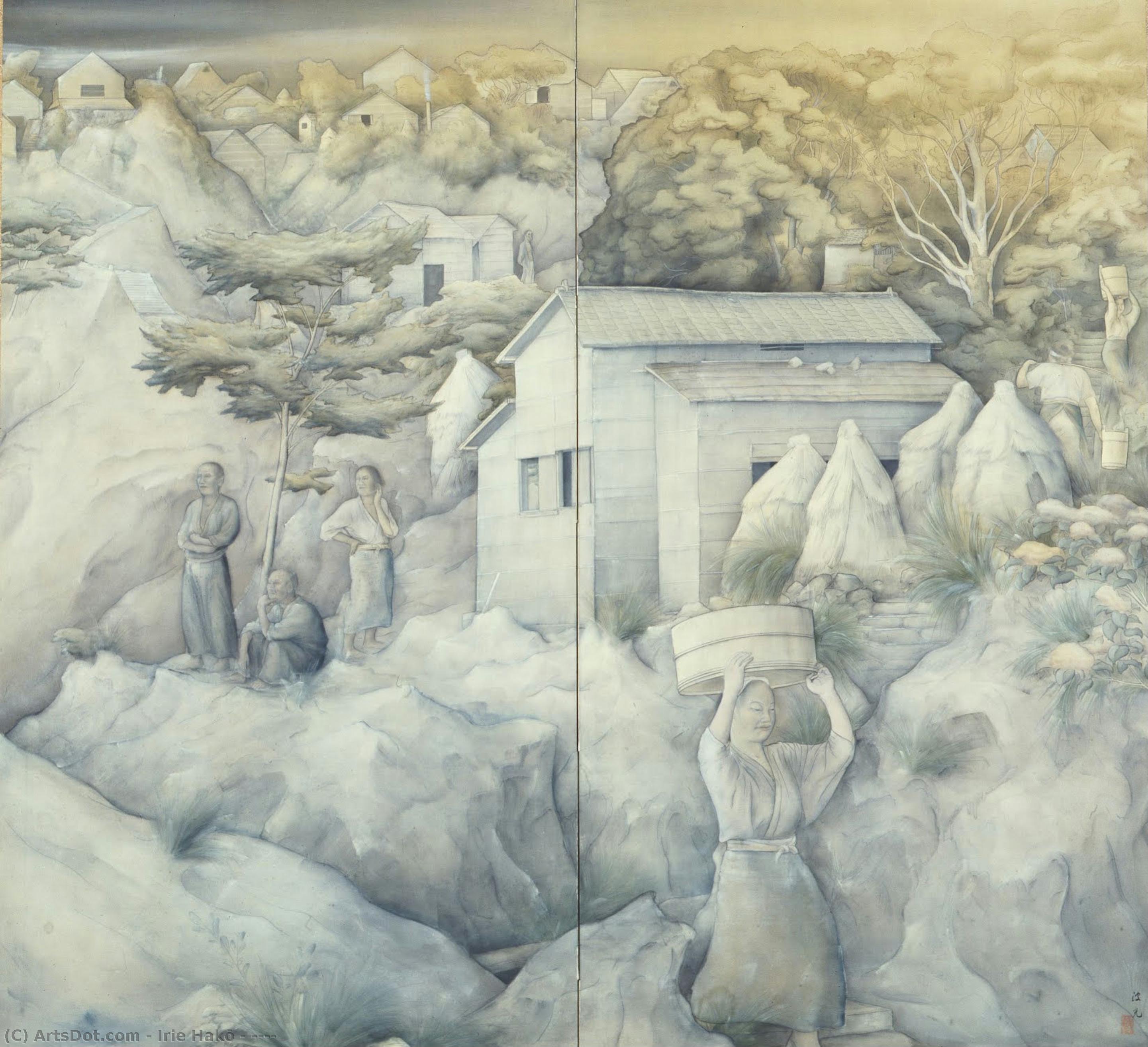
Hakō’s artistic style is characterized by its quiet elegance and profound spiritual depth. He primarily worked in *sumi-e*, utilizing mineral pigments and organic materials on silk or paper, adhering strictly to the principles of Nihonga. His paintings often depict landscapes, Buddhist figures, and scenes from everyday life, but they are rarely overtly dramatic. Instead, he favored a restrained palette, subtle brushwork, and an emphasis on capturing the essence of his subjects rather than their literal representation. His compositions frequently evoke a sense of tranquility and harmony, reflecting a deep connection to nature and a reverence for Buddhist principles. The influence of his European studies is evident in his use of light and shadow, though he skillfully integrated these elements with traditional Japanese aesthetics.
Legacy and Significance
Irie Hakō’s contributions to the Nihonga style are undeniable. He was an active participant in the National Artists' Association exhibitions, showcasing his work alongside other prominent artists of his time. His meticulous attention to detail, combined with a deep understanding of Buddhist iconography and traditional techniques, established him as a respected master within the Kyoto art community. While he may not be as widely celebrated as some of his contemporaries, Hakō’s legacy continues to inspire artists today. His work serves as a powerful reminder of the enduring beauty and spiritual significance of Nihonga painting – an art form that seeks to capture not just what is seen but also what is felt. His dedication to preserving the murals at Hōryū-ji Temple stands as a lasting testament to his artistic integrity and commitment to cultural heritage.


 Visualizar em escala
 Encomendar reprodução pintada à mão
 Enviar
 Compartilhar
 Ver detalhes

 Baixar
 Semelhantes
 Raio X
 Apresentação de slides

 Ver mais






































 A opção de vidro está disponível apenas para tamanhos inferiores a 110 cm



