

 Visualizar em escala
 Enviar
 Compartilhar
 Ver detalhes
 Guia de Obras do Aluno

 Baixar imagem
 Semelhantes
 Raio X
 Apresentação de slides
 Estatísticas
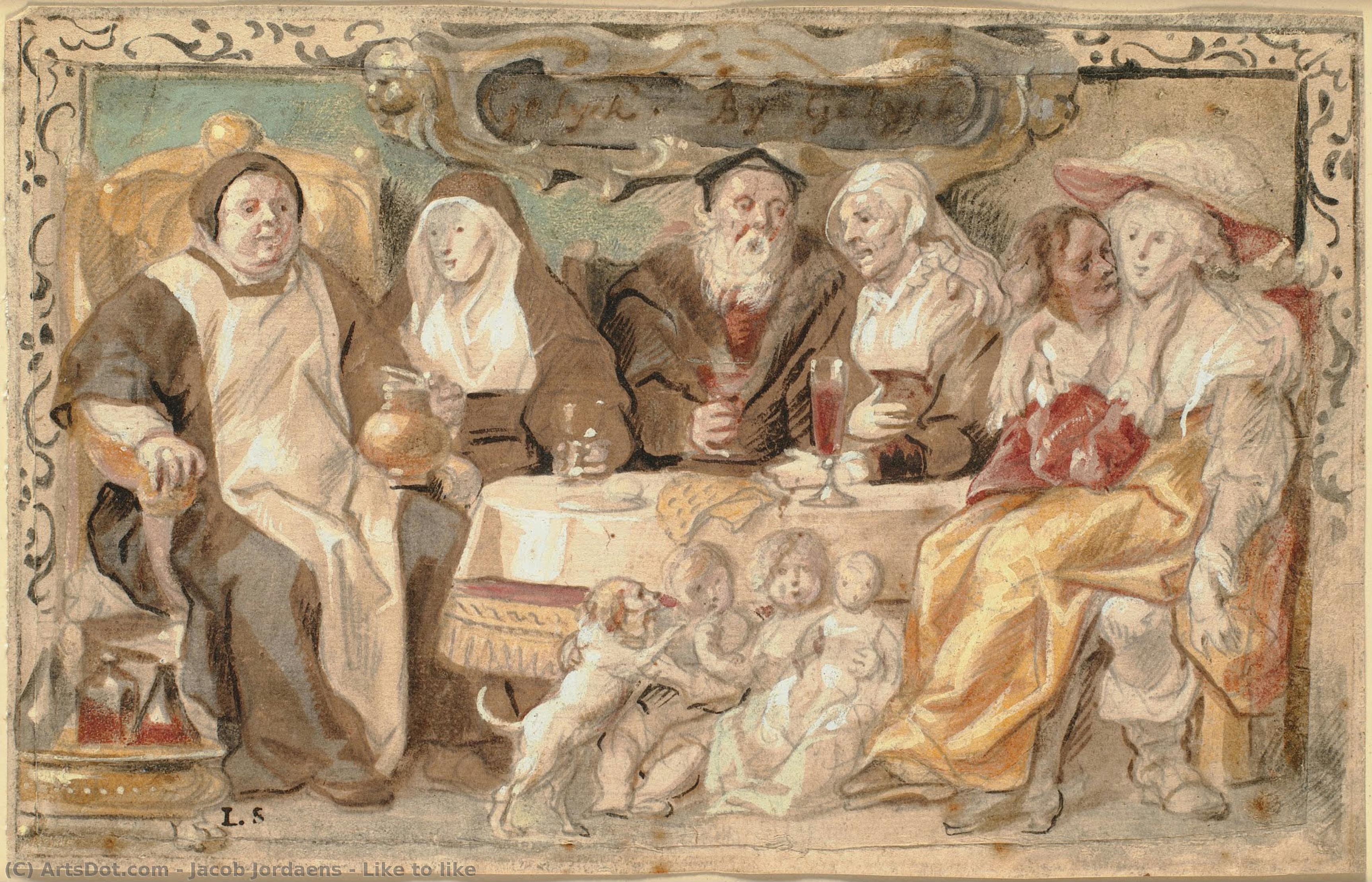
Like to like
 Oil On Canvas
- WallArt
- Baroque
 1645
1645- Renaissance
 21.0 x 13.0 cm
 Galeria Nacional da Dinamarca
Jacob Jordaens’ ‘Like to Like’ captures a vibrant 17th-century Dutch proverb scene with richly detailed figures and a bustling dining table. This Baroque masterpiece celebrates everyday life, offering a timeless depiction of human connection and social order.
 Ver mais
"meta_description": "Jacob Jordaens (1593-1678) foi um mestre barroco flemish conhecido por cenas vibrantes de vida cotidiana, alegorias e retratos. Sua obra celebra a alegria da existência e influenciou artistas como Jan Steen."
Giclée / Impressão de Arte
Impressão giclée ou em tela de qualidade de museu, com produção rápida e opções flexíveis de acabamento. ( Encomendar reprodução pintada à mão Ver Imagem Digital)




P118B $10

P118H $10

P118W $10

P438Z $10

P508JH $12

P508YH $12

P805H $10

P805Z $10

P919BZ $10

P919G $10

P919XJ $10

P959ZH $10

P968JZ $12

W106C $8

W218G $10

W218JH $8

W218Y $10

W307PJ $10

W316G $10

W316PJ $8

W316Y $10

W398PJ $8

W4111J $10

W500HY $15

W500JH $15

W692G $12

W849H $8

W940BG $15

W953PJ $8




Padrão
sob medida
CM
INCH
Escolha entre os nossos tamanhos pré-definidos que respeitam as proporções originais da obra de arte.
Loading sizes...

largura
altura
Você pode inserir suas próprias dimensões para se ajustar a uma moldura ou espaço específico. Se o tamanho selecionado não corresponder às proporções da imagem original, iremos recortar a obra de arte ou estender a imagem com uma borda espelhada ou preenchimento sólido. Um mockup digital será enviado para sua aprovação antes do início da produção.
Por favor, observe que a visualização na tela não reflete o recorte ou a extensão real. Apenas o mockup mostrará com precisão a composição final.
Embora tamanhos personalizados estejam disponíveis, recomendamos selecionar uma dimensão da lista predefinida para preservar as proporções originais.
Entrega mundial () em 2 semanas, em vez das 4/5 semanas padrão. (26 Setembro)

Envio expresso gratuito para todo o mundo

Tela de Linho Premium

Seguro de transporte total

Garantia de Reembolso de Impostos Alfandegários

Garantia de Fidelidade de Cor

Política de Devolução em 100 Dias (Apenas para Defeitos)

Garantia de reembolso de 100%

Desconto para múltiplas unidades
 A opção de vidro está disponível apenas para tamanhos inferiores a 110 cm

Like to like
Giclée / Impressão de Arte
Dimensões da Reprodução
-


Preço Total
$ 69
A Window into Flemish Wisdom: Jordaens’ “Like to Like”
Jacob Jordaens' "Like to Like," painted in 1645, is more than just a group portrait; it’s a meticulously crafted visual sermon, a testament to the enduring power of proverb and social commentary within the vibrant world of Flemish Baroque art. Executed during a period when artists like Bosch and Bruegel had established the tradition of illustrating moral lessons through captivating scenes, Jordaens continues this legacy with remarkable clarity and detail. This particular work, measuring 21 x 13 cm, offers a poignant glimpse into the lives and values of a prosperous Antwerp family, inviting viewers to contemplate their own place within the social order.
- Subject Matter: The painting depicts a gathering around a richly appointed dining table, populated by a diverse cast of characters – men, women, and children – each embodying a specific facet of societal expectation.
- Composition: Jordaens’ masterful composition utilizes theatrical staging, with the figures arranged as if on a stage, their faces turned towards the viewer, drawing us directly into the scene.
- Details: The inclusion of wine glasses, cups, and bowls adds to the sense of conviviality and abundance, while the presence of a boy and girl further emphasizes the theme of familial bonds and generational continuity.
The Language of Proverbs and Symbolism
At its core, “Like to Like” is an illustration of a fundamental proverb: "Stick with one’s own class." This message is powerfully conveyed through the carefully constructed groupings within the painting. Four distinct couples represent this principle – a friar and nun, an elderly married couple, young lovers, and a simple family – each pair visually reinforcing the idea of maintaining social standing and adhering to established norms. The artist's didacticism isn’t heavy-handed; rather, it’s subtly woven into the fabric of the scene, inviting contemplation rather than demanding obedience.
Beyond this central theme, the painting is rich in symbolic detail. The vase positioned near the center adds an element of decorative elegance, while the presence of a boy and dog – or girl and doll – speaks to childhood innocence and the importance of nurturing young generations. Even the clothing worn by each figure contributes to the overall narrative, reflecting their respective social roles and status.
A Masterful Exercise in Technique
Jordaens’ skill as a painter is immediately apparent in the meticulous rendering of textures – from the velvet upholstery of the chairs to the folds of the fabrics worn by the figures. His use of light and shadow creates a sense of depth and realism, while his brushwork is both precise and expressive. The painting demonstrates a mastery of *alla prima* technique, applying paint directly to the canvas in broad strokes, creating a vibrant and dynamic effect. This approach, favored by Rubens himself, contributes significantly to the work’s energetic feel.
Emotional Resonance and Lasting Appeal
"Like to Like" transcends its historical context to offer a timeless meditation on social order, family values, and the enduring wisdom of proverbs. Jordaens' ability to capture human emotion – tenderness, affection, contemplation – ensures that this painting continues to resonate with viewers centuries later. This hand-painted reproduction offers an exceptional opportunity to own a piece of art history, bringing the richness and complexity of Flemish Baroque into your home or office.
Biografia do Artista
A Vida e a Ascensão de um Mestre da Alegria: Jacob Jordaens
Jacob Jordaens nasceu em 1593, na próspera cidade de Antuérpia, no coração dos Países Baixos Espanhóis. Filho de um rico comerciante de linho, Jacob recebeu uma educação que lhe permitiu desfrutar de uma vida confortável e de oportunidades para desenvolver seu talento artístico. Diferentemente de muitos de seus contemporâneos, que buscavam aprimorar suas habilidades na Itália, Jordaens permaneceu enraizado em sua terra natal, cultivando um estilo único e vibrante que celebrava os prazeres e as realidades da vida cotidiana. Sua formação inicial foi influenciada por Adam van Noort, também mestre de Peter Paul Rubens, o que lhe proporcionou uma base sólida em técnica e composição. Em 1616, casou-se com a filha de seu mestre, Katharina, consolidando sua posição no cenário artístico local.O Pintor dos Festivais Populares e da Grandiosidade Barroca
A obra de Jordaens era incrivelmente diversificada, abrangendo desde narrativas religiosas e cenas mitológicas até composições alegóricas, pinturas de gênero repletas de vida e até mesmo retratos. No entanto, ele é mais lembrado por suas representações exuberantes de festivais populares e cenas de taverna – obras que irradiavam uma energia palpável e um espírito desinibido de alegria nos prazeres terrenos. Pinturas como *O Rei Bebendo* (também conhecida como a Festa do Rei Trancoso) exemplificam este estilo característico: composições lotadas com figuras robustas envolvidas em festividades animadas, pintadas com cores quentes e vibrantes e utilizando um contraste dramático de luz e sombra. Essas cenas não eram apenas celebrações da alegria; muitas vezes carregavam subtextos morais sutis, refletindo a complexa relação entre indulgência e restrição que prevalecia na sociedade do século XVII. Apesar disso, Jordaens era igualmente habilidoso em lidar com encargos mais formais e grandiosos. Sua participação na decoração do palácio Huis ten Bosch, perto de Haia, demonstrou sua capacidade de criar obras monumentais e alegóricas que integravam perfeitamente pintura e arquitetura.Influências e a Voz Artística Única
Embora Jordaens nunca tenha viajado para a Itália, ele foi profundamente influenciado por mestres italianos como Jacopo Bassano, Paolo Veronese e Caravaggio – artistas cujas obras chegaram aos Países Baixos através de gravuras e pinturas trazidas por outros artistas. A influência de Caravaggio é particularmente evidente em seu uso dramático da luz e sombra, uma técnica conhecida como *tenebrismo*, que intensifica a intensidade emocional de suas cenas. No entanto, Jordaens não simplesmente imitou essas influências; ele as sintetizou com suas próprias sensibilidades flamengas, criando um estilo único que era o seu. Ele se diferenciou de Rubens e Van Dyck em sua preferência pelo realismo em vez do idealismo, abraçando uma abordagem mais direta e despretensiosa para a representação da forma humana. Suas figuras são frequentemente substanciais, até mesmo corpulentas, seus rostos avermelhados e saudáveis. Este compromisso com o naturalismo, combinado com seu domínio magistral da cor e da composição, o distinguiu de seus contemporâneos e estabeleceu-o como uma figura proeminente na pintura barroca flamenga.A Técnica e a Abundância de Detalhes
O estilo de Jordaens era caracterizado por uma riqueza de detalhes e uma atenção meticulosa aos menores elementos. Ele frequentemente utilizava *sfumato*, uma técnica que suavizava os contornos das figuras, criando uma sensação de profundidade e atmosfera. Suas pinturas eram repletas de personagens, objetos e paisagens, cada um cuidadosamente renderizado com precisão e realismo. Jordaens era conhecido por sua habilidade em capturar a luz natural e as sombras, criando efeitos dramáticos que davam vida às suas cenas. Ele também era um mestre na representação da textura, utilizando pinceladas variadas para simular o toque do tecido, a rugosidade da madeira e a suavidade da pele.Legado e Impacto Duradouro
Ao longo de sua longa e prolífica carreira, Jordaens treinou numerosos alunos – quinze foram oficialmente registrados no Círculo de São Lucas entre 1621 e 1667—garantindo a continuidade de seu legado artístico. Sua influência pode ser vista na obra de artistas posteriores como Jan Steen, que compartilhava sua inclinação para representar cenas de gênero animadas. Além de seu impacto direto em outros pintores, as temáticas clássicas de Jordaens sobre a vida popular tiveram um efeito duradouro no mundo da arte, desafiando hierarquias tradicionais e celebrando a dignidade da vida cotidiana. Mesmo hoje, suas pinturas continuam a cativar o público com sua energia, vitalidade e representação honesta da experiência humana. Sua capacidade de combinar realismo com alegoria, sensualidade com moralidade e grandiosidade com intimidade o torna uma das figuras mais convincentes e duradouras do período barroco.
Jacob Jordaens
1593 - 1678 , Bélgica
Informações Rápidas
- Artistic Movement Or Style: Barroco
- Artists Or Movements Influenced By This Artist: ['Jan Steen']
- Artists Who Influenced This Artist: ['Adam van Noort']
- Date Of Birth: 19 de Maio de 1593
- Date Of Death: 18 de Outubro de 1678
- Full Name: Jacob Jordaens
- Nationality: Flemish
- Notable Artworks:
- O Banquete do Rei
- A Satyre et le Paysan
- Place Of Birth: Antuérpia, Bélgica
Artigos Relacionados

Golden Light & Dutch Skies: The Timeless Magic of Dutch Golden Age Landscapes
Discover the breathtaking beauty of Dutch Golden Age landscapes. Explore the mastery of light, chiaroscuro, and 17th-century realism through an expert art history lens, celebrating the enduring legacy of the Dutch Masters for discerning collectors and art lovers.

Mastering Light & Shadow: A Journey Through the Dutch Golden Age's Luminous Legacy
Embark on a cultural journey through the Dutch Golden Age. Explore the masterful interplay of light and shadow in 17th-century masterpieces, from Rembrandt to Vermeer, and discover how this era of profound realism continues to inspire fine art collectors today.
Explore obras de arte organizadas por temas, estilos e características.


