


 Visualizar em escala
 Enviar
 Compartilhar
 Ver detalhes
 Guia de Obras do Aluno

 Baixar imagem
 Semelhantes
 Raio X
 Apresentação de slides
 Estatísticas
A Morte de Sócrates
 Óleo sobre tela
- Arte de Parede
- Neoclassicismo
 1787
1787- Século XIX
 130.0 x 196.0 cm
 Museu Metropolitano de Arte
'A Morte de Sócrates', de Jacques-Louis David, personifica os ideais de virtude moral do Neoclassicismo com chiaroscuro magistral e detalhes simbólicos — uma reflexão profunda sobre mortalidade e saber na Revolução Francesa.
 Ver mais
Jacques-Louis David: Mestre do Neoclassicismo francês, capturou revoluções e glórias napoleônicas em obras icônicas como 'Juramento dos Horátios'. Um artista de grande impacto histórico e artístico.
Giclée / Impressão de Arte
Impressão giclée ou em tela de qualidade de museu, com produção rápida e opções flexíveis de acabamento. ( Encomendar reprodução pintada à mão Ver Imagem Digital)




P118B €10

P118H €10

P118W €10

P438Z €10

P508JH €12

P508YH €12

P805H €10

P805Z €10

P919BZ €10

P919G €10

P919XJ €10

P959ZH €10

P968JZ €12

W106C €8

W218G €10

W218JH €8

W218Y €10

W307PJ €10

W316G €10

W316PJ €8

W316Y €10

W398PJ €8

W4111J €10

W500HY €15

W500JH €15

W692G €12

W849H €8

W940BG €15

W953PJ €8




Padrão
sob medida
CM
INCH
Escolha entre os nossos tamanhos pré-definidos que respeitam as proporções originais da obra de arte.
Loading sizes...

largura
altura
Você pode inserir suas próprias dimensões para se ajustar a uma moldura ou espaço específico. Se o tamanho selecionado não corresponder às proporções da imagem original, iremos recortar a obra de arte ou estender a imagem com uma borda espelhada ou preenchimento sólido. Um mockup digital será enviado para sua aprovação antes do início da produção.
Por favor, observe que a visualização na tela não reflete o recorte ou a extensão real. Apenas o mockup mostrará com precisão a composição final.
Embora tamanhos personalizados estejam disponíveis, recomendamos selecionar uma dimensão da lista predefinida para preservar as proporções originais.
Entrega mundial () em 2 semanas, em vez das 4/5 semanas padrão. (14 Outubro)

Envio expresso gratuito para todo o mundo

Tela de Linho Premium

Seguro de transporte total

Garantia de Reembolso de Impostos Alfandegários

Garantia de Fidelidade de Cor

Política de Devolução em 100 Dias (Apenas para Defeitos)

Garantia de reembolso de 100%

Desconto para múltiplas unidades
 A opção de vidro está disponível apenas para tamanhos inferiores a 110 cm

A Morte de Sócrates
Giclée / Impressão de Arte
Dimensões da Reprodução
-


Preço Total
€ 60
Um Monumento à Fortaleza Moral
No grande teatro da arte neoclássica, poucas obras impõem tamanha gravidade quanto A Morte de Sócrates, de Jacques-Louis David. Pintada em 1787, esta tela monumental serve como muito mais do que um mero quadro histórico; é uma meditação visceral sobre a intersecção entre a mortalidade e os princípios inabaláveis. A cena captura os momentos finais e desafiadores do filósofo Sócrates em uma antiga prisão ateniense, pouco antes de consumir a cicuta que porá fim à sua vida. Através da mão magistral de David, a pintura transcende seu tema para se tornar um emblema atemporal de integridade intelectual e da coragem de enfrentar o próprio destino com serena determinação.
A composição é uma aula de tensão dramática e equilíbrio estrutural. No coração da obra encontra-se Sócrates, seu físico esculpido pelo uso brilhante do chiaroscuro. O jogo de luz e sombra não apenas define sua forma, mas parece emanar de seu próprio espírito, realçando sua postura musculosa e ereta enquanto ele alcança a taça de veneno. Seu gesto — uma mão segurando o cálice enquanto a outra aponta para os céus — simboliza uma ponte entre a luta terrena e as verdades eternas que ele defendeu. Ao seu redor, as figuras de seus discípulos e guardas estão dispostas com uma precisão rítmica que guia o olhar do espectador por uma paisagem de luto, choque e aceitação estoica.
A Linguagem do Neoclassicismo
David utiliza um estilo refinado e realista que evita a ornamentação frívola da era Rococo precedente em favor de uma clareza clássica e austera. A paleta de cores é intencionalmente sombria, dominada por tons suaves e sombras profundas que evocam a atmosfera úmida e pesada da cela da prisão. Esta escuridão serve como uma tela nítida para os realces na túnica branca de Sócrates, garantindo que a figura central permaneça como o ponto focal indiscutível da narrativa. Cada detalhe, desde as frias paredes de pedra até o brilho da luz na armadura dos guardas, é renderizado com uma precisão que confere um ar de verdade inegável ao drama histórico.
Além de seu esplendor visual, a pintura está imersa nas correntes políticas e filosóficas de sua época. Criada durante os anos tumultuados que antecederam a Revolução Francesa, a obra ressoa com o anseio da era por grandeza moral e resistência contra a autoridade injusta. Para o colecionador moderno ou designer de interiores, uma reprodução desta obra-prima oferece mais do que mera decoração; ela introduz um senso de profundidade intelectual e peso histórico a qualquer espaço. É um convite para contemplar o poder duradouro das ideias e a força do espírito humano diante da decadência inevitável.
Perguntas e Respostas
Em que técnica foi executada a obra "A Morte de Sócrates" de Jacques-Louis David?
A técnica de "A Morte de Sócrates" de Jacques-Louis David é Óleo sobre tela. As reproduções visam reproduzir a aparência desta técnica.
Para qual tamanho é sugerido "A Morte de Sócrates" em um(a) Lobbies de Hotéis?
Em um(a) Lobbies de Hotéis, sugere-se que "A Morte de Sócrates" seja impresso no tamanho Grande formato.
Como o contraste e a harmonia se combinam em "A Morte de Sócrates"?
A análise cromática de "A Morte de Sócrates" de Jacques-Louis David registra um contraste Suave e uma harmonia Paleta dissonante.
As cores de "A Morte de Sócrates" de Jacques-Louis David são saturadas ou suaves?
As cores de "A Morte de Sócrates" de Jacques-Louis David possuem uma saturação Sóbria. A saturação descreve o quão vívidas ou suaves são as cores.
Posso visualizar "A Morte de Sócrates" de Jacques-Louis David antes de fazer o pedido?
Uma prévia de "A Morte de Sócrates" de Jacques-Louis David está disponível na página de Visualização da obra.
Onde "A Morte de Sócrates" se posiciona entre os temas recorrentes de Jacques-Louis David?
Entre os temas registrados de Jacques-Louis David — ideais clássicos, virtude moral, espírito revolucionário, reflexão filosófica, legado de david — "A Morte de Sócrates" traz seu próprio foco em filosofia, morte, ética, grécia antiga, julgamento, virtude, lealdade.
Para qual tom se inclina "A Morte de Sócrates"?
"A Morte de Sócrates" inclina-se para um tom Do âmbar ao açafrão.
A qual corrente artística "A Morte de Sócrates" de Jacques-Louis David pertence?
"A Morte de Sócrates" de Jacques-Louis David pertence ao movimento Neoclassicismo. Este movimento fornece o contexto estilístico da obra.
Biografia do Artista
A Brushstroke Across Revolution: The Life and Art of Jacques-Louis David
Jacques-Louis David, born in Paris in 1748, was more than just a painter; he was a visual chronicler of an era defined by upheaval, idealism, and the relentless pursuit of new orders. His life mirrored the dramatic shifts unfolding across France – from the waning opulence of the Rococo to the austere clarity of Neoclassicism, and ultimately, through the tumultuous years of revolution and Napoleonic glory. A childhood marked by the early loss of his father and a facial impediment that initially hindered his speech seemed only to sharpen his observational skills and fuel an unwavering dedication to artistic mastery. Though initially apprenticed to François Boucher, David quickly found himself drawn to the more morally resonant work of Joseph-Marie Vien, whose emphasis on history painting and classical subjects resonated with a burgeoning sense of purpose within the young artist. His early attempts to win the prestigious Prix de Rome were fraught with frustration, yet these repeated setbacks only intensified his resolve, forging a relentless perfectionism that would characterize his entire career.The Birth of Neoclassical Drama
David’s artistic evolution wasn't merely a stylistic shift; it was a philosophical statement. He rejected the frivolous ornamentation and playful themes of the Rococo, embracing instead the clarity, order, and moral seriousness inherent in classical antiquity. This commitment was profoundly influenced by archaeological discoveries at Pompeii and Herculaneum, which unveiled a world of Roman art and architecture previously lost to time. These ruins ignited within him a profound respect for the rationalism and civic virtue of the ancient republic, inspiring a desire to emulate their ideals in his own work. His breakthrough came with “Oath of the Horatii” (1784), a painting that transcended mere artistic skill to become an emblem of civic virtue and patriotic sacrifice. The stark composition, dramatic lighting – carefully calculated to emphasize the figures’ musculature and emotional intensity – and precise draftsmanship were revolutionary, signaling a decisive break from the past. It wasn't simply *what* he painted but *how* – a deliberate construction designed to evoke powerful emotional responses and inspire contemplation on themes of duty, honor, and self-sacrifice. The figures are rendered with an almost sculptural quality, their bodies idealized according to classical principles, reflecting David’s deep study of Roman sculpture. This work didn't just announce a new style; it foreshadowed the ideological currents that would soon sweep across France.Revolution and Remembrance: Art as Political Weapon
As the French Revolution erupted in 1789, David was not merely an observer but an active participant. A fervent supporter of the revolutionary cause and a close associate of Maximilien Robespierre, he saw art as a powerful tool for shaping public opinion and immortalizing the ideals of the new republic. He believed that art could serve as a moral compass, guiding society towards virtue and justice. His paintings during this period became potent symbols of revolutionary martyrdom and republican fervor. Perhaps his most iconic work from this era is “The Death of Marat” (1793), a hauntingly realistic depiction of the assassinated journalist, transformed into a secular saint. The painting’s stark simplicity – the pale body, the makeshift desk, the poignant letter clutched in Marat's hand – elevates the scene to a level of profound emotional resonance. David deliberately chose this subject matter to honor the revolutionary hero and inspire further acts of sacrifice for the cause. He meticulously researched the event, relying on eyewitness accounts and seeking to capture the raw emotion of the moment with unflinching realism. “The Death of Marat” wasn’t just a portrait; it was a carefully constructed propaganda piece designed to galvanize support for the revolution.From Revolution to Empire: Serving Napoleon
The fall of Robespierre marked another turning point in David's career. With remarkable adaptability, he navigated the shifting political landscape and aligned himself with Napoleon Bonaparte, becoming the First Consul’s official court painter. This new patronage ushered in a period of grand-scale commissions designed to glorify Napoleon’s victories and achievements. “Napoleon Crossing the Alps” (1801-1805) is perhaps the most famous example – a masterful piece of propaganda that presents Napoleon as a heroic, almost mythical figure conquering both nature and adversity. The dramatic lighting, the dynamic composition, and the carefully chosen details all contribute to the image’s powerful effect. David skillfully employed classical motifs—the hero in a heroic pose, battling against the elements—to elevate Napoleon's status and associate him with the grandeur of antiquity. “The Coronation of Napoleon” (1807), an immense canvas capturing the opulence and grandeur of the imperial ceremony, further cemented David’s position as the preeminent artist of the Napoleonic era. During this time, his palette subtly shifted, incorporating warmer Venetian colors while maintaining the precision and clarity that defined his style.Exile, Legacy, and Enduring Influence
The Bourbon Restoration in 1814 brought renewed peril for David, whose association with the fallen Napoleon made him a target of persecution. He chose exile in Brussels in 1816, where he continued to paint and teach until his death on December 29, 1825. Despite facing hardship and political isolation, David remained committed to his art, producing works that reflected his evolving philosophical views. Even in exile, his influence remained profound. He trained numerous pupils, including Jean-Auguste-Dominique Ingres, who would become one of the most important neoclassical painters of the 19th century. David’s emphasis on draftsmanship, composition, and historical accuracy left an indelible mark on French art. *His legacy extends beyond mere imitation*; his expressive distortions of form and space even foreshadowed the innovations of later artists like Henri Matisse and Pablo Picasso. Jacques-Louis David was not simply a painter of his time; he *defined* it, capturing its spirit of revolution, ambition, and enduring ideals on canvas for generations to come.- Major Achievements: Established Neoclassicism as the dominant style in French painting.
- Historical Significance: Created iconic images that captured the spirit of the French Revolution and the Napoleonic era.
- Influence: Trained a generation of influential artists who carried on his legacy.

Jacques-Louis David
1748 - 1800 , França
Informações Rápidas
- Artistic Movement Or Style: Neoclassicismo
- Artists Or Movements Influenced By This Artist:
- Ingres
- Matisse
- Artists Who Influenced This Artist:
- Vien
- Rafael
- Date Of Birth: 30 de agosto de 1748
- Date Of Death: 29 de dezembro de 1825
- Full Name: Jacques-Louis David
- Nationality: Francês
- Notable Artworks:
- Juramento dos Horátios
- Morte de Marat
- Napoletano cruzando os Alpes
- Place Of Birth: Paris, França
Artigos Relacionados

The Revival of Antiquity: Exploring Neoclassical Art's Ideals & Enduring Legacy
Explore the revival of classical ideals in Neoclassical art! Discover Jacques-Louis David & the movement's impact on painting, sculpture & architecture. Expert insights & high-quality reproductions at TopImpressionists.

The Revival of Antiquity: Exploring the Ideals & Innovations of Neoclassical Art
Explore the revival of classical art with our deep dive into Neoclassicism! Discover key artists like Jacques-Louis David, Enlightenment influences & lasting impact on art history. Learn more now.

Jacques-Louis David: Neoclassical Ideals & Revolutionary Witness
Explore the life & art of Jacques-Louis David, leading Neoclassical painter of the French Revolution. Discover iconic works like 'The Death of Marat' and his lasting impact on art history. Expert analysis & high-quality reproductions at TopImpressionists.
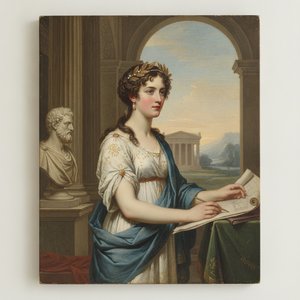
The Revival of Antiquity: Exploring Ideals of Beauty & Power in Neoclassical Portraiture
Explore the captivating world of Neoclassical portraiture! Discover the power & ideals behind masterpieces by David, Girodet & more. Expert analysis, custom reproductions & art appraisal at TopImpressionists.

Anne-Louis Girodet: Bridging Neoclassicism & Romanticism with Emotional Truth
Explore the captivating world of Anne-Louis Girodet, a pivotal figure bridging Neoclassicism & Romanticism. Discover his masterpieces and unique artistic vision with TopImpressionists.
Explore obras de arte organizadas por temas, estilos e características.


