

Exibido: · Com a moldura:
 Visualizar na parede
 Compartilhar
 Compartilhar
 Detalhes
 Guia
Guia

 Baixar imagem
 Semelhantes
 Raio X
 Ver diaporama
 Perguntas e Respostas
 Estatísticas
- 18.0 x 26.0 cm


€ 239
Reprodução em Óleo Feita à Mão
Óleo sobre tela pintado à mão no tamanho e moldura de sua escolha, feito sob encomenda pelos nossos artistas. ( Alternar para Impressão Alternar para Imagem Digital)
Tamanho
·Tamanho padrão
personalizado
CM
INCH
Escolha entre os nossos tamanhos pré-definidos que respeitam as proporções originais da obra de arte.
Carregando tamanhos...

largura
altura
Insira a largura e a altura desejadas para se ajustarem à sua moldura ou parede. Como esta obra é pintada à mão, para um tamanho com proporções diferentes, o artista poderá pintar um pouco mais ao redor da imagem ou reduzir ligeiramente a composição — você escolhe. Enviamos uma maquete digital para sua aprovação antes de iniciar a pintura. A imagem exibida nesta página não representa o resultado real — apenas a maquete mostra o resultado final.
 Leia mais
Finalizar
·
Branco €1

Bordas esfumaçadas €1

Bordas estendidas €1

P118B €10

P118H €10

P118W €10

P438Z €10

P508JH €12

P508YH €12

P805H €10

P805Z €10

P919BZ €10

P919G €10

P919XJ €10

P959ZH €10

P968JZ €12

W106C €8

W218G €10

W218JH €8

W218Y €10

W307PJ €10

W316G €10

W316PJ €8

W316Y €10

W398PJ €8

W4111J €10

W500HY €15

W500JH €15

W692G €12

W849H €8

W940BG €15

W953PJ €8

H24-GOLD €30

H24-SILVER €30

H36-GOLD €45

H36-SILVER €45
Enviado em um tubo protetor, pronto para ser emoldurado por você.
Extras
opcionalO que os extras incluem?
Exemplos do que pode ser alterado: Substituir o rosto pela foto do cliente; Adicionar um animal de estimação (ex: substituir gato por cachorro); Incluir uma mensagem oculta no fundo; Alterar a paisagem ou elementos do fundo.
Após o pedido, a equipe da TopImpressionists.com enviará um e-mail ao cliente para instruções e fornecerá uma prévia da montagem
Após o pedido, a equipe da TopImpressionists.com enviará um e-mail ao cliente para instruções e fornecerá uma prévia da montagem
Entrega mundial () em 3 a 4 semanas, em vez das 5 semanas padrão. (5 Novembro). Sem comprometer a qualidade.
Verniz de Proteção
Etiqueta de identificação
Detalhes da Placa de Bronze Gravada
This elegant plaque features the artist's name and the title of the artwork, finely engraved for a timeless presentation.
It is made from bronze with a refined, elegant finish. The text is precisely laser-engraved for a sharp and permanent result. Measuring 9x2 cm, the plaque is compact yet easy to read. It's built to be durable and scratch-resistant, offering a professional, museum-quality look. Mounting is simple thanks to the included adhesive backing.
Detalhes da Placa de Acrílico Transparente
The plaque includes essential engraved details such as the artist's name, the title of the artwork, the date it was created, the type of media used-like oil on canvas or watercolor-a brief description of the piece, and a QR code that links to the complete artwork information.
It is crafted from clear acrylic, offering a sleek, modern appearance. The text is UV-engraved in black to ensure strong visual contrast. With a size of 10x15 cm, it ensures optimal readability. It comes equipped with two metal hooks for secure wall mounting. The plaque is designed to be weather-resistant, making it suitable for various environments, and it includes interactive features that work seamlessly with smartphone scanning.
Detalhes da Placa de Acrílico Preto
This elegant plaque includes engraved information such as the artist's name, the title of the artwork, the date it was created, the type of media used (like oil on canvas or watercolor), a short description of the artwork, and a QR code for quick access to more information.
The plaque itself is made from refined black acrylic with a premium finish. The text is laser-engraved in white for high contrast and readability. Its size is 10x15 cm, designed to be easy to read. It comes with two metal hooks for professional mounting. The design is sleek and fits any interior style. It is also weather-resistant and durable, with built-in digital integration for mobile compatibility.
A opção de vidro está disponível apenas para tamanhos inferiores a 110 cm
 A opção de vidro está disponível apenas para tamanhos inferiores a 110 cm
- Envio expresso gratuito para todo o mundo
- Tela de Linho de Alta Qualidade
- Seguro de transporte completo
- Garantia de Reembolso de Impostos Alfandegários
- Garantia de Fidelidade Cromática
- Política de Devolução em 100 Dias (Apenas para Defeitos)
- Garantia de reembolso de 100%
- Oferta de desconto por quantidade


Descrição do Item
Biografia do Artista
Explore James Whistler (1834-1903): artista americano do Tonalismo e Esteticismo. Descubra 'Mãe Whistler', nocturnes, retratos e sua filosofia "arte pela arte". Uma figura inovadora da arte vitoriana.
Sobre a pintura
A Moment of Quiet Anticipation: Unpacking “The Violet Note”
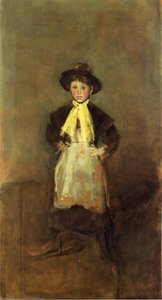
James Abbott McNeill Whistler’s "The Violet Note," painted in 1886, isn't a grand statement of narrative or dramatic action; it’s a carefully constructed tableau of quiet contemplation and the subtle poetry of everyday life. This intimate portrait captures a woman, her back turned to the viewer, engaged in the seemingly simple act of preparing for travel – a moment frozen in time that speaks volumes about Whistler’s core aesthetic philosophy: “art for art’s sake.” The painting immediately draws us in with its muted palette dominated by blues and greens, creating an atmosphere of subdued elegance and a sense of veiled mystery. It's a deliberate departure from the prevailing Victorian obsession with grand historical scenes or emotionally charged portraits, reflecting Whistler’s commitment to capturing the essence of beauty through form, color, and light rather than storytelling.
The Language of Form and Color: Whistler’s Aesthetic Vision
Whistler was deeply influenced by Japanese prints – particularly *ukiyo-e* – which emphasized flattened perspectives, bold outlines, and a focus on decorative elements. This influence is evident in the painting's composition; the figures are rendered with a sense of detachment, almost as if viewed through a slightly removed lens. The use of color is equally deliberate. Whistler favored a technique he called “tonal harmony,” prioritizing subtle gradations of tone over bright, saturated hues. Notice how the violet – hinted at in the title and subtly reflected in the arrangement of objects – acts as a unifying element, grounding the scene and lending it an air of sophisticated restraint. The careful placement of each object—the vase, the potted plant, the books—contributes to a carefully balanced visual rhythm, suggesting a considered aesthetic rather than a spontaneous one.
Symbolism in the Details: A Journey Within
Beyond its formal qualities, “The Violet Note” is rich with symbolic potential. The woman’s posture, leaning on her suitcase, immediately evokes travel and departure – but it's not a joyous or celebratory departure. There’s a hint of melancholy in her stance, suggesting perhaps a bittersweet farewell or the quiet solitude of a journey undertaken alone. The suitcase itself, placed squarely on the floor, is a potent symbol of both practicality and vulnerability. The books, stacked neatly together, could represent knowledge, experience, or even a longing for intellectual stimulation during her travels. Even the vase with its single bloom – a violet, no doubt – speaks to beauty, fragility, and the transient nature of life. Whistler wasn’t simply depicting a scene; he was layering it with subtle suggestions and inviting the viewer to project their own interpretations onto the canvas.
Historical Context: The Rise of Aestheticism
“The Violet Note” emerged during a pivotal moment in art history – the height of the Aesthetic movement. Whistler, along with figures like Oscar Wilde, rejected the didactic and moralistic tendencies of much 19th-century art, arguing that art should exist solely for its own beauty and pleasure. This philosophy challenged the established conventions of the time, leading to considerable controversy and criticism. Whistler’s work was often dismissed as “mere decoration,” but his insistence on prioritizing formal qualities over narrative content paved the way for modernism and profoundly influenced subsequent generations of artists. Understanding this context illuminates why "The Violet Note" is not a painting about *what* is happening, but rather about *how* it's being seen – a testament to Whistler’s dedication to capturing the essence of visual experience.
Bringing “The Violet Note” Home: A Reproduction for Your Space
TopImpressionists.com offers meticulously crafted hand-painted reproductions of "The Violet Note," allowing you to bring this evocative masterpiece into your own home or office. Our skilled artisans replicate Whistler’s tonal harmony and subtle details with exceptional precision, ensuring that the painting's atmosphere and symbolic depth are faithfully preserved. Whether you appreciate Whistler’s pioneering aestheticism or simply admire its quiet beauty, a reproduction of “The Violet Note” is a timeless addition to any collection – a reminder of the power of art to evoke emotion and inspire contemplation.
Perguntas e Respostas
Como "The Violet Note", de James Abbott McNeill Whistler conecta Aestheticism and Symbolism ao país de origem do artista?
"The Violet Note" foi criada por James Abbott McNeill Whistler, nascido em Estados Unidos, dentro do movimento Aestheticism and Symbolism. A origem do artista vincula a obra ao Aestheticism and Symbolism, tal como praticado por artistas de Estados Unidos.
De que forma o tema de "The Violet Note" se relaciona com os temas habituais de James Abbott McNeill Whistler?
Os temas recorrentes de James Abbott McNeill Whistler incluem aestheticism, european avant-garde, sensibility, mood, atmosphere, travel, preparation, journey; "The Violet Note" foca em woman, travel, packing, suitcase, vase, books, anticipation.
Onde posso encontrar um guia sobre "The Violet Note"?
Uma página de Ficha informativa está disponível para "The Violet Note", de James Abbott McNeill Whistler: uma ficha informativa imprimível sobre a obra, projetada para estudantes e uso em sala de aula.
Informações rápidas e quiz de arte
Sobre James Abbott McNeill Whistler

James Abbott McNeill Whistler
1834 - 1903, Estados Unidos
Biografia do Artista
A Vida Moldada pelo Esteticismo: O Mundo de James Abbott McNeill Whistler
James Abbott McNeill Whistler, nascido em Lowell, Massachusetts em 1834, foi uma figura perpetuamente em conflito com a convenção – um pintor que defendeu “a arte pela arte” durante uma era obcecada com narrativas moralizadoras. Sua vida inicial, marcada por frequentes mudanças de residência devido à carreira de engenheiro ferroviário de seu pai, inculcou nele um senso de adaptabilidade e exposição a ambientes diversos. Um breve e infeliz período em West Point provou ser inadequado para sua inclinação artística, seguido por trabalho com a Pesquisa Costeira e Geodésica dos EUA que, embora atrasasse, não extinguiu sua paixão crescente pela arte. Esses anos formativos foram caracterizados por um talento inato para o desenho e um desejo resoluto de trilhar seu próprio caminho como artista profissional, uma busca que o levaria eventualmente à travessia do Atlântico e ao coração da avant-garde europeia. As sementes da rebelião artística de Whistler foram plantadas cedo, nutrindo-se por uma alma que resistia à conformidade e abraçava a exploração estética acima de tudo.Inícios Parisienses e Cultivação do Estilo
O momento crucial na jornada artística de Whistler chegou com sua mudança para Paris em 1855. Lá, sob a tutela de Sébastien Bouré, ele aperfeiçoou suas habilidades em pintura a óleo, aquarela e gravura, absorvendo as influências dos pintores realistas franceses e da Escola Barbizon. No entanto, Whistler transcendeu rapidamente a mera imitação, desenvolvendo um estilo distinto caracterizado por harmonias tonais e efeitos atmosféricos. Ele não estava interessado em replicar a realidade; ao invés disso, buscava capturar sua *essência*, seus estados de espírito fugazes e nuances sutis. Este período marcou uma mudança crucial da precisão representacional para uma exploração da forma estética pura. Seus primeiros trabalhos já prenunciavam o delicado equilíbrio entre observação e abstração que definiria seu estilo maduro. Foi em Paris que Whistler começou a articular sua crença de que a arte deveria ser julgada apenas por suas qualidades estéticas, livre de narrativas didáticas ou moralizadoras – uma filosofia que se tornaria a pedra angular de sua prática artística e um traço definidor do movimento Estético.Nocturnes, Retratos e a Busca pela Harmonia
A visão artística de Whistler cristalizou-se em vários temas e escolhas estilísticas-chave. Ele defendeu o conceito de “a arte pela arte”, rejeitando narrativas carregadas de moral ou comentários sociais. Sua obra tornou-se um exercício na captura de nuances sutis de luz, cor e atmosfera – uma busca que levou a seus icônicos *Nocturnes*. Essas pinturas atmosféricas de cenas crepusculares, frequentemente retratando o Rio Tamisa à noite, não tinham como objetivo ser representações literais, mas sim impressões evocativas, estudos em harmonia tonal e humor. Ele empregava com frequência paletas limitadas e pinceladas delicadas, criando uma sensação de beleza etérea e contemplação silenciosa. Retratos também ocupavam um lugar central em sua prática, embora ele abordasse-os com uma sensibilidade única. Whistler não estava preocupado em capturar representações perfeitas; ao invés disso, concentrava-se na organização formal e nas relações tonais, tratando seus retratados como elementos composicionais dentro de um quadro estético cuidadosamente construído. Obras como *Arrangement in Grey and Black No. 1* – mais conhecida como *Whistler’s Mother* – demonstram essa abordagem perfeitamente, transformando um retrato familiar em uma imagem icônica da maternidade vitoriana através de seu uso magistral de forma e tom.Controvérsia, Influência e Legado Duradouro
A carreira de Whistler não foi isenta de controvérsias. A famosa ação judicial movida contra ele pelo crítico John Ruskin em 1878, desencadeada por *Nocturne in Black and Gold – The Falling Rocket*, tornou-se um momento marcante na história da arte. Whistler defendeu com sucesso sua autonomia artística, argumentando que suas pinturas não tinham como objetivo ser representações literais, mas sim arranjos estéticos de cor e forma. Este caso elevou seu perfil e desencadeou debates importantes sobre a natureza da crítica de arte e da liberdade artística. Além desta batalha legal, a influência de Whistler se estendeu amplamente. Ele foi profundamente inspirado por gravuras japonesas (ukiyo-e), que informaram seus princípios composicionais e sua ênfase em padrões decorativos, bem como o domínio tonal dos pintores espanhóis como Velázquez. Sua defesa de “a arte pela arte” impactou profundamente o movimento Estético na Inglaterra e nos Estados Unidos, abrindo caminho para o modernismo e desafiando as noções convencionais sobre o propósito da arte. Ele deixou um legado indelével na arte americana, inspirando gerações de artistas a abraçar abordagens formalistas e explorar o potencial expressivo da cor e da composição.Informações rápidas sobre James Abbott McNeill Whistler
- Artistic Movement Or Style: Tonalismo e Esteticismo
- Artists Or Movements Influenced By This Artist:
- Movimento Estético
- Modernismo
- Artists Who Influenced This Artist:
- Velázquez
- Xilogravuras japonesas
- Date Of Birth: 10 de julho de 1834
- Date Of Death: 17 de julho de 1903
- Full Name: James Abbott McNeill Whistler
- Nationality: Americano
- Notable Artworks:
- Mãe Whistler
- Nocturno em Azul e Prata
- Arranjo em Cinza e Preto No. 1
- Place Of Birth (City And Country): Lowell, Massachusetts
Obras Relacionadas


Explore obras de arte organizadas por temas, estilos e características.




James Abbott McNeill Whistler
The Violet Note
() ·
Com a moldura: · Pintura a óleo sobre linho feita à mão
Total