

 Visualizar na parede
 Compartilhar
 Compartilhar
 Detalhes
 Guia
Guia

 Baixar imagem
 Semelhantes
 Raio X
 Ver diaporama
 Q&A
Q&A Estatísticas
The Slum

- 91.0 x 71.0 cm


James Ferrier Pryde's "The Slum" (1916) captures a poignant Edinburgh alleyway scene, reflecting urban poverty and social commentary through atmospheric brushstrokes. Explore this evocative work of art.
 Ler mais
James Pryde (1866-1941): Pintor britânico conhecido por seus designs de pôsteres inovadores com "The Beggarstaffs" e paisagens arquitetônicas atmosféricas que exploram a emoção e o mistério, influenciando a arte gráfica do século XX.
Giclée / Impressão de Arte
Impressão giclée ou em tela de qualidade de museu, com produção rápida e opções flexíveis de acabamento. ( Comprar pintura feita à mão Alternar para Imagem Digital)




P118B €10

P118H €10

P118W €10

P438Z €10

P508JH €12

P508YH €12

P805H €10

P805Z €10

P919BZ €10

P919G €10

P919XJ €10

P959ZH €10

P968JZ €12

W106C €8

W218G €10

W218JH €8

W218Y €10

W307PJ €10

W316G €10

W316PJ €8

W316Y €10

W398PJ €8

W4111J €10

W500HY €15

W500JH €15

W692G €12

W849H €8

W940BG €15

W953PJ €8




Tamanho padrão
personalizado
CM
INCH
Escolha entre os nossos tamanhos pré-definidos que respeitam as proporções originais da obra de arte.
Loading sizes...

largura
altura
Insira a largura e a altura desejadas para se ajustarem à sua moldura ou parede. Uma impressão pode ser apenas cortada, nunca ampliada além da imagem original; portanto, um tamanho com proporções diferentes resultará na perda de parte da imagem. Enviamos uma maquete digital para sua aprovação antes de realizarmos a impressão. A imagem exibida nesta página não mostra o corte real — apenas a maquete o faz.
Entrega mundial () em 2 semanas, em vez das 4/5 semanas padrão. (31 Outubro)

Envio expresso gratuito para todo o mundo

Tela de Linho de Alta Qualidade

Seguro de transporte completo

Garantia de Reembolso de Impostos Alfandegários

Garantia de Fidelidade Cromática

Política de Devolução em 100 Dias (Apenas para Defeitos)

Garantia de reembolso de 100%

Oferta de desconto por quantidade
 A opção de vidro está disponível apenas para tamanhos inferiores a 110 cm

The Slum
Giclée / Impressão de Arte
Tamanho da Reprodução
-


Preço Total
€ 61
A Glimpse into Urban Decay: The Haunting Beauty of “The Slum”
James Ferrier Pryde’s “The Slum,” painted in 1916, isn't merely a depiction of a neglected corner of Edinburgh; it’s a profound meditation on poverty, social injustice, and the encroaching shadows of modernity. Born amidst the artistic ferment of Glasgow’s School of Art, Pryde developed a distinctive style—a masterful blend of atmospheric realism and subtle symbolism—that resonated deeply with the anxieties of his time. This painting, now housed in the Ashmolean Museum, offers a stark yet strangely beautiful portrayal of a working-class neighborhood grappling with hardship and neglect.
The scene unfolds within a narrow alleyway, dominated by a towering tenement building that seems to lean precariously towards the viewer. Pryde’s masterful use of light and shadow immediately establishes an unsettling mood. The muted palette—a symphony of grays, browns, and ochres—evokes a sense of dampness, decay, and oppressive gloom. Rain streaks down the walls, reflecting the weak light from unseen windows, while deep shadows conceal the lives within. The composition is deliberately claustrophobic, drawing the eye into the heart of the slum and emphasizing its suffocating atmosphere.
Technique and Artistic Influences
Pryde’s technique is characterized by a loose, expressive brushstroke—a hallmark of his work with the Beggarstaffs poster company. He eschews meticulous detail in favor of capturing the essence of the scene, prioritizing mood and atmosphere over photographic realism. The painting's texture is rich and layered, achieved through multiple thin applications of oil paint, creating a palpable sense of depth and physicality. There’s an undeniable influence from Whistler’s atmospheric style, particularly in Pryde’s ability to evoke emotion through color and light—a skill honed during his brief but formative time studying in Paris.
Furthermore, the painting subtly references classical architecture, most notably the Roman ruins of Pompeii. The building's form echoes the grandeur of ancient structures, suggesting a lost sense of order and beauty amidst the squalor. This juxtaposition—the crumbling tenements against the backdrop of classical imagery—serves as a poignant commentary on the decline of society and the erosion of values.
Symbolism and Social Commentary
“The Slum” is far more than a simple depiction of urban poverty; it’s a powerful social statement. Pryde wasn't simply documenting a physical space; he was exploring the human cost of industrialization and social inequality. The figures visible on the balcony—a small group of men, seemingly detached from the misery below—represent the indifference of the upper classes to the plight of their less fortunate neighbors. Their presence underscores the painting’s central theme: the isolation and marginalization experienced by those living in poverty.
The title itself is deliberately provocative, suggesting a deliberate confrontation with uncomfortable truths. Pryde's choice of "Slum" as the name for this work reflects his own artistic philosophy—a commitment to portraying the realities of life, even when they are unpleasant or challenging. It’s a stark reminder that beauty can be found in unexpected places, and that art has the power to expose injustice and provoke empathy.
A Timeless Masterpiece
“The Slum” remains a profoundly moving work of art—a testament to Pryde's artistic vision and his unwavering commitment to social justice. Its haunting atmosphere, evocative symbolism, and masterful technique continue to resonate with viewers today, prompting reflection on the enduring challenges of poverty, inequality, and the human condition. Reproductions of this powerful painting offer a unique opportunity to bring this poignant scene into your home or office, serving as a constant reminder of the importance of compassion and social responsibility.
Perguntas e Respostas
Com que idade James Ferrier Pryde criou "The Slum"?
Quando "The Slum" foi criada em 1916, James Ferrier Pryde — nascido(a) em 1866 — tinha 50 anos.
"The Slum", de James Ferrier Pryde é uma obra de arte conhecida?
"The Slum" é classificada como Recognized.
"The Slum", de James Ferrier Pryde, está em domínio público? E por quê?
O status de direitos autorais de "The Slum" - em domínio público — seus direitos autorais expiraram - decorre do falecimento do artista em 1941.
Biografia do Artista
A Life Etched in Atmosphere: The World of James Ferrier Pryde
James Ferrier Pryde, born on March 30, 1866, in Edinburgh, was a British artist whose work profoundly shaped the aesthetics of early 20th-century graphic design and painting. His life unfolded within a lineage steeped in artistic heritage – connected to the celebrated Scottish painters Robert Scott Lauder and James Eckford Lauder – nurturing an environment that valued creativity and intellectual exploration from his earliest years. Raised in Edinburgh, Pryde’s formal artistic training commenced at the Royal Scottish Academy between 1885 and 1888, providing him with a foundational understanding of technique and composition. This early education proved pivotal, laying the groundwork for a career characterized by an exceptional ability to capture atmosphere and emotion through his art. He was particularly influenced by the Glasgow School’s pioneering spirit, drawing inspiration from artists like James Guthrie and Edward Arthur Walton, whose innovative approaches resonated deeply with his own artistic sensibilities. A brief but formative period in Paris, studying under William-Adolphe Bouguereau at the Académie Julian, ultimately proved less aligned with Pryde's vision; the stifling atmosphere of the Parisian atelier prompted a swift return to Scotland, where he began to forge his distinct artistic path.The Beggarstaffs and a Revolution in Design
Pryde’s most enduring legacy stems from his collaborative partnership with William Nicholson, forming “The Beggarstaffs” in 1893. This union marked a watershed moment in the history of graphic design, ushering in a new era of visual communication characterized by boldness, theatricality, and a deliberate rejection of conventional norms. Prior to The Beggarstaffs, posters were often cluttered with illustrative elements, serving primarily as functional advertisements. Pryde and Nicholson, however, fundamentally reimagined the poster’s potential, stripping away superfluous details and embracing striking compositions, arresting imagery, and a dramatic sensibility. Their designs transcended mere commercial promotion; they became statements of artistic intent, elevating the status of poster art to that of legitimate visual expression. A key element of their approach was a conscious decision to eschew established design conventions, creating work that was both visually captivating and intellectually stimulating. The Beggarstaffs’ impact extended beyond posters, encompassing signboards and other graphic elements—all united by a shared commitment to innovation and artistic vision. Their partnership dissolved in 1899, yet the influence of The Beggarstaffs reverberates through the world of design to this day, shaping the aesthetics of countless contemporary works.Atmospheric Visions: A Painterly Language
While celebrated for his contributions to graphic design, Pryde’s true passion resided in painting. He developed a deeply personal style centered around atmospheric architectural scenes—images that transcended simple representation and instead explored the emotional resonance of space and time. These canvases rarely depict buildings as they appear in reality; rather, they are evocative explorations of mood, memory, and a sense of melancholy. Pryde’s technique is characterized by broad brushwork, dramatic lighting effects, and a deliberate blurring of lines between observation and imagination. His paintings frequently feature structures dwarfing the human figures within them, emphasizing our vulnerability against the weight of history and the passage of time. The influence of Giovanni Battista Piranesi's etchings—particularly his depictions of Roman ruins—is readily apparent in Pryde’s monumental compositions and fascination with decaying architecture. He wasn’t interested in precise replication; instead, he sought to capture the *feeling* of a place – its history, its secrets, and its inherent sadness. His paintings often possess an almost dreamlike quality, inviting viewers into a realm where reality and imagination intertwine.A Multifaceted Artist: Stagecraft and Recognition
Pryde’s artistic pursuits extended beyond painting and graphic design. He briefly pursued a career as an actor between 1894 and 1899, a period that undoubtedly informed his theatrical sensibility and understanding of spatial dynamics. This foray into the performing arts also brought him into contact with influential figures like Edward Gordon Craig, who recognized Pryde’s exceptional talent as a painter despite acknowledging his limitations as an actor. He became actively involved in artistic societies, becoming an associate of the International Society of Sculptors, Painters and Gravers in 1901 and later serving as its vice-president in 1921. In 1930, he brought his visual artistry to the stage, designing sets for Paul Robeson’s production of *Othello* at the Savoy Theatre, demonstrating a versatility that extended beyond the canvas. Despite holding only two solo exhibitions during his lifetime – one at the Baillie Gallery in 1911 and another at the Leicester Galleries in 1933 – Pryde received recognition from patrons like Viscountess Cowdray and was lauded by critics such as Frank Rutter, who described him as “stupendous.” His work continues to be studied and appreciated for its unique blend of artistic skill and emotional depth.A Lasting Legacy
James Ferrier Pryde passed away on February 24, 1941, in London. Though he didn’t align himself with any specific artistic movement, his distinctive style and contributions to early 20th-century art are increasingly recognized as significant. A memorial exhibition held in 1949, touring Edinburgh, Brighton, and London, helped revive interest in his work. While exhibitions of his paintings remain relatively infrequent, a growing number of his works are held in public collections, ensuring that his atmospheric visions continue to captivate audiences. Pryde’s legacy rests not only on the beauty of his individual artworks but also on the profound impact of The Beggarstaffs' innovative graphic design, which continues to inspire artists and designers today. He remains a compelling figure—a painter who dared to explore the emotional power of architecture and a designer who helped redefine the very language of visual communication.
James Ferrier Pryde
1866 - 1941 , Reino Unido
Dados Rápidos
- Artistic Movement Or Style: Design gráfico, Visões atmosféricas
- Artists Or Movements Influenced By This Artist:
- Nicholson
- n"Design gráfico"] }
- Date Of Birth: 30 Mar 1866
- Date Of Death: 24 Feb 1941
- Full Name: James Ferrier Pryde
- Nationality: Britânico
- Notable Artworks:
- Ruína com Figura
- n"A Casa Assombrada"], "Artists who influenced this artist": ["Guthrie", "Walton",
- Whistler
- Bouguereau
- Place Of Birth: Edinburgh, Reino Unido
Artigos Relacionados
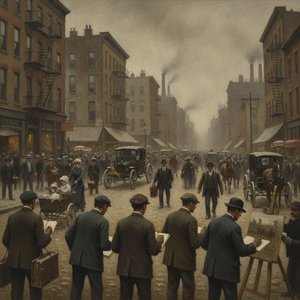
The Ashcan School: Capturing the Raw, Unfiltered Soul of Urban Life through American Realism
Discover the raw beauty of the Ashcan School. Explore how masters like Bellows and Henri captured the gritty, vibrant soul of early 20th-century New York through profound American Realism and evocative urban landscapes.
Explore obras de arte organizadas por temas, estilos e características.


