

 Visualizar na parede
 Compartilhar
 Compartilhar
 Detalhes
 Guia
Guia

 Baixar imagem
 Semelhantes
 Raio X
 Ver diaporama
 Perguntas e Respostas
 Estatísticas
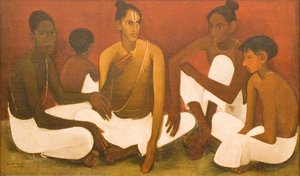
Mother and Child

- 465.0 x 1165.0 cm


Experience the simple elegance of Jamini Roy's Mother and Child, capturing Bengali folk spirit with timeless grace; discover this masterpiece today.
 Ler mais
Descubra Jamini Roy (1887-1972), pintor modernista indiano fundamental. Explore seu estilo ousado de inspiração folclórica, cores vibrantes e temas de vida rural, mitologia e retratos. Uma figura chave da arte indiana.
A obra de arte exibida nesta página é protegida por leis de direitos autorais, o que significa que não podemos criar ou vender legalmente uma reprodução idêntica. Esta proteção é aplicada por meio de acordos internacionais, tais como a Convenção de Berna e pelas leis nacionais, incluindo as estabelecidas por Lei de Direitos Autorais dos EUA - Título 17.
Este método cumpre plenamente as regulamentações de direitos autorais, pois não envolve a cópia ou duplicação da obra protegida. Em vez disso, trata-se de uma reinterpretação criativa — uma nova pintura que é influenciada pela original, mas não idêntica a ela.
Giclée / Impressão de Arte
Impressão giclée ou em tela de qualidade de museu, com produção rápida e opções flexíveis de acabamento. ( Comprar pintura feita à mão Alternar para Imagem Digital)




P118B €10

P118H €10

P118W €10

P438Z €10

P508JH €12

P508YH €12

P805H €10

P805Z €10

P919BZ €10

P919G €10

P919XJ €10

P959ZH €10

P968JZ €12

W106C €8

W218G €10

W218JH €8

W218Y €10

W307PJ €10

W316G €10

W316PJ €8

W316Y €10

W398PJ €8

W4111J €10

W500HY €15

W500JH €15

W692G €12

W849H €8

W940BG €15

W953PJ €8




Tamanho padrão
personalizado
CM
INCH
Escolha entre os nossos tamanhos pré-definidos que respeitam as proporções originais da obra de arte.
Loading sizes...

largura
altura
Insira a largura e a altura desejadas para se ajustarem à sua moldura ou parede. Uma impressão pode ser apenas cortada, nunca ampliada além da imagem original; portanto, um tamanho com proporções diferentes resultará na perda de parte da imagem. Enviamos uma maquete digital para sua aprovação antes de realizarmos a impressão. A imagem exibida nesta página não mostra o corte real — apenas a maquete o faz.
Entrega mundial () em 2 semanas, em vez das 4/5 semanas padrão. (7 Novembro)

Envio expresso gratuito para todo o mundo

Tela de Linho de Alta Qualidade

Seguro de transporte completo

Garantia de Reembolso de Impostos Alfandegários

Garantia de Fidelidade Cromática

Política de Devolução em 100 Dias (Apenas para Defeitos)

Garantia de reembolso de 100%

Oferta de desconto por quantidade
 A opção de vidro está disponível apenas para tamanhos inferiores a 110 cm

Mother and Child
Giclée / Impressão de Arte
Tamanho da Reprodução
-


Preço Total
€ 62
The Enduring Embrace: A Study in Bengali Folk Spirit
To stand before Jamini Roy's depiction of Mother and Child is to step across the threshold of colonial influence and into the vibrant, deeply rooted heart of Bengal’s cultural soul. This painting is far more than a mere portrait; it is an eloquent testament to cultural resilience. While Roy initially honed his craft mastering the techniques of European Academic realism at the Government School of Art in Calcutta, the very act of creation became an act of profound artistic rebellion. He consciously shed the polished veneer of Western tradition, channeling instead the raw, immediate energy found in Bengal’s indigenous art forms—the earthy narratives of pat paintings and the intricate storytelling etched into temple terracotta reliefs.
The scene itself captures a moment suspended in time: an intimate tableau where connection is palpable. The mother tenderly guides her child, their hands resting upon one another’s shoulders in a gesture of profound mutual support. This central bond radiates warmth, yet the composition expands beyond this core pair. Peripheral figures populate the space, grounding the loving interaction within a larger community setting, all framed by the suggestion of an outdoor environment marked by the presence of foliage.
Stylistic Echoes and Folk Simplicity
What immediately draws the discerning eye is Roy’s masterful simplification of form. His technique eschews academic verisimilitude for something far more primal and emotionally resonant. The lines employed are a beautiful marriage of sweeping curves and deliberate angles, lending the figures a stylized grace that speaks directly to folk aesthetics. This stylistic choice was not merely decorative; it was ideological. By embracing the visual language of village life—the subjects often drawn from Santhal women—Roy anchored his art in the tangible reality of rural Bengali existence. The resulting flatness and bold outlines give the work an immediate, almost graphic power that transcends passing trends.
For those considering a reproduction for your space, understanding this stylistic commitment is key; it promises an artwork with undeniable character, far removed from sterile imitation.
Symbolism of Connection and Identity
At its heart, Mother and Child functions as a powerful allegory. The mother-child dynamic symbolizes nurturing, continuity, and the passing down of cultural memory. In the context of Roy’s life, this symbolism deepened: it represented the preservation of Bengali identity against external pressures. The figures are not just connected physically; they are linked by an unbroken thread of tradition and belonging. The inclusion of other community members suggests that this intimate moment is witnessed, supported, and woven into the fabric of a larger cultural tapestry.
The emotional impact is one of deep comfort mixed with quiet strength—a feeling that resonates universally, making it a centerpiece capable of elevating any room from merely decorated to truly soulful.
A Legacy in Color and Line
Jamini Roy’s genius lies in his ability to synthesize high artistic training with the vernacular spirit. The resulting work possesses an elegance that is simultaneously rustic and sophisticated. When viewing this piece, one appreciates the deliberate economy of line—every curve serves a narrative purpose. It invites contemplation on what truly defines humanity: Is it perfect anatomical rendering, or is it the shared glance, the guiding hand, the enduring bond? This painting argues passionately for the latter.
Owning this piece, or a high-quality reproduction capturing its essence, means bringing home not just paint on canvas, but a vibrant echo of Bengal’s artistic soul—a celebration of life's most fundamental and beautiful connections.
Perguntas e Respostas
Quem criou "Mother and Child" e em que ano?
"Mother and Child" foi criado por Jamini Nath Roy em 1920.
"Mother and Child" apresenta contrastes fortes entre luz e sombra?
O nível de contraste de "Mother and Child", de Jamini Nath Roy é Serene.
Para que tipo de uso é recomendada uma reprodução de "Mother and Child", de Jamini Nath Roy?
A recomendação de uso para uma impressão de "Mother and Child" é Focal.




Biografia do Artista
Jamini Roy foi um renomado pintor indiano, nascido em 11 de abril de 1887, em Belaitore, Bengala Ocidental. Ele é considerado uma das figuras mais importantes da arte moderna indiana, com um estilo artístico caracterizado pela simplicidade, elegância e uma conexão profunda com a arte folclórica indiana.
Juventude e Formação
Roy nasceu no seio de uma família de proprietários de terras moderadamente próspera. Foi criado em um ambiente de classe média comum, repleto de amor pela arte, o que influenciaria decisivamente suas escolhas futuras. Aos 16 anos, mudou-se para Calcutá para estudar no Government College of Art, onde teve a honra de ser ensinado por Abanindranath Tagore, um proeminente artista e educador indiano.Estilo Artístico e Influências
O estilo de Roy foi profundamente influenciado pelas pinturas Kalighat, uma forma de arte folclórica indiana. Embora também tenha buscado inspiração na arte moderna europeia, ele acabou por rejeitar as tradições ocidentais para se concentrar em sua própria herança cultural. Suas pinturas são marcadas pela simplicidade, pela bidimensionalidade e pelo uso de cores vibrantes e audaciosas. Algumas de suas obras mais notáveis incluem:- Retrato de uma jovem, que demonstra sua habilidade em capturar a essência da arte folclórica indiana.
- Buste de Francoise, uma pintura que evidencia sua maestria no retrato.
- O Pintor e seu Modelo, uma obra que destaca seu interesse em explorar a relação entre o artista e o seu tema.
Prêmios e Reconhecimento
Em 1954, Roy foi agraciado com o Padma Bhushan, uma das mais altas honrarias civis da Índia. Ele também foi membro da Lalit Kala Akademi, uma prestigiada instituição de arte na Índia.Legado e Impacto
A contribuição de Roy para a arte moderna indiana é imensurável. Seu compromisso em preservar as tradições da arte folclórica indiana inspirou gerações de artistas. Hoje, suas pinturas podem ser encontradas em museus e coleções particulares ao redor do mundo, incluindo o Museu Nacional da Coreia e o Government College of Art. Para mais informações sobre a vida e obra de Jamini Roy, visite TopImpressionists.com ou a Wikipedia. Suas pinturas continuam a inspirar amantes da arte e estudiosos, oferecendo um vislumbre único do universo da arte moderna indiana.
Jamini Nath Roy
1887 - 1972 , Índia
Dados Rápidos
- Artistic Movement Or Style: Arte Popular Bengali
- Artists Or Movements Influenced By This Artist: ['Pintura Kalighat']
- Artists Who Influenced This Artist: ['Abanindranath Tagore']
- Date Of Birth: 11 de abril de 1887
- Date Of Death: 1972
- Full Name: Jamini Roy
- Nationality: Indiano
- Notable Artworks:
- Retrato de uma Jovem
- Buste de Françoise
- O Pintor e seu Modelo
- Place Of Birth: Belaitore, Índia
Artigos Relacionados

The Psychology of the Palette: Decoding Roy Lichtenstein's Bold Color Theory
Explore the profound psychological depth of Roy Lichtenstein's color theory. Discover how his use of primary colors and Ben-Day dots revolutionized modern art, transforming mass media imagery into sophisticated fine art for the discerning collector.