Ateliê — Envio gratuito para todo o mundo — Entrega em 2–6 semanas
      Visualizar em escala Visualizar em RA Encomendar reprodução pintada à mão Ver Imagem Digital Enviar
      Ver detalhes Guia de Obras do Aluno Adicionar aos favoritos Baixar imagem Semelhantes Raio X Apresentação de slides Estatísticas

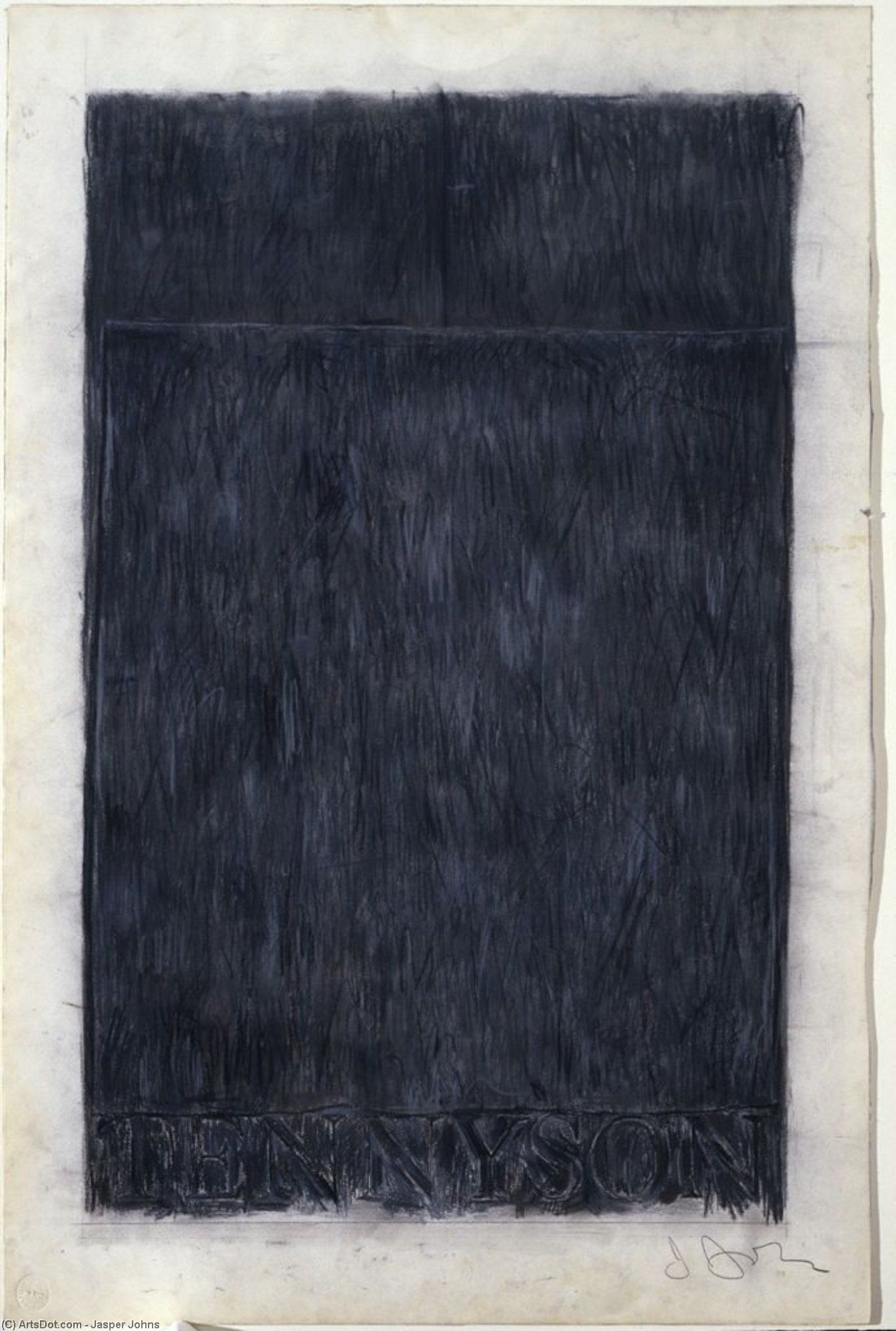
      Tennyson

      Jasper Johns' Tennyson is a haunting black and white painting embodying Abstract Expressionism’s moodiness through an intricate geometric design, reflecting the artist's exploration of identity and American iconography.

      Descubra Jasper Johns (1930), pioneiro de Pop & Expressionismo Abstrato! Explore obras icônicas como 'A Bandeira', mapas e alvos – redefinindo a arte moderna.

      A obra de arte exibida nesta página é protegida por leis de direitos autorais, o que significa que não podemos criar ou vender legalmente uma reprodução idêntica. Esta proteção é aplicada por meio de acordos internacionais, tais como a Convenção de Berna e pelas leis nacionais, incluindo as estabelecidas por Lei de Direitos Autorais dos EUA - Título 17.

      Este método cumpre plenamente as regulamentações de direitos autorais, pois não envolve a cópia ou duplicação da obra protegida. Em vez disso, trata-se de uma reinterpretação criativa — uma nova pintura que é influenciada pela original, mas não idêntica a ela.

      Giclée / Impressão de Arte

      Impressão giclée ou em tela de qualidade de museu, com produção rápida e opções flexíveis de acabamento. ( Encomendar reprodução pintada à mão Ver Imagem Digital)

      Corner sample of the P118B picture frame: moulded polystyrene, 5 cm wide and 3 cm thick
      P118B €10
      Corner sample of the P118H picture frame: moulded polystyrene, 5 cm wide and 3 cm thick
      P118H €10
      Corner sample of the P118W picture frame: moulded polystyrene, 5 cm wide and 3 cm thick
      P118W €10
      Corner sample of the P438Z picture frame: moulded polystyrene, 5.5 cm wide and 3.5 cm thick
      P438Z €10
      Corner sample of the P508JH picture frame: moulded polystyrene, 7 cm wide and 3.5 cm thick
      P508JH €12
      Corner sample of the P508YH picture frame: moulded polystyrene, 7 cm wide and 3.5 cm thick
      P508YH €12
      Corner sample of the P805H picture frame: moulded polystyrene, 5 cm wide and 3.5 cm thick
      P805H €10
      Corner sample of the P805Z picture frame: moulded polystyrene, 5 cm wide and 3.5 cm thick
      P805Z €10
      Corner sample of the P919BZ picture frame: moulded polystyrene, 7 cm wide and 3.5 cm thick
      P919BZ €10
      Corner sample of the P919G picture frame: moulded polystyrene, 7 cm wide and 3.5 cm thick
      P919G €10
      Corner sample of the P919XJ picture frame: moulded polystyrene, 7 cm wide and 3.5 cm thick
      P919XJ €10
      Corner sample of the P959ZH picture frame: moulded polystyrene, 5 cm wide and 3 cm thick
      P959ZH €10
      Corner sample of the P968JZ picture frame: moulded polystyrene, 6 cm wide and 4 cm thick
      P968JZ €12
      Corner sample of the W106C picture frame: solid wood, 5 cm wide and 3 cm thick
      W106C €8
      Corner sample of the W218G picture frame: solid wood, 5 cm wide and 3 cm thick
      W218G €10
      Corner sample of the W218JH picture frame: solid wood, 5 cm wide and 3 cm thick
      W218JH €8
      Corner sample of the W218Y picture frame: solid wood, 5 cm wide and 3 cm thick
      W218Y €10
      Corner sample of the W307PJ picture frame: solid wood, 6 cm wide and 3 cm thick
      W307PJ €10
      Corner sample of the W316G picture frame: solid wood, 6 cm wide and 3 cm thick
      W316G €10
      Corner sample of the W316PJ picture frame: solid wood, 6 cm wide and 3 cm thick
      W316PJ €8
      Corner sample of the W316Y picture frame: solid wood, 6 cm wide and 3 cm thick
      W316Y €10
      Corner sample of the W398PJ picture frame: solid wood, 5 cm wide and 3 cm thick
      W398PJ €8
      Corner sample of the W4111J picture frame: solid wood, 6.5 cm wide and 3.5 cm thick
      W4111J €10
      Corner sample of the W500HY picture frame: solid wood, 7 cm wide and 5 cm thick
      W500HY €15
      Corner sample of the W500JH picture frame: solid wood, 7 cm wide and 5 cm thick
      W500JH €15
      Corner sample of the W692G picture frame: solid wood, 8 cm wide and 4 cm thick
      W692G €12
      Corner sample of the W849H picture frame: solid wood, 5 cm wide and 3 cm thick
      W849H €8
      Corner sample of the W940BG picture frame: solid wood, 7.5 cm wide and 4.5 cm thick
      W940BG €15
      Corner sample of the W953PJ picture frame: solid wood, 6 cm wide and 3.5 cm thick
      W953PJ €8

      Padrão
      sob medida
      CM
      INCH

      Escolha entre os nossos tamanhos pré-definidos que respeitam as proporções originais da obra de arte.

      largura
      altura

      Você pode inserir suas próprias dimensões para se ajustar a uma moldura ou espaço específico. Se o tamanho selecionado não corresponder às proporções da imagem original, iremos recortar a obra de arte ou estender a imagem com uma borda espelhada ou preenchimento sólido. Um mockup digital será enviado para sua aprovação antes do início da produção.
      Por favor, observe que a visualização na tela não reflete o recorte ou a extensão real. Apenas o mockup mostrará com precisão a composição final.
      Embora tamanhos personalizados estejam disponíveis, recomendamos selecionar uma dimensão da lista predefinida para preservar as proporções originais.

      Entrega mundial () em 2 semanas, em vez das 4/5 semanas padrão. (10 Outubro)

      Envio expresso gratuito para todo o mundo
      Tela de Linho Premium
      Seguro de transporte total
      Garantia de Reembolso de Impostos Alfandegários
      Garantia de Fidelidade de Cor
      Política de Devolução em 100 Dias (Apenas para Defeitos)
      Garantia de reembolso de 100%
      Desconto para múltiplas unidades

      Preço Total

      € 59

      Tennyson

      Giclée / Impressão de Arte

      Dimensões da Reprodução

      -

      Preço Total

      € 59

      Detalhes Rápidos

      • Year: 1959
      • Title: Tennyson
      • Notable elements or techniques: Symbolic imagery
      • Subject or theme: Iconography
      • Movement: Abstract Expressionism
      • Artistic style: Geometric abstraction

      Teste de Conhecimentos Artísticos

      Cada pergunta possui apenas uma resposta correta.

      Questão 1:
      What artistic movement is Jasper Johns' Tennyson painting associated with?
      Questão 2:
      In what year was Tennyson created by Jasper Johns?
      Questão 3:
      Tennyson utilizes a predominantly ____ background.
      Questão 4:
      Jasper Johns' Tennyson is considered an example of Pop Art due to its focus on ____.
      Questão 5:
      What technique is most prominently employed in Tennyson?

      A Portrait of Quiet Intensity: The Enigmatic World of Jasper Johns' Tennyson

      In the vast landscape of twentieth-century modernism, few works possess the haunting, meditative quality found in Jasper Johns’ “Tennyson,” completed in 1959. This monumental canvas serves as a profound invitation into a realm where recognizable forms dissolve into evocative suggestion, standing as a pivotal bridge between the raw, emotional energy of Abstract Expressionism and the burgeoning intellectual rigor of Pop Art. Rather than presenting a literal depiction, the painting offers a subtle, atmospheric experience that rewards the patient observer with its deep, layered mysteries.

      The technique employed by Johns in this piece is nothing short of meticulous, utilizing the ancient and demanding medium of encaustic. By mixing pigment with hot wax and layering thin sheets onto the canvas under intense heat, Johns achieved a remarkable textural quality that breathes life into the surface. Subtle ridges and depressions emerge from the dark, charcoal-gray background, creating a tactile landscape that hints at hidden depths beneath the skin of the painting. This deliberate restraint in color and form stands in stark contrast to the sprawling, gestural brushstrokes of his contemporaries like Pollock, favoring instead a sense of precision, control, and profound stillness.

      Symbolism and the Echoes of Memory

      The title of the work serves as a poetic key, referencing Alfred Lord Tennyson’s poignant poem “In Memoriam A Lay of Remembrance.” Through this connection, the painting transcends its abstract appearance to explore themes of grief, loss, and the enduring, often fragmented nature of memory. Johns avoids explicit figures or landscapes, opting instead for a visual language where the dark, somber palette symbolizes sorrow and obscurity. The textured surface of the wax becomes a metaphor for the way impressions linger in the mind—fragmented, layered, and occasionally obscured by the passage of time.

      For the collector or the interior designer, “Tennyson” offers more than mere decoration; it provides an emotional anchor for a space. Its subdued palette and monochromatic depth allow it to integrate seamlessly into sophisticated environments, acting as a focal point for contemplation. The painting does not demand immediate attention through loud colors but rather invites a slow, rhythmic engagement, making it an ideal piece for those seeking to infuse a room with a sense of intellectual depth, resilience, and quiet beauty. It remains a testament to the power of abstraction to convey the most complex human experiences through nothing more than light, shadow, and texture.

      Perguntas e Respostas

      A qual artista "Tennyson" é atribuída?

      "Tennyson" é atribuída a Jasper Johns.

      Posso visualizar "Tennyson" de Jasper Johns antes de fazer o pedido?

      Uma prévia de "Tennyson" de Jasper Johns está disponível na página de Visualização da obra.

      Quão intensas são as cores de "Tennyson"?

      "Tennyson" de Jasper Johns é registrado com uma saturação Muted e uma intensidade Monochromatic.

      Qual é a data de criação de "Tennyson" de Jasper Johns?

      A criação de "Tennyson" de Jasper Johns data de 1959.

      Qual era a idade de Jasper Johns quando "Tennyson" foi criada?

      Jasper Johns criou "Tennyson" aos 29 anos. O artista nasceu em 1930 e a obra data de 1959.

      Que atmosfera possui "Tennyson"?

      O clima geral de "Tennyson" de Jasper Johns é Elegant. O clima descreve a atmosfera geral da obra.

      Como "Tennyson" equilibra luz e sombra?

      Os valores registrados para "Tennyson" de Jasper Johns são: balanced de brilho, Gentle Luminance de luminância.


      Biografia do Artista

      A Life Painted in Symbols: The World of Jasper Johns

      Jasper Johns emerged as a pivotal figure in the landscape of American art, bridging the emotive intensity of Abstract Expressionism with the burgeoning Pop Art movement that would soon redefine artistic boundaries. Born in Augusta, Georgia, in 1930, his early life was marked by a sense of displacement following his parents’ divorce, an experience that perhaps subtly informed his later explorations of identity and belonging within the context of American iconography. His formative years unfolded across various schools before he briefly attended the University of South Carolina, but it wasn't until his move to New York City in 1949 that Johns truly began to forge his artistic path. A period of service during the Korean War further shaped his perspective, exposing him to a world far removed from the burgeoning art scene he was eager to embrace upon his return.

      Breaking with Abstraction: The Dawn of a New Visual Language

      The post-war American art world was dominated by Abstract Expressionism—a style characterized by spontaneous gesture and deeply personal emotional expression. While initially influenced by this movement, Johns felt compelled to move beyond its purely non-representational approach. He sought a new visual language, one that incorporated recognizable imagery not as illustrations but as vehicles for deeper contemplation. This wasn’t simply about *depicting* the world; it was about questioning how we perceive and interpret symbols within it. Key influences guided his departure: Marcel Duchamp's radical readymades challenged conventional notions of art-making, demonstrating that everyday objects could be elevated to the status of art through their presentation, while the emphasis on materiality in Abstract Expressionism informed Johns’ early techniques. However, it was the everyday objects and potent symbols of American culture—flags, targets, maps, numbers—that truly became central to his artistic vocabulary. He wasn’t interested in escaping representation; he wanted to dissect it, layer it with meaning, and ultimately reveal its inherent ambiguities. Johns' early work often involved layering paint over collage elements – newspaper clippings, photographs, and other found materials – creating a complex interplay of image and texture.

      Iconic Images: Flags, Targets, and the Language of Symbols

      Johns’ breakthrough works arrived in the mid-1950s, instantly establishing him as a force to be reckoned with. His paintings of flags, most notably *Flag* (1954–55), were not patriotic declarations but rather investigations into the very nature of representation. Rendered in a semi-abstract style, using encaustic—pigment mixed with hot wax—and collage techniques, these flags weren’t simply images; they were textured surfaces laden with symbolic weight. The *Flag* painting itself is particularly complex, incorporating elements of a map and a military target, prompting viewers to consider the multiple layers of meaning embedded within a seemingly simple symbol. Similarly, his series of targets—starting in 1958—explored themes of visibility, danger, and the relationship between perception and reality. The stark simplicity of the bullseye contrasted with the meticulous detail of the surrounding paint application, creating a tension that invited contemplation. *Map* (1961), with its fragmented and layered depictions of the United States, delved into themes of geography, identity, and the complexities of national representation. Works like *False Start* (1959) demonstrated his experimentation with language and visual codes, creating complex compositions that challenged viewers to decipher their underlying meanings. Even *White Flag* (1955), a seemingly simple monochrome canvas, prompted profound questions about absence, surrender, and the very act of seeing.

      A Legacy of Influence: Paving the Way for Pop Art and Beyond

      Jasper Johns’ impact on the trajectory of modern art is undeniable. He played a crucial role in the transition from Abstract Expressionism to Pop Art, challenging the prevailing aesthetic norms and opening up new avenues for artistic exploration. By embracing recognizable imagery, he paved the way for artists like Andy Warhol and Roy Lichtenstein, who would further blur the lines between high art and popular culture. His close collaboration with Robert Rauschenberg was also profoundly influential, fostering a spirit of experimentation and pushing the boundaries of artistic practice. Johns’ work often incorporated elements of Neo-Dada, referencing found objects and challenging traditional notions of authorship and originality. He wasn't simply replicating images; he was transforming them through his unique process—building up layers of paint, collage, and other materials to create works that were both visually arresting and intellectually stimulating. Johns’ enduring legacy lies not only in the iconic images he created but also in the profound questions he raised about the nature of representation, symbolism, and the very essence of what it means to be an artist in a rapidly changing world.

      Recognition and Enduring Impact

      Throughout his illustrious career, Jasper Johns has received numerous accolades, including a Golden Lion at the Venice Biennale in 1988, the National Medal of Arts in 1990, and the Presidential Medal of Freedom in 2011. His works are held in major museum collections worldwide—the Museum of Modern Art, the Whitney Museum of American Art, the Metropolitan Museum of Art in New York, and Tate Modern in London, to name just a few. He has been the subject of countless exhibitions, cementing his position as one of the most important figures in 20th and 21st-century art. Beyond his paintings, Johns’ contributions extend to sculpture and printmaking, demonstrating his versatility and unwavering commitment to artistic innovation. He remains an active artist, constantly evolving his approach and solidifying his place as a vital voice in contemporary art.

      Jasper Johns

      Jasper Johns

      1930 - , Estados Unidos da América

      Informações Rápidas

      • Artistic Movement Or Style: Pop e Expressionismo Abstrato
      • Artists Or Movements Influenced By This Artist: ['Andy Warhol']
      • Artists Who Influenced This Artist: ['Marcel Duchamp']
      • Date Of Birth: 15 de maio de 1930
      • Full Name: Jasper Johns
      • Nationality: Americano
      • Notable Artworks:
        • Flag
        • Target
        • Mapa
      • Place Of Birth: Augusta, EUA
      Explore obras de arte organizadas por temas, estilos e características.
      © TopImpressionists.com — Todos os direitos reservados  ·  100% Pintado à Mão · Satisfação Garantida · Frete Grátis para Todo o Mundo
      VISA MASTERCARD