

Exibido: · Com a moldura:
 Visualizar na parede
 Compartilhar
 Compartilhar
 Detalhes
 Guia
Guia

 Baixar imagem
 Semelhantes
 Raio X
 Ver diaporama
 Perguntas e Respostas
 Estatísticas

€ 240
Reprodução em Óleo Feita à Mão
Óleo sobre tela pintado à mão no tamanho e moldura de sua escolha, feito sob encomenda pelos nossos artistas. ( Alternar para Impressão Alternar para Imagem Digital)
Tamanho
·Tamanho padrão
personalizado
CM
INCH
Escolha entre os nossos tamanhos pré-definidos que respeitam as proporções originais da obra de arte.
Carregando tamanhos...

largura
altura
Insira a largura e a altura desejadas para se ajustarem à sua moldura ou parede. Como esta obra é pintada à mão, para um tamanho com proporções diferentes, o artista poderá pintar um pouco mais ao redor da imagem ou reduzir ligeiramente a composição — você escolhe. Enviamos uma maquete digital para sua aprovação antes de iniciar a pintura. A imagem exibida nesta página não representa o resultado real — apenas a maquete mostra o resultado final.
 Leia mais
Finalizar
·
Branco €1

Bordas esfumaçadas €1

Bordas estendidas €1

P118B €10

P118H €10

P118W €10

P438Z €10

P508JH €12

P508YH €12

P805H €10

P805Z €10

P919BZ €10

P919G €10

P919XJ €10

P959ZH €10

P968JZ €12

W106C €8

W218G €10

W218JH €8

W218Y €10

W307PJ €10

W316G €10

W316PJ €8

W316Y €10

W398PJ €8

W4111J €10

W500HY €15

W500JH €15

W692G €12

W849H €8

W940BG €15

W953PJ €8

H24-GOLD €30

H24-SILVER €30

H36-GOLD €45

H36-SILVER €45
Enviado em um tubo protetor, pronto para ser emoldurado por você.
Extras
opcionalO que os extras incluem?
Exemplos do que pode ser alterado: Substituir o rosto pela foto do cliente; Adicionar um animal de estimação (ex: substituir gato por cachorro); Incluir uma mensagem oculta no fundo; Alterar a paisagem ou elementos do fundo.
Após o pedido, a equipe da TopImpressionists.com enviará um e-mail ao cliente para instruções e fornecerá uma prévia da montagem
Após o pedido, a equipe da TopImpressionists.com enviará um e-mail ao cliente para instruções e fornecerá uma prévia da montagem
Entrega mundial () em 3 a 4 semanas, em vez das 5 semanas padrão. (7 Novembro). Sem comprometer a qualidade.
Verniz de Proteção
Etiqueta de identificação
Detalhes da Placa de Bronze Gravada
This elegant plaque features the artist's name and the title of the artwork, finely engraved for a timeless presentation.
It is made from bronze with a refined, elegant finish. The text is precisely laser-engraved for a sharp and permanent result. Measuring 9x2 cm, the plaque is compact yet easy to read. It's built to be durable and scratch-resistant, offering a professional, museum-quality look. Mounting is simple thanks to the included adhesive backing.
Detalhes da Placa de Acrílico Transparente
The plaque includes essential engraved details such as the artist's name, the title of the artwork, the date it was created, the type of media used-like oil on canvas or watercolor-a brief description of the piece, and a QR code that links to the complete artwork information.
It is crafted from clear acrylic, offering a sleek, modern appearance. The text is UV-engraved in black to ensure strong visual contrast. With a size of 10x15 cm, it ensures optimal readability. It comes equipped with two metal hooks for secure wall mounting. The plaque is designed to be weather-resistant, making it suitable for various environments, and it includes interactive features that work seamlessly with smartphone scanning.
Detalhes da Placa de Acrílico Preto
This elegant plaque includes engraved information such as the artist's name, the title of the artwork, the date it was created, the type of media used (like oil on canvas or watercolor), a short description of the artwork, and a QR code for quick access to more information.
The plaque itself is made from refined black acrylic with a premium finish. The text is laser-engraved in white for high contrast and readability. Its size is 10x15 cm, designed to be easy to read. It comes with two metal hooks for professional mounting. The design is sleek and fits any interior style. It is also weather-resistant and durable, with built-in digital integration for mobile compatibility.
A opção de vidro está disponível apenas para tamanhos inferiores a 110 cm
 A opção de vidro está disponível apenas para tamanhos inferiores a 110 cm
- Envio expresso gratuito para todo o mundo
- Tela de Linho de Alta Qualidade
- Seguro de transporte completo
- Garantia de Reembolso de Impostos Alfandegários
- Garantia de Fidelidade Cromática
- Política de Devolução em 100 Dias (Apenas para Defeitos)
- Garantia de reembolso de 100%
- Oferta de desconto por quantidade


Descrição do Item
Biografia do Artista
Descubra Jean-Baptiste-Camille Corot (1796-1875), mestre das paisagens atmosféricas que une Neoclassicismo e Impressionismo. Explore suas pinturas serenas e sua influência duradoura na história da arte.
Sobre a pintura
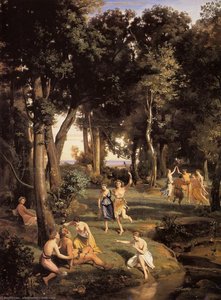
A Moment Frozen in Time: Jean-Baptiste Camille Corot’s Silenus
Jean-Baptiste Camille Corot (1796 – 1875), arguably France's foremost landscape painter of the Romantic era, gifted us with “Silenus,” a masterpiece that transcends mere depiction and delves into the very essence of pastoral tranquility. Painted in 1838 during his prolific period exploring the Fontainebleau Forest near Paris, this canvas embodies Corot’s signature style – characterized by luminous tonal harmonies and an unwavering commitment to capturing the subtle nuances of natural light.
- Subject Matter: The painting portrays a solitary figure seated beneath a sprawling oak tree. This isn't simply a depiction of a man; it’s a deliberate choice to represent humanity in communion with nature, mirroring themes prevalent throughout Romantic art.
- Style & Technique: Corot employed a technique known as “plein air” painting – working directly outdoors—a revolutionary approach for its time. He meticulously blended oil paints on canvas using soft brushes and layering techniques, achieving an astonishingly realistic rendering of texture and color. The muted palette—dominated by greens, browns, and ochres—creates an atmosphere of profound stillness and contemplation.
- Historical Context: “Silenus” emerged during a period of significant artistic upheaval in France. Romanticism rejected Neoclassical formalism, prioritizing emotion and imagination over reason. Artists like Corot sought inspiration from the sublime – awe-inspiring vistas that evoked feelings of humility and wonder—reflecting the broader intellectual currents of the era.
- Symbolism: The oak tree itself holds considerable symbolic weight. Traditionally associated with strength, resilience, and longevity, it represents permanence amidst the fleeting beauty of the forest scene. The solitary figure embodies introspection and contemplation, inviting viewers to consider their own relationship with the natural world.
More than just a beautiful landscape, “Silenus” speaks to something deeper within the human spirit. Corot’s masterful execution captures not only the visual splendor of Fontainebleau but also an intangible quality—a sense of peace and solitude that resonates across generations. It's a painting that encourages us to slow down, observe closely, and appreciate the profound beauty inherent in simple moments of connection with nature.
- Interior Designers’ Note: Consider incorporating Corot’s palette—muted greens and earthy browns—into your interior design schemes. The tonal harmony achieved by Corot exemplifies a timeless aesthetic that prioritizes calm sophistication.
Perguntas e Respostas
Quanta luz as cores de "Silenus" parecem refletir?
As cores de "Silenus" apresentam uma luminância Dark.
Quem criou "Silenus" e quando?
"Silenus" foi criado por Jean-Baptiste-Camille Corot em 1838.
A que fase da trajetória de Jean-Baptiste-Camille Corot "Silenus" pertence?
"Silenus" pertence ao Mature Period da carreira de Jean-Baptiste-Camille Corot. Esta classificação relaciona a obra ao desenvolvimento do artista.
Informações rápidas e quiz de arte
Sobre Jean-Baptiste-Camille Corot

Jean-Baptiste-Camille Corot
1796 - 1875, França
Biografia do Artista
A Life Immersed in Light and Landscape
Jean-Baptiste-Camille Corot, a name that resonates with the tranquil beauty of 19th-century French landscape painting, was born into a comfortable Parisian bourgeois family on July 16, 1796. Though initially steered towards a commercial path, destiny – and perhaps an innate artistic sensibility – intervened. His early years were marked by an unconventional upbringing; entrusted to the care of a nurse in the countryside near L’Isle-Adam until age four, he developed a profound connection with nature that would indelibly shape his artistic vision. This initial immersion in rural tranquility stood in stark contrast to the bustling city life awaiting him, yet it laid the foundation for a lifelong pursuit of capturing the ephemeral qualities of light and atmosphere. His parents, successful milliners, provided financial stability, allowing Corot the freedom to explore his burgeoning passion for painting after an unsuccessful attempt at mercantile pursuits – a rare privilege for aspiring artists of that era. This support was crucial, enabling him to dedicate himself fully to artistic training without the immediate pressures of earning a livelihood.From Academic Foundations to Plein-Air Innovation
Corot’s formal artistic education began with studies under Achille Etna Michallon and later Jean-Victor Bertin, both esteemed landscape painters steeped in the neoclassical tradition. This grounding instilled in him a meticulous approach to composition and form, emphasizing clarity and structure. However, Corot wasn't content merely replicating established styles; he yearned for something more authentic, a way to convey not just *what* he saw, but *how* it felt to be immersed within the landscape. A pivotal moment arrived with his first journey to Italy in 1825. The Roman Campagna, bathed in golden light and steeped in history, ignited his imagination. He spent years sketching and painting en plein air – directly from nature – a practice that was still relatively uncommon at the time. This dedication to direct observation allowed him to capture the subtle nuances of light and shadow, the delicate atmospheric effects that would become hallmarks of his style. He wasn’t simply recording topographical details; he was striving to evoke a mood, a feeling of tranquility and harmony. His early Italian works demonstrate a clarity of form and bright palette influenced by classical ideals, yet already hint at the softer, more evocative approach that would define his mature style. He meticulously studied the masters, copying their work in the Roman galleries, but always filtered these lessons through his own increasingly sensitive perception of nature.A Bridge Between Traditions
Corot’s artistic development wasn't linear; it was a delicate balancing act between tradition and innovation. He exhibited regularly at the Paris Salon, initially gaining recognition for works rooted in neoclassical conventions. However, as he continued to explore plein-air painting, his style began to evolve. He moved away from highly finished, detailed compositions towards looser brushwork and a more muted palette. This shift wasn't a rejection of academic principles entirely; rather, it was an attempt to infuse them with the immediacy and emotional resonance of direct observation. He became a master of tonalism, using subtle variations in value to create depth and atmosphere. His landscapes weren’t about dramatic narratives or grand gestures; they were about quiet contemplation, the beauty of everyday scenes – a forest glade, a sun-dappled meadow, a tranquil riverbank. This approach resonated with a growing audience seeking respite from the rapid industrialization and social upheaval of 19th-century France. He skillfully blended elements of realism with an almost poetic sensibility, creating landscapes that felt both familiar and deeply personal. He wasn’t interested in grand pronouncements or political statements; his art was about finding beauty in the ordinary, elevating the commonplace to a realm of serene contemplation.Legacy and Enduring Influence
Jean-Baptiste-Camille Corot’s influence on subsequent generations of artists is immeasurable. He served as a crucial link between the neoclassical tradition and the emerging Impressionist movement. Artists like Monet, Pissarro, and Sisley deeply admired his ability to capture the fleeting effects of light and atmosphere, and they built upon his innovations in their own groundbreaking work. Corot’s emphasis on direct observation and plein-air painting paved the way for the Impressionists' radical departure from studio-based practices. However, Corot wasn’t simply a precursor to Impressionism; he was a unique and significant artist in his own right. His vast output – encompassing landscapes, portraits, and figure studies – continues to captivate audiences with its serene beauty and emotional depth. His works can be found in major museums around the world, including the Musée des Beaux-Arts in Dunkirk and the Musée Courbet in Ornans, France, as well as the National Gallery in London and the Metropolitan Museum of Art in New York. He died on February 22, 1875, leaving behind a legacy that continues to inspire artists and art lovers alike – a testament to the enduring power of light, landscape, and quiet contemplation. The Repose, Interrupted Reading, and Agostina remain iconic examples of his mastery, showcasing his ability to capture both the physical world and the inner life of his subjects with remarkable sensitivity and grace. His influence extends beyond painting; he fostered a spirit of artistic freedom and encouraged younger artists to find their own voice, solidifying his place as a pivotal figure in the history of art.Informações rápidas sobre Jean-Baptiste-Camille Corot
- Artistic Movement Or Style: Realismo, Impressionismo
- Artists Or Movements Influenced By This Artist:
- Monet
- Pissarro
- Artists Who Influenced This Artist:
- Michallon
- Bertin
- Date Of Birth: 16 Jul 1796
- Date Of Death: 22 Feb 1875
- Full Name: Jean-Baptiste-Camille Corot
- Nationality: Francês
- Notable Artworks:
- O Repouso
- Leau des Saules
- Place Of Birth: Paris, França
Explore obras de arte organizadas por temas, estilos e características.


Jean-Baptiste-Camille Corot
Silenus
() ·
Com a moldura: · Pintura a óleo sobre linho feita à mão
Total