
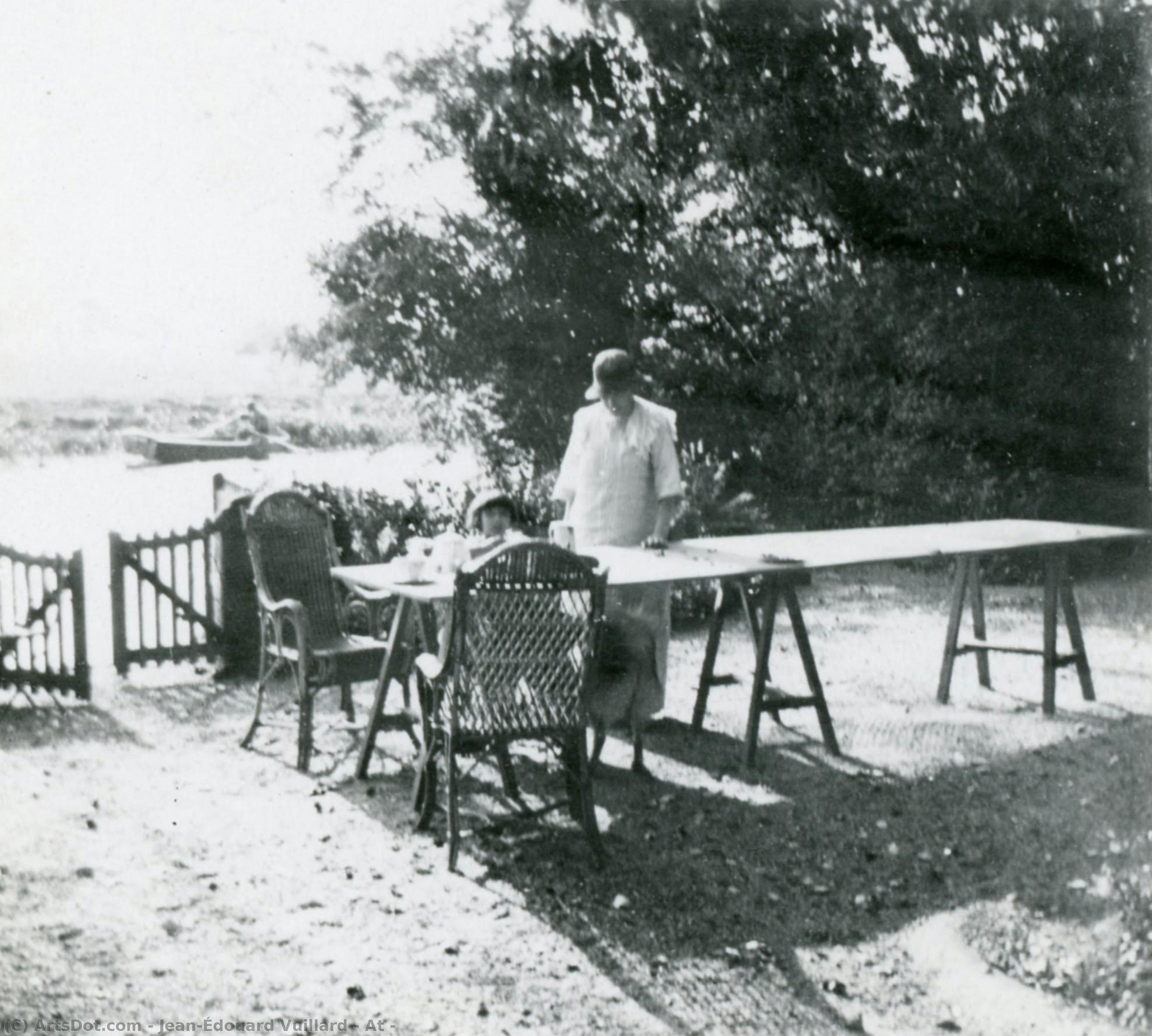
Shown: · With its frame:
 Compartilhar
 Compartilhar
 Detalhes
 Guia
Guia

 Baixar imagem
 Semelhantes
 Ver diaporama
 Q&A
Q&A Estatísticas
 Black and White Photography
- Photo
- Post-Impressionism
 1913
1913- Modern
 8.0 x 8.0 cm
 Musée des Impressionnismes Giverny
€ 281
Reprodução em Óleo Feita à Mão
Óleo sobre tela pintado à mão no tamanho e moldura de sua escolha, feito sob encomenda pelos nossos artistas. ( Alternar para Impressão Alternar para Imagem Digital)
Size
·Tamanho padrão
personalizado
CM
INCH
Escolha entre os nossos tamanhos pré-definidos que respeitam as proporções originais da obra de arte.
Loading sizes...

largura
altura
Insira a largura e a altura desejadas para se ajustarem à sua moldura ou parede. Como esta obra é pintada à mão, para um tamanho com proporções diferentes, o artista poderá pintar um pouco mais ao redor da imagem ou reduzir ligeiramente a composição — você escolhe. Enviamos uma maquete digital para sua aprovação antes de iniciar a pintura. A imagem exibida nesta página não representa o resultado real — apenas a maquete mostra o resultado final.
 Leia mais
Finish
·
White €1

Blurside €1

Extended €1

P118B €10

P118H €10

P118W €10

P438Z €10

P508JH €12

P508YH €12

P805H €10

P805Z €10

P919BZ €10

P919G €10

P919XJ €10

P959ZH €10

P968JZ €12

W106C €8

W218G €10

W218JH €8

W218Y €10

W307PJ €10

W316G €10

W316PJ €8

W316Y €10

W398PJ €8

W4111J €10

W500HY €15

W500JH €15

W692G €12

W849H €8

W940BG €15

W953PJ €8

H24-GOLD €30

H24-SILVER €30

H36-GOLD €45

H36-SILVER €45
Shipped in a protective tube, ready for your own framer.
Above 105 cm the frame is shipped as a kit for a professional framer — read the details.
Extras
optionalWhat do the extras include?
Examples of what can be changed: Replace face with customer photo; Add pet (e.g., replace cat with dog); Include hidden message in background; Change background landscape or elements.
After order, TopImpressionists.com team will email client for instructions and provide a mockup preview
After order, TopImpressionists.com team will email client for instructions and provide a mockup preview
Entrega mundial () em 3 a 4 semanas, em vez das 5 semanas padrão. (29 Outubro). Sem comprometer a qualidade.
Verniz de Proteção
Etiqueta de identificação
Detalhes da Placa de Bronze Gravada
This elegant plaque features the artist's name and the title of the artwork, finely engraved for a timeless presentation.
It is made from bronze with a refined, elegant finish. The text is precisely laser-engraved for a sharp and permanent result. Measuring 9x2 cm, the plaque is compact yet easy to read. It's built to be durable and scratch-resistant, offering a professional, museum-quality look. Mounting is simple thanks to the included adhesive backing.
Detalhes da Placa de Acrílico Transparente
The plaque includes essential engraved details such as the artist's name, the title of the artwork, the date it was created, the type of media used-like oil on canvas or watercolor-a brief description of the piece, and a QR code that links to the complete artwork information.
It is crafted from clear acrylic, offering a sleek, modern appearance. The text is UV-engraved in black to ensure strong visual contrast. With a size of 10x15 cm, it ensures optimal readability. It comes equipped with two metal hooks for secure wall mounting. The plaque is designed to be weather-resistant, making it suitable for various environments, and it includes interactive features that work seamlessly with smartphone scanning.
Detalhes da Placa de Acrílico Preto
This elegant plaque includes engraved information such as the artist's name, the title of the artwork, the date it was created, the type of media used (like oil on canvas or watercolor), a short description of the artwork, and a QR code for quick access to more information.
The plaque itself is made from refined black acrylic with a premium finish. The text is laser-engraved in white for high contrast and readability. Its size is 10x15 cm, designed to be easy to read. It comes with two metal hooks for professional mounting. The design is sleek and fits any interior style. It is also weather-resistant and durable, with built-in digital integration for mobile compatibility.
A opção de vidro está disponível apenas para tamanhos inferiores a 110 cm
 A opção de vidro está disponível apenas para tamanhos inferiores a 110 cm
- Envio expresso gratuito para todo o mundo
- Tela de Linho de Alta Qualidade
- Seguro de transporte completo
- Garantia de Reembolso de Impostos Alfandegários
- Garantia de Fidelidade Cromática
- Política de Devolução em 100 Dias (Apenas para Defeitos)
- Garantia de reembolso de 100%
- Oferta de desconto por quantidade


Descrição do Item
This photograph depicts Jean Vuillard's 1898 painting, 'At the Café-Concert,' showcasing an intimate interior scene characteristic of Impressionism and the Nabis movement. The artwork features loose brushwork, warm tones, and focuses on a contemplative woman amidst a café setting. It exemplifies Vuillard’s stylistic innovation and contribution to early modern art.
Biografia do Artista
Jean-Édouard Vuillard (1868-1940) foi um pintor francês e membro dos Nabis, conhecido por cenas íntimas de interiores, estilo decorativo e influência no modernismo como Cubismo. Explore sua arte!
About the painting
A Moment Frozen in Time: The Quiet Allure of Vuillard’s “At”
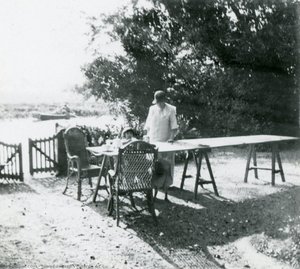
In the delicate tapestry of early 20th-century art, few works capture the ephemeral essence of a passing second as poignantly as Jean Vuillard’s 1913 masterpiece, “At.” This evocative scene serves as much more than a mere depiction of an outdoor gathering; it is a profound distillation of Impressionistic ideals filtered through the intimate, decorative lens of the Nabis movement. To gaze upon this work is to step into a world where time slows down, inviting the viewer to inhabit a space of quiet contemplation and subtle emotional resonance. The composition centers around a solitary figure seated at a table beneath an overcast sky, surrounded by the silent presence of empty chairs that suggest both companionship and the lingering traces of a shared moment.
The atmosphere is one of profound serenity, established through a masterful use of landscape and setting. Lush foliage frames the scene, hinting at a lakeside or coastal retreat where the air is still and the world feels momentarily paused. This deliberate choice of environment echoes the tranquil, pastoral landscapes favored by Vuillard’s contemporaries, yet he imbues it with a unique, psychological depth. There is a sense of domesticity brought into the wild, an intimate pocket of human existence carved out from the vastness of nature, making the piece particularly captivating for those who seek art that offers a sanctuary of peace within the home.
Technique and the Language of Color
Vuillard’s technical prowess is on full display through his signature approach to form and surface. Influenced heavily by the flattened perspectives of Japanese woodblock prints, the artist eschews traditional academic realism in favor of a more modern, sensory experience. He utilizes flattened planes of color and loose, rhythmic brushstrokes to build a sense of texture and movement. While the historical photograph of this work presents a monochrome view, the original artistic vision is rooted in the Nabis' revolutionary use of color to convey feeling rather than mere fact.
The composition is a sophisticated dance of lines and shapes. Strong horizontal planes, established by the table’s surface and the distant horizon, provide a grounding stability to the piece, while vertical elements like the chairs and trees create a rhythmic structure. These geometric foundations are softened by the organic, flowing shapes of the foliage and the human figures, creating a balanced tension between order and nature. For the discerning collector or interior designer, this interplay of structure and softness makes the artwork an incredibly versatile element, capable of anchoring a room with its classical weight while adding a layer of organic grace.
Historical Significance and Emotional Resonance
Created during a period of immense artistic upheaval in Europe, “At” stands as a pivotal contribution to the development of modern art. It reflects the burgeoning interest in abstraction and the rejection of rigid representational styles that defined the early 1900s. As a prominent member of Les Nabis, Vuillard helped bridge the gap between the fleeting light of Impressionism and the structured symbolism of the coming decades. His ability to transform an ordinary, everyday moment into something deeply symbolic—where a seated man might represent focused introspection or the quietude of the soul—is what gives this work its enduring power.
For those looking to bring a piece of art history into their personal spaces, a high-quality reproduction of “At” offers more than just aesthetic beauty; it offers an emotional connection to a bygone era. The painting evokes a sense of nostalgia and a longing for the stillness that is so often lost in our modern, frenetic lives. It is a piece designed for deep looking, rewarding the viewer with new layers of meaning and texture upon every encounter, making it an exquisite choice for any curated collection or thoughtfully designed interior.
Perguntas e Respostas
Qual é a intensidade das cores em "At", de Jean-Edouard Vuillard?
As cores em "At", de Jean-Edouard Vuillard possuem uma intensidade Monochromatic.
A obra "At", de Jean-Edouard Vuillard, pertencente ao acervo do Musée des Impressionnismes Giverny, pode ser reproduzida legalmente?
"At", de Jean-Edouard Vuillard, pertencente ao Musée des Impressionnismes Giverny, está em em domínio público — seus direitos autorais expiraram. Este status determina se reproduções da imagem podem ser feitas.
"At", de Jean-Edouard Vuillard está localizado no país de origem do artista?
Sim – a obra de arte encontra-se no país de origem do artista. O país de nascimento de Jean-Edouard Vuillard é França, e o museu que detém o original de "At" está em França.
Quick facts and art quiz
About Jean-Edouard Vuillard
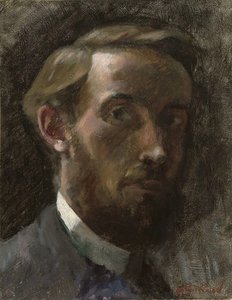
Jean-Edouard Vuillard
1868 - 1940, França
Biografia do Artista
**early life and artistic beginnings**
Jean-Édouard Vuillard, a name synonymous with the subtle beauty of Parisian interiors and the evocative dance of color, was born on November 11, 1868, in Cuiseaux, a small village nestled within the Saône-et-Loire region of France. His early life unfolded amidst modest circumstances; his father, a retired naval captain, transitioned to a career as a tax collector after his military service. Vuillard’s mother, Marie Vuillard, a skilled seamstress, provided the family with stability and instilled in her son an appreciation for detail and craftsmanship – qualities that would profoundly influence his artistic vision. Following his father's retirement in 1877, the family relocated to Paris, settling into a building on Rue de Chabrol, later moving to Rue Daunou where his mother operated her sewing workshop. This early exposure to Parisian life, coupled with a scholarship awarded for his academic performance at the Lycée Condorcet, set the stage for Vuillard’s artistic journey. During his time at the Lycée, he developed a deep admiration for the works of Michelangelo and classical sculptures, honing his observational skills and laying the groundwork for his future explorations of form and composition. It was here that he encountered Ker-Xavier Roussel, who would later become both a friend and fellow artist, and whose counsel steered Vuillard away from a potential military career – a path ultimately deemed unsuitable for his burgeoning artistic aspirations. Vuillard’s formal training began at the École des Beaux-Arts in Paris, where he immersed himself in the study of traditional techniques and artistic principles, though it was through informal connections and independent exploration that he truly discovered his unique voice.**the nabis movement and its influence**
Emerging from the vibrant crucible of late 19th-century Parisian art, Jean-Édouard Vuillard became a pivotal figure within the Nabis group – a collective of artists who sought to redefine the boundaries of painting. The Nabis, meaning “prophets” in Hebrew, were deeply influenced by the Symbolist movement and the radical ideas of Paul Gauguin, particularly his use of flattened space, bold color palettes, and symbolic imagery. Vuillard’s artistic trajectory intersected with those of fellow Nabis members such as Maurice Denis, Pierre Bonnard, and Aurélien Lugné-Poe, forging a collaborative spirit that fueled their experimentation and innovation. The group's philosophy centered on the belief that art should transcend mere representation, instead conveying emotional truths and spiritual insights through carefully orchestrated color relationships and simplified forms. Vuillard’s paintings often featured areas of pure color – vibrant reds, blues, and greens – arranged in a manner reminiscent of Japanese woodblock prints, which were experiencing a surge in popularity among European artists at the time. His interiors, in particular, became characterized by their exploration of spatial effects, utilizing flattened planes of color to create a sense of depth and atmosphere. This approach, profoundly influenced by Japanese aesthetics, marked a significant departure from traditional academic painting and paved the way for later developments in Cubism and Abstract Expressionism. The Nabis’s commitment to artistic freedom and their rejection of conventional norms established Vuillard as a key player in the transition towards modern art.**vuillard's later work and legacy**
Following the dissolution of the Nabis group in 1900, Jean-Édouard Vuillard embarked on a period of artistic exploration that saw him refine his style while retaining his core principles. While he continued to produce intimate interior scenes – often depicting familiar settings such as his mother’s apartment and the homes of friends – his approach evolved, incorporating greater detail and a heightened sense of realism. In the 1920s and 1930s, Vuillard turned his attention to portraiture, capturing the likenesses of prominent figures in French industry and the arts within their everyday environments. These portraits, rendered with remarkable sensitivity and psychological insight, offer glimpses into the lives of individuals who shaped the cultural landscape of his time. Notably, he painted portraits of Misia Natanson, the wife of his dealer Jos Hessel, a woman who became an enduring presence in his life and work. Vuillard’s later years were marked by a continued dedication to his craft, producing a prolific body of work that reflects both his artistic evolution and his deep appreciation for the beauty of ordinary moments. His legacy as one of France's most influential modern artists is firmly established, with his paintings continuing to captivate audiences worldwide.**key works and exhibitions**
The artistic output of Jean-Édouard Vuillard is richly documented in numerous museums across Europe and North America. The Musée de la Révolution Française in Paris houses a significant collection of his works, offering a comprehensive overview of his career. Notable paintings include “La Patrie en Danger” (1892), a poignant depiction of a young man condemned to death for blasphemy during the Ancien Régime – a subject that reflects Vuillard’s interest in social commentary and historical narratives. His later works, such as portraits of French industry and arts figures, can be found in collections at institutions like the Musée d'Orsay in Paris and the Art Institute of Chicago. Vuillard’s influence extends beyond individual paintings; his innovative approach to color and composition has resonated throughout the history of modern art, inspiring generations of artists to explore new possibilities in visual expression.**conclusion**
Jean-Édouard Vuillard's artistic journey is a testament to the power of observation, intuition, and creative vision. From his humble beginnings in Cuiseaux to his recognition as a pivotal figure in the Nabis movement and beyond, Vuillard’s work embodies a unique synthesis of formal innovation and emotional depth. His ability to capture the essence of everyday life – the quiet intimacy of domestic interiors, the subtle nuances of human interaction – has secured his place among the most celebrated artists of the 20th century. His legacy continues to inspire, reminding us that beauty can be found in the simplest of moments and that art possesses the capacity to illuminate the complexities of the human experience.Quick facts about Jean-Edouard Vuillard
- Artistic Movement Or Style: Nabis
- Artists Or Movements Influenced By This Artist:
- Cubismo
- Fauvismo
- Artists Who Influenced This Artist: ['Paul Gauguin']
- Date Of Birth: 11 Nov 1868
- Date Of Death: 21 Jun 1940
- Full Name: Jean-Édouard Vuillard
- Nationality: Francês
- Notable Artworks:
- Interior Verde
- Mulher Dormindo
- Place Of Birth: Cuiseaux, França
Obras Relacionadas




Explore obras de arte organizadas por temas, estilos e características.


Jean-Edouard Vuillard
At
() ·
With its frame: · Hand-painted in oil on linen
Total