Visualizar na parede
 Compartilhar
 Compartilhar
 Detalhes
 Guia
Guia

 Baixar imagem
 Semelhantes
 Raio X
 Ver diaporama
 Estatísticas
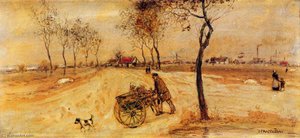
A springtime stroll

Discover "A springtime stroll" by Jean-François Raffaelli – a captivating 19th-century French painting. Explore Impressionism's beauty & timeless charm. Acquire this exquisite piece today!
Descubra Jean-François Raffaëlli's realista pinturas e esculturas que retratam a vida parisiense! Defensor do estilo "caractérisme", ele uniu Realismo e Impressionismo. Explore seu legado na TopImpressionists!
 Ler mais
Giclée / Impressão de Arte
Impressão giclée ou em tela de qualidade de museu, com produção rápida e opções flexíveis de acabamento. ( Comprar pintura feita à mão Alternar para Imagem Digital)




P118B €10

P118H €10

P118W €10

P438Z €10

P508JH €12

P508YH €12

P805H €10

P805Z €10

P919BZ €10

P919G €10

P919XJ €10

P959ZH €10

P968JZ €12

W106C €8

W218G €10

W218JH €8

W218Y €10

W307PJ €10

W316G €10

W316PJ €8

W316Y €10

W398PJ €8

W4111J €10

W500HY €15

W500JH €15

W692G €12

W849H €8

W940BG €15

W953PJ €8




Tamanho padrão
personalizado
CM
INCH
Escolha entre os nossos tamanhos pré-definidos que respeitam as proporções originais da obra de arte.
Loading sizes...

largura
altura
Insira a largura e a altura desejadas para se ajustarem à sua moldura ou parede. Uma impressão pode ser apenas cortada, nunca ampliada além da imagem original; portanto, um tamanho com proporções diferentes resultará na perda de parte da imagem. Enviamos uma maquete digital para sua aprovação antes de realizarmos a impressão. A imagem exibida nesta página não mostra o corte real — apenas a maquete o faz.
Entrega mundial () em 2 semanas, em vez das 4/5 semanas padrão. (26 Outubro)

Envio expresso gratuito para todo o mundo

Tela de Linho de Alta Qualidade

Seguro de transporte completo

Garantia de Reembolso de Impostos Alfandegários

Garantia de Fidelidade Cromática

Política de Devolução em 100 Dias (Apenas para Defeitos)

Garantia de reembolso de 100%

Oferta de desconto por quantidade
 A opção de vidro está disponível apenas para tamanhos inferiores a 110 cm

A springtime stroll
Giclée / Impressão de Arte
Tamanho da Reprodução
-


Preço Total
€ 61
Obras Relacionadas


Biografia do Artista
Jean-François Raffaëlli: Bridging Realism and Impressionism
Jean-François Raffaëlli (1850–1924) stands as a singular figure in the panorama of French art—a painter who stubbornly clung to the tenets of Realism while simultaneously absorbing the transformative currents of Impressionism. Born in Paris on April 20, 1850, Raffaëlli’s artistic journey began not with grand ambitions but with an unexpected detour into theatrical performance, a formative experience that would profoundly shape his sensibilities and ultimately inform his visual idiom. Despite initial setbacks in this field, he swiftly recognized the allure of painting and enrolled at the École des Beaux-Arts in Paris in 1870, where he studied under Jean-Léon Gérôme—a sculptor and painter whose uncompromising adherence to Academic tradition served as a crucial counterpoint to Raffaëlli’s burgeoning artistic inclinations.- Early Influences & Training: Raffaëlli's brief engagement with Gérôme instilled in him a meticulous attention to detail and a mastery of classical technique—skills that would prove invaluable as he embarked on his independent artistic explorations. However, the rigid formalism of Academism clashed sharply with Raffaëlli’s innate inclination toward observation and emotional expression.
- A Singular Vision: Rejecting Gérôme's prescribed path, Raffaëlli swiftly distanced himself from Academic conventions, prioritizing a personal aesthetic rooted in direct engagement with the world around him. This decision would propel him towards collaborations with influential critics like J.-K. Huysmans and Edgar Degas—figures who recognized Raffaëlli’s distinctive voice amidst the burgeoning Impressionist movement.
The Birth of “Caractérisme”
Raffaëlli’s artistic breakthrough arrived in 1876, coinciding with a pivotal shift in his creative focus—a deliberate turn away from idealized depictions toward unflinching portrayals of everyday life. Driven by the intellectual fervor of Émile Zola and influenced by Hippolyte-Adolphe Taine's philosophical theories, Raffaëlli championed what he termed “caractérisme”—a revolutionary approach that demanded an artist’s unwavering commitment to capturing not merely appearances but the essence of human experience. This theory insisted on meticulous observation—analyzing subjects within their social context—to distill the core of their character and convey its emotional impact.- Parisian Suburbs & Social Commentary: Raffaëlli’s canvases became windows into the lives of Parisians inhabiting marginalized neighborhoods—ragpickers, laborers, and impoverished families—subjects previously ignored by Academic painters. His works resonated with a palpable empathy for the struggles faced by ordinary people, reflecting his conviction that art should serve as a vehicle for social critique.
- Technical Innovation: Raffaëlli’s technique blended meticulous detail with Impressionistic fluidity—a harmonious fusion achieved through careful layering of pigment and masterful manipulation of light and shadow. He pioneered the “batonnet” printing process—a revolutionary method utilizing oil sticks to achieve unprecedented tonal nuance and textural richness.
Notable Achievements & Recognition
Raffaëlli’s artistic reputation soared in 1880 and 1881, when he participated in the fifth Impressionist exhibition—a daring move that sparked considerable debate within the movement itself. Despite reservations expressed by Monet regarding Raffaëlli's expanding scope of subject matter, Degas championed his inclusion, recognizing Raffaëlli’s singular vision as a vital contribution to the avant-garde landscape. His unwavering dedication to artistic experimentation earned him the Légion d’honneur in 1889—a testament to his enduring influence on French art history.- Iconic Paintings: Raffaëlli's oeuvre includes masterpieces such as *Les Déclassés* (later renamed *Les Buveurs d’Absinthe*)—a haunting depiction of societal alienation that cemented his place among the foremost artists of his time—and *At the Caster’s*, a poignant portrayal of urban life capturing the spirit of Belle Époque Paris.
- Legacy & Influence: Raffaëlli's “caractérisme” profoundly impacted subsequent generations of painters interested in exploring the complexities of human experience and conveying social realities with honesty and compassion. He remains an indispensable figure in understanding the evolution of French art—a bridge between Academic tradition and the burgeoning Impressionist movement.
Concluding Thoughts
Jean-François Raffaëlli’s artistic legacy transcends mere stylistic innovation; it embodies a fundamental shift in artistic sensibility—a commitment to portraying humanity with empathy, nuance, and unwavering observation. His enduring influence continues to inspire artists today who strive to capture the essence of human experience within the framework of their chosen medium—solidifying his position as one of France’s most significant painters of the 19th century.
Jean-François Raffaëlli
1850 - 1924 , França
Dados Rápidos
- Artistic Movement Or Style: Realismo
- Artists Or Movements Influenced By This Artist: ['Impressionismo']
- Artists Who Influenced This Artist: ['Jean Léon Gerôme']
- Date Of Birth: Paris, França (1850)
- Date Of Death: 1924
- Full Name: Jean François Raffaëlli
- Nationality: Francês
- Notable Artworks:
- Les buveurs d'absinthe
- At the Caster's
- Place Of Birth: Paris
Artigos Relacionados

The Beauty of Impermanence: Capturing Decay through Impressionist Eyes
Explore the profound beauty of impermanence through Impressionist and Post-Impressionist eyes. Discover how masters like Monet and Van Gogh captured fleeting light and the poetic essence of nature's transitions in our deep dive into art history and emotional landscapes.

Beyond the Light: Capturing Raw Emotion and Subjective Vision in Post-Impressionist Landscapes
Explore the profound emotional depth of Post-Impressionist landscapes. Discover how masters like Van Gogh moved beyond light to capture raw human feeling through vibrant color and expressive texture in this expert art history retrospective.

Whispers of Rural Serenity: A Journey Through the Enchanting Village Landscapes of Impressionism
Immerse yourself in the tranquil beauty of Impressionist village landscapes. Explore our exquisite collection of hand-painted oil reproductions, capturing the light and soul of masters like Monet and Pissarro. Bring a piece of art history into your home with TopImpressionists.com.

Capturing the Soul: The Most Emotionally Moving Impressionist and Post-Impressionist Masterpieces
Discover the profound emotional depth of Impressionist and Post-Impressionist masterpieces. Explore how legends like Monet, Van Gogh, and Gauguin captured light and soul through evocative landscapes and vibrant brushwork for a timeless connection to art history.
Golden Fields & Sun-Drenched Meadows: Capturing the Soul of Impressionist Landscapes
Immerse yourself in the luminous world of Impressionist landscapes. Discover how masters like Monet and Gauguin captured ephemeral light through plein air painting, and learn to bring the soul of sun-drenched meadows into your home with exquisite, hand-painted oil reproductions.
Explore obras de arte organizadas por temas, estilos e características.