Visualizar em escala
 Enviar
 Compartilhar
 Ver detalhes
 Guia de Obras do Aluno

 Baixar imagem
 Semelhantes
 Raio X
 Apresentação de slides
 Estatísticas
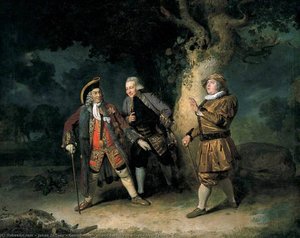
David Garrick
 Oil On Canvas
- WallArt
- Baroque Rococo Fusion
 1763
1763- Early Modern
 75.0 x 63.0 cm
 Museu Ashmolean de Arte e Arqueologia
Admire Johann Zoffany's iconic portrait of David Garrick alongside Eva Maria Veigel, capturing the theatrical spirit of Georgian England at The Ashmolean Museum.
 Ver mais
"meta_description": "Johann Zoffany: um pintor alemão renomado por suas cenas de 'conversazione', retratando a vida social e cultural do século XVIII com precisão e charme. Famoso pelo Tribuna dos Uffizi e retratos da realeza."
Giclée / Impressão de Arte
Impressão giclée ou em tela de qualidade de museu, com produção rápida e opções flexíveis de acabamento. ( Encomendar reprodução pintada à mão Ver Imagem Digital)




P118B €10

P118H €10

P118W €10

P438Z €10

P508JH €12

P508YH €12

P805H €10

P805Z €10

P919BZ €10

P919G €10

P919XJ €10

P959ZH €10

P968JZ €12

W106C €8

W218G €10

W218JH €8

W218Y €10

W307PJ €10

W316G €10

W316PJ €8

W316Y €10

W398PJ €8

W4111J €10

W500HY €15

W500JH €15

W692G €12

W849H €8

W940BG €15

W953PJ €8




Padrão
sob medida
CM
INCH
Escolha entre os nossos tamanhos pré-definidos que respeitam as proporções originais da obra de arte.
Loading sizes...

largura
altura
Digite a largura e a altura de que necessita, para se ajustar à sua moldura ou à sua parede. Uma impressão só pode ser cortada, nunca ampliada além da imagem original, pelo que um tamanho com uma proporção diferente perderá parte da imagem. Enviamos-lhe uma maquete digital para aprovação antes de imprimirmos qualquer coisa. A imagem apresentada nesta página não mostra o corte real — apenas a maquete o faz.
Entrega mundial () em 2 semanas, em vez das 4/5 semanas padrão. (25 Outubro)

Envio expresso gratuito para todo o mundo

Tela de Linho Premium

Seguro de transporte total

Garantia de Reembolso de Impostos Alfandegários

Garantia de Fidelidade de Cor

Política de Devolução em 100 Dias (Apenas para Defeitos)

Garantia de reembolso de 100%

Desconto para múltiplas unidades
 A opção de vidro está disponível apenas para tamanhos inferiores a 110 cm

David Garrick
Giclée / Impressão de Arte
Dimensões da Reprodução
-


Preço Total
€ 61
A Theatrical Soul Captured in Oil
In the quiet halls of The Ashmolean Museum of Art and Archaeology, there exists a portrait that does more than merely record a likeness; it breathes with the very essence of the eighteenth-century stage. Johann Zoffany’s 1763 masterpiece, David Garrick, is an evocative window into the heart of Enlightenment England. At first glance, we encounter the commanding presence of Garrick, the most celebrated actor of his era, rendered with a profound sense of dignity and intellectual depth. Zoffny does not present us with a mere performer in costume, but with a man whose very existence was intertwined with the dramatic arts. The composition is intimate yet grand, focusing on Garrick from the chest up against a somber, dark background that pushes his luminous features toward the viewer, demanding an immediate and visceral connection.
The technique employed by Zoffany is nothing short of masterful, showcasing the meticulous precision characteristic of the finest oil-on-canvas works of the period. Through subtle tonal gradations and a sophisticated command of light, the artist breathes life into the textures of the subject's attire—the crisp white collar contrasting sharply against the deep black of his formal coat. This interplay of light and shadow, or chiaroscuro, serves to sculpt Garrick’s face, highlighting a contemplative gaze that seems to look beyond the frame, perhaps lost in thought regarding a recent performance or a future script. For the discerning collector or interior designer, this painting offers a profound sense of classical elegance, making it an ideal centerpiece for spaces that value historical gravity and sophisticated drama.
The Dual Faces of Drama
Beyond the physical representation of a legendary actor, Zoffany weaves a complex tapestry of symbolism into the very fabric of the portrait. Floating near Garrick’s face are two iconic theatrical masks: the smiling visage of Comedy and the furrowed, mournful brow of Tragedy. These are not mere decorative elements; they are the dual pillars of the human experience that Garrick mastered on stage. The presence of these masks transforms the portrait from a standard biographical study into a profound meditation on the nature of performance and emotion. It suggests that behind the dignified gentleman lies the capacity for both joyous exuberance and profound sorrow, mirroring the duality of the human condition itself.
This symbolic layer adds an intellectual richness that elevates the artwork, making it much more than a decorative piece. It invites the viewer to contemplate the boundaries between reality and artifice, between the man and the persona. For those looking to adorn a home or gallery with a reproduction of this caliber, the painting provides a continuous source of conversation and inspiration. It embodies a period where art, intellect, and social status converged in a beautiful, theatrical display. To possess such a work is to hold a fragment of history—a moment frozen in 1763, where the spirit of the theatre remains eternally vibrant and hauntingly beautiful.
Perguntas e Respostas
Que atmosfera "David Garrick" de Johann Zoffany traz a um ambiente?
"David Garrick" de Johann Zoffany possui uma atmosfera Elegant e é recomendado para um(a) Living Room. O clima é o que a obra traz para o espaço ao seu redor.
Qual ambiente é sugerido para "David Garrick" de Johann Zoffany?
"David Garrick" de Johann Zoffany é recomendado para um(a) Living Room. Esta sugestão baseia-se no tema, nas cores e na atmosfera da obra.
A obra "David Garrick" de Johann Zoffany, pertencente ao acervo do Museu Ashmolean de Arte e Arqueologia, pode ser reproduzida legalmente?
A obra original "David Garrick" encontra-se no Museu Ashmolean de Arte e Arqueologia, e a obra está em em domínio público - seus direitos autorais expiraram.
Biografia do Artista
Early Life and Artistic Foundations
Johann Zoffany, born Johannes Josephus Zaufallij in 1733 in Freiburg, Germany, emerged from a lineage steeped in craftsmanship – his father was a cabinet maker and architect of the court of Alexander Ferdinand, the third Prince of Thurn and Taxis. This familial connection to design and artistry provided an early exposure to visual culture, subtly shaping his future path. His formative years were spent honing his skills under the tutelage of various masters: initially, he apprenticed with a sculptor, likely Melchior Paulus in Ellwangen, absorbing the fundamentals of form and technique. This initial training was followed by a period studying with Martin Speer in Regensburg, where he deepened his understanding of composition and perspective – foundational elements that would later define his distinctive style. These early influences, rooted in both practical craftsmanship and artistic discipline, laid the groundwork for Zoffany’s remarkable career.
A Journey to Rome and Italian Influence
In 1750, a pivotal moment arrived when Zoffany embarked on a journey to Rome. Here, he entered the studio of Agostino Masucci, a renowned painter known for his vibrant colors and dynamic compositions. This immersion in the heart of the Italian artistic tradition proved transformative. Zoffany absorbed the techniques of Baroque painting, studying the works of masters like Caravaggio and Bernini, learning to harness light and shadow with dramatic effect and mastering the art of capturing fleeting moments. The Roman experience instilled in him a deep appreciation for classical forms and a heightened sense of theatricality – qualities that would become hallmarks of his later work. It was during this period that he began to develop his own unique approach, blending Italian flair with emerging stylistic trends.
Establishing a Career in England
Following his time in Rome, Zoffany relocated to England in 1760, seeking new opportunities and patronage. Initially, he found work as a decorative designer for the clockmaker Stephen Rimbault, creating intricate panels and embellishments for elaborate clocks. This period provided him with valuable experience in producing detailed renderings and mastering the art of miniature painting – skills that would later prove useful in his portraiture. However, it was in London that Zoffany truly began to establish himself as an artist of distinction. He quickly gained recognition for his ability to capture informal moments and portray subjects with a remarkable sense of realism and charm. His talent caught the eye of King George III and Queen Charlotte, who became devoted patrons, commissioning numerous portraits and providing him with access to the highest echelons of British society.
The Rise of the ‘Conversation Piece’
Zoffany is most celebrated for his “conversation pieces,” or *conversazione* – a genre that defined his artistic legacy. These informal group portraits depicted social gatherings, capturing not just the outward appearance of the subjects but also their personalities and interactions. Zoffany possessed an extraordinary ability to create a sense of immediacy and intimacy within these scenes, as if the viewer were a silent observer at a lively salon. He skillfully arranged figures in dynamic poses, using subtle gestures and expressions to convey a wealth of information about their relationships and social standing. Notable examples include The Cope Family (1775), which offers a glimpse into the lives of prominent patrons, and *Queen Charlotte and Her Two Eldest Children* (1765), a charming depiction of the royal family at home. These works established Zoffany as a master of social portraiture, capturing the essence of Georgian society with remarkable insight and artistry.
Major Works and Lasting Legacy
Among Zoffany’s most significant achievements is undoubtedly The Tribuna of the Uffizi (1772-1778), a meticulously detailed depiction of the gallery's interior in Florence. This ambitious undertaking showcased his technical skill, artistic vision, and meticulous attention to detail. He also created portraits of notable figures such as Dr. William Hunter teaching anatomy at the Royal Academy, showcasing his interest in scientific illustration and education. His portrait of King George III is a testament to his ability to capture regal dignity and power. Furthermore, Zoffany’s time in India resulted in captivating depictions of Indian princes and court life, offering valuable insights into colonial society. Despite facing challenges after the decline of the conversation piece genre, Zoffany continued to paint until his death in 1810, leaving behind a rich body of work that continues to fascinate art historians and enthusiasts alike. His legacy lies not only in his technical mastery but also in his ability to capture the spirit of his time – the social customs, intellectual pursuits, and cultural values of 18th-century England and beyond.

Johann Zoffany
1733 - 1810 , Alemanha
Informações Rápidas
- Artistic Movement Or Style: Neoclassicismo, Realismo
- Artists Or Movements Influenced By This Artist:
- Garrick
- Royal Academy
- Artists Who Influenced This Artist:
- Masucci
- Speer
- Date Of Birth: 1733
- Date Of Death: 1810
- Full Name: Johann Zoffany
- Nationality: Alemão
- Notable Artworks:
- Tribuna Uffizi
- George III
- Cock Match
- Place Of Birth: Frankfurt, Alemanha
Artigos Relacionados

Johann Zoffany: Capturing Georgian Society with Brushstrokes of Cosmopolitan Flair
Explore the captivating world of Johann Zoffany, master portraitist of Georgian society. Discover his unique 'conversation pieces,' imperial commissions & lasting legacy. A guide for discerning collectors.

David Cox the Elder: Landscape, Light & the Romantic Vision of Rural England
Explore the captivating landscapes of David Cox the Elder, a pivotal figure in British Romanticism. Discover his masterful watercolour techniques, enduring legacy & find timeless art for your home at TopImpressionists.

Gerard David: Bridging Late Medieval Tradition with Early Renaissance Humanism
Explore the captivating world of Gerard David, a pivotal figure bridging late medieval artistry with the Early Renaissance. Discover his innovative techniques, religious masterpieces, and enduring legacy – a must-read for discerning art collectors.

Jacques-Louis David: Neoclassical Ideals & Revolutionary Witness
Explore the life & art of Jacques-Louis David, leading Neoclassical painter of the French Revolution. Discover iconic works like 'The Death of Marat' and his lasting impact on art history. Expert analysis & high-quality reproductions at TopImpressionists.

Thomas Rowlandson: Satire, Society & the Art of Caricature in Georgian England
Explore the witty world of Thomas Rowlandson, master Georgian caricaturist! Discover his satirical prints & insightful social commentary on 18th-century England. Learn about his life, techniques, and enduring influence.
Explore obras de arte organizadas por temas, estilos e características.