

Exibido: · Com a moldura:
 Visualizar na parede
 Compartilhar
 Compartilhar
 Detalhes
 Guia
Guia

 Baixar imagem
 Semelhantes
 Raio X
 Ver diaporama
 Perguntas e Respostas
 Estatísticas


€ 239
Reprodução em Óleo Feita à Mão
Óleo sobre tela pintado à mão no tamanho e moldura de sua escolha, feito sob encomenda pelos nossos artistas. ( Alternar para Impressão Alternar para Imagem Digital)
Tamanho
·Tamanho padrão
personalizado
CM
INCH
Escolha entre os nossos tamanhos pré-definidos que respeitam as proporções originais da obra de arte.
Carregando tamanhos...

largura
altura
Insira a largura e a altura desejadas para se ajustarem à sua moldura ou parede. Como esta obra é pintada à mão, para um tamanho com proporções diferentes, o artista poderá pintar um pouco mais ao redor da imagem ou reduzir ligeiramente a composição — você escolhe. Enviamos uma maquete digital para sua aprovação antes de iniciar a pintura. A imagem exibida nesta página não representa o resultado real — apenas a maquete mostra o resultado final.
 Leia mais
Finalizar
·
Branco €1

Bordas esfumaçadas €1

Bordas estendidas €1

P118B €10

P118H €10

P118W €10

P438Z €10

P508JH €12

P508YH €12

P805H €10

P805Z €10

P919BZ €10

P919G €10

P919XJ €10

P959ZH €10

P968JZ €12

W106C €8

W218G €10

W218JH €8

W218Y €10

W307PJ €10

W316G €10

W316PJ €8

W316Y €10

W398PJ €8

W4111J €10

W500HY €15

W500JH €15

W692G €12

W849H €8

W940BG €15

W953PJ €8

H24-GOLD €30

H24-SILVER €30

H36-GOLD €45

H36-SILVER €45
Enviado em um tubo protetor, pronto para ser emoldurado por você.
Extras
opcionalO que os extras incluem?
Exemplos do que pode ser alterado: Substituir o rosto pela foto do cliente; Adicionar um animal de estimação (ex: substituir gato por cachorro); Incluir uma mensagem oculta no fundo; Alterar a paisagem ou elementos do fundo.
Após o pedido, a equipe da TopImpressionists.com enviará um e-mail ao cliente para instruções e fornecerá uma prévia da montagem
Após o pedido, a equipe da TopImpressionists.com enviará um e-mail ao cliente para instruções e fornecerá uma prévia da montagem
Entrega mundial () em 3 a 4 semanas, em vez das 5 semanas padrão. (5 Novembro). Sem comprometer a qualidade.
Verniz de Proteção
Etiqueta de identificação
Detalhes da Placa de Bronze Gravada
This elegant plaque features the artist's name and the title of the artwork, finely engraved for a timeless presentation.
It is made from bronze with a refined, elegant finish. The text is precisely laser-engraved for a sharp and permanent result. Measuring 9x2 cm, the plaque is compact yet easy to read. It's built to be durable and scratch-resistant, offering a professional, museum-quality look. Mounting is simple thanks to the included adhesive backing.
Detalhes da Placa de Acrílico Transparente
The plaque includes essential engraved details such as the artist's name, the title of the artwork, the date it was created, the type of media used-like oil on canvas or watercolor-a brief description of the piece, and a QR code that links to the complete artwork information.
It is crafted from clear acrylic, offering a sleek, modern appearance. The text is UV-engraved in black to ensure strong visual contrast. With a size of 10x15 cm, it ensures optimal readability. It comes equipped with two metal hooks for secure wall mounting. The plaque is designed to be weather-resistant, making it suitable for various environments, and it includes interactive features that work seamlessly with smartphone scanning.
Detalhes da Placa de Acrílico Preto
This elegant plaque includes engraved information such as the artist's name, the title of the artwork, the date it was created, the type of media used (like oil on canvas or watercolor), a short description of the artwork, and a QR code for quick access to more information.
The plaque itself is made from refined black acrylic with a premium finish. The text is laser-engraved in white for high contrast and readability. Its size is 10x15 cm, designed to be easy to read. It comes with two metal hooks for professional mounting. The design is sleek and fits any interior style. It is also weather-resistant and durable, with built-in digital integration for mobile compatibility.
A opção de vidro está disponível apenas para tamanhos inferiores a 110 cm
 A opção de vidro está disponível apenas para tamanhos inferiores a 110 cm
- Envio expresso gratuito para todo o mundo
- Tela de Linho de Alta Qualidade
- Seguro de transporte completo
- Garantia de Reembolso de Impostos Alfandegários
- Garantia de Fidelidade Cromática
- Política de Devolução em 100 Dias (Apenas para Defeitos)
- Garantia de reembolso de 100%
- Oferta de desconto por quantidade


Descrição do Item
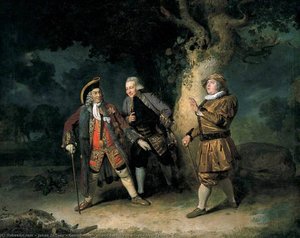
Admire Johann Zoffany’s ‘George III,’ a stunning 1771 royal portrait showcasing the King's power & elegance. A historical masterpiece by a renowned artist, now available as a handmade oil painting.
Biografia do Artista
"meta_description": "Johann Zoffany: um pintor alemão renomado por suas cenas de 'conversazione', retratando a vida social e cultural do século XVIII com precisão e charme. Famoso pelo Tribuna dos Uffizi e retratos da realeza."
Sobre a pintura
The Majesty of a King: An Exploration of Zoffany’s ‘George III’
Johann Zoffany's “George III” is more than just a portrait; it’s a meticulously constructed tableau vivant, a frozen moment brimming with historical significance and subtle theatricality. Completed in 1771, this oil on canvas painting offers a rare glimpse into the life of King George III during a period of profound political and personal upheaval. Zoffany, a German-born artist who found his most enduring success in England, masterfully blended elements of Italian portraiture with the burgeoning conventions of the ‘conversation piece’ – a genre that favored informal group settings and layered symbolism.
The painting immediately commands attention through its opulent setting. The King is seated within a richly appointed room, reminiscent of an Italian villa or a grand salon, complete with a meticulously rendered violoncello, a symbol of musical refinement and aristocratic leisure. However, the true brilliance lies in the details – the intricate patterns on the wallpaper, the carefully chosen objects adorning the walls, each contributing to a complex web of meaning. This isn’t merely a depiction of royalty; it's an assertion of power, a visual declaration of George III’s status as both a sovereign and a cultivated gentleman.
A Stage for Power: Symbolism and Context
Zoffany was acutely aware of the political climate surrounding his subject. George III inherited a throne beset by challenges – a fragile peace following the Seven Years' War, mounting debts, and growing tensions with the American colonies. The King’s posture, his gaze directed towards an unseen observer (often interpreted as a young boy), conveys a sense of both authority and vulnerability. He is dressed in the formal attire of a General, complete with medals and a sash – emblems of military prowess and royal rank. The inclusion of the Order of the Garter, one of the most prestigious chivalric orders in Britain, further reinforces his position as a key figure within the nation’s elite.
Beyond the obvious symbols of power, Zoffany employs subtle visual cues to suggest the complexities of George III's reign. The presence of the violoncello, for instance, is not simply decorative; it alludes to the King’s musical interests and his patronage of artists and musicians – a carefully cultivated image designed to project an aura of sophistication and refinement. The inclusion of a young boy in the painting has been interpreted as representing the future of the monarchy, but also perhaps hinting at the challenges George III faced in securing a legitimate heir.
Technique and Artistic Legacy
Zoffany’s skill lies not only in his ability to capture likenesses with remarkable accuracy but also in his masterful use of light and shadow. The dramatic lighting highlights the King's face, emphasizing his features and conveying a sense of gravitas. The artist employs a technique reminiscent of both Italian portraiture and Dutch genre painting, creating a rich, textured surface that is both visually engaging and historically informative. His attention to detail is astonishing – from the folds in the fabric to the reflections on the polished surfaces – demonstrating a deep understanding of his subject matter and a commitment to realism.
“George III” stands as one of Zoffany’s most celebrated works, alongside “Queen Charlotte and Her Six Eldest Children.” Reproductions of this iconic painting continue to captivate art lovers today, offering a window into the world of Georgian England and the complex personality of its King. The Royal Collection Trust holds the original, ensuring that this remarkable piece of history remains accessible for generations to come.
Further Information:
Perguntas e Respostas
Quando foi criada a obra "George III" e a qual movimento ela pertence?
"George III" foi criada em 1771 como uma obra do movimento Neoclassicism. A data e o movimento situam a obra na história da arte.
Qual é a intensidade das cores em "George III", de Johann Zoffany?
As cores em "George III", de Johann Zoffany possuem uma intensidade Monochromatic.
Que tema e atmosfera combinam em "George III", de Johann Zoffany?
"George III", de Johann Zoffany retrata portrait, royalty, british history, 18th century, military, formal, dignified, zoffany, em uma atmosfera Elegant. O tema e a ambientação descrevem, juntos, a obra.
Informações rápidas e quiz de arte
Sobre Johann Zoffany

Johann Zoffany
1733 - 1810, Alemanha
Biografia do Artista
Early Life and Artistic Foundations
Johann Zoffany, born Johannes Josephus Zaufallij in 1733 in Freiburg, Germany, emerged from a lineage steeped in craftsmanship – his father was a cabinet maker and architect of the court of Alexander Ferdinand, the third Prince of Thurn and Taxis. This familial connection to design and artistry provided an early exposure to visual culture, subtly shaping his future path. His formative years were spent honing his skills under the tutelage of various masters: initially, he apprenticed with a sculptor, likely Melchior Paulus in Ellwangen, absorbing the fundamentals of form and technique. This initial training was followed by a period studying with Martin Speer in Regensburg, where he deepened his understanding of composition and perspective – foundational elements that would later define his distinctive style. These early influences, rooted in both practical craftsmanship and artistic discipline, laid the groundwork for Zoffany’s remarkable career.
A Journey to Rome and Italian Influence
In 1750, a pivotal moment arrived when Zoffany embarked on a journey to Rome. Here, he entered the studio of Agostino Masucci, a renowned painter known for his vibrant colors and dynamic compositions. This immersion in the heart of the Italian artistic tradition proved transformative. Zoffany absorbed the techniques of Baroque painting, studying the works of masters like Caravaggio and Bernini, learning to harness light and shadow with dramatic effect and mastering the art of capturing fleeting moments. The Roman experience instilled in him a deep appreciation for classical forms and a heightened sense of theatricality – qualities that would become hallmarks of his later work. It was during this period that he began to develop his own unique approach, blending Italian flair with emerging stylistic trends.
Establishing a Career in England
Following his time in Rome, Zoffany relocated to England in 1760, seeking new opportunities and patronage. Initially, he found work as a decorative designer for the clockmaker Stephen Rimbault, creating intricate panels and embellishments for elaborate clocks. This period provided him with valuable experience in producing detailed renderings and mastering the art of miniature painting – skills that would later prove useful in his portraiture. However, it was in London that Zoffany truly began to establish himself as an artist of distinction. He quickly gained recognition for his ability to capture informal moments and portray subjects with a remarkable sense of realism and charm. His talent caught the eye of King George III and Queen Charlotte, who became devoted patrons, commissioning numerous portraits and providing him with access to the highest echelons of British society.
The Rise of the ‘Conversation Piece’
Zoffany is most celebrated for his “conversation pieces,” or *conversazione* – a genre that defined his artistic legacy. These informal group portraits depicted social gatherings, capturing not just the outward appearance of the subjects but also their personalities and interactions. Zoffany possessed an extraordinary ability to create a sense of immediacy and intimacy within these scenes, as if the viewer were a silent observer at a lively salon. He skillfully arranged figures in dynamic poses, using subtle gestures and expressions to convey a wealth of information about their relationships and social standing. Notable examples include The Cope Family (1775), which offers a glimpse into the lives of prominent patrons, and *Queen Charlotte and Her Two Eldest Children* (1765), a charming depiction of the royal family at home. These works established Zoffany as a master of social portraiture, capturing the essence of Georgian society with remarkable insight and artistry.
Major Works and Lasting Legacy
Among Zoffany’s most significant achievements is undoubtedly The Tribuna of the Uffizi (1772-1778), a meticulously detailed depiction of the gallery's interior in Florence. This ambitious undertaking showcased his technical skill, artistic vision, and meticulous attention to detail. He also created portraits of notable figures such as Dr. William Hunter teaching anatomy at the Royal Academy, showcasing his interest in scientific illustration and education. His portrait of King George III is a testament to his ability to capture regal dignity and power. Furthermore, Zoffany’s time in India resulted in captivating depictions of Indian princes and court life, offering valuable insights into colonial society. Despite facing challenges after the decline of the conversation piece genre, Zoffany continued to paint until his death in 1810, leaving behind a rich body of work that continues to fascinate art historians and enthusiasts alike. His legacy lies not only in his technical mastery but also in his ability to capture the spirit of his time – the social customs, intellectual pursuits, and cultural values of 18th-century England and beyond.
Informações rápidas sobre Johann Zoffany
- Artistic Movement Or Style: Neoclassicismo, Realismo
- Artists Or Movements Influenced By This Artist:
- Garrick
- Royal Academy
- Artists Who Influenced This Artist:
- Masucci
- Speer
- Date Of Birth: 1733
- Date Of Death: 1810
- Full Name: Johann Zoffany
- Nationality: Alemão
- Notable Artworks:
- Tribuna Uffizi
- George III
- Cock Match
- Place Of Birth: Frankfurt, Alemanha
Explore obras de arte organizadas por temas, estilos e características.


Johann Zoffany
George III
() ·
Com a moldura: · Pintura a óleo sobre linho feita à mão
Total