


 Visualizar na parede
 Compartilhar
 Compartilhar
 Detalhes
 Guia
Guia

 Baixar imagem
 Semelhantes
 Raio X
 Ver diaporama
 Q&A
Q&A Estatísticas
Lord Hugh Seymour
 Oil On Canvas
- WallArt
- Neoclassical Portraiture
 1799
1799 96.0 x 83.0 cm
 National Maritime Museum
Admire John Hoppner's striking portrait of Lord Hugh Seymour, a distinguished naval officer and socialite from 1799. A captivating glimpse into Georgian England.
 Ler mais
John Hoppner (1758-1810) foi um pintor inglês renomado por suas obras de arte vibrantes e coloridas, especialmente retratos da realeza britânica e figuras femininas. Explore seus principais trabalhos e legado em TopImpressionists!
Giclée / Impressão de Arte
Impressão giclée ou em tela de qualidade de museu, com produção rápida e opções flexíveis de acabamento. ( Comprar pintura feita à mão Alternar para Imagem Digital)




P118B €10

P118H €10

P118W €10

P438Z €10

P508JH €12

P508YH €12

P805H €10

P805Z €10

P919BZ €10

P919G €10

P919XJ €10

P959ZH €10

P968JZ €12

W106C €8

W218G €10

W218JH €8

W218Y €10

W307PJ €10

W316G €10

W316PJ €8

W316Y €10

W398PJ €8

W4111J €10

W500HY €15

W500JH €15

W692G €12

W849H €8

W940BG €15

W953PJ €8




Tamanho padrão
personalizado
CM
INCH
Escolha entre os nossos tamanhos pré-definidos que respeitam as proporções originais da obra de arte.
Loading sizes...

largura
altura
Insira a largura e a altura desejadas para se ajustarem à sua moldura ou parede. Uma impressão pode ser apenas cortada, nunca ampliada além da imagem original; portanto, um tamanho com proporções diferentes resultará na perda de parte da imagem. Enviamos uma maquete digital para sua aprovação antes de realizarmos a impressão. A imagem exibida nesta página não mostra o corte real — apenas a maquete o faz.
Entrega mundial () em 2 semanas, em vez das 4/5 semanas padrão. (29 Outubro)

Envio expresso gratuito para todo o mundo

Tela de Linho de Alta Qualidade

Seguro de transporte completo

Garantia de Reembolso de Impostos Alfandegários

Garantia de Fidelidade Cromática

Política de Devolução em 100 Dias (Apenas para Defeitos)

Garantia de reembolso de 100%

Oferta de desconto por quantidade
 A opção de vidro está disponível apenas para tamanhos inferiores a 110 cm

Lord Hugh Seymour
Giclée / Impressão de Arte
Tamanho da Reprodução
-


Preço Total
€ 61
A Portrait of Command and Courtly Intrigue: John Hoppner’s Lord Hugh Seymour
John Hoppner's 1799 portrait of Vice-Admiral Lord Hugh Seymour is more than just a likeness; it’s a meticulously crafted tableau of naval authority, aristocratic grace, and the subtle currents of Georgian London society. Painted during a period of intense political and military upheaval – the twilight years of the American War of Independence and the burgeoning threat of revolutionary France – the canvas captures a man at the apex of his career, yet subtly hinting at the complexities beneath the surface of his public persona.
Hoppner, a master of colour and light, demonstrates his exceptional skill in rendering Seymour’s imposing figure. The admiral is depicted in full-dress uniform, a rich tapestry of gold braid, scarlet cloth, and dark blue velvet, signifying his rank and status within the Royal Navy. Note the careful attention to detail – the precise folds of the fabric, the glint of metal on the medals adorning his chest, and the subtle sheen of the polished boots beneath him. Hoppner’s use of light is particularly striking; it highlights Seymour's face, drawing the viewer’s eye to his expression—a mixture of dignified composure and a hint of shrewd intelligence.
The Context of Power: Naval Authority and Georgian Society
Lord Hugh Seymour’s life was inextricably linked to both naval service and the intricacies of London high society. Born into a wealthy family with deep ties to the aristocracy, he initially pursued a career in the Navy, quickly rising through the ranks due to his competence and charisma. His involvement in key battles during the American War, including the relief of Gibraltar – an event that earned him a commemorative medal – cemented his reputation as a courageous officer. However, Seymour’s life was also marked by scandal and social intrigue; he cultivated a notorious reputation for his dissolute lifestyle, frequenting gambling dens and engaging in affairs with women of high standing.
Hoppner's decision to paint Seymour in this formal portrait reflects the societal pressures of the time. The aristocracy placed immense value on appearances, and a well-executed portrait was essential for projecting an image of wealth, power, and social legitimacy. Yet, even within the confines of this carefully constructed representation, Hoppner subtly hints at the contradictions inherent in Seymour’s character. The admiral's gaze is direct and unwavering, suggesting confidence and authority, but there’s also a certain weariness in his eyes—a subtle acknowledgment of the burdens of command and the complexities of navigating the treacherous waters of Georgian society.
Symbolism and Artistic Technique
Beyond the straightforward depiction of a naval officer, Hoppner employs several symbolic elements to enrich the portrait’s meaning. The epaulettes adorning Seymour's uniform, for instance, are not merely decorative; they represent his rank and authority within the Navy—a deliberate statement of his position as a Vice-Admiral. The inclusion of two figures in the background – one on the left and another on the right – adds depth to the composition, suggesting the presence of other individuals and hinting at the social circles in which Seymour moved. The muted tones of the wall behind him create a sense of formality and restraint, contrasting with the vibrant colours of his uniform.
Hoppner’s technique is characterized by its masterful use of colour and light. He employs a rich palette of reds, blues, and golds to capture the textures and reflections of Seymour's clothing and accessories. His brushwork is loose and expressive, creating a sense of movement and dynamism within the portrait. The subtle gradations of tone and shadow contribute to the overall illusion of depth and realism, drawing the viewer into the scene.
A Legacy of Colour and Intrigue
Lord Hugh Seymour’s portrait remains a captivating work of art—a testament to John Hoppner's artistic skill and his ability to capture both the outward appearance and the underlying complexities of human character. It offers a glimpse into the world of Georgian London, where naval authority intersected with aristocratic privilege and social intrigue. Today, this painting stands as a reminder that even within the most formal representations, there is always room for nuance, ambiguity, and a touch of captivating mystery.
Perguntas e Respostas
A que fase da carreira de John Hoppner corresponde a data de 1799 de "Lord Hugh Seymour"?
Dada a sua data de 1799, "Lord Hugh Seymour" insere-se no período Mature Period de John Hoppner.
Qual é o formato de "Lord Hugh Seymour"?
"Lord Hugh Seymour", de John Hoppner possui um formato Portrait. O formato descreve as proporções da composição.
Para qual ambiente se sugere "Lord Hugh Seymour", de John Hoppner?
O espaço recomendado para "Lord Hugh Seymour", de John Hoppner é uma Living Room. A sugestão pode, naturalmente, ser adaptada ao seu interior.
Biografia do Artista
a life of artistry and royal patronage
John Hoppner (4 de Abril de 1758 – 23 de Janeiro de 1810) foi um retratista e pintor inglês. Ele alcançou a fama como colorista brilhante. O seu toque tem qualidades de amplitude e liberdade que dão aos seus quadros um pálido reflexo do charme de Reynolds. Nasceu em Whitechapel, Londres, filho de pais alemães, a sua mãe era uma das atendentes alemães no palácio real. O interesse paternal e o patrocínio do rei George sobre o menino deu origem a rumores, bastante infundados, de que ele possa ter sido seu filho ilegítimo. Hoppner tornou-se um cantor na capela real, mas mostrou forte inclinação para a arte, e em 1775 ele entrou para a Academia Real. Em 1778 ele ganhou uma medalha de prata pelo desenho de formas de vida, e em 1782, a mais alta condecoração da Academia, a medalha de ouro para pintura histórica, com o tema Rei Lear. Sua carreira começou na Academia Real em 1780 onde suas primeiras obras demonstraram um profundo conhecimento da técnica e uma sensibilidade estética que prenunciavam seu estilo único. Um amor pela paisagem inicialmente o atraiu para este gênero artístico, mas a necessidade de sustento o impulsionou para o trabalho mais lucrativo: o retrato. Ele rapidamente estabeleceu-se como um dos artistas mais procurados da época, trabalhando para membros importantes da aristocracia e do governo britânico. Sua habilidade em capturar a beleza humana e transmitir emoções através da pintura o consagrou como um dos maiores representantes da estética neoclássica inglesa.early life and training
Hoppner recebeu uma educação privilegiada graças ao apoio familiar alemão, que lhe proporcionou acesso à cultura erudita e às artes clássicas. Sua formação inicial na capela real despertou seu interesse pela música e pelo desenho, habilidades que ele desenvolveu com maestria durante seus estudos na Academia Real. Em particular, ele admirava o trabalho de Joshua Reynolds, considerado o pintor mais importante do período neoclássico inglês, cujo estilo caracterizado por uma composição equilibrada e uma paleta cromática rica influenciou profundamente sua obra. Sua habilidade em reproduzir formas de vida com precisão e expressividade foi reconhecida desde cedo pelos críticos da época, que destacaram seu talento natural e sua capacidade de transmitir emoções através da pintura.rise to fame and notable works
Hoppner alcançou o reconhecimento público graças à sua série de retratos femininos, que foram considerados obras-primas pela crítica especializada e pelo público em geral. Sua técnica inovadora, caracterizada por uma liberdade expressiva e uma atenção meticulosa aos detalhes, permitiu que ele criasse imagens excepcionalmente vibrantes e emotivas. Entre suas obras mais importantes destacam-se:- Mrs. Jordan as Viola in 'Twelfth Night', uma obra que hoje está localizada na English Heritage em Londres e demonstra sua maestria na pintura de retratos femininos
- Retratos do príncipe de Gales, o duque e duquesa de York, Lord Rodney e Lord Nelson, que foram exibidos nos apartamentos de estado no Palácio de St. James's Palace e refletem seu profundo conhecimento da vida cortesã inglesa
legacy and later life
Apesar de uma doença crônica do fígado que marcou seus últimos anos, Hoppner deixou um legado artístico duradouro, celebrado por gerações de artistas e críticos. Sua obra permanece admirada pela beleza estética e pela profundidade emocional, sendo considerada um marco da pintura neoclássica inglesa. Ele é reconhecido como um dos artistas mais importantes do século XVIII, cuja influência pode ser observada em obras posteriores de outros pintores ingleses. Sua habilidade em capturar a essência humana e transmitir emoções através da pintura o consagrou como um dos maiores representantes da estética neoclássica inglesa.
John Hoppner
1758 - 1810 , Reino Unido
Dados Rápidos
- Artistic Movement Or Style: Retratismo
- Artists Or Movements Influenced By This Artist: ['Reynolds']
- Artists Who Influenced This Artist: ['Joshua Reynolds']
- Date Of Birth: 4 de Abril de 1758
- Date Of Death: 23 de Janeiro de 1810
- Full Name: John Hoppner
- Nationality: Britânico
- Notable Artworks:
- Mrs. Jordan como Viola
- Príncipe de Gales
- Duque de York
- Lord Rodney
- Lord Nelson
- Place Of Birth: Whitechapel, Londres
Artigos Relacionados

Sir William Beechey: Portraiture, Patronage & Shaping Georgian Society
Explore the life & art of Sir William Beechey, a leading British portraitist of the Georgian era. Discover his royal commissions, aristocratic subjects, and lasting influence on 18th-century painting. Learn more at TopImpressionists.

Elevando a Estética do Espaço de Trabalho: As 5 Principais Tendências Artísticas para Escritórios Contemporâneos
Descubra as 5 principais tendências artísticas para transformar seu escritório em um espaço inspirador e produtivo! Design, bem-estar e identidade visual para o sucesso do seu negócio.

John Hoppner: Portraiture, Patronage & British Identity in the Late Georgian Era
Explore the life & work of John Hoppner, a leading Georgian portraitist. Discover his vibrant style, influential patrons, and lasting impact on British art history. Expert insights for collectors.

Allen Ramsay: Portraiture, Patronage & Shaping Georgian Identity
Explore the life & work of Allen Ramsay, pivotal portraitist to George III. Discover his Rococo style, influence on Georgian society, and lasting legacy in British art history. Learn about his key works & patronage.
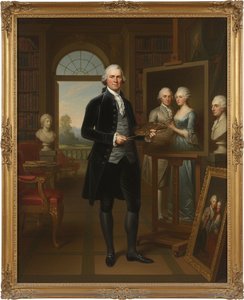
Sir Nathaniel Dance-Holland: Portraiture, Patronage & Georgian Identity
Explore the life & art of Sir Nathaniel Dance-Holland, a leading Georgian portraitist. Discover his masterful technique, influential patrons, and lasting impact on 18th-century British society. A guide for discerning collectors.
Explore obras de arte organizadas por temas, estilos e características.

