
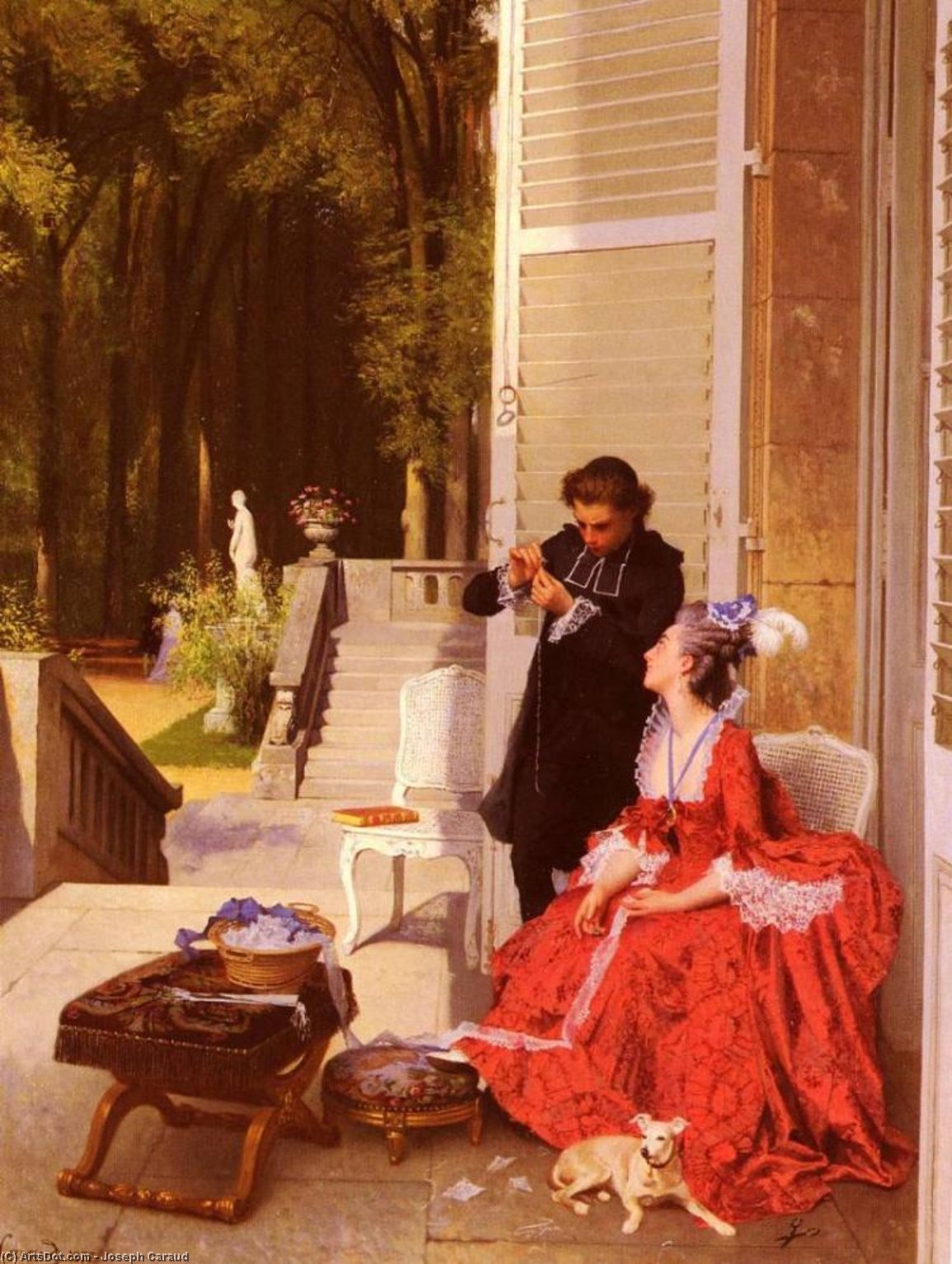
Shown: · With its frame:
 Visualizar na parede
 Compartilhar
 Compartilhar
 Detalhes
 Guia
Guia

 Baixar imagem
 Semelhantes
 Raio X
 Ver diaporama
 Q&A
Q&A Estatísticas
€ 237
Reprodução em Óleo Feita à Mão
Óleo sobre tela pintado à mão no tamanho e moldura de sua escolha, feito sob encomenda pelos nossos artistas. ( Alternar para Impressão Alternar para Imagem Digital)
Size
·Tamanho padrão
personalizado
CM
INCH
Escolha entre os nossos tamanhos pré-definidos que respeitam as proporções originais da obra de arte.
Loading sizes...

largura
altura
Insira a largura e a altura desejadas para se ajustarem à sua moldura ou parede. Como esta obra é pintada à mão, para um tamanho com proporções diferentes, o artista poderá pintar um pouco mais ao redor da imagem ou reduzir ligeiramente a composição — você escolhe. Enviamos uma maquete digital para sua aprovação antes de iniciar a pintura. A imagem exibida nesta página não representa o resultado real — apenas a maquete mostra o resultado final.
 Leia mais
Finish
·
White €1

Blurside €1

Extended €1

P118B €10

P118H €10

P118W €10

P438Z €10

P508JH €12

P508YH €12

P805H €10

P805Z €10

P919BZ €10

P919G €10

P919XJ €10

P959ZH €10

P968JZ €12

W106C €8

W218G €10

W218JH €8

W218Y €10

W307PJ €10

W316G €10

W316PJ €8

W316Y €10

W398PJ €8

W4111J €10

W500HY €15

W500JH €15

W692G €12

W849H €8

W940BG €15

W953PJ €8

H24-GOLD €30

H24-SILVER €30

H36-GOLD €45

H36-SILVER €45
Shipped in a protective tube, ready for your own framer.
Above 105 cm the frame is shipped as a kit for a professional framer — read the details.
Extras
optionalWhat do the extras include?
Examples of what can be changed: Replace face with customer photo; Add pet (e.g., replace cat with dog); Include hidden message in background; Change background landscape or elements.
After order, TopImpressionists.com team will email client for instructions and provide a mockup preview
After order, TopImpressionists.com team will email client for instructions and provide a mockup preview
Entrega mundial () em 3 a 4 semanas, em vez das 5 semanas padrão. (29 Outubro). Sem comprometer a qualidade.
Verniz de Proteção
Etiqueta de identificação
Detalhes da Placa de Bronze Gravada
This elegant plaque features the artist's name and the title of the artwork, finely engraved for a timeless presentation.
It is made from bronze with a refined, elegant finish. The text is precisely laser-engraved for a sharp and permanent result. Measuring 9x2 cm, the plaque is compact yet easy to read. It's built to be durable and scratch-resistant, offering a professional, museum-quality look. Mounting is simple thanks to the included adhesive backing.
Detalhes da Placa de Acrílico Transparente
The plaque includes essential engraved details such as the artist's name, the title of the artwork, the date it was created, the type of media used-like oil on canvas or watercolor-a brief description of the piece, and a QR code that links to the complete artwork information.
It is crafted from clear acrylic, offering a sleek, modern appearance. The text is UV-engraved in black to ensure strong visual contrast. With a size of 10x15 cm, it ensures optimal readability. It comes equipped with two metal hooks for secure wall mounting. The plaque is designed to be weather-resistant, making it suitable for various environments, and it includes interactive features that work seamlessly with smartphone scanning.
Detalhes da Placa de Acrílico Preto
This elegant plaque includes engraved information such as the artist's name, the title of the artwork, the date it was created, the type of media used (like oil on canvas or watercolor), a short description of the artwork, and a QR code for quick access to more information.
The plaque itself is made from refined black acrylic with a premium finish. The text is laser-engraved in white for high contrast and readability. Its size is 10x15 cm, designed to be easy to read. It comes with two metal hooks for professional mounting. The design is sleek and fits any interior style. It is also weather-resistant and durable, with built-in digital integration for mobile compatibility.
A opção de vidro está disponível apenas para tamanhos inferiores a 110 cm
 A opção de vidro está disponível apenas para tamanhos inferiores a 110 cm
- Envio expresso gratuito para todo o mundo
- Tela de Linho de Alta Qualidade
- Seguro de transporte completo
- Garantia de Reembolso de Impostos Alfandegários
- Garantia de Fidelidade Cromática
- Política de Devolução em 100 Dias (Apenas para Defeitos)
- Garantia de reembolso de 100%
- Oferta de desconto por quantidade


Biografia do Artista
Explore the art of Joseph Caraud (1821-1905), a French artist known for his diverse works, including museum connections in Hungary & Austria.
About the painting
Quick facts and art quiz
About Joseph Caraud

Joseph Caraud
1821 - 1905, France
Biografia do Artista
The Luminous Elegance of Joseph Caraud
In the heart of nineteenth-century France, amidst the shifting tides of artistic revolution, Joseph Caraud (1821–1905) carved out a sanctuary of refined grace. Born in the historic town of Cluny, Caraud emerged from a world of classical stability to become a master of the intimate and the anecdotal. While his contemporaries, such as Monet and Degas, were beginning to fracture the traditional canvas with the spontaneous strokes of Impressionism, Caraud remained a steadfast guardian of academic excellence. His work did not seek to disrupt the viewer with the chaos of modern life, but rather to enchant them with a polished, nostalgic beauty that celebrated the quiet dramas of domesticity and the splendor of historical eras.
His artistic foundation was laid within the prestigious halls of the École des Beaux-Arts, where he studied under the watchful eyes of masters like Alexandre Abel de Pujol and Charles Louis Müller. From De Pujol, a disciple of the great David, Caraud inherited a command over dramatic narrative and the poised, sculptural quality of human figures. From Müller, he refined an exquisite eye for intricate detail and the luminous finishes that would become his hallmark. These early influences coalesced into a style that was both technically rigorous and emotionally tender, allowing him to transition seamlessly from grand historical tableaux to the delicate, light-drenched interiors that would eventually secure his fame among the European bourgeoisie.
A Mastery of Light and Intimacy
Caraud’s oeuvre is perhaps most celebrated for its ability to transform a simple room into a stage for silent storytelling. He possessed an unrivaled talent for capturing the soft, filtered light that dances across velvet draperies or illuminates the porcelain skin of a seated subject. His preference for interiors lit by limited, singular sources allowed him to employ a sophisticated use of glazes, creating a warmth and depth that felt almost tactile. This technique gave his paintings a "pastelistic" quality—a softness of hue that evoked a sense of peace and spiritual contemplation.
His subject matter often drifted toward the nostalgic, catering to a Victorian and Edwardian appetite for scenes of the eighteenth-century Regency era. Whether depicting the theatrical episodes of Marie Antoinette or the gentle, colorful charm of Italian domestic life, Caraud infused every scene with an air of sophisticated elegance. His paintings were not merely observations; they were carefully constructed worlds where themes of motherhood, femininity, and grace were woven into the very fabric of the setting. In works such as Feeding the Pigeons or his poignant portraits of women in serene repose, one finds a profound commitment to capturing nuanced emotional states through the careful arrangement of symbolic elements.
Legacy and Recognition
The success of Joseph Caraud was not merely a matter of local acclaim but a widespread European phenomenon. His ability to capture the "small dramas" of daily life resonated deeply with aristocratic families across Hungary and Austria, leading to prestigious commissions that placed his work in notable collections such as the Brodsky House Museum in Saint Petersburg and the halls of Josephplatz in Vienna. His technical prowess was frequently honored by the French state; he was a decorated recipient of several medals at the Paris Salon—including honors in 1859, 1861, and 1863—and was ultimately bestowed with the prestigious Légion d'honneur in 1867.
Beyond the canvas, Caraud’s influence extended through the medium of engraving, as his highly sought-after compositions were reproduced to satisfy a growing demand for fine art. Even as the world moved toward the fragmented reality of the twentieth century, Caraud’s dedication to the beauty of the classical form remained an anchor for those seeking solace in tradition. He passed away in Paris in 1905, leaving behind a legacy of luminous, meticulously crafted windows into a more elegant, tranquil era of European history.
Quick facts about Joseph Caraud
- Full Name: Joseph Caraud
- Nationality: French
- Date Of Birth: 1821
- Date Of Death: 1905
- Place Of Birth: Cluny, France
- Notable Artworks:
- Feeding the Pigeons
- The Yellow Canaries
- Attending to the Bride
- Artistic Movement Or Style: Neoclassical

Joseph Caraud
The obliging abbé
() ·
With its frame: · Hand-painted in oil on linen
Total