

Exibido: · Com a moldura:
 Visualizar na parede
 Compartilhar
 Compartilhar
 Detalhes
 Guia
Guia

 Baixar imagem
 Semelhantes
 Raio X
 Ver diaporama
 Perguntas e Respostas
 Estatísticas

€ 240
Reprodução em Óleo Feita à Mão
Óleo sobre tela pintado à mão no tamanho e moldura de sua escolha, feito sob encomenda pelos nossos artistas. ( Alternar para Impressão Alternar para Imagem Digital)
Tamanho
·Tamanho padrão
personalizado
CM
INCH
Escolha entre os nossos tamanhos pré-definidos que respeitam as proporções originais da obra de arte.
Carregando tamanhos...

largura
altura
Insira a largura e a altura desejadas para se ajustarem à sua moldura ou parede. Como esta obra é pintada à mão, para um tamanho com proporções diferentes, o artista poderá pintar um pouco mais ao redor da imagem ou reduzir ligeiramente a composição — você escolhe. Enviamos uma maquete digital para sua aprovação antes de iniciar a pintura. A imagem exibida nesta página não representa o resultado real — apenas a maquete mostra o resultado final.
 Leia mais
Finalizar
·
Branco €1

Bordas esfumaçadas €1

Bordas estendidas €1

P118B €10

P118H €10

P118W €10

P438Z €10

P508JH €12

P508YH €12

P805H €10

P805Z €10

P919BZ €10

P919G €10

P919XJ €10

P959ZH €10

P968JZ €12

W106C €8

W218G €10

W218JH €8

W218Y €10

W307PJ €10

W316G €10

W316PJ €8

W316Y €10

W398PJ €8

W4111J €10

W500HY €15

W500JH €15

W692G €12

W849H €8

W940BG €15

W953PJ €8

H24-GOLD €30

H24-SILVER €30

H36-GOLD €45

H36-SILVER €45
Enviado em um tubo protetor, pronto para ser emoldurado por você.
Extras
opcionalO que os extras incluem?
Exemplos do que pode ser alterado: Substituir o rosto pela foto do cliente; Adicionar um animal de estimação (ex: substituir gato por cachorro); Incluir uma mensagem oculta no fundo; Alterar a paisagem ou elementos do fundo.
Após o pedido, a equipe da TopImpressionists.com enviará um e-mail ao cliente para instruções e fornecerá uma prévia da montagem
Após o pedido, a equipe da TopImpressionists.com enviará um e-mail ao cliente para instruções e fornecerá uma prévia da montagem
Entrega mundial () em 3 a 4 semanas, em vez das 5 semanas padrão. (6 Novembro). Sem comprometer a qualidade.
Verniz de Proteção
Etiqueta de identificação
Detalhes da Placa de Bronze Gravada
This elegant plaque features the artist's name and the title of the artwork, finely engraved for a timeless presentation.
It is made from bronze with a refined, elegant finish. The text is precisely laser-engraved for a sharp and permanent result. Measuring 9x2 cm, the plaque is compact yet easy to read. It's built to be durable and scratch-resistant, offering a professional, museum-quality look. Mounting is simple thanks to the included adhesive backing.
Detalhes da Placa de Acrílico Transparente
The plaque includes essential engraved details such as the artist's name, the title of the artwork, the date it was created, the type of media used-like oil on canvas or watercolor-a brief description of the piece, and a QR code that links to the complete artwork information.
It is crafted from clear acrylic, offering a sleek, modern appearance. The text is UV-engraved in black to ensure strong visual contrast. With a size of 10x15 cm, it ensures optimal readability. It comes equipped with two metal hooks for secure wall mounting. The plaque is designed to be weather-resistant, making it suitable for various environments, and it includes interactive features that work seamlessly with smartphone scanning.
Detalhes da Placa de Acrílico Preto
This elegant plaque includes engraved information such as the artist's name, the title of the artwork, the date it was created, the type of media used (like oil on canvas or watercolor), a short description of the artwork, and a QR code for quick access to more information.
The plaque itself is made from refined black acrylic with a premium finish. The text is laser-engraved in white for high contrast and readability. Its size is 10x15 cm, designed to be easy to read. It comes with two metal hooks for professional mounting. The design is sleek and fits any interior style. It is also weather-resistant and durable, with built-in digital integration for mobile compatibility.
A opção de vidro está disponível apenas para tamanhos inferiores a 110 cm
 A opção de vidro está disponível apenas para tamanhos inferiores a 110 cm
- Envio expresso gratuito para todo o mundo
- Tela de Linho de Alta Qualidade
- Seguro de transporte completo
- Garantia de Reembolso de Impostos Alfandegários
- Garantia de Fidelidade Cromática
- Política de Devolução em 100 Dias (Apenas para Defeitos)
- Garantia de reembolso de 100%
- Oferta de desconto por quantidade


Descrição do Item
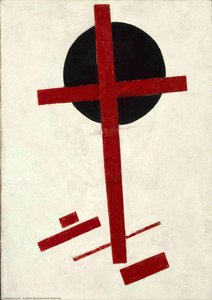
Explore 'Mulher Camponesa com Balde' de Kazimir Malevich: um ícone da arte abstrata russa, que transcende o figurativo e explora formas geométricas e cores vibrantes. Uma obra-prima para colecionadores e amantes da arte.
Biografia do Artista
Kazimir Malevich (1878-1935): pioneiro da arte abstrata russa, fundador do Suprematismo e visionário que revolucionou a pintura com formas geométricas e pura emoção.
Sobre a pintura
A Glimpse into Rural Russia: Kazimir Malevich ’Peasant Woman”
Kazimir Malevich’s “Peasant Woman,” painted in 1912, isn't merely a portrait of rural life; it’s a profound meditation on the essence of human existence, a pivotal work that bridges the artist’s early explorations with his revolutionary plunge into pure abstraction. This painting transcends simple representation, becoming an intense study of form and a harbinger of the seismic shifts about to reshape the very landscape of modern art. Emerging from a period where Malevich was absorbing influences ranging from Impressionism to Cubism, “Peasant Woman” reveals a masterful synthesis – a deliberate fracturing of perspective combined with a deep resonance for the Ukrainian countryside of his youth, a place inextricably linked to his identity and artistic vision.
The central figure, a peasant woman, is rendered not as a realistic likeness but as an assemblage of geometric shapes. Her form is robust, grounded, yet simultaneously fragmented, suggesting both physical labor – the weight of daily toil – and a spiritual depth, a quiet resilience that speaks to the enduring spirit of rural life. She clutches what appears to be a metallic object—perhaps a bell or a simple instrument—a detail that hints at communication, ritual, and a connection to ancient traditions. The surrounding figures, though less defined, contribute to this sense of community, suggesting a shared experience of hardship and perseverance. Malevich’s use of color is equally deliberate: earthy ochres, deep browns, and greens dominate the palette, punctuated by stark blacks that create a dramatic contrast, drawing the eye to key elements within the composition.
The Cubo-Futurist Embrace
“Peasant Woman” firmly establishes itself within the burgeoning movements of Cubism and Futurism that were electrifying Europe at the time. However, Malevich doesn’t simply mimic these styles; he infuses them with a distinctly Russian sensibility. The painting's angularity and flattened planes echo the analytical approach of early Cubism – breaking down the subject into its constituent parts and presenting multiple viewpoints simultaneously. Yet, unlike the often-muted palettes of French Cubists, Malevich employs a more vibrant, earthy tonality, reflecting the colors of the Ukrainian landscape and evoking a sense of nostalgia for a disappearing way of life. The dynamism inherent in Futurism is also present, not through depictions of speed or machinery—a common theme for Italian Futurists—but through the energetic arrangement of forms and the implied movement within the composition.
This fusion creates a unique visual language that feels both modern and deeply rooted in tradition. Malevich’s deliberate distortion of anatomy and perspective foreshadows his later rejection of figuration altogether, signaling a radical departure from conventional artistic representation. The painting is not about capturing a specific individual; it's about conveying an idea—the essence of rural life, the dignity of labor, and perhaps even a yearning for something beyond the material world.
Symbolism and Spiritual Undertones
Beyond its formal qualities, “Peasant Woman” invites contemplation on deeper symbolic levels. The peasant class held a particular significance for Malevich, representing an authentic connection to the land—a connection he believed was being eroded by industrialization and urbanization. This painting can be interpreted as a poignant elegy for a vanishing world, a celebration of simple virtues, and a plea for spiritual renewal. The woman’s posture – sturdy and resolute – suggests resilience and endurance in the face of hardship. The object she holds could be interpreted as a symbol of communication or ritual, linking her to ancient traditions and beliefs—a tangible connection to the past.
Malevich's exploration of these themes wasn’t simply aesthetic; it was driven by a desire to express something fundamental about the human condition and the spiritual forces that shape our existence. This search for pure feeling would soon culminate in his Suprematist works, but its seeds are clearly visible within the complex layers of “Peasant Woman.” The painting is more than just an image; it’s a visual poem—a meditation on identity, tradition, and the enduring spirit of humanity.
A Precursor to Abstraction
Looking at “Peasant Woman” today, it’s easy to see it as a crucial stepping stone towards Malevich’s ultimate artistic goal: non-objective art. While still recognizably representational in its initial stages, the painting pushes the boundaries of depiction, prioritizing form and structure over realistic portrayal. The deliberate distortion of anatomy and perspective foreshadows his later rejection of figuration altogether. It’s a work that embodies transition—a moment where the artist is actively dismantling traditional artistic conventions in preparation for building something entirely new. For collectors and interior designers alike, a reproduction of “Peasant Woman” offers not just a beautiful image but a powerful statement about the evolution of art and the enduring legacy of one of its most visionary pioneers. It’s a piece that invites conversation, contemplation, and a deeper appreciation for the forces that have shaped our visual world.
Photo Description: The image is a painting of a woman in a black dress with a metal object in her hand. She appears to be holding a bell or a similar item. The painting has a futuristic style, which gives it an artistic and unique appearance. There are several other people in the background, but they are not as prominent as the main subject. The woman is wearing a black dress that covers most of her body, with a metal object in her hand. She appears to be standing on top of a hill or a raised surface, which adds an interesting perspective to the painting. The other people in the background are also dressed in black and appear to be engaged in various activities.
Size: Unknown
Date: 1912
Perguntas e Respostas
Quão harmoniosas são as cores de "Mulher camponesa com balde", de Kazimir Malevich?
"Mulher camponesa com balde", de Kazimir Malevich apresenta uma harmonia de cores Paleta dissonante.
Para que tipo de uso se recomenda uma impressão de "Mulher camponesa com balde"?
Uma reprodução de "Mulher camponesa com balde", de Kazimir Malevich é recomendada para Peça de destaque. Esta sugestão decorre do tema, da atmosfera e das cores da obra.
Qual é o lugar de "Mulher camponesa com balde", de Kazimir Malevich na história da arte?
"Mulher camponesa com balde", de Kazimir Malevich pertence ao movimento Cubo-Futurismo, dentro do período Modernismo. Juntos, eles conferem à obra o seu lugar na história da arte.
Informações rápidas e quiz de arte
Sobre Kazimir Malevich

Kazimir Malevich
1878 - 1935, Ucrânia
Biografia do Artista
Kazimir Malevich: Um Pioneiro da Arte Abstrata
Kazimir Severinovich Malevich, nascido em 1878 na região de Kyiv, Ucrânia, é uma figura central e revolucionária na história da arte do século XX. Sua trajetória artística, marcada por uma busca incessante pela pureza formal e pela expressão de emoções através de formas geométricas, o consagrou como um dos fundadores do Suprematismo e um precursor fundamental da arte abstrata. A sua vida e obra refletem uma profunda transformação na percepção estética, desafiando as convenções tradicionais e abrindo novos caminhos para a criação artística.Primeiros Anos e Influências
A infância de Malevich, passada em meio à paisagem rural ucraniana, foi fundamental para o desenvolvimento do seu olhar artístico. A beleza da natureza, os costumes folclóricos e a simplicidade da vida no campo despertaram nele um interesse pela arte e pela expressão visual. Após completar seus estudos na Escola de Agricultura em Parjómovka, sua paixão pela pintura o levou a buscar formação artística em Kyiv, onde iniciou seus primeiros trabalhos. A influência do Impressionismo, do Simbolismo e do Fauvismo foi crucial nessa fase inicial, fornecendo-lhe as ferramentas técnicas e estéticas para explorar novas possibilidades expressivas. Um ponto de virada decisivo na sua trajetória foi a viagem a Paris em 1912. A exposição de obras de Picasso e outros artistas vanguardistas europeus o expôs às últimas tendências da arte moderna, despertando nele um desejo de romper com as tradições e buscar uma linguagem artística totalmente nova. A influência do Cubismo, com sua fragmentação da realidade e sua exploração das formas geométricas, foi particularmente importante para a sua evolução estética.Desenvolvimento Artístico e Movimento Suprematista
Ao retornar à Rússia, Malevich começou a desenvolver um estilo próprio, caracterizado pela abstração geométrica e pela busca por uma expressão puramente emocional. Em 1915, ele lançou o movimento Suprematismo, que se baseava na ideia de que a arte deveria transcender a representação do mundo visível e buscar a “supremacia do sentimento puro” através das formas geométricas básicas – quadrados, círculos, retângulos e linhas. O Suprematismo rejeitava qualquer tentativa de representar objetos ou cenas da realidade, focando-se na pureza formal e na expressividade das cores. A obra mais emblemática desse período é o "Quadrado Negro sobre Fundo Branco" (1915), uma pintura que causou grande impacto na época e é considerada um marco fundamental da arte abstrata. O quadrado preto, isolado em um fundo branco, representa a eliminação de toda referência ao mundo exterior e a busca por uma experiência estética pura. Outras obras importantes do Suprematismo incluem "White on White" (1918), que explora a pureza das formas e cores em sua forma mais radical, e "House under Construction" (1916), que utiliza formas geométricas para representar a arquitetura e o espaço urbano.Legado Histórico e Significado
Apesar de ter sido marginalizado durante o período stalinista, devido à sua abordagem não-conformista e à sua rejeição da propaganda ideológica, Malevich deixou um legado duradouro na história da arte. Sua obra influenciou profundamente o desenvolvimento do Minimalismo e de outras correntes artísticas abstratas, tanto na Rússia quanto no Ocidente. A sua busca pela pureza formal e pela expressão emocional continua a inspirar artistas contemporâneos, que encontram em seu trabalho um exemplo de liberdade criativa e de desafio às convenções estéticas. Malevich não apenas revolucionou a linguagem da pintura, mas também questionou os fundamentos da arte e da percepção visual. Sua obra nos convida a repensar o papel do artista e do espectador, e a explorar as possibilidades infinitas da abstração como forma de expressão. Kazimir Malevich é, sem dúvida, um dos artistas mais importantes e influentes do século XX, cuja visão inovadora continua a ressoar no mundo da arte contemporânea.Informações rápidas sobre Kazimir Malevich
- Artistic Movement Or Style: Suprematismo, Arte abstrata
- Artists Or Movements Influenced By This Artist:
- Minimalismo
- Construtivismo
- El Lissitzky
- Artists Who Influenced This Artist:
- Cubismo
- Fauvismo
- Impressionismo
- Date Of Birth: 1879
- Date Of Death: 1935
- Full Name: Kazimir Severinovich Malevich
- Nationality: Ucraniano/Russo
- Notable Artworks:
- Quadrado Negro
- Branco sobre Branco
- Casa em construção
- Place Of Birth: Kyiv, Ucrânia
Explore obras de arte organizadas por temas, estilos e características.




Kazimir Malevich
Mulher camponesa com balde
() ·
Com a moldura: · Pintura a óleo sobre linho feita à mão
Total