

Shown: · With its frame:
 Visualizar na parede
 Compartilhar
 Compartilhar
 Detalhes
 Guia
Guia

 Baixar imagem
 Semelhantes
 Raio X
 Ver diaporama
 Q&A
Q&A Estatísticas
- 27.0 x 26.0 cm


€ 239
Reprodução em Óleo Feita à Mão
Óleo sobre tela pintado à mão no tamanho e moldura de sua escolha, feito sob encomenda pelos nossos artistas. ( Alternar para Impressão Alternar para Imagem Digital)
Size
·Tamanho padrão
personalizado
CM
INCH
Escolha entre os nossos tamanhos pré-definidos que respeitam as proporções originais da obra de arte.
Loading sizes...

largura
altura
Insira a largura e a altura desejadas para se ajustarem à sua moldura ou parede. Como esta obra é pintada à mão, para um tamanho com proporções diferentes, o artista poderá pintar um pouco mais ao redor da imagem ou reduzir ligeiramente a composição — você escolhe. Enviamos uma maquete digital para sua aprovação antes de iniciar a pintura. A imagem exibida nesta página não representa o resultado real — apenas a maquete mostra o resultado final.
 Leia mais
Finish
·
White €1

Blurside €1

Extended €1

P118B €10

P118H €10

P118W €10

P438Z €10

P508JH €12

P508YH €12

P805H €10

P805Z €10

P919BZ €10

P919G €10

P919XJ €10

P959ZH €10

P968JZ €12

W106C €8

W218G €10

W218JH €8

W218Y €10

W307PJ €10

W316G €10

W316PJ €8

W316Y €10

W398PJ €8

W4111J €10

W500HY €15

W500JH €15

W692G €12

W849H €8

W940BG €15

W953PJ €8

H24-GOLD €30

H24-SILVER €30

H36-GOLD €45

H36-SILVER €45
Shipped in a protective tube, ready for your own framer.
Above 105 cm the frame is shipped as a kit for a professional framer — read the details.
Extras
optionalWhat do the extras include?
Examples of what can be changed: Replace face with customer photo; Add pet (e.g., replace cat with dog); Include hidden message in background; Change background landscape or elements.
After order, TopImpressionists.com team will email client for instructions and provide a mockup preview
After order, TopImpressionists.com team will email client for instructions and provide a mockup preview
Entrega mundial () em 3 a 4 semanas, em vez das 5 semanas padrão. (2 Novembro). Sem comprometer a qualidade.
Verniz de Proteção
Etiqueta de identificação
Detalhes da Placa de Bronze Gravada
This elegant plaque features the artist's name and the title of the artwork, finely engraved for a timeless presentation.
It is made from bronze with a refined, elegant finish. The text is precisely laser-engraved for a sharp and permanent result. Measuring 9x2 cm, the plaque is compact yet easy to read. It's built to be durable and scratch-resistant, offering a professional, museum-quality look. Mounting is simple thanks to the included adhesive backing.
Detalhes da Placa de Acrílico Transparente
The plaque includes essential engraved details such as the artist's name, the title of the artwork, the date it was created, the type of media used-like oil on canvas or watercolor-a brief description of the piece, and a QR code that links to the complete artwork information.
It is crafted from clear acrylic, offering a sleek, modern appearance. The text is UV-engraved in black to ensure strong visual contrast. With a size of 10x15 cm, it ensures optimal readability. It comes equipped with two metal hooks for secure wall mounting. The plaque is designed to be weather-resistant, making it suitable for various environments, and it includes interactive features that work seamlessly with smartphone scanning.
Detalhes da Placa de Acrílico Preto
This elegant plaque includes engraved information such as the artist's name, the title of the artwork, the date it was created, the type of media used (like oil on canvas or watercolor), a short description of the artwork, and a QR code for quick access to more information.
The plaque itself is made from refined black acrylic with a premium finish. The text is laser-engraved in white for high contrast and readability. Its size is 10x15 cm, designed to be easy to read. It comes with two metal hooks for professional mounting. The design is sleek and fits any interior style. It is also weather-resistant and durable, with built-in digital integration for mobile compatibility.
A opção de vidro está disponível apenas para tamanhos inferiores a 110 cm
 A opção de vidro está disponível apenas para tamanhos inferiores a 110 cm
- Envio expresso gratuito para todo o mundo
- Tela de Linho de Alta Qualidade
- Seguro de transporte completo
- Garantia de Reembolso de Impostos Alfandegários
- Garantia de Fidelidade Cromática
- Política de Devolução em 100 Dias (Apenas para Defeitos)
- Garantia de reembolso de 100%
- Oferta de desconto por quantidade


Descrição do Item
Kazimir Malevich's 'Self-Portrait' (1910) is a vibrant Fauvist masterpiece showcasing bold colors and a serious expression, embodying the spirit of early 20th-century modern art.
Biografia do Artista
Kazimir Malevich (1878-1935): pioneiro da arte abstrata russa, fundador do Suprematismo e visionário que revolucionou a pintura com formas geométricas e pura emoção.
About the painting
A Bold Statement of Form and Feeling
Kazimir Malevich's 1910 “Self-Portrait” is not merely a depiction of an individual; it’s a declaration. Painted in gouache on paper, this work stands as a pivotal example of the Fauvist movement – a radical departure from the naturalistic traditions that had dominated Western art for centuries. More than just a portrait, it's a concentrated distillation of color and form, a visual embodiment of Malevich’s burgeoning exploration of pure feeling and abstraction. The painting immediately commands attention with its vibrant palette: a striking red tie dominates the composition, juxtaposed against a background that seems to dissolve into an energetic swirl of blues and greens. This isn’t a realistic rendering; it's an emotional landscape rendered in pigment.
The Fauvist Impulse
Born from a reaction against Impressionism’s focus on capturing fleeting moments of light, Fauvism embraced the deliberate distortion of color for expressive effect. Artists like Henri Matisse and André Derain used intense hues – often divorced from naturalistic representation – to evoke moods and sensations directly. Malevich's “Self-Portrait” perfectly embodies this principle. The bold red isn’t simply a description of his tie; it’s a conduit for energy, confidence, or perhaps even defiance. The artist deliberately avoids subtle gradations, opting instead for flat areas of color that vibrate with intensity. This technique creates a sense of immediacy and raw emotion, pulling the viewer directly into the painting's core.
A Study in Geometric Simplicity
While firmly rooted in Fauvism, Malevich’s work is already hinting at his later development of Suprematism – an even more radical movement that sought to eliminate all representational elements from art. Notice the simplification of form within the portrait itself; the face is rendered with broad strokes and minimal detail, prioritizing the overall composition over a precise likeness. The background, too, is reduced to dynamic shapes and colors, suggesting movement and energy rather than a specific location. This deliberate reduction reflects Malevich’s belief that art should transcend the limitations of the visible world and tap into a realm of pure feeling and spirituality – a concept central to Suprematism.
Context within Post-Impressionism
To understand “Self-Portrait,” it's crucial to situate it within the broader context of Post-Impressionism. This movement, spanning from roughly 1886 to 1905, represented a diverse range of artistic approaches that reacted against Impressionism’s emphasis on capturing light and color. Artists like Paul Cézanne, Vincent van Gogh, and Paul Gauguin explored subjective experience, emotional intensity, and symbolic meaning in their work. Malevich's Fauvist tendencies align with this broader trend toward greater expressiveness and experimentation within the Post-Impressionist landscape. His exploration of color and form paved the way for the revolutionary developments that would characterize 20th-century art.
A Legacy of Abstraction
“Self-Portrait” is more than just a beautiful painting; it’s a foundational work in the history of modern art. It represents a crucial step toward abstraction, demonstrating Malevich's willingness to challenge conventional artistic norms and explore new ways of representing reality – or, perhaps more accurately, representing inner experience. Reproductions of this powerful image continue to resonate with viewers today, offering a glimpse into the mind of a visionary artist who fundamentally altered the course of art history. Explore high-quality reproductions on TopImpressionists.com for a stunning addition to your collection.
Perguntas e Respostas
"Self-Portrait", de Kazimir Malevich é uma composição em formato retrato, paisagem ou quadrada?
"Self-Portrait", de Kazimir Malevich é uma composição em Quadrado. Vale a pena conferir as proporções antes de escolher o tamanho da impressão.
Qual tamanho de impressão é sugerido para "Self-Portrait" em um(a) Sala de Estar?
A combinação recomendada para "Self-Portrait", de Kazimir Malevich: uma impressão de Médio em um(a) Sala de Estar.
Como o meio e o movimento se combinam em "Self-Portrait"?
"Self-Portrait" é feita em Acrílico sobre papel, no estilo Fauvism.
Quick facts and art quiz
About Kazimir Malevich

Kazimir Malevich
1878 - 1935, Ucrânia
Biografia do Artista
Kazimir Malevich: Um Pioneiro da Arte Abstrata
Kazimir Severinovich Malevich, nascido em 1878 na região de Kyiv, Ucrânia, é uma figura central e revolucionária na história da arte do século XX. Sua trajetória artística, marcada por uma busca incessante pela pureza formal e pela expressão de emoções através de formas geométricas, o consagrou como um dos fundadores do Suprematismo e um precursor fundamental da arte abstrata. A sua vida e obra refletem uma profunda transformação na percepção estética, desafiando as convenções tradicionais e abrindo novos caminhos para a criação artística.Primeiros Anos e Influências
A infância de Malevich, passada em meio à paisagem rural ucraniana, foi fundamental para o desenvolvimento do seu olhar artístico. A beleza da natureza, os costumes folclóricos e a simplicidade da vida no campo despertaram nele um interesse pela arte e pela expressão visual. Após completar seus estudos na Escola de Agricultura em Parjómovka, sua paixão pela pintura o levou a buscar formação artística em Kyiv, onde iniciou seus primeiros trabalhos. A influência do Impressionismo, do Simbolismo e do Fauvismo foi crucial nessa fase inicial, fornecendo-lhe as ferramentas técnicas e estéticas para explorar novas possibilidades expressivas. Um ponto de virada decisivo na sua trajetória foi a viagem a Paris em 1912. A exposição de obras de Picasso e outros artistas vanguardistas europeus o expôs às últimas tendências da arte moderna, despertando nele um desejo de romper com as tradições e buscar uma linguagem artística totalmente nova. A influência do Cubismo, com sua fragmentação da realidade e sua exploração das formas geométricas, foi particularmente importante para a sua evolução estética.Desenvolvimento Artístico e Movimento Suprematista
Ao retornar à Rússia, Malevich começou a desenvolver um estilo próprio, caracterizado pela abstração geométrica e pela busca por uma expressão puramente emocional. Em 1915, ele lançou o movimento Suprematismo, que se baseava na ideia de que a arte deveria transcender a representação do mundo visível e buscar a “supremacia do sentimento puro” através das formas geométricas básicas – quadrados, círculos, retângulos e linhas. O Suprematismo rejeitava qualquer tentativa de representar objetos ou cenas da realidade, focando-se na pureza formal e na expressividade das cores. A obra mais emblemática desse período é o "Quadrado Negro sobre Fundo Branco" (1915), uma pintura que causou grande impacto na época e é considerada um marco fundamental da arte abstrata. O quadrado preto, isolado em um fundo branco, representa a eliminação de toda referência ao mundo exterior e a busca por uma experiência estética pura. Outras obras importantes do Suprematismo incluem "White on White" (1918), que explora a pureza das formas e cores em sua forma mais radical, e "House under Construction" (1916), que utiliza formas geométricas para representar a arquitetura e o espaço urbano.Legado Histórico e Significado
Apesar de ter sido marginalizado durante o período stalinista, devido à sua abordagem não-conformista e à sua rejeição da propaganda ideológica, Malevich deixou um legado duradouro na história da arte. Sua obra influenciou profundamente o desenvolvimento do Minimalismo e de outras correntes artísticas abstratas, tanto na Rússia quanto no Ocidente. A sua busca pela pureza formal e pela expressão emocional continua a inspirar artistas contemporâneos, que encontram em seu trabalho um exemplo de liberdade criativa e de desafio às convenções estéticas. Malevich não apenas revolucionou a linguagem da pintura, mas também questionou os fundamentos da arte e da percepção visual. Sua obra nos convida a repensar o papel do artista e do espectador, e a explorar as possibilidades infinitas da abstração como forma de expressão. Kazimir Malevich é, sem dúvida, um dos artistas mais importantes e influentes do século XX, cuja visão inovadora continua a ressoar no mundo da arte contemporânea.Quick facts about Kazimir Malevich
- Artistic Movement Or Style: Suprematismo, Arte abstrata
- Artists Or Movements Influenced By This Artist:
- Minimalismo
- Construtivismo
- El Lissitzky
- Artists Who Influenced This Artist:
- Cubismo
- Fauvismo
- Impressionismo
- Date Of Birth: 1879
- Date Of Death: 1935
- Full Name: Kazimir Severinovich Malevich
- Nationality: Ucraniano/Russo
- Notable Artworks:
- Quadrado Negro
- Branco sobre Branco
- Casa em construção
- Place Of Birth: Kyiv, Ucrânia
Explore obras de arte organizadas por temas, estilos e características.




Kazimir Malevich
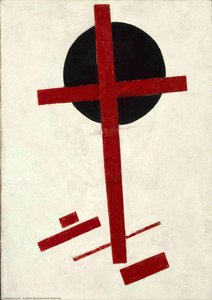
Self-Portrait
() ·
With its frame: · Hand-painted in oil on linen
Total