

Shown: · With its frame:
 Visualizar na parede
 Compartilhar
 Compartilhar
 Detalhes
 Guia
Guia

 Baixar imagem
 Semelhantes
 Raio X
 Ver diaporama
 Q&A
Q&A Estatísticas


€ 239
Reprodução em Óleo Feita à Mão
Óleo sobre tela pintado à mão no tamanho e moldura de sua escolha, feito sob encomenda pelos nossos artistas. ( Alternar para Impressão Alternar para Imagem Digital)
Size
·Tamanho padrão
personalizado
CM
INCH
Escolha entre os nossos tamanhos pré-definidos que respeitam as proporções originais da obra de arte.
Loading sizes...

largura
altura
Insira a largura e a altura desejadas para se ajustarem à sua moldura ou parede. Como esta obra é pintada à mão, para um tamanho com proporções diferentes, o artista poderá pintar um pouco mais ao redor da imagem ou reduzir ligeiramente a composição — você escolhe. Enviamos uma maquete digital para sua aprovação antes de iniciar a pintura. A imagem exibida nesta página não representa o resultado real — apenas a maquete mostra o resultado final.
 Leia mais
Finish
·
White €1

Blurside €1

Extended €1

P118B €10

P118H €10

P118W €10

P438Z €10

P508JH €12

P508YH €12

P805H €10

P805Z €10

P919BZ €10

P919G €10

P919XJ €10

P959ZH €10

P968JZ €12

W106C €8

W218G €10

W218JH €8

W218Y €10

W307PJ €10

W316G €10

W316PJ €8

W316Y €10

W398PJ €8

W4111J €10

W500HY €15

W500JH €15

W692G €12

W849H €8

W940BG €15

W953PJ €8

H24-GOLD €30

H24-SILVER €30

H36-GOLD €45

H36-SILVER €45
Shipped in a protective tube, ready for your own framer.
Above 105 cm the frame is shipped as a kit for a professional framer — read the details.
Extras
optionalWhat do the extras include?
Examples of what can be changed: Replace face with customer photo; Add pet (e.g., replace cat with dog); Include hidden message in background; Change background landscape or elements.
After order, TopImpressionists.com team will email client for instructions and provide a mockup preview
After order, TopImpressionists.com team will email client for instructions and provide a mockup preview
Entrega mundial () em 3 a 4 semanas, em vez das 5 semanas padrão. (31 Outubro). Sem comprometer a qualidade.
Verniz de Proteção
Etiqueta de identificação
Detalhes da Placa de Bronze Gravada
This elegant plaque features the artist's name and the title of the artwork, finely engraved for a timeless presentation.
It is made from bronze with a refined, elegant finish. The text is precisely laser-engraved for a sharp and permanent result. Measuring 9x2 cm, the plaque is compact yet easy to read. It's built to be durable and scratch-resistant, offering a professional, museum-quality look. Mounting is simple thanks to the included adhesive backing.
Detalhes da Placa de Acrílico Transparente
The plaque includes essential engraved details such as the artist's name, the title of the artwork, the date it was created, the type of media used-like oil on canvas or watercolor-a brief description of the piece, and a QR code that links to the complete artwork information.
It is crafted from clear acrylic, offering a sleek, modern appearance. The text is UV-engraved in black to ensure strong visual contrast. With a size of 10x15 cm, it ensures optimal readability. It comes equipped with two metal hooks for secure wall mounting. The plaque is designed to be weather-resistant, making it suitable for various environments, and it includes interactive features that work seamlessly with smartphone scanning.
Detalhes da Placa de Acrílico Preto
This elegant plaque includes engraved information such as the artist's name, the title of the artwork, the date it was created, the type of media used (like oil on canvas or watercolor), a short description of the artwork, and a QR code for quick access to more information.
The plaque itself is made from refined black acrylic with a premium finish. The text is laser-engraved in white for high contrast and readability. Its size is 10x15 cm, designed to be easy to read. It comes with two metal hooks for professional mounting. The design is sleek and fits any interior style. It is also weather-resistant and durable, with built-in digital integration for mobile compatibility.
A opção de vidro está disponível apenas para tamanhos inferiores a 110 cm
 A opção de vidro está disponível apenas para tamanhos inferiores a 110 cm
- Envio expresso gratuito para todo o mundo
- Tela de Linho de Alta Qualidade
- Seguro de transporte completo
- Garantia de Reembolso de Impostos Alfandegários
- Garantia de Fidelidade Cromática
- Política de Devolução em 100 Dias (Apenas para Defeitos)
- Garantia de reembolso de 100%
- Oferta de desconto por quantidade


Descrição do Item
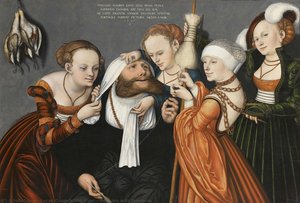
Lucas Cranach’s "Hercules with Omphale" (1548) depicts the legendary hero in a humbling act of servitude alongside Queen Omphale, showcasing masterful realism and idealized beauty from the German Renaissance. Explore this iconic tale of strength and vulnerability – discover or own a stunning reproduction.
Biografia do Artista
Explore a vida e obra de Lucas Cranach, o Velho: retratos marcantes, arte da Reforma e cenas mitológicas. Um mestre do Renascimento alemão com legado duradouro!
About the painting
A Tale of Strength and Servitude: Lucas Cranach’s Hercules with Omphale
Lucas Cranach the Elder's "Hercules with Omphale," painted around 1548, is more than just a portrait; it’s a masterful distillation of Greek mythology interwoven with humanist ideals and skillfully executed in the distinctive style of the Saxon Renaissance. The painting depicts Hercules—the legendary hero famed for his unparalleled physical prowess—engaged in an act of humbling servitude: spinning wool alongside Omphale, Queen of Lydia, a gesture that encapsulates the central theme of the artwork – the paradoxical triumph of vulnerability over dominance.- Subject Matter and Narrative Context: Cranach’s depiction draws directly from Apollonian mythology, specifically Euripides' tragedy “Hercules and Omphale.” The myth recounts how Hercules, weary after his labors, was captured by Omphale and forced to adopt Lydiaian customs, including spinning wool – an occupation deemed utterly unsuitable for a titan of strength. This reversal serves as a potent commentary on the limitations of power and the transformative potential of accepting humility.
- Style and Technique: Cranach’s style is characterized by its meticulous realism combined with idealized beauty—a hallmark of German Renaissance art. He employs oil paint on panel, applying thin glazes to achieve luminous color palettes and subtle tonal gradations. The artist's masterful brushwork captures the textures of fabric and skin with remarkable accuracy, while simultaneously conveying a sense of grace and elegance.
Symbolism: Beyond Mythological Narrative
The painting overflows with symbolic significance that extends far beyond its immediate mythological narrative. Hercules’ spinning wheel represents not merely an act of domestic labor but symbolizes the relinquishment of ego and the acceptance of a lower status—a deliberate stripping away of his heroic identity. Omphale, portrayed as regal yet receptive, embodies feminine wisdom and compassion. Her gaze towards Hercules suggests admiration for his noble spirit despite his apparent weakness.Emotional Impact: A Meditation on Transformation
“Hercules with Omphale” transcends mere visual representation; it evokes a profound emotional response in the observer. The painting compels contemplation on themes of humility, transformation, and the acceptance of limitations—concepts that resonated deeply within humanist circles of the time. Cranach’s ability to convey psychological depth through subtle gestures and expressions contributes significantly to the artwork's enduring power.Concluding Remarks
Lucas Cranach's "Hercules with Omphale" stands as a testament to the Renaissance artist’s genius – a captivating blend of mythology, technique, and humanist philosophy. It is an artwork that invites viewers to consider the complexities of human experience and celebrates the transformative potential inherent in embracing vulnerability. Its enduring beauty and profound symbolism ensure its continued appreciation for generations to come.Perguntas e Respostas
Como "Hercules with Omphale" se integra aos temas e ao estilo de Lucas Cranach o Velho?
"Hercules with Omphale" integra a produção Renaissance German Style de Lucas Cranach o Velho, cujos temas recorrentes incluem german renaissance masters, mythological narrative style, religious symbolism marriage, court patronage artistic taste, iconic cranach portraiture legacy.
Onde posso ver a obra original "Hercules with Omphale", de Lucas Cranach o Velho?
"Hercules with Omphale", de Lucas Cranach o Velho está em exibição no Grand Palais, Paris, France. A referência ao museu diz respeito à obra original, não a reproduções.
Que harmonia de cores apresenta "Hercules with Omphale", de Lucas Cranach o Velho?
"Hercules with Omphale", de Lucas Cranach o Velho apresenta uma harmonia de cores Strong Color Unity.
Quick facts and art quiz
About Lucas Cranach o Velho

Lucas Cranach o Velho
1472 - 1553, Alemanha
Biografia do Artista
A Renaissance Master of Saxony: The Life and Art of Lucas Cranach the Elder
Lucas Cranach the Elder, nascido em Kronach, Alemanha por volta de 1472, emerge como uma figura central do Renascimento germânico. Sua vida se desenrolou durante um período de intensas transformações religiosas e políticas, e sua arte tornou-se intrinsecamente ligada tanto à emergente Reforma Protestante quanto aos opulentos tribunais que serviu. Inicialmente treinado por seu pai, Hans Maler, o desenvolvimento artístico inicial de Cranach permanece em certa medida envolto em mistério, embora influências de mestres do sul da Alemanha sejam evidentes em seu estilo em evolução. Rapidamente, ele se distinguiu não apenas como um artesão habilidoso, mas como um artista capaz de capturar profundidade psicológica ao lado da precisão técnica – qualidades que logo atraíram a atenção de mecenas poderosos. Em 1504, ingressou no serviço de Frederico III, Eleitor de Saxônia, uma relação que definiria grande parte de sua carreira e lhe proporcionaria estabilidade e acesso a círculos influentes. Essa nomeação como pintor da corte em Wittenberg não era simplesmente para produzir obras decorativas; ela o colocava no coração de um dos movimentos mais transformadores da história europeia.Patronage, Reformation and Artistic Innovation
A posição de Cranach dentro do tribunal saxão provou ser crucial não apenas para sua subsistência, mas também para seu desenvolvimento artístico. Ele não estava simplesmente documentando eventos; ele estava ativamente moldando narrativas visuais durante um período de mudança profunda. Seu legado mais duradouro é, sem dúvida, sua associação próxima com Martinho Lutero, a figura central da Reforma Protestante. Cranach criou não menos do que onze retratos de Lutero, cada um oferecendo um vislumbre único da personalidade e do papel em evolução do reformador – qualidades essenciais para um líder desafiando a ordem religiosa estabelecida. Além dos retratos, Cranach traduziu as ideias da Reforma em termos visuais, produzindo xilogravuras e pinturas que disseminaram as ideias protestantes amplamente. Suas representações de cenas bíblicas se afastaram das tradicionais iconografias católicas, enfatizando o envolvimento direto com a Escritura e fomentando um relacionamento mais pessoal entre o espectador e a fé. A Anunciação a Joacim, por exemplo, irradia um espírito alegre, refletindo a nova ênfase na piedade individual dentro da igreja reformada. Essa abordagem inovadora se estendeu além dos temas religiosos; as pinturas mitológicas de Cranach, como representações de Vênus e outros personagens clássicos, frequentemente carregavam significados alegóricos relevantes para os problemas políticos e sociais contemporâneos.A Workshop Dynasty: Style and Technique
Lucas Cranach the Elder não era um artista solitário trabalhando em isolamento. Ele dirigiu uma oficina notavelmente produtiva, empregando numerosos assistentes e aprendizes que contribuíram significativamente para sua produção. Essa abordagem colaborativa significou que muitas obras atribuídas a Cranach foram, na verdade, produzidas sob sua direção ou por membros de seu círculo – incluindo seu filho, Lucas Cranach the Younger. A oficina de Cranach tornou-se conhecida por seu estilo distinto: figuras elegantes com proporções alongadas, cores vibrantes e atenção meticulosa aos detalhes. Sua técnica envolvia uma combinação de pintura a óleo, xilogravura e gravura, permitindo que ele alcançasse um público amplo através tanto de obras de arte originais quanto de impressões acessíveis. A Caça ao Veado do Eleitor Frederico III o Sábio exemplifica sua maestria no estilo renascentista do norte, mostrando realismo detalhado ao lado do simbolismo nobre. A composição é dinâmica, capturando a energia da caçada enquanto transmite ao mesmo tempo o poder e o status do eleitor. O uso de luz e sombra cria uma sensação de profundidade e atmosfera, atraindo o espectador para a cena. Seus retratos são igualmente convincentes, caracterizados por sua percepção psicológica e execução refinada.Major Achievements and Historical Significance
Lucas Cranach the Elder morreu em 1553, deixando um legado artístico extraordinário que continua a ressoar hoje. Ele foi um mestre na pintura de retratos, um intérprete habilidoso de temas religiosos e um empresário astuto que compreendeu o poder da comunicação visual. Sua obra não apenas reflete as correntes culturais e intelectuais de seu tempo, mas também ajudou a moldá-las. A oficina de Cranach continuou a prosperar após sua morte, garantindo que seu estilo e técnicas fossem perpetuados por gerações. Sua influência pode ser vista nas obras de inúmeros artistas posteriores, e suas pinturas permanecem altamente procuradas por colecionadores e museus em todo o mundo. Desde os retratos icônicos de Martinho Lutero até as cativantes cenas mitológicas, a arte de Cranach oferece uma janela fascinante para o mundo da Renascença alemã – um mundo marcado tanto pela profunda questão espiritual quanto pela inovação artística. Sua capacidade de combinar fervor religioso, sagacidade política e talento artístico selou seu lugar como um dos artistas mais importantes de sua era, e suas contribuições continuam a inspirar e cativar públicos por séculos.Influences
Cranach foi influenciado por uma variedade de artistas e movimentos, incluindo os mestres do sul da Alemanha, como Hans Holbein o Jovem e Matthias Grünewald. A influência desses mestres pode ser vista em seu estilo realista, atenção aos detalhes e uso de cores vibrantes. Cranach também foi influenciado pela arte renascentista italiana, especialmente por Leonardo da Vinci e Rafael. Ele incorporou elementos dessas tradições em sua própria obra, como o uso de perspectiva e a representação naturalista das figuras humanas. Além disso, Cranach estava familiarizado com as ideias humanistas do século XVI, que enfatizavam a importância do indivíduo e a razão. Essas ideias se refletem em suas pinturas mitológicas, que frequentemente exploram temas de amor, beleza e moralidade.Legacy
O legado de Lucas Cranach the Elder é vasto e duradouro. Ele é considerado um dos artistas mais importantes da Renascença alemã, e sua obra continua a ser estudada e admirada hoje em dia. Suas pinturas são exibidas em museus e galerias de todo o mundo, e suas gravuras são altamente valorizadas por colecionadores. Cranach também teve uma influência significativa no desenvolvimento da arte alemã, ajudando a estabelecer um novo estilo que combinava elementos do Renascimento italiano com as tradições artísticas locais. Sua obra é um testemunho do poder da arte para inspirar, provocar e transformar.Quick facts about Lucas Cranach o Velho
- Artistic Movement Or Style: Renascimento Alemão
- Artists Or Movements Influenced By This Artist: ['Escola do Danúbio']
- Artists Who Influenced This Artist: ['Hans Maler']
- Date Of Birth: 1472
- Date Of Death: 1553
- Full Name: Lucas Cranach o Velho
- Nationality: Alemão
- Notable Artworks:
- Caça à Rena
- Retrato de Lutero
- Anunciação
- Place Of Birth: Kronach, Alemanha
Explore obras de arte organizadas por temas, estilos e características.


Lucas Cranach o Velho
Hercules with Omphale
() ·
With its frame: · Hand-painted in oil on linen
Total