
 Visualizar na parede
 Compartilhar
 Compartilhar
 Detalhes
 Guia
Guia

 Baixar imagem
 Semelhantes
 Raio X
 Ver diaporama
 Q&A
Q&A Estatísticas
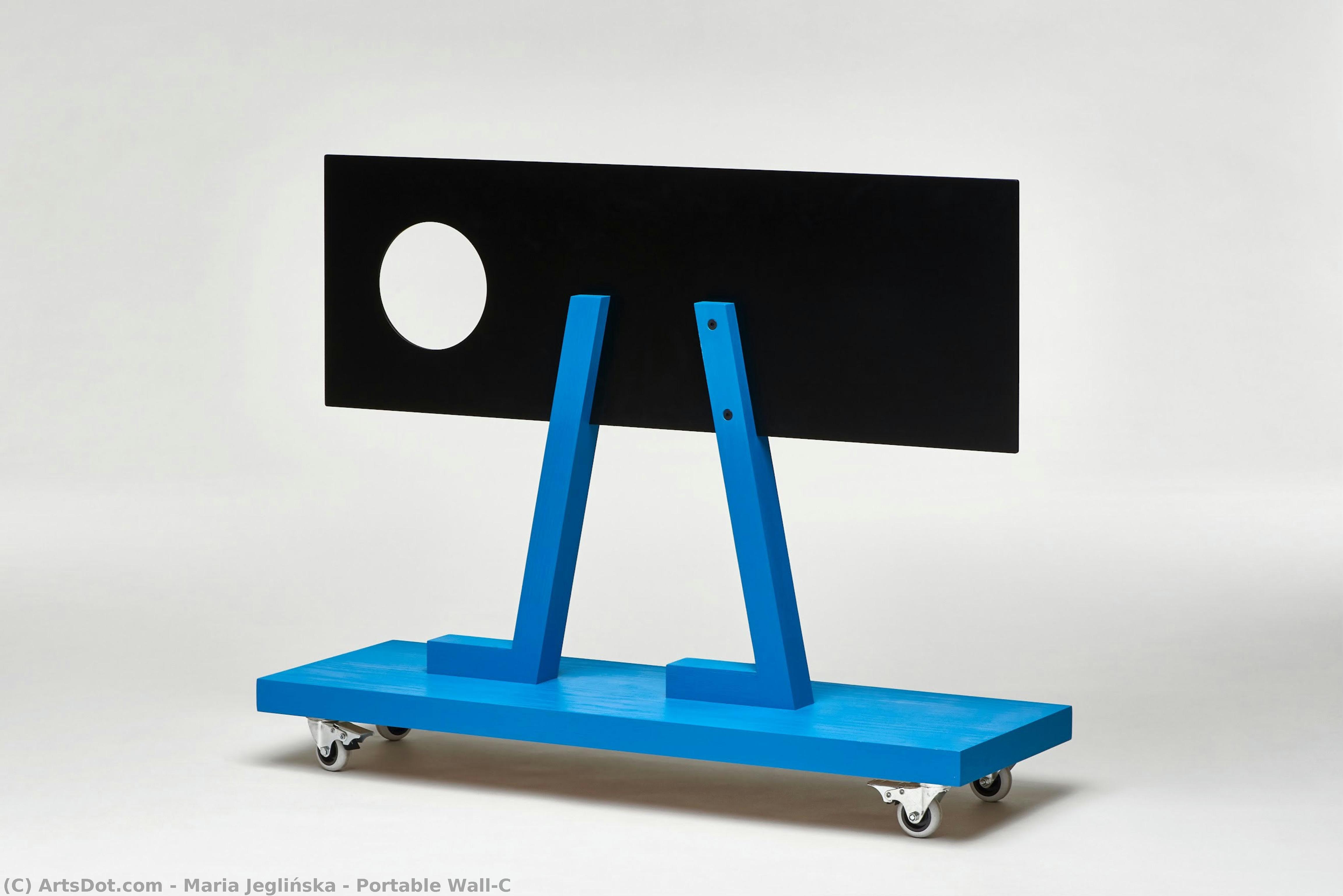
Portable Wall-C

- 70.0 x 90.0 cm


Explore Maria Jeglińska’s ‘Portable Wall-C’: a striking minimalist design blending functionality & color. This sculptural display unit evokes modern aesthetics & playful spatial partitions.
 Ler mais
Explore maria jeglińska's minimalist designs blending functionality & simplicity. Discover her innovative artworks & global exhibitions.
A obra de arte exibida nesta página é protegida por leis de direitos autorais, o que significa que não podemos criar ou vender legalmente uma reprodução idêntica. Esta proteção é aplicada por meio de acordos internacionais, tais como a Convenção de Berna e pelas leis nacionais, incluindo as estabelecidas por Lei de Direitos Autorais dos EUA - Título 17.
Este método cumpre plenamente as regulamentações de direitos autorais, pois não envolve a cópia ou duplicação da obra protegida. Em vez disso, trata-se de uma reinterpretação criativa — uma nova pintura que é influenciada pela original, mas não idêntica a ela.
Giclée / Impressão de Arte
Impressão giclée ou em tela de qualidade de museu, com produção rápida e opções flexíveis de acabamento. ( Comprar pintura feita à mão Alternar para Imagem Digital)




































Tamanho padrão
personalizado
CM
INCH
Escolha entre os nossos tamanhos pré-definidos que respeitam as proporções originais da obra de arte.
Loading sizes...

largura
altura
Insira a largura e a altura desejadas para se ajustarem à sua moldura ou parede. Uma impressão pode ser apenas cortada, nunca ampliada além da imagem original; portanto, um tamanho com proporções diferentes resultará na perda de parte da imagem. Enviamos uma maquete digital para sua aprovação antes de realizarmos a impressão. A imagem exibida nesta página não mostra o corte real — apenas a maquete o faz.
Entrega mundial () em 2 semanas, em vez das 4/5 semanas padrão. (31 Outubro)

Envio expresso gratuito para todo o mundo

Tela de Linho de Alta Qualidade

Seguro de transporte completo

Garantia de Reembolso de Impostos Alfandegários

Garantia de Fidelidade Cromática

Política de Devolução em 100 Dias (Apenas para Defeitos)

Garantia de reembolso de 100%

Oferta de desconto por quantidade
 A opção de vidro está disponível apenas para tamanhos inferiores a 110 cm

Portable Wall-C
Giclée / Impressão de Arte
Tamanho da Reprodução
-


Preço Total
€ 61
The ‘Portable wall-C‘ was created as part of the exhibition series Circulation in the Circle, launched by the Contemporary Design Department in 2018. According to the concept, the invited designer will select an object or ensemble of objects from the collection of the Museum of Applied Arts, and will create a new design as inspired by the object(s). The second designer we have invited for the series is Maria Jeglińska from Poland, who has selected an armchair designed by Sándor Mikó from the museum’s collection, which , which served as one piece of the furnishings of the Te + Én eszpresszó [You + Me espresso bar] that operated on Bem rakpart [embankment] in the 1970s. Inspired by the armchair she selected, Jeglińska has designed playful spatial partitions, which are also colourful characters. The stylised dividers reminiscent of human or animal figures are coquettish pieces. They are located somewhere along the frontier of opening and closing, at the border of 2D and 3D.
Perguntas e Respostas
Como posso visualizar uma reprodução de "Portable Wall-C", de Maria Jeglińska?
Uma prévia de "Portable Wall-C", de Maria Jeglińska está disponível na página de Pré-visualização da obra.
Quantas pessoas visualizam "Portable Wall-C"?
As estatísticas sobre "Portable Wall-C", de Maria Jeglińska encontram-se na página de Estatísticas da obra: visitas mensais da obra, visitas às obras do artista e o detalhamento por país e idioma dos visitantes recentes.
Em qual museu se encontra a obra original de "Portable Wall-C"?
A obra original "Portable Wall-C", de Maria Jeglińska encontra-se no Museu de Artes Aplicadas, Budapeste, Hungria. Uma reprodução permite que a obra seja exibida em sua casa.
Biografia do Artista
A Quiet Revolution in Form: The World of Maria Jeglińska
Maria Jeglińska-Adamczewska, born in Fontainebleau, France, in 1983, embodies a fascinating paradox within the contemporary design landscape. She is an artist who quietly champions simplicity and functionality, yet her work resonates with a profound depth that has garnered international acclaim. Her journey, marked by rigorous training at the prestigious ECAL (École Cantonale d'Art de Lausanne) and formative experiences in studios alongside luminaries like Konstantin Grcic and Alexander Taylor, initially pointed towards a career steeped in global design trends. However, Jeglińska’s unexpected return to Poland proved pivotal, igniting a creative force dedicated to fostering a uniquely Polish aesthetic while simultaneously engaging with universal principles of form and space.
From Lausanne to Warsaw: A Defining Shift
Jeglińska's education at ECAL was foundational. The school’s emphasis on industrial design—a discipline that marries artistic vision with practical application—instilled in her a deep respect for materials, processes, and the user experience. Scholarships from institutions like IKEA further broadened her horizons, providing opportunities to collaborate and learn from established figures. Her early work, influenced by these experiences, demonstrated a keen understanding of minimalist principles and a sophisticated approach to spatial composition. Yet, it was her decision to relocate back to Poland in 2007 that truly defined her artistic trajectory. This wasn’t merely a geographical shift; it represented a conscious choice to engage with a specific cultural context—a desire to contribute to the burgeoning Polish design scene and challenge preconceived notions about its capabilities.
The Office for Design & Research: A Philosophy in Practice
In 2012, Jeglińska established the Office for Design & Research, a studio that quickly became synonymous with thoughtful, research-driven design. The office’s ethos centers on the belief that rigorous investigation can unlock innovative solutions and generate new forms of expression. This isn't simply about aesthetics; it’s about understanding the social, cultural, and historical forces that shape our interaction with objects and spaces. Her projects span a diverse range of applications—furniture, lighting, functional objects, exhibition design, and even filmmaking—reflecting a holistic approach to creativity. Clients such as Ligne Roset, Kvadrat, Vitra, and Hermès attest to the studio’s international appeal and its ability to seamlessly blend artistic integrity with commercial viability.
Major Achievements & Curatorial Vision
Jeglińska's impact extends beyond her own design work. She has curated numerous exhibitions that showcase both Polish and global talent, acting as a vital bridge between local artisans and the international art community. Her curation of “Punkty Widzenia / Punkty Siedzenia” (“Ways of Seeing/Sitting”) at the Łódź Design Festival in 2012 demonstrated her ability to create compelling narratives through carefully selected objects. Perhaps most notably, she co-curated and designed the Polish Pavilion for the inaugural London Design Biennale in 2016, a project that brought Polish design to the forefront of international attention. From 2018 to 2020, her role as creative director of the ARENA DESIGN fair in Poznań further solidified her position as a leading voice in the Polish design landscape.
Historical Significance & A Lasting Legacy
Maria Jeglińska’s significance lies not in flamboyant gestures or radical departures from tradition, but rather in her subtle yet powerful commitment to quiet innovation. She represents a new generation of designers who are actively challenging the boundaries between art, design, and research. Her work is characterized by an understated elegance that belies its intellectual depth—a testament to the power of simplicity and functionality when informed by rigorous investigation and cultural awareness. Her influence can be seen in the growing recognition of Polish design on the global stage, and her dedication to fostering a vibrant creative community ensures that her legacy will continue to inspire for years to come. Her recent participation in projects like “Connected” with the American Hardwood Export Council demonstrates an ongoing commitment to exploring new materials and responding to contemporary challenges, solidifying her position as a vital force in the evolving world of design.

Maria Jeglińska
1983 - , France
Dados Rápidos
- Artistic Movement Or Style: Minimalist design
- Artists Who Influenced This Artist:
- Konstantin Grcic
- Alexander Taylor
- Date Of Birth: 1983
- Full Name: Maria Jeglińska-Adamczewska
- Nationality: Polish
- Notable Artworks:
- Portable Wall-B
- Vase Man
- Connected table/chair
- Place Of Birth: Fontainebleau, France
Artigos Relacionados

The Enduring Form: Sculpture Across History, Technique & Emotional Resonance
Explore the rich history of sculpture with TopImpressionists. Discover key techniques, influential artists & investment potential for discerning collectors. Expert insights into valuing and collecting timeless masterpieces.

As 10 Obras Mais Famosas em Tons de Azul Ardósia | TopImpressionists.com
Descubra as 10 pinturas mais emblemáticas em tons de azul ardósia! Explore a história, artistas como Monet e Van Gogh, e o significado da cor na arte. Encontre reproduções de alta qualidade para decorar sua casa com TopImpressionists.com.

The Enduring Form: Exploring Themes & Techniques in Sculpture Across Historical Periods
Explore the rich history of sculpture from ancient masterpieces to contemporary innovations. Discover key techniques, influential artists & investment potential for discerning art collectors.

Esculturas em Bronze Icônicas: 10 Obras que Revolucionaram a Arte | TopImpressionists
Descubra as 10 esculturas em bronze mais icônicas da história! Explore a arte de Rodin, Michelangelo e outros mestres. Encontre reproduções de alta qualidade para sua casa em TopImpressionists.com.

As 10 Obras em Bronze Mais Icônicas que Transformaram a História da Arte | TopImpressionists
Descubra as 10 esculturas em bronze mais influentes da história! Explore a arte de Rodin, Michelangelo e outros mestres. Reproduções de alta qualidade para decorar sua casa com elegância. TopImpressionists.