


 Visualizar em escala
 Enviar
 Compartilhar
 Ver detalhes
 Guia de Obras do Aluno

 Baixar imagem
 Semelhantes
 Raio X
 Apresentação de slides
 Estatísticas
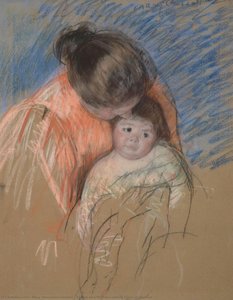
Child with Doll


Discover Milton Avery’s ‘Child with Doll’ (1944), a vibrant folk art piece featuring a stylized mother & child. Bold lines, orange hues, & expressive form evoke protection & nurture.
 Ver mais
Milton Avery (1885-1965): pintor americano inovador conhecido por cores vibrantes, formas simplificadas e paisagens evocativas. Influenciou o expressionismo abstrato com sua obra singular.
Adquira uma imagem digital de alta resolução e aprimorada, muito superior à prévia online.
Cada arquivo é meticulosamente preparado por nossos especialistas internos, utilizando ferramentas avançadas e retoques manuais de alta precisão. Garantimos que cada imagem apresente clareza excepcional, fidelidade de cores e detalhes minuciosos.
O arquivo final é entregue por e-mail em até 72 horas, otimizado para uso imediato em ambientes profissionais, editoriais e de impressão. Esta é a mesma qualidade utilizada por estúdios de design de alto nível, editoras e galerias.
Imagem Digital
Baixe um arquivo de alta resolução para exibição pessoal, impressão e projetos criativos. ( Alternar para Impressão Encomendar reprodução pintada à mão)
Incluído em cada pedido de imagem digital
Entrega Digital Especializada e Garantida
Ao escolher o TopImpressionists.com, você não está apenas adquirindo uma imagem — você está recebendo uma obra de arte digital profissionalmente aprimorada, elaborada com precisão e com garantia de satisfação. Aqui está tudo o que acompanha seu pedido, automaticamente:

Entrega rápida por e-mail
O seu arquivo de imagem digital em alta resolução será enviado por e-mail em até 72 horas após o pedido — pronto para uso imediato.

Arquivo Digital com IA Otimizado
Sua obra de arte é otimizada profissionalmente por meio de ferramentas avançadas de IA e edição manual, garantindo o máximo de detalhes, clareza e precisão de cores.

Reenvio gratuito vitalício
Apagou ou perdeu o seu ficheiro acidentalmente? Não se preocupe – nós reenviamos para si a qualquer momento, gratuitamente.

Sem Taxas de Importação - Sempre
Desfrute da sua obra de arte instantaneamente, sem taxas alfandegárias, impostos ou custos de entrega — downloads digitais são sempre isentos de taxas.

Garantia de Precisão de Cores
Garantimos que sua imagem digital reflita as cores originais com a maior fidelidade possível, utilizando ferramentas profissionais e gerenciamento de cores.

Garantia de satisfação de 100 dias
Se não estiver satisfeito com a sua imagem digital, nós a revisaremos ou reembolsaremos 100% dentro de 100 dias — sem perguntas.

Garantia de Reembolso 100%
Não está satisfeito? Receba o reembolso total em até 100 dias após o recebimento do seu arquivo digital — sem perguntas.

Descontos para pedidos em lote
Compre 3 imagens, economize 10% - Compre 5, economize 15% - Compre 10+, economize 20%. Ideal para projetos criativos, galerias e agências.
A Quiet Revolution in Color
In the landscape of American Modernism, few works capture the profound intimacy of domestic life with as much poetic restraint as Milton Avery’s 1944 masterpiece, Child with Doll. This painting is far more than a mere depiction of maternal tenderness; it is a masterful exploration of how color and form can bypass literal representation to touch the very soul of the viewer. At first glance, the eye is immediately drawn into a vibrant dialogue between warm and cool tones. A bold, sun-drenched palette of orange and pink dances against a grounding, somber expanse of grey, creating a chromatic harmony that feels both modern and timeless. Avery, deeply influenced by the colorist traditions of Matisse, uses these hues not just to decorate the canvas, but to evoke an atmosphere of serene stillness and emotional depth.
The composition itself is a study in elegant simplicity. Eschewing the complex perspectives of classical realism, Avery presents a frontal view that brings the figures into an immediate, almost confrontational closeness with the observer. The subjects—a mother and child—are rendered through simplified geometric shapes, where rectangles and ovals become the building blocks of human connection. Thick, confident outlines delineate these forms, providing a sense of structural stability and warmth. This stylistic choice leans toward a beautiful, naive aesthetic, stripping away the unnecessary noise of the world to focus entirely on the essence of the bond being portrayed. It is a visual language that speaks of protection and nurturing, turning a private moment into a universal symbol of care.
The Tactile Poetry of Technique
To look closely at Child with Doll is to witness the physical labor of the artist’s hand. Avery employed a technique involving the application of oil paint via a palette knife, a method that lends the surface a distinctive, palpable texture. This deliberate roughness breaks the flatness of the modern shapes, adding a layer of materiality that grounds the abstraction in reality. The visible, broad brushstrokes and the slight impasto effect create a rhythmic energy across the canvas, ensuring that even within its minimalist structure, the painting feels alive and breathing.
<For the discerning collector or interior designer, this artwork offers a rare opportunity to introduce a sense of sophisticated tranquility into a space. The way the light interacts with the textured surface—even in a high-quality reproduction—promises a dynamic visual experience that changes with the time of day. Whether placed in a contemporary gallery setting or as a focal point in a curated living space, Avery’s work provides a bridge between the bold experimentation of the mid-century avant-garde and the timeless human need for beauty and connection. It is an investment in a piece of history that continues to offer a quiet, colorful revolution to all who behold it.
Perguntas e Respostas
Qual é a luminância de "Child with Doll" de Milton Avery?
A luminância registrada para "Child with Doll" de Milton Avery é Gentle Luminance.
A qual artista "Child with Doll" é atribuída?
"Child with Doll" é atribuída a Milton Avery.
Para qual tom se inclina "Child with Doll"?
A tonalidade dominante de "Child with Doll" de Milton Avery é Amber to Saffron. A tonalidade é o tom subjacente da paleta.
Como é construída a composição cromática de "Child with Doll" de Milton Avery?
Em "Child with Doll", um Bold contraste é acompanhado por uma Strong Color Unity harmonia.
Qual é o sentimento geral de "Child with Doll" de Milton Avery?
"Child with Doll" de Milton Avery é descrito como tendo um clima Serene. Esta classificação pode ajudar a combinar a obra com um ambiente.
Com que idade Milton Avery criou "Child with Doll"?
Quando "Child with Doll" foi criada em 1944, Milton Avery — nascido(a) em 1885 — tinha 59 anos.
Qual é a data de criação de "Child with Doll" de Milton Avery?
A criação de "Child with Doll" de Milton Avery data de 1944.
Obras Relacionadas




Biografia do Artista
A Quiet Revolution in Color: The Life and Art of Milton Avery
Milton Clark Avery, born March 7, 1885, in the small hamlet of Altmar, New York, wasn’t a painter who stormed the art world with manifestos or radical pronouncements. Instead, his revolution unfolded quietly, through a subtle yet profound exploration of color and form that would deeply influence generations of American artists. His early life was steeped in practicality; as the son of a tanner, Avery began working at sixteen to support his family after his father’s untimely death, taking on various blue-collar jobs while nurturing a burgeoning passion for art. This period instilled in him a grounded sensibility, a connection to everyday life that would permeate his work.
Early Life and Artistic Beginnings
Raised in rural New York State amidst the hardships of working-class existence, Avery’s formative years shaped his artistic vision profoundly. The death of his brother-in-law in 1915 left him responsible for caring for nine female relatives—a circumstance that instilled a deep sense of responsibility and fostered an unwavering dedication to providing for his family. Recognizing his innate talent for visual representation, he pursued formal training at the Connecticut League of Art Students and later at the Art Students League of New York, honing his skills through disciplined observation and experimentation.
Influences from European Modernism
Avery’s artistic journey wasn't defined by immediate acclaim but rather by a gradual assimilation of influential movements. He absorbed the bold color palettes of French Fauvism—artists like Henri Matisse served as pivotal mentors—and the expressive distortions characteristic of German Expressionism, particularly the work of Ernst Ludwig Kirchner. However, Avery skillfully synthesized these lessons into something uniquely his own; he didn’t merely imitate stylistic conventions but rather interrogated their underlying principles, seeking to distill essence and convey emotion.
The Rise of Color Field Painting & Recognition by Roy Neuberger
Avery's breakthrough came in the 1930s with the patronage of Roy Neuberger, a New York art dealer who recognized the exceptional quality and originality of his paintings. Neuberger’s astute judgment propelled Avery into the spotlight, initiating an ambitious campaign to disseminate his work internationally—a pivotal moment that secured his place as a cornerstone of American Modernism. Among Neuberger's most notable acquisitions was *Gaspé Landscape*, which became emblematic of Avery’s distinctive style: luminous color fields juxtaposed with simplified geometric forms.
A Legacy of Serenity and Influence
Milton Avery’s enduring legacy resides in his unwavering commitment to exploring the expressive potential of color—a pursuit that profoundly impacted subsequent generations of artists. Artists like Mark Rothko and Adolph Gottlieb acknowledged Avery's influence, recognizing his pioneering role in establishing Color Field painting as a dominant aesthetic trend. His paintings continue to captivate audiences today with their serene beauty, understated elegance, and profound emotional resonance—a testament to an artist who dared to redefine the boundaries of artistic expression.

Milton Avery
1885 - 1965 , Estados Unidos da América
Informações Rápidas
- Artistic Movement Or Style: Modernismo, Fauvismo
- Artists Or Movements Influenced By This Artist:
- Expressionismo
- Abstracionismo
- Artists Who Influenced This Artist:
- Matisse
- Kirchner
- Date Of Birth: 7 de março de 1885
- Date Of Death: 3 de janeiro de 1965
- Full Name: Milton Clark Avery
- Nationality: Americano
- Notable Artworks:
- Gaspé Landscape
- Central Park
- Flight of Birds
- Place Of Birth: Altmar, EUA