

Shown: · With its frame:
 Visualizar na parede
 Compartilhar
 Compartilhar
 Detalhes
 Guia
Guia

 Baixar imagem
 Semelhantes
 Raio X
 Ver diaporama
 Q&A
Q&A Estatísticas


€ 239
Reprodução em Óleo Feita à Mão
Óleo sobre tela pintado à mão no tamanho e moldura de sua escolha, feito sob encomenda pelos nossos artistas. ( Alternar para Impressão Alternar para Imagem Digital)
Size
·Tamanho padrão
personalizado
CM
INCH
Escolha entre os nossos tamanhos pré-definidos que respeitam as proporções originais da obra de arte.
Loading sizes...

largura
altura
Insira a largura e a altura desejadas para se ajustarem à sua moldura ou parede. Como esta obra é pintada à mão, para um tamanho com proporções diferentes, o artista poderá pintar um pouco mais ao redor da imagem ou reduzir ligeiramente a composição — você escolhe. Enviamos uma maquete digital para sua aprovação antes de iniciar a pintura. A imagem exibida nesta página não representa o resultado real — apenas a maquete mostra o resultado final.
 Leia mais
Finish
·
White €1

Blurside €1

Extended €1

P118B €10

P118H €10

P118W €10

P438Z €10

P508JH €12

P508YH €12

P805H €10

P805Z €10

P919BZ €10

P919G €10

P919XJ €10

P959ZH €10

P968JZ €12

W106C €8

W218G €10

W218JH €8

W218Y €10

W307PJ €10

W316G €10

W316PJ €8

W316Y €10

W398PJ €8

W4111J €10

W500HY €15

W500JH €15

W692G €12

W849H €8

W940BG €15

W953PJ €8

H24-GOLD €30

H24-SILVER €30

H36-GOLD €45

H36-SILVER €45
Shipped in a protective tube, ready for your own framer.
Above 105 cm the frame is shipped as a kit for a professional framer — read the details.
Extras
optionalWhat do the extras include?
Examples of what can be changed: Replace face with customer photo; Add pet (e.g., replace cat with dog); Include hidden message in background; Change background landscape or elements.
After order, TopImpressionists.com team will email client for instructions and provide a mockup preview
After order, TopImpressionists.com team will email client for instructions and provide a mockup preview
Entrega mundial () em 3 a 4 semanas, em vez das 5 semanas padrão. (30 Outubro). Sem comprometer a qualidade.
Verniz de Proteção
Etiqueta de identificação
Detalhes da Placa de Bronze Gravada
This elegant plaque features the artist's name and the title of the artwork, finely engraved for a timeless presentation.
It is made from bronze with a refined, elegant finish. The text is precisely laser-engraved for a sharp and permanent result. Measuring 9x2 cm, the plaque is compact yet easy to read. It's built to be durable and scratch-resistant, offering a professional, museum-quality look. Mounting is simple thanks to the included adhesive backing.
Detalhes da Placa de Acrílico Transparente
The plaque includes essential engraved details such as the artist's name, the title of the artwork, the date it was created, the type of media used-like oil on canvas or watercolor-a brief description of the piece, and a QR code that links to the complete artwork information.
It is crafted from clear acrylic, offering a sleek, modern appearance. The text is UV-engraved in black to ensure strong visual contrast. With a size of 10x15 cm, it ensures optimal readability. It comes equipped with two metal hooks for secure wall mounting. The plaque is designed to be weather-resistant, making it suitable for various environments, and it includes interactive features that work seamlessly with smartphone scanning.
Detalhes da Placa de Acrílico Preto
This elegant plaque includes engraved information such as the artist's name, the title of the artwork, the date it was created, the type of media used (like oil on canvas or watercolor), a short description of the artwork, and a QR code for quick access to more information.
The plaque itself is made from refined black acrylic with a premium finish. The text is laser-engraved in white for high contrast and readability. Its size is 10x15 cm, designed to be easy to read. It comes with two metal hooks for professional mounting. The design is sleek and fits any interior style. It is also weather-resistant and durable, with built-in digital integration for mobile compatibility.
A opção de vidro está disponível apenas para tamanhos inferiores a 110 cm
 A opção de vidro está disponível apenas para tamanhos inferiores a 110 cm
- Envio expresso gratuito para todo o mundo
- Tela de Linho de Alta Qualidade
- Seguro de transporte completo
- Garantia de Reembolso de Impostos Alfandegários
- Garantia de Fidelidade Cromática
- Política de Devolução em 100 Dias (Apenas para Defeitos)
- Garantia de reembolso de 100%
- Oferta de desconto por quantidade


Descrição do Item
Biografia do Artista
Um dos artistas mais importantes do Barroco francês, Nicolas Poussin é conhecido por suas obras que celebram valores clássicos como beleza e ordem, utilizando uma linguagem visual sofisticada para criar imagens de grande impacto emocional.
About the painting
A Moment Frozen in Time: Poussin’s ‘Two Silver Birches’
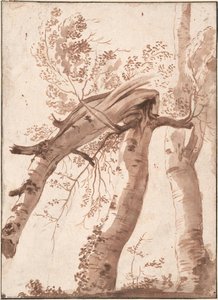
Nicolas Poussin's “Two Silver Birches, the Front One Fallen,” painted circa 1629, isn’t merely a depiction of trees; it’s a carefully constructed meditation on mortality, harmony, and the enduring power of classical ideals. Emerging from his formative years in France and culminating in his profound immersion within the Roman artistic landscape, Poussin sought to synthesize the sensual richness of Venetian painting with the rigorous order and intellectual depth of antiquity. This work, created during a pivotal period of his career, exemplifies this ambition – a quiet yet profoundly resonant scene that speaks volumes about the artist’s evolving philosophy.
The painting immediately draws the eye with its stark simplicity. Two birch trees dominate the composition, their silvery bark rendered with an almost luminous quality. The tree on the right stands tall and proud, branches reaching skyward as if in defiant grace, while its counterpart lies prone at the base of the canvas, a fallen sentinel marking the passage of time. The absence of leaves is deliberate; it strips away the seasonal distractions, focusing instead on the skeletal beauty of the trees themselves – a motif frequently associated with death and remembrance within classical art. This reduction to essential form allows Poussin to explore the underlying structure of nature, mirroring his broader interest in geometric principles and mathematical harmony.
The Language of Line and Light
Poussin’s technique is characterized by an exquisite control of line and light. He employs a meticulous layering of thin washes of paint – a hallmark of his style – to build up the forms with remarkable precision. The branches, particularly those of the upright birch, are delineated with delicate, almost hesitant strokes, creating a sense of movement and vulnerability. The fallen tree is rendered with a slightly heavier touch, suggesting its weight and the inevitability of decay. Light plays a crucial role in shaping the scene; it seems to emanate from an unseen source, bathing the trees in a soft, diffused glow that enhances their silvery sheen. This masterful manipulation of light not only creates visual beauty but also imbues the painting with a sense of spiritual depth.
Noticeably, Poussin includes a human figure – a small, dark silhouette standing near the base of the fallen tree. The identity and purpose of this figure remain deliberately ambiguous, adding another layer of complexity to the work. Some scholars interpret it as representing contemplation or perhaps even mourning, while others see it as a symbol of humanity’s relationship with nature—a witness to its cycles of growth and decline. The figure's presence subtly anchors the scene in the realm of human experience, reminding us that even within the grandeur of the natural world, we are confronted by our own mortality.
Symbolism Rooted in Antiquity
The birch tree itself carries a rich symbolic weight throughout Western art history. Often associated with purity, resilience, and the afterlife, it frequently appears in funerary monuments and depictions of mourning. Its slender form and delicate branches evoke images of fragility and vulnerability, while its ability to withstand harsh winters speaks to an enduring spirit. Poussin’s choice of birch trees aligns perfectly with his engagement with classical themes – particularly those found in Roman mythology and literature, where the tree frequently served as a symbol of transition and renewal.
Furthermore, the fallen tree can be interpreted as a representation of *memento mori*—a reminder of death. This concept was central to Renaissance art, serving as a powerful tool for prompting reflection on the transience of earthly life. Poussin’s painting, therefore, transcends mere botanical observation; it becomes a poignant meditation on the cyclical nature of existence and the inevitability of loss. The composition invites us to contemplate our own place within this grand scheme, fostering a sense of both melancholy and acceptance.
A Timeless Masterpiece for Reproduction
TopImpressionists offers meticulously crafted hand-painted reproductions of “Two Silver Birches, the Front One Fallen,” allowing you to bring this iconic work into your home or office. Our artists replicate Poussin’s delicate brushwork and masterful use of light with unparalleled precision, ensuring that every detail is faithfully reproduced. Whether you are an art enthusiast, a collector seeking to expand your collection, or an interior designer searching for a touch of classical elegance, our reproductions provide a beautiful and authentic representation of this timeless masterpiece. Experience the profound beauty and intellectual depth of Poussin’s vision – a moment frozen in time, brought vividly back to life.
Perguntas e Respostas
"Two Silver Birches, the Front One Fallen, c. 1629", de Nicolas Poussin utiliza contrastes fortes ou harmonias suaves?
Em "Two Silver Birches, the Front One Fallen, c. 1629", um Gentle contraste une-se a uma Unified Palette harmonia.
O que "Two Silver Birches, the Front One Fallen, c. 1629", de Nicolas Poussin retrata e qual é a sua atmosfera?
"Two Silver Birches, the Front One Fallen, c. 1629" apresenta birches, trees, fallen tree, tranquility, poussin, landscape, classical, harmony, e o seu estado de espírito registrado é Calm.
Como o movimento e a época se encontram em "Two Silver Birches, the Front One Fallen, c. 1629", de Nicolas Poussin?
"Two Silver Birches, the Front One Fallen, c. 1629" pertence ao movimento French Baroque Painting, e seu criador atuou na era Idade Moderna.
Quick facts and art quiz
About Nicolas Poussin

Nicolas Poussin
1594 - 1665, França
Biografia do Artista
Nicolas Poussin – Um Ídolo da Serenidade Clássica
Nicolas Poussin, um nome que ressoa com a grandeza da pintura barroca francesa, foi, no entanto, uma alma profundamente ancorada na terra italiana por grande parte de sua vida artística. Nasceu em Les Andelys, Normandia, em junho de 1594, seus primeiros anos permanecem parcialmente envoltos em mistério, ainda que certamente estabelecessem as bases para uma carreira que se tornaria fundamental na formação da tradição clássica dentro da arte francesa. Embora tenha estudado brevemente em Paris durante os primeiros anos de 1610, absorvendo influências de artistas menos conhecidos da época, foi sua jornada para Roma em 1624 que realmente inflamou seu destino artístico. Não se tratava apenas de uma mudança geográfica; era uma imersão no coração da antiguidade, uma peregrinação à fonte mesma da inspiração que definiria sua visão estética. Os primeiros trabalhos de Poussin exibiam uma qualidade sensual reminiscente dos mestres venezianos como Titian, porém mesmo nessas obras iniciais, um senso latente de ordem e rigor intelectual começava a emergir—uma prenúncio do estilo que ele tão magistralmente refinaria.Os Anos Romanos: Forjando um Ideal Clássico
Roma provou ser mais do que apenas um estúdio para Poussin; tornou-se seu crisol intelectual. Ele encontrava-se entre uma vibrante companhia de estudiosos, arqueólogos e artistas colegas, notavelmente Cassiano dal Pozzo, cuja profunda compreensão da antiguidade clássica influenciou profundamente a abordagem do artista. Dal Pozzo’s dedicação meticulosa à documentação de restos antigos inculcou em Poussin um profundo respeito pela precisão histórica e um desejo de impregnar suas pinturas com uma sensação de eternidade. Esta época viu Poussin afastar-se da exuberância flamboyante de alguns contemporâneos, abraçando um estilo caracterizado por clareza, equilíbrio e uma ênfase deliberada na composição linear. Ele estudava atentamente as obras de Rafael, absorvendo suas harmoniosas disposições e formas elegantes, enquanto simultaneamente buscava inspiração em esculturas antigas e fontes literárias como *As Metamorfoses* de Ovídio. Sua pintura começou a povoar com figuras retiradas da história antiga e mitologia, apresentadas não apenas como elementos decorativos, mas como expressões de virtudes morais e ideias filosóficas. Ele estudou profundamente os princípios da perspectiva e da anatomia humana, buscando replicar o rigor científico que caracterizava o Renascimento italiano.Influências e Estilo: Uma Voz Única na Arte Barroca
Embora inicialmente influenciado pela estética veneziana, Poussin rapidamente desenvolveu um estilo próprio que se distinguiria dos demais artistas de sua época. Sua obra refletia uma profunda compreensão da filosofia clássica e uma habilidade excepcional em transmitir emoções sutis através da luz e sombra—uma característica marcante do barroco francês. Ele admirava profundamente o trabalho de Rafael Sanzio, buscando replicar suas composições equilibradas e suas formas suaves, mas também incorporou elementos da arte italiana renascentista, como o uso de cores vibrantes e detalhes minuciosos. Diferentemente dos artistas barrocos que buscavam impressionar o público com efeitos dramáticos e exagerados, Poussin procurava criar imagens que evocassem uma sensação de beleza serena e ordem intelectual—um objetivo que guiou toda sua produção artística. Sua maestria na composição linear e seu domínio da perspectiva são evidentes em obras como *O Ato Nobre de Scípio*, considerada uma das maiores conquistas da pintura barroca francesa.Um Legado Duradouro: Moldando a Arte Francesa
Apesar de passar grande parte de sua vida fora da França, Nicolas Poussin deixou uma marca indelével na arte francesa. Ele retornou brevemente à cidade em 1640, sob o mandato do Cardeal Richelieu, nomeado Primeiro Pintor ao Rei, mas encontrou-se frustrado pelas demandas e intrigas da corte. Logo voltou para Roma, onde continuou a pintar até sua morte em 1665. Sua dedicação aos princípios clássicos ajudou estabelecer um padrão de treinamento artístico e prática dentro da França, influenciando gerações de artistas que o seguiram. Ele tornou-se uma figura central na Académie Royale de Peinture et de Sculpture, consolidando sua posição como um dos pilares do Classicismo francês. Artistas como Jacques-Louis David e Paul Cézanne reconheceram abertamente sua dívida com Poussin’s rigor intelectual e estilo único—uma homenagem àquele artista que buscava não apenas representar o mundo, mas elevá-lo através da lente da razão e da beleza. Sua obra permanece um testemunho da capacidade artística de capturar a essência da experiência humana e transmitir valores universais como ordem, equilíbrio e contemplação estética.- Principais Obras: *O Ato Nobre de Scípio*, *Os Dez Mandamentos*, *A Criação do Mundo*, *O Nascimento de Venus*, *O Êxodo dos Hebreus*.
- Características Essenciais: Composição Linear, Uso Magistral da Luz e Sombra, Temas Mitológicos e Históricos Inspirados pela Antiguidade Clássica.
Quick facts about Nicolas Poussin
- Artistic Movement Or Style: Barroco, Classicismo
- Artists Who Influenced This Artist:
- Rafael
- Titian
- Date Of Birth: 1594
- Date Of Death: 1665
- Full Name: Nicolas Poussin
- Nationality: Francês
- Notable Artworks:
- O Ato Nobre de Scípio
- Os Sete Sacramentos Série
- Uma Estrada Romana
- Orião Cegado Procurando o Sol
- As Estações
- Place Of Birth: Les Andelys, França
Explore obras de arte organizadas por temas, estilos e características.


Nicolas Poussin
Two Silver Birches, the Front One Fallen, c. 1629
() ·
With its frame: · Hand-painted in oil on linen
Total