

Exibido: · Com a moldura:
 Visualizar na parede
 Compartilhar
 Compartilhar
 Detalhes
 Guia
Guia

 Baixar imagem
 Semelhantes
 Raio X
 Ver diaporama
 Perguntas e Respostas
 Estatísticas


€ 240
Reprodução em Óleo Feita à Mão
Óleo sobre tela pintado à mão no tamanho e moldura de sua escolha, feito sob encomenda pelos nossos artistas. ( Alternar para Impressão Alternar para Imagem Digital)
Tamanho
·Tamanho padrão
personalizado
CM
INCH
Escolha entre os nossos tamanhos pré-definidos que respeitam as proporções originais da obra de arte.
Carregando tamanhos...

largura
altura
Insira a largura e a altura desejadas para se ajustarem à sua moldura ou parede. Como esta obra é pintada à mão, para um tamanho com proporções diferentes, o artista poderá pintar um pouco mais ao redor da imagem ou reduzir ligeiramente a composição — você escolhe. Enviamos uma maquete digital para sua aprovação antes de iniciar a pintura. A imagem exibida nesta página não representa o resultado real — apenas a maquete mostra o resultado final.
 Leia mais
Finalizar
·
Branco €1

Bordas esfumaçadas €1

Bordas estendidas €1

P118B €10

P118H €10

P118W €10

P438Z €10

P508JH €12

P508YH €12

P805H €10

P805Z €10

P919BZ €10

P919G €10

P919XJ €10

P959ZH €10

P968JZ €12

W106C €8

W218G €10

W218JH €8

W218Y €10

W307PJ €10

W316G €10

W316PJ €8

W316Y €10

W398PJ €8

W4111J €10

W500HY €15

W500JH €15

W692G €12

W849H €8

W940BG €15

W953PJ €8

H24-GOLD €30

H24-SILVER €30

H36-GOLD €45

H36-SILVER €45
Enviado em um tubo protetor, pronto para ser emoldurado por você.
Extras
opcionalO que os extras incluem?
Exemplos do que pode ser alterado: Substituir o rosto pela foto do cliente; Adicionar um animal de estimação (ex: substituir gato por cachorro); Incluir uma mensagem oculta no fundo; Alterar a paisagem ou elementos do fundo.
Após o pedido, a equipe da TopImpressionists.com enviará um e-mail ao cliente para instruções e fornecerá uma prévia da montagem
Após o pedido, a equipe da TopImpressionists.com enviará um e-mail ao cliente para instruções e fornecerá uma prévia da montagem
Entrega mundial () em 3 a 4 semanas, em vez das 5 semanas padrão. (3 Novembro). Sem comprometer a qualidade.
Verniz de Proteção
Etiqueta de identificação
Detalhes da Placa de Bronze Gravada
This elegant plaque features the artist's name and the title of the artwork, finely engraved for a timeless presentation.
It is made from bronze with a refined, elegant finish. The text is precisely laser-engraved for a sharp and permanent result. Measuring 9x2 cm, the plaque is compact yet easy to read. It's built to be durable and scratch-resistant, offering a professional, museum-quality look. Mounting is simple thanks to the included adhesive backing.
Detalhes da Placa de Acrílico Transparente
The plaque includes essential engraved details such as the artist's name, the title of the artwork, the date it was created, the type of media used-like oil on canvas or watercolor-a brief description of the piece, and a QR code that links to the complete artwork information.
It is crafted from clear acrylic, offering a sleek, modern appearance. The text is UV-engraved in black to ensure strong visual contrast. With a size of 10x15 cm, it ensures optimal readability. It comes equipped with two metal hooks for secure wall mounting. The plaque is designed to be weather-resistant, making it suitable for various environments, and it includes interactive features that work seamlessly with smartphone scanning.
Detalhes da Placa de Acrílico Preto
This elegant plaque includes engraved information such as the artist's name, the title of the artwork, the date it was created, the type of media used (like oil on canvas or watercolor), a short description of the artwork, and a QR code for quick access to more information.
The plaque itself is made from refined black acrylic with a premium finish. The text is laser-engraved in white for high contrast and readability. Its size is 10x15 cm, designed to be easy to read. It comes with two metal hooks for professional mounting. The design is sleek and fits any interior style. It is also weather-resistant and durable, with built-in digital integration for mobile compatibility.
A opção de vidro está disponível apenas para tamanhos inferiores a 110 cm
 A opção de vidro está disponível apenas para tamanhos inferiores a 110 cm
- Envio expresso gratuito para todo o mundo
- Tela de Linho de Alta Qualidade
- Seguro de transporte completo
- Garantia de Reembolso de Impostos Alfandegários
- Garantia de Fidelidade Cromática
- Política de Devolução em 100 Dias (Apenas para Defeitos)
- Garantia de reembolso de 100%
- Oferta de desconto por quantidade


Descrição do Item
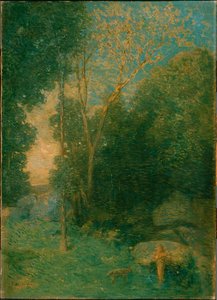
Discover 'Interieur de Foret (Compiegne)' by Paul Huet – a captivating Romantic landscape painting. Explore its atmospheric brushstrokes, forest scene & human element. #art #landscapepainting #frenchart
Biografia do Artista
Paul Huet (1803-1869) foi um pintor de paisagens francês conhecido pelo seu estilo Romântico e influência nos artistas de Barbizon e Impressionistas. Explore as suas evocativas aquarelas e pinturas a óleo.
Sobre a pintura
The Enveloping Mystery of the Woodland
To stand before Paul Huet’s depiction of an interior forest—Intérieur de Forêt (Compiègne)—is not merely to observe a landscape; it is to step through a veil into a moment suspended between light and shadow. The painting immerses the viewer in the profound, almost palpable atmosphere of a dense woodland. Huet masterfully captures the overwhelming presence of nature, where the vertical thrust of countless tree trunks creates an architectural rhythm, guiding the eye deep into the cool embrace of the woods. This is a scene steeped in the Romantic sensibility, suggesting that the forest itself is a character, whispering secrets only to those who listen closely.
A Study in Light and Atmosphere
Technically, Huet’s handling of oil paint is breathtakingly evocative. One can almost feel the texture beneath the surface; the visible brushstrokes speak to an artist deeply engaged with his medium, prioritizing feeling over flawless polish. The light here is not direct but diffused—a celestial curtain filtering through a thick canopy overhead. This dappled illumination creates pockets of ethereal brightness on the forest floor and catches the edges of foliage, giving the scene a luminous quality despite its deep shadows. The palette relies heavily on earthy greens and rich browns, punctuated by those brilliant, almost accidental touches of yellow and white that suggest hope or revelation within the gloom.
Romantic Echoes and Human Presence
Historically, this work situates itself perfectly within the currents of 19th-century Romanticism. Huet, a pioneer whose vision bridged the gap between academic training and the burgeoning spirit of Impressionism, understood that nature was a mirror for the human soul. The inclusion of a small figure, subtly placed near the lower right corner, is crucial. This solitary presence acts as an anchor, providing scale and narrative focus against the immensity of the woods. It suggests contemplation—a moment where humanity pauses before the sublime power of the natural world, finding both solitude and companionship within its embrace.
Symbolism for the Modern Sanctuary
For the contemporary collector or designer, this piece transcends mere decoration; it functions as an emotional conduit. The forest setting symbolizes retreat, introspection, and the enduring connection to something wild and untamed. It speaks to a modern yearning for sanctuary—a place away from the clamor of urban life. Reproducing Intérieur de Forêt allows one to bring that sense of hushed tranquility into a formal interior space, transforming a room into a contemplative haven. The artwork doesn't shout its beauty; it whispers it, inviting quiet reflection upon its textured, deeply atmospheric surface.
Perguntas e Respostas
De que técnica é feita a obra "INTERIEUR DE FORET (COMPIEGNE)"?
"INTERIEUR DE FORET (COMPIEGNE)" é executada em Oil On Canvas.
Onde posso ver a obra original "INTERIEUR DE FORET (COMPIEGNE)", de Paul Huet?
"INTERIEUR DE FORET (COMPIEGNE)", de Paul Huet está em exibição no Museu do Louvre, Paris, França. A referência ao museu diz respeito à obra original, não a reproduções.
"INTERIEUR DE FORET (COMPIEGNE)" é típico do que Paul Huet costumava criar?
"INTERIEUR DE FORET (COMPIEGNE)" retrata forest landscape, romantic art, natural scene, atmospheric view, tree silhouettes, human figure, tranquil nature, dark woods, enquanto os temas recorrentes de Paul Huet são key work in huet's career, demonstrates romantic vision, influential on impressionists, romantic landscape tradition, french barbizon school style, emphasis on atmospheric mood, connection to nature's power, solitude and reflection. A comparação entre ambos revela como a obra se relaciona com os temas habituais do artista.
Informações rápidas e quiz de arte
Sobre Paul Huet

Paul Huet
1803 - 1869, França
Biografia do Artista
Paul Huet: Um Pioneiro da Paisagem Romântica
Paul Huet (1803-1869) ergue-se como uma figura fundamental, embora muitas vezes subestimada, na arte francesa do século XIX – um pintor de paisagens que influenciou profundamente tanto a Escola de Barbizon quanto os nascentes Impressionistas. Nascido em Paris, em meio a um clima artístico efervescente, a jornada de Huet foi marcada por uma observação incansável, uma conexão profunda com a natureza e uma rejeição deliberada às tendências neoclássicas predominantes. Sua obra não era meramente uma representação de cenários; era uma tentativa de capturar a própria essência da luz, da atmosfera e da beleza fugaz do mundo natural, uma busca que consolidou seu lugar como um inovador essencial na pintura francesa.Influências Iniciais e Formação Artística
O desenvolvimento artístico de Huet começou com uma base sólida em técnicas tradicionais. Ele recebeu instruções precoces de Jean-Julien Deltil, antigo aluno de Jacques-Louis David, seguidas por estudos na École des Beaux-Arts sob a tutela de Pierre Guérin e Antoine-Jean Gros. Crucialmente, seu caminho cruzou-se com o de Richard Parkes Bonington, um colega de estúdio de Gros. Este encontro revelou-se transformador. A abordagem de Bonington à pintura plein-air – trabalhando diretamente da natureza – cativou Huet, levando-o a abandonar a rigidez formal do Neoclassicidade para abraçar um estilo mais espontâneo e observacional. As pinturas de paisagem britânicas exibidas no Salão de 1824 serviram como uma revelação; a habilidade de John Constable em renderizar o frescor e a beleza exuberante, sem recorrer a sombras escuras ou artificialismos, ressoou profundamente em Huet, moldando sua própria filosofia artística. Ele descreveu famosamente a obra de Constable como “talvez a primeira vez que se sentiu o frescor, que se viu uma natureza luxuriante e verde, sem negros, crueza ou maneirismo”.O Estilo de Barbizon e os Mestres Holandeses
O estilo de Huet evoluiu através de uma fascinante síntese de influências. Inicialmente, ele emulou a técnica de aquarela de Bonington, mas sua sensibilidade artística estendeu-se muito além da mera imitação. Ele buscou inspiração nas paisagens atmosféricas de mestres holandeses como Jacob van Ruysdael e Meindert Hobbema, particularmente no uso magistral da luz e da cor para transmitir humor e atmosfera. Essa admiração pelos Antigos Mestres informou sua própria abordagem, resultando em pinturas que possuíam uma dignidade silenciosa e um notável senso de realismo — não fotográfico, mas profundamente sentido. Sua obra durante este período foi caracterizada por uma rejeição deliberada das convenções acadêmicas, favorecendo pinceladas soltas, cores vibrantes e uma ênfase em capturar a impressão imediata da natureza.Reconhecimento no Salão e Engajamento Político
A carreira artística de Huet ganhou impulso com sua estreia no Salão de 1827, onde uma de suas oito pinturas submetidas foi aceita. Ele continuou a expor regularmente no Salão ao longo das décadas de 1830 e 1840, construindo consistentemente sua reputação entre críticos e colecionadores. Eugène Delacroix, um colega artista e amigo próximo, defendeu o trabalho de Huet, reconhecendo suas qualidades únicas. No entanto, Étienne-Jean Delécluze ofereceu uma perspectiva mais crítica, vendo Huet como excessivamente devotado a Constable e Turner, por vezes negligenciando princípios fundamentais de composição. Além de suas buscas artísticas, Huet foi um participante ativo na Revolução de Julho de 1830 e, posteriormente, envolveu-se na política republicana, refletindo o clima social e político turbulento da França na época. Seu compromisso com esses ideais rendeu-lhe o reconhecimento do Rei Luís Filipe, que lhe presenteou com um par de vasos de porcelana de Sèvres em 1844, além de uma medalha de ouro no Salão de 1848.Legado e Significância Artística
O impacto de Paul Huet na pintura de paisagem francesa é considerável. Seu uso inovador da aquarela — não apenas para esboços, mas como meio principal para obras acabadas — demonstrou o potencial dessa técnica para alcançar uma profundidade e riqueza notáveis, muitas vezes assemelhando-se a pinturas a óleo. Ele foi um dos primeiros adotantes da pintura plein-air, priorizando a observação direta da natureza em detrimento do trabalho de estúdio. Mais importante ainda, a ênfase de Huet em capturar os efeitos fugazes da luz e da atmosfera influenciou profundamente a Escola de Barbizon e, mais tarde, os Impressionistas. Artistas como Théodore Rousseau e Jean-François Millet, que buscaram pintar diretamente da natureza com foco na vida rural e nas paisagens, devem muito à abordagem pioneira de Huet. Sua obra permanece como um testemunho do poder da observação, da beleza da simplicidade e do apelo duradouro de capturar a essência do mundo natural. Ele faleceu em Paris em 1869, deixando para trás um corpo substancial de obras que continuam a cativar os espectadores com sua atmosfera evocativa e profunda conexão com a natureza.Informações rápidas sobre Paul Huet
- Artistic Movement Or Style: Paisagem Romântica
- Artists Or Movements Influenced By This Artist:
- Escola de Barbizon
- Impressionistas
- Artists Who Influenced This Artist:
- Rembrandt
- John Constable
- Eugène Delacroix
- Date Of Birth: 1803-10-03
- Date Of Death: 1869-01-08
- Full Name: Paul Huet
- Nationality: Francês
- Notable Artworks:
- A Villa Near Rome
- Effet du Soir
- Sous bois avec un étang
- Place Of Birth: Paris, França
Obras Relacionadas




Paul Huet
INTERIEUR DE FORET (COMPIEGNE)
() ·
Com a moldura: · Pintura a óleo sobre linho feita à mão
Total