


 Visualizar em escala
 Enviar
 Compartilhar
 Ver detalhes
 Guia de Obras do Aluno

 Baixar imagem
 Semelhantes
 Raio X
 Apresentação de slides
 Estatísticas
Estudos para
 Acrílico sobre tela
- Arte de Parede
- Post-Impressionism
 1893
1893 11.0 x 14.0 cm
 Musée de Pont-Aven
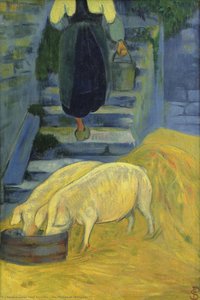
Uma pintura de uma mulher com cabelos longos que parece olhar para baixo, vestindo um vestido e colocando as mãos juntas à frente do rosto. Criação de Paul Sérusier em 1893, exibida no Musée de Pont-Aven.
 Ver mais
Paul Sérusier (1864-1927) foi um pintor francês pioneiro na abstração e influente no movimento Nabis. Conhecido por sua técnica Cloisonnism e obras como 'O Talismã', Sérusier revolucionou a arte com suas cores vibrantes e formas inovadoras.
Reprodução em Óleo Feita à Mão
Óleo sobre tela pintado à mão no tamanho e moldura de sua escolha, feito sob encomenda pelos nossos artistas. ( Alternar para Impressão Ver Imagem Digital)




P118B €10

P118H €10

P118W €10

P438Z €10

P508JH €12

P508YH €12

P805H €10

P805Z €10

P919BZ €10

P919G €10

P919XJ €10

P959ZH €10

P968JZ €12

W106C €8

W218G €10

W218JH €8

W218Y €10

W307PJ €10

W316G €10

W316PJ €8

W316Y €10

W398PJ €8

W4111J €10

W500HY €15

W500JH €15

W692G €12

W849H €8

W940BG €15

W953PJ €8




Padrão
sob medida
CM
INCH
Escolha entre os nossos tamanhos pré-definidos que respeitam as proporções originais da obra de arte.
Loading sizes...

largura
altura
Pode inserir as suas próprias dimensões para se adequar a uma moldura ou espaço específico. Se o tamanho selecionado não corresponder às proporções da imagem original, iremos cortar a obra de arte ou estender a pintura com elementos adicionais pintados à mão. Um esboço digital será enviado para sua aprovação antes do início da produção.
Tenha em atenção que a pré-visualização no ecrã não reflete o corte ou extensão real. Apenas o esboço mostrará com precisão a composição final.
Embora tamanhos personalizados estejam disponíveis, recomendamos selecionar uma dimensão da lista predefinida para preservar as proporções originais.
Exemplos do que pode ser personalizado: Substituir o rosto pela foto do cliente; Adicionar um animal de estimação (ex: substituir gato por cão); Incluir uma mensagem oculta no fundo; Alterar a paisagem ou elementos do fundo.
Após o pedido, a equipa TopImpressionists.com enviará um e-mail ao cliente para solicitar instruções e fornecer uma prévia do esboço.
Após o pedido, a equipa TopImpressionists.com enviará um e-mail ao cliente para solicitar instruções e fornecer uma prévia do esboço.
Entrega mundial () em 3 a 4 semanas, em vez das 5 semanas padrão. (7 Outubro). Sem comprometer a qualidade.

Envio expresso gratuito para todo o mundo

Tela de Linho Premium

Seguro de transporte total

Garantia de Reembolso de Impostos Alfandegários

Garantia de Fidelidade de Cor

Política de Devolução em 100 Dias (Apenas para Defeitos)

Garantia de reembolso de 100%

Desconto para múltiplas unidades
 A opção de vidro está disponível apenas para tamanhos inferiores a 110 cm

Estudos para
Técnica de Reprodução
Dimensões da Reprodução
-


Preço Total
€ 231
Uma Reflexão Sobre o Silêncio e a Busca pela Essência na Pintura de Paul Sérusier
Paul Sérusier, um nome que pode não ser imediatamente familiar para todos os amantes da arte moderna, desempenhou um papel fundamental na formação do movimento nabis e na exploração inicial das ideias que mais tarde influenciariam artistas como Matisse e Picasso. Sua obra "Estudos para" (1893), atualmente alojada no Musée de Pont-Aven em França, oferece uma janela fascinante para compreender a estética da época e o espírito inovador que caracterizou essa fase crucial da arte francesa do final do século XIX.- O Tema da Pintura: A imagem apresenta uma figura feminina envolta em luz suave, cuja postura transmite uma sensação de introspecção e contemplação. Ela está olhando para baixo, como se absorvida por um pensamento profundo ou pela beleza silenciosa do ambiente ao seu redor.
- Estilo e Técnica: Sérusier empregou uma abordagem meticulosa na criação desta obra, utilizando técnicas tradicionais de desenho a carvão sobre papel. Apesar da simplicidade aparente da composição, o artista demonstra uma sensibilidade excepcional para capturar nuances emocionais e atmosferas sutis.
- O Movimento Nabis: Esta pintura é um exemplo emblemático do movimento nabis, que buscava romper com as convenções acadêmicas e explorar novas formas de expressão artística. Os artistas nabis estavam particularmente interessados em investigar o impacto da luz natural sobre a paisagem e na busca por uma estética pura e espiritualizada.
- Pont-Aven e Gauguin: O contexto histórico é marcado pela influência marcante de Paul Gauguin, que liderava um grupo de artistas em Pont-Aven, onde Sérusier encontrou inspiração para suas obras. A relação entre os dois artistas foi intensa e colaborativa, impulsionando o desenvolvimento de estilos inovadores como o cloisonnismo, uma técnica que enfatiza a divisão da superfície em áreas distintas por linhas paralelas.
- Simbolismo e Impacto Emocional: Embora não haja uma interpretação explícita ou narrativa convencional na pintura, ela transmite uma profunda sensação de calma e serenidade. O olhar baixo da figura feminina pode simbolizar uma busca pela beleza interior e pela conexão com a natureza, elementos centrais na filosofia estética nabis.
Perguntas e Respostas
Como as cores de "Estudos para" se relacionam entre si?
As cores de "Estudos para" de Paul Sérusier apresentam uma harmonia Paleta Unificada. A harmonia descreve como as cores se relacionam entre si.
Em que ano foi criado "Estudos para" de Paul Sérusier?
"Estudos para" data de 1893. A data situa a obra na carreira de Paul Sérusier e em sua época.
Que saturação e intensidade apresenta "Estudos para" de Paul Sérusier?
"Estudos para" de Paul Sérusier é registrado com uma saturação Suave e equilibrado e uma intensidade Equilibrado.
Que humor "Estudos para" de Paul Sérusier expressa dentro de Post-Impressionism?
"Estudos para" carrega um tom emocional Reflexivo dentro do movimento Post-Impressionism.
A qual artista "Estudos para" é atribuída?
O artista por trás de "Estudos para" é Paul Sérusier. A obra está catalogada sob o nome de Paul Sérusier.
Que tipo de obra é "Estudos para"?
No catálogo, "Estudos para" de Paul Sérusier está registrado como Arte de Parede. A categoria ajuda a encontrar obras semelhantes.
Qual era a idade de Paul Sérusier quando "Estudos para" foi criada?
Paul Sérusier tinha 29 anos quando criou "Estudos para" em 1893. A idade é calculada a partir do ano de nascimento do artista, 1864.
Obras Relacionadas




Biografia do Artista
Early Life and Artistic Foundations
Paul Sérusier, a pivotal figure in the evolution of modern art, was born on November 9th, 1864, in the heart of Paris. His early years were steeped in the cultural richness of the capital, yet his artistic journey began unexpectedly, far removed from the traditional avenues of formal training. Sérusier’s father, a successful businessman of Flemish descent involved in the perfume industry, envisioned a career for his son within the commercial world. However, young Paul harbored an undeniable passion for art, a desire that ultimately led him to abandon his family's expectations and pursue his artistic calling. He enrolled at the Lycée Condorcet, a prestigious secondary school renowned for its emphasis on philosophy and classical studies – an education that would subtly shape his later approach to art, imbuing it with intellectual depth and a nuanced understanding of form. It was during this period that he encountered Maurice Denis, a fellow student who would become a lifelong friend and collaborator, profoundly influencing Sérusier’s artistic development. The summer of 1888 marked a transformative moment in Sérusier's life: his journey to Pont-Aven, a small village nestled in the Breton countryside. This pilgrimage proved crucial, as it introduced him to a vibrant community of artists—Paul Gauguin, Emile Bernard, and others—who were challenging conventional artistic norms and experimenting with new ways of seeing and representing the world.The Nabis Movement and Pioneering Techniques
Pont-Aven became the epicenter of a groundbreaking artistic movement known as the Nabis (meaning “prophets” in Hebrew). Under the guidance of Paul Gauguin, Sérusier began to shed his earlier academic training and embrace a radically new approach to painting. Gauguin encouraged him to move beyond mere imitation of nature, urging him instead to capture the essence of his impressions—the feeling, the color, the emotion—rather than meticulously replicating visual details. This shift was further solidified by conversations with Emile Bernard, who introduced Sérusier to the principles of cloisonnism, a technique characterized by bold outlines and flat areas of color applied in distinct compartments, reminiscent of stained glass windows. This innovative approach, combined with Gauguin’s emphasis on simplification and symbolic representation, culminated in Sérusier's iconic painting, “The Talisman” (1888). This work stands as a seminal example of cloisonnism, pushing the boundaries of abstraction and foreshadowing the developments of later avant-garde movements. The painting’s seemingly simple composition—a depiction of a Breton landscape—is in fact a complex exploration of color, form, and symbolism, reflecting Sérusier's evolving artistic vision.Key Works and Artistic Evolution
Sérusier’s oeuvre is characterized by a remarkable fluidity and experimentation. Beyond “The Talisman,” he produced a series of paintings that demonstrate his ongoing exploration of color, line, and composition. "L'Averse" (1893) showcases his ability to capture the atmospheric effects of Breton weather, while "Portrait of Paul Ranson" (1890) reveals his interest in portraying human subjects with a sense of immediacy and psychological depth. “Melancholy” (1890), a hauntingly evocative work, exemplifies Sérusier’s capacity to convey complex emotions through subtle color harmonies and carefully constructed forms. Later in his career, Sérusier continued to refine his style, incorporating elements of synthetism—a technique that sought to reduce natural forms to their essential geometric components—and exploring the expressive potential of abstraction. His work during this period reflects a growing interest in spirituality and symbolism, drawing inspiration from Theosophical ideas and other esoteric traditions. Notably, Sérusier also served as an instructor at the École Ranson, founded by his fellow Nabi Paul Ranson, where he instilled his innovative approach to painting in a new generation of artists.Legacy and Historical Significance
Paul Sérusier’s contribution to the development of modern art is profound and multifaceted. He was not merely a follower of Gauguin; rather, he played a crucial role in shaping the direction of the Nabis movement and, more broadly, in paving the way for subsequent avant-garde movements such as Fauvism and Cubism. His pioneering use of cloisonnism—a technique that emphasized simplified forms and bold outlines—demonstrated a radical departure from traditional artistic conventions and opened up new possibilities for abstract expression. Sérusier’s emphasis on capturing the essence of impressions, rather than simply replicating visual reality, profoundly influenced his contemporaries and successors. His legacy extends beyond his individual paintings; he is remembered as a key figure in the intellectual and aesthetic ferment that characterized late 19th-century Paris—a period marked by experimentation, innovation, and a profound questioning of established artistic norms. Paul Sérusier passed away on October 7, 1927, leaving behind a body of work that continues to inspire and challenge viewers today.
Paul Sérusier
1864 - 1927 , França
Informações Rápidas
- Artistic Movement Or Style: Pós-Impressionismo
- Artists Or Movements Influenced By This Artist: ['Nabis']
- Artists Who Influenced This Artist:
- Paul Gauguin
- Maurice Denis
- Date Of Birth: 9 de novembro de 1864
- Date Of Death: 7 de outubro de 1927
- Full Name: Louis-Paul-Henri Sérusier
- Nationality: Francês
- Notable Artworks:
- O Talismã
- L'Averse
- Place Of Birth: Paris, França
Artigos Relacionados

Beyond the Light: Discovering the Soul and Emotional Depth of Post-Impressionism
Embark on a cultural journey through Post-Impressionism. Discover the profound emotional depth of masters like Van Gogh and Cézanne, exploring how they moved beyond light to capture the very soul of human experience through vibrant color and symbolic form.
Explore obras de arte organizadas por temas, estilos e características.


