


 Visualizar em escala
 Enviar
 Compartilhar
 Ver detalhes
 Guia de Obras do Aluno

 Baixar imagem
 Semelhantes
 Raio X
 Apresentação de slides
 Estatísticas
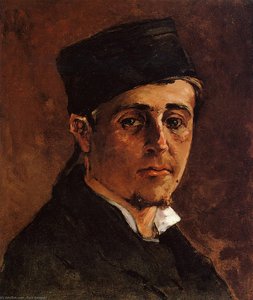
Self Portrait
 Acrylic On Canvas
- WallArt
- British Impressionism
 1920
1920 74.0 x 59.0 cm
 Museu Fitzwilliam
Philip Wilson Steer's "The President Woodrow Wilson House" captures a contemplative man in a suit, showcasing his signature Impressionistic style and masterful use of light & shadow. Explore this evocative portrait.
 Ver mais
Philip Wilson Steer (1860-1942) foi um pintor impressionista britânico conhecido por paisagens e cenas marítimas luminosas. Influenciado por Manet e Whistler, suas obras são celebradas no Tate e Uffizi, capturando a beleza da costa inglesa.
Adquira uma imagem digital de alta resolução e aprimorada, muito superior à prévia online.
Cada arquivo é meticulosamente preparado por nossos especialistas internos, utilizando ferramentas avançadas e retoques manuais de alta precisão. Garantimos que cada imagem apresente clareza excepcional, fidelidade de cores e detalhes minuciosos.
O arquivo final é entregue por e-mail em até 72 horas, otimizado para uso imediato em ambientes profissionais, editoriais e de impressão. Esta é a mesma qualidade utilizada por estúdios de design de alto nível, editoras e galerias.
Imagem Digital
Baixe um arquivo de alta resolução para exibição pessoal, impressão e projetos criativos. ( Alternar para Impressão Encomendar reprodução pintada à mão)
Incluído em cada pedido de imagem digital
Entrega Digital Especializada e Garantida
Ao escolher o TopImpressionists.com, você não está apenas adquirindo uma imagem — você está recebendo uma obra de arte digital profissionalmente aprimorada, elaborada com precisão e com garantia de satisfação. Aqui está tudo o que acompanha seu pedido, automaticamente:

Entrega rápida por e-mail
O seu arquivo de imagem digital em alta resolução será enviado por e-mail em até 72 horas após o pedido — pronto para uso imediato.

Arquivo Digital com IA Otimizado
Sua obra de arte é otimizada profissionalmente por meio de ferramentas avançadas de IA e edição manual, garantindo o máximo de detalhes, clareza e precisão de cores.

Reenvio gratuito vitalício
Apagou ou perdeu o seu ficheiro acidentalmente? Não se preocupe – nós reenviamos para si a qualquer momento, gratuitamente.

Sem Taxas de Importação - Sempre
Desfrute da sua obra de arte instantaneamente, sem taxas alfandegárias, impostos ou custos de entrega — downloads digitais são sempre isentos de taxas.

Garantia de Precisão de Cores
Garantimos que sua imagem digital reflita as cores originais com a maior fidelidade possível, utilizando ferramentas profissionais e gerenciamento de cores.

Garantia de satisfação de 100 dias
Se não estiver satisfeito com a sua imagem digital, nós a revisaremos ou reembolsaremos 100% dentro de 100 dias — sem perguntas.

Garantia de Reembolso 100%
Não está satisfeito? Receba o reembolso total em até 100 dias após o recebimento do seu arquivo digital — sem perguntas.

Descontos para pedidos em lote
Compre 3 imagens, economize 10% - Compre 5, economize 15% - Compre 10+, economize 20%. Ideal para projetos criativos, galerias e agências.
A Portrait of Quiet Intensity: Philip Wilson Steer’s “The President Woodrow Wilson House”
Philip Wilson Steer's "The President Woodrow Wilson House," painted in 1920, isn’t merely a depiction of a building; it’s a carefully constructed tableau brimming with subtle symbolism and imbued with the melancholic beauty characteristic of the artist. This oil-on-canvas work, measuring 74 x 59 cm, transports us to a moment suspended between formality and introspection – a visual poem reflecting on leadership, memory, and the quiet dignity of American history. Steer, a pivotal figure in British Impressionism, masterfully employs a muted palette dominated by greys, blues, and browns, creating an atmosphere of subdued light and contemplative stillness. The composition itself is deliberately restrained, focusing intently on the imposing façade of the Wilson House in Washington D.C., rendered with a remarkable sensitivity to texture and light.
The Impressionist’s Lens: Technique and Style
Steer's approach aligns closely with the tenets of Impressionism, yet he transcends simple replication. He doesn’t strive for photographic accuracy but rather captures an *impression* – a fleeting moment imbued with feeling. Notice how he utilizes broken brushstrokes to suggest the play of light on the stone walls and the subtle shifts in shadow. The artist's layering technique is particularly evident in the rendering of the building’s surface, where individual strokes coalesce to create a sense of depth and volume. Steer was deeply influenced by John Constable and J.M.W. Turner, artists known for their atmospheric landscapes and masterful use of light and color. This influence is palpable in Steer's ability to evoke a specific mood through his manipulation of tone and texture – a feeling of quiet contemplation and perhaps even a touch of wistful nostalgia.
Symbolism Within the Frame: Leadership and Reflection
The choice of subject matter—the Wilson House—is rich in symbolic potential. Woodrow Wilson, the 28th President of the United States, was a complex figure – lauded for his leadership during World War I but also criticized for his handling of racial issues at home. Steer’s painting doesn't offer a straightforward portrait of Wilson himself, instead focusing on the building that housed him and, by extension, representing the weight of responsibility and the enduring legacy of power. The muted colors and the solitary nature of the scene suggest a reflection on leadership itself – its burdens, its triumphs, and its inevitable passage of time. The composition’s stillness invites viewers to contemplate the unseen narratives contained within those walls.
A Legacy of Light: Steer's Influence and Artistic Context
Philip Wilson Steer was a significant figure in British art, bridging the gap between Impressionism and a more traditional English style. His work gained recognition during his time as a painting tutor at the Slade School of Fine Art, where he profoundly influenced generations of young artists. His exploration of coastal scenes, particularly those along the Suffolk coast, cemented his reputation for capturing the ethereal beauty of the British landscape. “The President Woodrow Wilson House” stands as a testament to Steer’s ability to imbue seemingly simple subjects with profound emotional resonance. It's a poignant reminder that even in grand architectural settings, moments of quiet contemplation and subtle symbolism can hold immense artistic value. Reproductions of this piece offer a captivating glimpse into the artist’s world and invite viewers to engage with the complexities of American history through the lens of Impressionist artistry.
Perguntas e Respostas
Qual uso e espaço são recomendados para "Self Portrait" de Philip Wilson Steer?
"Self Portrait" de Philip Wilson Steer é recomendado para Reflective, idealmente em um(a) Living Room. O uso e o espaço juntos orientam onde uma reprodução se encaixa.
O que "Self Portrait" compartilha com o restante da obra de Philip Wilson Steer?
Na produção de Philip Wilson Steer, "Self Portrait" insere-se no estilo British Impressionism, acompanhando os temas de impressionism, whistler, constable, turner, coastal scenes, british identity, modern life, leisure.
O que "Self Portrait" de Philip Wilson Steer retrata?
"Self Portrait" de Philip Wilson Steer retrata: seascape, coastline, figures, light, reflection, landscape, british, painting.
Quão intensas são as cores em "Self Portrait" de Philip Wilson Steer?
"Self Portrait" de Philip Wilson Steer apresenta uma intensidade de cor Monochromatic.
Em que técnica foi executada a obra "Self Portrait" de Philip Wilson Steer?
Philip Wilson Steer utilizou a técnica de Acrylic On Canvas para "Self Portrait". A técnica define a natureza material da obra original.
De qual país é a obra do British Impressionism "Self Portrait"?
"Self Portrait" foi criada por Philip Wilson Steer, nascido em Reino Unido, dentro do movimento British Impressionism. A origem do artista vincula a obra ao British Impressionism conforme praticado por artistas de Reino Unido.
"Self Portrait" de Philip Wilson Steer é uma obra de arte clara ou escura?
No geral, "Self Portrait" é registrado como deep_shadow. A luminosidade percebida descreve o quão clara ou escura a obra parece ser.
Qual é o tamanho de impressão recomendado para "Self Portrait"?
Sugere-se uma reprodução de Medium para "Self Portrait" de Philip Wilson Steer. O tamanho pode ser ajustado mantendo as proporções.
Obras Relacionadas


Biografia do Artista
Os Primeiros Anos e a Formação Artística de Philip Wilson Steer
Philip Wilson Steer, nascido em Birkenhead em 1860, floresceu num ambiente familiar profundamente imerso no mundo da arte – seu pai era tanto retratista quanto um dedicado professor de artes. Essa exposição precoce revelou-se fundamental, nutrindo uma sensibilidade que definiria o curso de sua vida. A mudança para Whitchurch, perto de Monmouth, quando tinha apenas três anos, instilou uma conexão com a paisagem britânica que ressoaria ao longo de toda a sua obra. Sua educação formal começou na Hereford Cathedral School, proporcionando uma base sólida antes de se dedicar integralmente às suas ambições artísticas. A formação de Steer continuou na Gloucester School of Art e nas South Kensington Drawing Schools, mas foi sua estadia em Paris entre 1880 e 1884 que provou ser verdadeiramente transformadora. Estudando na Académie Julian e posteriormente com Alexandre Cabanel na École des Beaux Arts, ele encontrou um mundo repleto de novas ideias e abordagens para a pintura.A Adoção do Impressionismo e um Estilo Distinto
Paris tornou-se um cadinho para o desenvolvimento artístico de Steer. Ele ficou profundamente comovido pelas obras de Édouard Manet e James McNeill Whistler, absorvendo suas técnicas inovadoras na captura da luz, cor e atmosfera. Essa exposição acendeu nele uma paixão pelo Impressionismo, embora ele nunca o tenha simplesmente replicado. Steer habilmente combinou essas influências francesas com sua sensibilidade inglesa inerente, forjando um estilo exclusivamente seu. Suas pinturas são caracterizadas por uma notável capacidade de capturar momentos fugazes – o jogo da luz solar na água, a qualidade efêmera do ar costeiro. Ele empregou pinceladas soltas e cores vibrantes não apenas para retratar cenas, mas para evocar emoções e criar uma sensação imersiva de imediatismo. Temas recorrentes em seu trabalho incluem cenas de praia e paisagens marinhas, frequentemente banhadas por luz prateada e translúcida, demonstrando um domínio na representação do frescor e da luminosidade desses ambientes. Obras como The Music Room, no início de sua carreira, mostram sua crescente habilidade com composição e luz, enquanto peças como Girls Running: Walberswick Pier explodem com a energia e a vitalidade de uma cidade costeira de Suffolk.Um Defensor da Arte Moderna e a Influência de Étaples
Steer não se contentou apenas em pintar; ele moldou ativamente o cenário artístico da Grã-Bretanha. Ele desempenhou um papel fundamental na fundação do New English Art Club, uma organização dedicada à defesa da expressão artística moderna – uma mudança ousada num momento em que os gostos tradicionais ainda prevaleciam. Através desta plataforma e exposições regulares na Royal Academy, incluindo a participação na inovadora London Impressionist Exhibition de 1889, ele ajudou a introduzir novas ideias e desafiar as normas convencionais. Seu tempo gasto na colônia artística de Étaples em 1887 refinou ainda mais sua visão artística. Esta vibrante comunidade de artistas proporcionou um ambiente estimulante para experimentação e colaboração, solidificando sua capacidade de capturar a luz e a atmosfera com crescente nuance e habilidade. Steer inspirou-se numa variedade diversificada de mestres – John Constable, J.M.W. Turner e até mesmo François Boucher – mas sempre filtrava essas influências através de sua própria perspectiva única.Legado, Reconhecimento e Influência Duradoura
Philip Wilson Steer continuou a pintar prolificamente até que problemas de saúde o forçaram a parar em 1940, falecendo dois anos depois aos 81 anos. Suas contribuições foram amplamente reconhecidas durante sua vida, culminando numa Ordem do Mérito. Hoje, suas obras estão presentes em coleções prestigiadas em todo o mundo, incluindo a Tate Gallery e até mesmo a Galeria Uffizi – um testemunho de seu reconhecimento internacional. Além de suas pinturas, o legado de Steer se estende por sua longa atuação como tutor de pintura na Slade School of Art. Por muitos anos, ele influenciou profundamente gerações de jovens artistas, transmitindo não apenas habilidades técnicas, mas também uma profunda apreciação pela observação e integridade artística. Sua contribuição para o desenvolvimento e aceitação do Impressionismo na Grã-Bretanha é inegável, consolidando seu lugar como uma figura significativa na história da arte britânica – um pintor que conseguiu preencher a lacuna entre tradição e modernidade, deixando uma marca duradoura na paisagem artística britânica. Obras notáveis como Convalescent, com suas ricas texturas e olhar evocativo, e The Teme at Ludlow, destacando a beleza serena e o magistral trabalho de pincel, continuam a cativar o público hoje, demonstrando a qualidade atemporal de sua visão artística.
Philip Wilson Steer
1860 - 1942 , Reino Unido
Informações Rápidas
- Artistas Que O Influenciaram:
- Manet
- Whistler
- Artistas/Movimentos Influenciados: ['Impressionismo Britânico']
- Data Da Morte: 18 de março de 1942
- Data De Nascimento: 28 de dezembro de 1860
- Local De Nascimento: Birkenhead, Reino Unido
- Movimento Artístico: Impressionismo
- Nacionalidade: Britânico
- Nome Completo: Philip Wilson Steer
- Obras Notáveis:
- The Music Room
- Girls Running