

Shown: · With its frame:
 Visualizar na parede
 Compartilhar
 Compartilhar
 Detalhes
 Guia
Guia

 Baixar imagem
 Semelhantes
 Raio X
 Ver diaporama
 Q&A
Q&A Estatísticas
 Acrylic On Canvas
- WallArt
- German Romanticism
 1809
1809- 19th Century
 225.0 x 189.0 cm
 Hamburger Kunsthalle
€ 239
Reprodução em Óleo Feita à Mão
Óleo sobre tela pintado à mão no tamanho e moldura de sua escolha, feito sob encomenda pelos nossos artistas. ( Alternar para Impressão Alternar para Imagem Digital)
Size
·Tamanho padrão
personalizado
CM
INCH
Escolha entre os nossos tamanhos pré-definidos que respeitam as proporções originais da obra de arte.
Loading sizes...

largura
altura
Insira a largura e a altura desejadas para se ajustarem à sua moldura ou parede. Como esta obra é pintada à mão, para um tamanho com proporções diferentes, o artista poderá pintar um pouco mais ao redor da imagem ou reduzir ligeiramente a composição — você escolhe. Enviamos uma maquete digital para sua aprovação antes de iniciar a pintura. A imagem exibida nesta página não representa o resultado real — apenas a maquete mostra o resultado final.
 Leia mais
Finish
·
White €1

Blurside €1

Extended €1

P118B €10

P118H €10

P118W €10

P438Z €10

P508JH €12

P508YH €12

P805H €10

P805Z €10

P919BZ €10

P919G €10

P919XJ €10

P959ZH €10

P968JZ €12

W106C €8

W218G €10

W218JH €8

W218Y €10

W307PJ €10

W316G €10

W316PJ €8

W316Y €10

W398PJ €8

W4111J €10

W500HY €15

W500JH €15

W692G €12

W849H €8

W940BG €15

W953PJ €8

H24-GOLD €30

H24-SILVER €30

H36-GOLD €45

H36-SILVER €45
Shipped in a protective tube, ready for your own framer.
Above 105 cm the frame is shipped as a kit for a professional framer — read the details.
Extras
optionalWhat do the extras include?
Examples of what can be changed: Replace face with customer photo; Add pet (e.g., replace cat with dog); Include hidden message in background; Change background landscape or elements.
After order, TopImpressionists.com team will email client for instructions and provide a mockup preview
After order, TopImpressionists.com team will email client for instructions and provide a mockup preview
Entrega mundial () em 3 a 4 semanas, em vez das 5 semanas padrão. (31 Outubro). Sem comprometer a qualidade.
Verniz de Proteção
Etiqueta de identificação
Detalhes da Placa de Bronze Gravada
This elegant plaque features the artist's name and the title of the artwork, finely engraved for a timeless presentation.
It is made from bronze with a refined, elegant finish. The text is precisely laser-engraved for a sharp and permanent result. Measuring 9x2 cm, the plaque is compact yet easy to read. It's built to be durable and scratch-resistant, offering a professional, museum-quality look. Mounting is simple thanks to the included adhesive backing.
Detalhes da Placa de Acrílico Transparente
The plaque includes essential engraved details such as the artist's name, the title of the artwork, the date it was created, the type of media used-like oil on canvas or watercolor-a brief description of the piece, and a QR code that links to the complete artwork information.
It is crafted from clear acrylic, offering a sleek, modern appearance. The text is UV-engraved in black to ensure strong visual contrast. With a size of 10x15 cm, it ensures optimal readability. It comes equipped with two metal hooks for secure wall mounting. The plaque is designed to be weather-resistant, making it suitable for various environments, and it includes interactive features that work seamlessly with smartphone scanning.
Detalhes da Placa de Acrílico Preto
This elegant plaque includes engraved information such as the artist's name, the title of the artwork, the date it was created, the type of media used (like oil on canvas or watercolor), a short description of the artwork, and a QR code for quick access to more information.
The plaque itself is made from refined black acrylic with a premium finish. The text is laser-engraved in white for high contrast and readability. Its size is 10x15 cm, designed to be easy to read. It comes with two metal hooks for professional mounting. The design is sleek and fits any interior style. It is also weather-resistant and durable, with built-in digital integration for mobile compatibility.
A opção de vidro está disponível apenas para tamanhos inferiores a 110 cm
 A opção de vidro está disponível apenas para tamanhos inferiores a 110 cm
- Envio expresso gratuito para todo o mundo
- Tela de Linho de Alta Qualidade
- Seguro de transporte completo
- Garantia de Reembolso de Impostos Alfandegários
- Garantia de Fidelidade Cromática
- Política de Devolução em 100 Dias (Apenas para Defeitos)
- Garantia de reembolso de 100%
- Oferta de desconto por quantidade


Descrição do Item
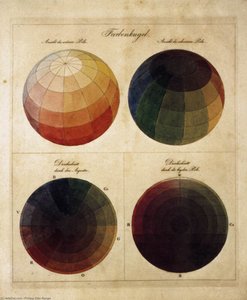
Experience 'Colour Spheres' by Philipp Otto Runge – a mesmerizing 1809 engraving depicting vibrant color spheres arranged in a harmonious circular design. A captivating piece of Romantic art.
Biografia do Artista
Philipp Otto Runge (1777-1810) foi um pintor romântico alemão celebrado por suas paisagens simbólicas, retratos e pioneira teoria das cores ('Esfera de Cores'). Descubra sua arte mística e influência duradoura.
About the painting
A Symphony of Color: Philipp Otto Runge’s “Colour Spheres”
Philipp Otto Runge's "Colour Spheres," painted in 1809, isn’t merely a depiction of spheres; it’s an intensely personal and profoundly symbolic exploration of color theory, spirituality, and the very essence of perception. Created during a pivotal moment in German Romanticism – a period grappling with tradition versus innovation, reason versus emotion – Runge sought to move beyond the constraints of academic painting and forge a new visual language rooted in his own deeply felt inner world. The work, now housed within the Kunsthalle in Hamburg, Germany, is a testament to this ambition, radiating an almost palpable sense of contemplative energy.
The composition itself is deceptively simple: four distinct spheres dominate the canvas, each imbued with a unique chromatic harmony. These aren’t static objects; they appear to pulse with light and movement, their surfaces shimmering with subtle gradations of color. Runge masterfully employs a technique reminiscent of both pastel drawing and early Impressionism – delicate layering of translucent washes creates an ethereal quality, while careful attention to value and hue establishes a remarkable sense of depth and luminosity. The spheres aren’t rendered with photographic realism; instead, they are idealized forms, suggesting a connection to the divine or the abstract realms of consciousness. The choice of materials—engraving media—contributes to this luminous effect, allowing for a richness of tone rarely achieved with oil paint alone.
The Roots of Color Theory and Spiritual Symbolism
Runge’s fascination with color stemmed from his deep engagement with the philosophy of Jakob Böhme, a 17th-century German mystic who believed that colors possessed inherent spiritual significance. Böhme posited that each hue corresponded to a specific stage of human development or a particular aspect of the divine. Runge sought to translate these esoteric ideas into visual form, believing that color could be used to unlock deeper levels of understanding and experience. His work reflects this intellectual pursuit, moving beyond mere representation to become a vehicle for conveying complex philosophical concepts.
The arrangement of the spheres themselves is laden with symbolic meaning. The central sphere, predominantly red, often represents passion, energy, and earthly existence – the realm of the senses. The green sphere embodies growth, harmony, and connection to nature. Blue signifies intellect, contemplation, and the spiritual realm. Yellow, positioned furthest from the viewer, evokes joy, enlightenment, and divine grace. The circular arrangement suggests a cyclical process—a journey through different states of consciousness or stages of life. It’s important to note that Runge's color theory was radically different from prevailing scientific understanding at the time; he prioritized subjective experience over objective measurement.
A Dialogue with Goethe and the Romantic Spirit
Runge’s work resonated deeply with his contemporary, Johann Wolfgang von Goethe, who shared a profound interest in color theory. The two artists engaged in extensive correspondence, exchanging ideas about the nature of perception and the expressive potential of color. Indeed, Runge's exploration of color was heavily influenced by Goethe’s theories on optics and aesthetics. This intellectual exchange highlights the vibrant artistic and philosophical ferment of the early 19th century – a period marked by a renewed interest in spirituality, emotion, and the power of individual experience.
Furthermore, “Colour Spheres” embodies the core tenets of German Romanticism: an emphasis on intuition, imagination, and the sublime. It rejects the rationalism of the Enlightenment in favor of a more subjective and emotionally charged approach to art. The painting’s evocative atmosphere—its sense of mystery, wonder, and spiritual yearning—captures the essence of this artistic movement perfectly. It invites the viewer not simply to *see* the colors but to *feel* them, to connect with their own inner world.
Collecting a Timeless Masterpiece
Reproductions of “Colour Spheres” offer a remarkable opportunity to bring Runge’s visionary aesthetic into any interior space. The delicate layering and luminous quality of the original are faithfully reproduced in high-quality prints, allowing the painting's subtle nuances to shine through. Whether displayed as a statement piece or incorporated into a more restrained color scheme, this artwork will undoubtedly serve as a focal point, sparking conversation and inspiring contemplation. Consider commissioning a hand-painted reproduction – a truly unique and authentic representation of this seminal work of German Romantic art.
Perguntas e Respostas
Para que tipo de uso se recomenda uma impressão de "Colour Spheres"?
A recomendação de uso para uma impressão de "Colour Spheres" é Statement.
Qual é a intensidade do contraste em "Colour Spheres", de Philipp Otto Runge?
O contraste entre claro e escuro de "Colour Spheres" é registrado como Statement. O contraste descreve a intensidade da diferença entre as áreas claras e escuras.
"Colour Spheres" possui uma prévia em realidade aumentada?
A página de Prévia em RA de "Colour Spheres", de Philipp Otto Runge utiliza realidade aumentada para mostrar a obra em seu próprio espaço, através de um dispositivo compatível.
Quick facts and art quiz
About Philipp Otto Runge

Philipp Otto Runge
1777 - 1810, Alemanha
Biografia do Artista
Uma Vida Iluminada pela Visão Interior
Philipp Otto Runge, um nome que ressoa com o espírito nascente do Romantismo Alemão, foi um artista cuja vida trágicamente curta desmentiu a profunda originalidade e profundidade de sua visão. Nascido em 1777 em Wolgast, então parte da Pomerânia Sueca, numa família enraizada na construção naval e ligada à nobreza prussiana, os primeiros anos de Runge foram marcados pela doença, fomentando uma natureza contemplativa que informaria profundamente seus esforços artísticos. Este período de fragilidade física também nutriu um talento precoce para *silhuetas recortadas*, uma prática que continuou ao longo da vida – um testemunho de sua capacidade inata de destilar forma e emoção com notável precisão. Sua formação formal começou mais tarde do que a maioria, inicialmente através de um aprendizado comercial em Hamburgo na empresa de seu irmão Daniel. No entanto, o apelo da expressão artística provou ser forte demais, levando-o a Copenhague em 1799 para estudar pintura com Jens Juel. Este marcou o verdadeiro início da jornada de Runge para se tornar um dos artistas mais inovadores e espiritualmente motivados da Alemanha.O Amanhecer do Simbolismo Romântico
O desenvolvimento artístico de Runge foi profundamente moldado por sua mudança para Dresden em 1801, onde encontrou figuras cruciais como Caspar David Friedrich e Ludwig Tieck. Foi também aqui que conheceu Pauline Bassenge, com quem se casou em 1804. Este período testemunhou um crescente fascínio pelos escritos místicos de Jakob Böhme, cujas explorações filosóficas das harmonias ocultas do universo ressoaram profundamente com as próprias inclinações espirituais de Runge. Um momento crucial chegou em 1803, quando inesperadamente conheceu Johann Wolfgang von Goethe em Weimar, forjando uma amizade construída sobre interesses compartilhados na teoria da cor e expressão artística. Este encontro provou ser transformador, encorajando Runge a se aprofundar na linguagem simbólica da arte e explorar a interconexão de todas as coisas. Seus primeiros trabalhos começaram a refletir esta crescente sensibilidade romântica, afastando-se da contenção neoclássica em direção a paisagens e retratos carregados de emoção imbuídos de significado pessoal. *As Crianças Hülsenbeck* (1805), por exemplo, não é meramente um retrato, mas uma representação pungente da intimidade familiar e da inocência infantil, renderizada com uma qualidade quase etérea.A Cor como Linguagem Cósmica
O legado mais duradouro de Runge reside em seu trabalho inovador sobre a teoria das cores. Ele acreditava que a cor não era simplesmente um fenômeno visual, mas uma força fundamental que moldava nossa percepção da realidade e refletia a ordem divina. Esta convicção levou ao desenvolvimento de sua *Farben-Kugel* (Esfera de Cores), publicada em 1810, pouco antes de sua morte prematura por tuberculose aos trinta e três anos. A Esfera de Cores não era meramente um tratado científico; foi uma tentativa de mapear todo o espectro de cores em uma forma tridimensional, com branco e preto representando polos opostos e as cores primárias – azul, amarelo e vermelho – simbolizando a Santíssima Trindade. Azul representava Deus e a noite, vermelho simbolizava manhã, tarde e Jesus, enquanto amarelo incorporava o Espírito Santo. Os experimentos meticulosos de mistura de discos coloridos de Runge foram uma tentativa de fornecer suporte empírico para sua estrutura teórica, demonstrando como as cores poderiam ser harmoniosamente misturadas para criar uma vasta gama de tons. Esta exploração não era isolada; estava entrelaçada com sua prática artística, informando o uso simbólico da cor em suas pinturas e desenhos.A Sinfonia Inacabada dos ‘Tempos do Dia’
Runge visualizou um *Gesamtkunstwerk* – uma obra de arte total – que fundiria pintura, poesia, música e arquitetura em uma experiência sensorial unificada. Esta ambição encontrou sua expressão mais ambiciosa em sua série *Tageszeiten* (Tempos do Dia), iniciada em 1803. O projeto compreendia quatro pinturas monumentais representando manhã, meio-dia, tarde e noite, cada uma projetada para ser vista dentro de um edifício especialmente construído acompanhada por música e poesia. Embora apenas duas versões de “Manhã” tenham sido concluídas, os desenhos para todo o ciclo revelam a profunda compreensão do simbolismo de Runge e seu desejo de capturar a essência espiritual do próprio tempo. Estas obras marcaram uma partida da pintura paisagística tradicional, imbuindo a natureza com significado religioso e emocional. Ele procurou não apenas retratar o mundo externo, mas transmitir sua harmonia interior e presença divina. O conceito foi revolucionário para a época, antecipando desenvolvimentos posteriores na arte abstrata e instalações multimídia.Uma Influência Duradoura
Embora sua carreira tenha sido interrompida pela doença, o impacto de Philipp Otto Runge no Romantismo Alemão e no desenvolvimento da arte moderna é inegável. Sua exploração da teoria das cores influenciou gerações de artistas, incluindo aqueles associados ao movimento Bauhaus. Sua ênfase no simbolismo e na expressão emocional abriu caminho para os pintores expressionistas posteriores. A mistura única de investigação científica, convicção espiritual e inovação artística de Runge continua a cativar e inspirar. Ele permanece uma figura fundamental na história da arte – um artista visionário que ousou explorar as profundezas ocultas da percepção humana e os mistérios do universo através da linguagem da cor, forma e simbolismo. Suas obras não são meramente pinturas; são janelas para um mundo iluminado pela visão interior, convidando-nos a contemplar a profunda interconexão de todas as coisas.Quick facts about Philipp Otto Runge
- Artistas Que O Influenciaram:
- Jakob Böhme
- Goethe
- Artistas/Movimentos Influenciados: ['Caspar David Friedrich']
- Data Da Morte: 1810
- Data De Nascimento: 1777
- Local De Nascimento: Wolgast, Alemanha
- Movimento Artístico: Romantismo
- Nacionalidade: Alemão
- Nome Completo: Philipp Otto Runge
- Obras Notáveis:
- Crianças Hülsenbeck
- Grande Manhã
- Esfera Colorida
Explore obras de arte organizadas por temas, estilos e características.

Philipp Otto Runge
Colour Spheres
() ·
With its frame: · Hand-painted in oil on linen
Total