

Exibido: · Com a moldura:
 Visualizar na parede
 Compartilhar
 Compartilhar
 Detalhes
 Guia
Guia

 Baixar imagem
 Semelhantes
 Raio X
 Ver diaporama
 Perguntas e Respostas
 Estatísticas

€ 240
Reprodução em Óleo Feita à Mão
Óleo sobre tela pintado à mão no tamanho e moldura de sua escolha, feito sob encomenda pelos nossos artistas. ( Alternar para Impressão Alternar para Imagem Digital)
Tamanho
·Tamanho padrão
personalizado
CM
INCH
Escolha entre os nossos tamanhos pré-definidos que respeitam as proporções originais da obra de arte.
Carregando tamanhos...

largura
altura
Insira a largura e a altura desejadas para se ajustarem à sua moldura ou parede. Como esta obra é pintada à mão, para um tamanho com proporções diferentes, o artista poderá pintar um pouco mais ao redor da imagem ou reduzir ligeiramente a composição — você escolhe. Enviamos uma maquete digital para sua aprovação antes de iniciar a pintura. A imagem exibida nesta página não representa o resultado real — apenas a maquete mostra o resultado final.
 Leia mais
Finalizar
·
Branco €1

Bordas esfumaçadas €1

Bordas estendidas €1

P118B €10

P118H €10

P118W €10

P438Z €10

P508JH €12

P508YH €12

P805H €10

P805Z €10

P919BZ €10

P919G €10

P919XJ €10

P959ZH €10

P968JZ €12

W106C €8

W218G €10

W218JH €8

W218Y €10

W307PJ €10

W316G €10

W316PJ €8

W316Y €10

W398PJ €8

W4111J €10

W500HY €15

W500JH €15

W692G €12

W849H €8

W940BG €15

W953PJ €8

H24-GOLD €30

H24-SILVER €30

H36-GOLD €45

H36-SILVER €45
Enviado em um tubo protetor, pronto para ser emoldurado por você.
Extras
opcionalO que os extras incluem?
Exemplos do que pode ser alterado: Substituir o rosto pela foto do cliente; Adicionar um animal de estimação (ex: substituir gato por cachorro); Incluir uma mensagem oculta no fundo; Alterar a paisagem ou elementos do fundo.
Após o pedido, a equipe da TopImpressionists.com enviará um e-mail ao cliente para instruções e fornecerá uma prévia da montagem
Após o pedido, a equipe da TopImpressionists.com enviará um e-mail ao cliente para instruções e fornecerá uma prévia da montagem
Entrega mundial () em 3 a 4 semanas, em vez das 5 semanas padrão. (3 Novembro). Sem comprometer a qualidade.
Verniz de Proteção
Etiqueta de identificação
Detalhes da Placa de Bronze Gravada
This elegant plaque features the artist's name and the title of the artwork, finely engraved for a timeless presentation.
It is made from bronze with a refined, elegant finish. The text is precisely laser-engraved for a sharp and permanent result. Measuring 9x2 cm, the plaque is compact yet easy to read. It's built to be durable and scratch-resistant, offering a professional, museum-quality look. Mounting is simple thanks to the included adhesive backing.
Detalhes da Placa de Acrílico Transparente
The plaque includes essential engraved details such as the artist's name, the title of the artwork, the date it was created, the type of media used-like oil on canvas or watercolor-a brief description of the piece, and a QR code that links to the complete artwork information.
It is crafted from clear acrylic, offering a sleek, modern appearance. The text is UV-engraved in black to ensure strong visual contrast. With a size of 10x15 cm, it ensures optimal readability. It comes equipped with two metal hooks for secure wall mounting. The plaque is designed to be weather-resistant, making it suitable for various environments, and it includes interactive features that work seamlessly with smartphone scanning.
Detalhes da Placa de Acrílico Preto
This elegant plaque includes engraved information such as the artist's name, the title of the artwork, the date it was created, the type of media used (like oil on canvas or watercolor), a short description of the artwork, and a QR code for quick access to more information.
The plaque itself is made from refined black acrylic with a premium finish. The text is laser-engraved in white for high contrast and readability. Its size is 10x15 cm, designed to be easy to read. It comes with two metal hooks for professional mounting. The design is sleek and fits any interior style. It is also weather-resistant and durable, with built-in digital integration for mobile compatibility.
A opção de vidro está disponível apenas para tamanhos inferiores a 110 cm
 A opção de vidro está disponível apenas para tamanhos inferiores a 110 cm
- Envio expresso gratuito para todo o mundo
- Tela de Linho de Alta Qualidade
- Seguro de transporte completo
- Garantia de Reembolso de Impostos Alfandegários
- Garantia de Fidelidade Cromática
- Política de Devolução em 100 Dias (Apenas para Defeitos)
- Garantia de reembolso de 100%
- Oferta de desconto por quantidade


Descrição do Item
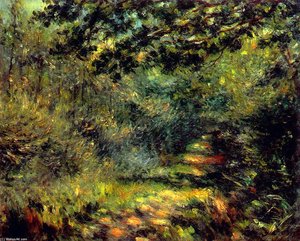
Pierre-Auguste Renoir's “Path Through the Woods,” painted in 1874, isn’t merely a landscape; it’s an invitation. This Impressionist masterpiece captures a golden hour bathed in dappled sunlight filtering through a dense forest, emphasizing peace and contemplation. Renoir’s loose brushstrokes and masterful use of light create a captivating scene.
Biografia do Artista
Key Works and Themes</h2> <p>Renoir's oeuvre is a celebration of life’s simple pleasures – intimate gatherings
Sobre a pintura
A Serene Passage: Delving into Renoir’s “Path Through the Woods”
Pierre-Auguste Renoir's "Path Through the Woods," painted in 1874, isn’t merely a landscape; it’s an invitation. An invitation to step away from the bustle of Parisian life and immerse oneself within the tranquil embrace of nature. This quintessential Impressionist work, rendered in oil on canvas, captures a fleeting moment – a golden hour bathed in dappled sunlight filtering through a dense forest, creating an atmosphere of profound peace and quiet contemplation. The painting immediately draws the eye along the winding path, a subtle yet powerful directional element that guides us deeper into the scene’s heart. It's a testament to Renoir’s ability to distill the essence of a natural setting, not just its visual appearance, but also its emotional resonance.Composition and Technique: A Dance of Light and Brushstroke
Renoir masterfully employs Impressionist techniques to achieve this effect. The composition is deceptively simple – a winding path cutting through a tapestry of trees and grasses – yet it’s the *way* he renders these elements that truly captivates. Loose, expressive brushstrokes dominate the scene, avoiding sharp outlines and instead prioritizing the capture of light and color as they shift and change with every passing moment. The trees themselves aren't meticulously detailed; rather, they are suggested through a rapid succession of short, broken strokes in shades of green and brown, conveying movement and vitality. Similarly, the grasses ripple with an almost palpable sense of life, rendered with delicate, feathery textures that seem to shimmer in the sunlight. Notice how Renoir utilizes warm hues – ochres, yellows, and hints of red – in the background to create a sense of depth and distance, while cooler greens dominate the foreground, anchoring the viewer within the scene. The subtle inclusion of a solitary figure near the center adds a touch of scale and perspective, reminding us of our own presence within this natural world without disrupting its serenity.Contextualizing the Impression: Renoir and the Dawn of Modernity
“Path Through the Woods” firmly places itself within the broader artistic context of the late 19th century, a period marked by significant shifts in art and society. Pierre-Auguste Renoir was a pivotal figure in the burgeoning Impressionist movement, alongside artists like Claude Monet and Edgar Degas. Rejecting the rigid conventions of academic painting, the Impressionists sought to capture the fleeting effects of light and atmosphere – *impressions* – rather than striving for photographic realism. This focus on subjective experience is powerfully evident in “Path Through the Woods.” The painting reflects Renoir’s fascination with modern life and his desire to portray it with a sense of immediacy and spontaneity. Interestingly, this work also echoes the Realist movement, particularly in its depiction of everyday scenes and human interaction within nature – a bridge between the two styles that defined much of the era.Symbolism and Emotional Resonance: A Journey Within
Beyond its technical brilliance, “Path Through the Woods” possesses a subtle yet profound symbolic depth. The winding path itself can be interpreted as a metaphor for life’s journey – a meandering route through an uncertain world. The dappled sunlight suggests hope and optimism, while the dense forest represents both challenge and mystery. The solitary figure, though indistinct, embodies a sense of contemplation and connection with nature. It invites us to pause, breathe deeply, and reflect on our own place within the larger scheme of things. Renoir wasn’t simply painting a landscape; he was offering an experience – a momentary escape into a realm of beauty, tranquility, and quiet introspection. The painting's enduring appeal lies in its ability to evoke these emotions, transporting viewers to a world where time seems to slow down and the simple pleasures of nature take center stage.Bringing Renoir’s Vision Home: High-Quality Reproductions
TopImpressionists.com offers meticulously crafted oil painting reproductions that faithfully capture the essence of “Path Through the Woods.” Each reproduction is created using traditional techniques, employing hand-mixed pigments and archival-quality canvas to ensure lasting beauty and vibrancy. Whether you’re an art enthusiast seeking a stunning addition to your collection or an interior designer aiming to create a serene and inviting atmosphere, our reproductions provide a remarkable opportunity to bring Renoir's masterpiece into your own space. Explore the available sizes and options on TopImpressionists.com to discover the perfect way to experience the timeless beauty of “Path Through the Woods.”Perguntas e Respostas
Como "Path through the Woods" se integra aos temas e ao estilo de Pierre-Auguste Renoir?
"Path through the Woods" compartilha com as outras obras de Pierre-Auguste Renoir o seu estilo Impressionism e os temas recorrentes: rubens, watteau, manet, realism, impressionist landscape, balance of nature & humanity, series exploration, leisure.
As cores de "Path through the Woods", de Pierre-Auguste Renoir são saturadas ou suaves?
A paleta de "Path through the Woods" possui uma saturação Balanced Soft.
A qual movimento artístico pertence "Path through the Woods", de Pierre-Auguste Renoir?
O movimento associado a "Path through the Woods", de Pierre-Auguste Renoir é Impressionism. Esta classificação situa a obra entre artistas e obras de arte relacionados.
Informações rápidas e quiz de arte
Sobre Pierre-Auguste Renoir

Pierre-Auguste Renoir
1841 - 1919, França
Biografia do Artista
Uma Vida Banhada em Luz: O Mundo de Pierre-Auguste Renoir
Nascido na província francesa de Limoges, em 1841, a trajetória de Pierre-Auguste Renoir, desde suas origens humildes como pintor de porcelana até se tornar um celebrado mestre do Impressionismo, é uma prova de sua dedicação inabalável e visão artística. Sua juventude foi marcada por uma mudança para Paris com sua família, em busca de oportunidades econômicas – uma experiência que moldaria profundamente sua sensibilidade artística. A vibrante cidade, com seu agitado cotidiano e personagens diversos, tornou-se a fonte de inspiração para grande parte de sua obra posterior. Inicialmente aprendiz de pintor de porcelana – uma necessidade prática ditada por restrições financeiras –, o jovem Renoir encontrava consolo em frequentes visitas ao Louvre, onde estudava meticulosamente os grandes mestres, absorvendo suas técnicas e desenvolvendo um apreço pela beleza que se tornaria a marca registrada de seu estilo. Essa exposição inicial despertou nele uma paixão que transcendia o mero artesanato; era um chamado para capturar as qualidades efêmeras da luz e da vida na tela. Mais tarde, ingressou no ateliê de Charles Gleyre, onde forjou amizades duradouras com aspirantes a artistas como Claude Monet, Alfred Sisley e Frédéric Bazille – um momento crucial que lançaria as bases para o movimento Impressionista.Do Realismo às Radiantes Impressões
O desenvolvimento artístico de Renoir foi uma evolução fascinante, influenciada por uma diversidade de mestres. Inicialmente inclinou-se ao realismo de Gustave Courbet e Édouard Manet, admirando seu compromisso em retratar a vida contemporânea com honestidade e franqueza. No entanto, foram as paletas luminosas e formas sensuais de Peter Paul Rubens e Jean-Antoine Watteau que verdadeiramente o cativaram, instilando em sua obra uma profunda apreciação pela beleza e uma inclinação para retratar cenas de alegria e lazer. Essas primeiras influências se consolidaram à medida que Renoir começou a forjar seu próprio estilo único, caracterizado por cores vibrantes, pinceladas soltas e um foco na captura dos efeitos fugazes da luz. Sua participação na primeira exposição Impressionista em 1874 foi um momento decisivo, embora inicialmente recebido com críticas de círculos artísticos tradicionais. Essa ousada iniciativa sinalizou uma rejeição das convenções acadêmicas e a adoção de uma nova visão artística – que buscava capturar não apenas o que o olho vê, mas como *se sente* ao experimentar um determinado momento no tempo. Pinturas como Dance at Le Moulin de la Galette (1876) exemplificam essa abordagem, imergindo os espectadores na atmosfera animada da vida noturna parisiense com sua luz difusa e figuras alegres.Capturando os Momentos Fugazes da Vida: Obras-Chave e Temas
A obra de Renoir é uma celebração dos prazeres simples da vida – encontros íntimos, paisagens ensolaradas e a beleza radiante da forma humana. Luncheon of the Boating Party (1880-81) destaca-se como uma de suas obras mais icônicas, retratando um grupo animado desfrutando de uma tarde de lazer no Sena. A pintura é uma aula magistral na captura da luz e do movimento, com figuras banhadas pela luz quente do sol e reflexos cintilantes na água. After the Bath (1885-87) demonstra a habilidade requintada de Renoir em retratar o corpo feminino nu, enfatizando tons delicados de pele e poses graciosas. Suas pinturas não são meras representações da realidade; elas são imbuídas de uma sensação de calor, intimidade e alegria que ressoa profundamente com os espectadores. Ele não se interessava por narrativas históricas grandiosas ou alegorias dramáticas; em vez disso, concentrou-se em capturar a beleza inerente à vida cotidiana, elevando momentos comuns ao status de obras de arte. Dance at Bougival, outra peça celebrada, demonstra sua capacidade de capturar impressões fugazes e efeitos atmosféricos, criando uma sensação de movimento e espontaneidade.Uma Mudança em Direção à Forma e Estrutura: Anos Posteriores e Legado
Na década de 1890, o estilo de Renoir passou por uma transformação significativa. Embora nunca tenha abandonado completamente suas raízes impressionistas, ele começou a se mover em direção a uma abordagem mais escultórica e clássica, influenciada por suas viagens à Itália e um renovado interesse pela forma e estrutura. Essa mudança foi parcialmente motivada por limitações físicas – a artrite restringia gradualmente sua mobilidade, forçando-o a adaptar sua técnica. Apesar desses desafios, Renoir continuou a pintar com dedicação inabalável, produzindo obras caracterizadas por figuras mais cheias e uma paleta mais quente. Suas pinturas posteriores frequentemente refletem um humor mais contemplativo, mas mantêm a mesma celebração subjacente da beleza que definiu seu trabalho anterior. Além de suas conquistas artísticas, o legado de Renoir se estende através de sua família; seu filho, Jean Renoir, tornou-se um renomado cineasta, transmitindo um espírito criativo através das gerações. Pierre-Auguste Renoir morreu em 1919, deixando para trás um corpo duradouro de trabalho que continua a inspirar e encantar o público em todo o mundo. Ele permanece uma das figuras mais amadas na história da arte, celebrado por sua capacidade de capturar a alegria da vida e a beleza da experiência humana com sensibilidade e graça incomparáveis.Influência Duradoura
- A influência de Renoir nas gerações subsequentes de artistas é inegável. Sua ênfase na luz, cor e captura de momentos fugazes abriu caminho para muitos movimentos artísticos modernos.
- Sua celebração da beleza e sensualidade continua a ressoar com o público hoje, tornando seu trabalho universalmente atraente.
- Ele desempenhou um papel fundamental no estabelecimento do Impressionismo como uma força importante na história da arte, desafiando as convenções tradicionais e abrindo novas possibilidades para a expressão artística.
- A popularidade duradoura de suas pinturas – reproduzidas em inúmeros pôsteres, calendários e outros produtos – testemunha a qualidade atemporal de seu trabalho.
Informações rápidas sobre Pierre-Auguste Renoir
- Artistas Que O Influenciaram:
- Rubens
- Watteau
- Courbet
- Manet
- Artistas/Movimentos Influenciados: ['Impressionismo']
- Data Da Morte: 3 de dezembro de 1919
- Data De Nascimento: 25 de fevereiro de 1841
- Local De Nascimento: Limoges, França
- Movimento Artístico: Impressionismo
- Nacionalidade: Francês
- Nome Completo: Pierre-Auguste Renoir
- Obras Notáveis:
- Dance at Le Moulin...
- Luncheon of the Boating...
- After the Bath
- Dance at Bougival
Obras Relacionadas



Explore obras de arte organizadas por temas, estilos e características.


Pierre-Auguste Renoir
Path through the Woods
() ·
Com a moldura: · Pintura a óleo sobre linho feita à mão
Total