

Exibido: · Com a moldura:
 Visualizar na parede
 Compartilhar
 Compartilhar
 Detalhes
 Guia
Guia

 Baixar imagem
 Semelhantes
 Raio X
 Ver diaporama
 Perguntas e Respostas
 Estatísticas
- 36.0 x 39.0 cm


€ 240
Reprodução em Óleo Feita à Mão
Óleo sobre tela pintado à mão no tamanho e moldura de sua escolha, feito sob encomenda pelos nossos artistas. ( Alternar para Impressão Alternar para Imagem Digital)
Tamanho
·Tamanho padrão
personalizado
CM
INCH
Escolha entre os nossos tamanhos pré-definidos que respeitam as proporções originais da obra de arte.
Carregando tamanhos...

largura
altura
Insira a largura e a altura desejadas para se ajustarem à sua moldura ou parede. Como esta obra é pintada à mão, para um tamanho com proporções diferentes, o artista poderá pintar um pouco mais ao redor da imagem ou reduzir ligeiramente a composição — você escolhe. Enviamos uma maquete digital para sua aprovação antes de iniciar a pintura. A imagem exibida nesta página não representa o resultado real — apenas a maquete mostra o resultado final.
 Leia mais
Finalizar
·
Branco €1

Bordas esfumaçadas €1

Bordas estendidas €1

P118B €10

P118H €10

P118W €10

P438Z €10

P508JH €12

P508YH €12

P805H €10

P805Z €10

P919BZ €10

P919G €10

P919XJ €10

P959ZH €10

P968JZ €12

W106C €8

W218G €10

W218JH €8

W218Y €10

W307PJ €10

W316G €10

W316PJ €8

W316Y €10

W398PJ €8

W4111J €10

W500HY €15

W500JH €15

W692G €12

W849H €8

W940BG €15

W953PJ €8

H24-GOLD €30

H24-SILVER €30

H36-GOLD €45

H36-SILVER €45
Enviado em um tubo protetor, pronto para ser emoldurado por você.
Extras
opcionalO que os extras incluem?
Exemplos do que pode ser alterado: Substituir o rosto pela foto do cliente; Adicionar um animal de estimação (ex: substituir gato por cachorro); Incluir uma mensagem oculta no fundo; Alterar a paisagem ou elementos do fundo.
Após o pedido, a equipe da TopImpressionists.com enviará um e-mail ao cliente para instruções e fornecerá uma prévia da montagem
Após o pedido, a equipe da TopImpressionists.com enviará um e-mail ao cliente para instruções e fornecerá uma prévia da montagem
Entrega mundial () em 3 a 4 semanas, em vez das 5 semanas padrão. (8 Novembro). Sem comprometer a qualidade.
Verniz de Proteção
Etiqueta de identificação
Detalhes da Placa de Bronze Gravada
This elegant plaque features the artist's name and the title of the artwork, finely engraved for a timeless presentation.
It is made from bronze with a refined, elegant finish. The text is precisely laser-engraved for a sharp and permanent result. Measuring 9x2 cm, the plaque is compact yet easy to read. It's built to be durable and scratch-resistant, offering a professional, museum-quality look. Mounting is simple thanks to the included adhesive backing.
Detalhes da Placa de Acrílico Transparente
The plaque includes essential engraved details such as the artist's name, the title of the artwork, the date it was created, the type of media used-like oil on canvas or watercolor-a brief description of the piece, and a QR code that links to the complete artwork information.
It is crafted from clear acrylic, offering a sleek, modern appearance. The text is UV-engraved in black to ensure strong visual contrast. With a size of 10x15 cm, it ensures optimal readability. It comes equipped with two metal hooks for secure wall mounting. The plaque is designed to be weather-resistant, making it suitable for various environments, and it includes interactive features that work seamlessly with smartphone scanning.
Detalhes da Placa de Acrílico Preto
This elegant plaque includes engraved information such as the artist's name, the title of the artwork, the date it was created, the type of media used (like oil on canvas or watercolor), a short description of the artwork, and a QR code for quick access to more information.
The plaque itself is made from refined black acrylic with a premium finish. The text is laser-engraved in white for high contrast and readability. Its size is 10x15 cm, designed to be easy to read. It comes with two metal hooks for professional mounting. The design is sleek and fits any interior style. It is also weather-resistant and durable, with built-in digital integration for mobile compatibility.
A opção de vidro está disponível apenas para tamanhos inferiores a 110 cm
 A opção de vidro está disponível apenas para tamanhos inferiores a 110 cm
- Envio expresso gratuito para todo o mundo
- Tela de Linho de Alta Qualidade
- Seguro de transporte completo
- Garantia de Reembolso de Impostos Alfandegários
- Garantia de Fidelidade Cromática
- Política de Devolução em 100 Dias (Apenas para Defeitos)
- Garantia de reembolso de 100%
- Oferta de desconto por quantidade


Descrição do Item
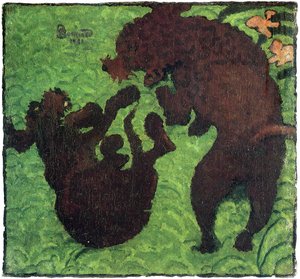
Colorful Pierre Bonnard’s "Two Poodles" (1891) captures playful dogs in a vibrant scene, showcasing the artist's signature style and domestic charm. Discover this delightful artwork and bring its joyful energy into your space.
Biografia do Artista
Pierre Bonnard (1867-1947) foi um mestre da cor e da luz, conhecido por suas cenas intimistas e estilo 'Intimista'. Explore sua obra icônica e a beleza dos momentos cotidianos!
Sobre a pintura
A Moment of Playful Joy: Pierre Bonnard's "Two Poodles"
Pierre Bonnard’s “Two Poodles,” painted in 1891, offers a captivating glimpse into the artist’s evolving approach to capturing domestic life. This vibrant depiction of two dogs engaged in a spirited wrestling match transcends mere representation; it’s an exploration of light, color, and the fleeting moments of joy found within everyday scenes. Measuring 36 x 39 cm, the painting immediately draws the eye with its bold palette – a symphony of blues, greens, yellows, and ochres that Bonnard masterfully employed to evoke atmosphere rather than photographic realism.
- Subject Matter: The central focus is undeniably the two poodles, rendered with affectionate detail. Their playful interaction, captured in a dynamic pose, speaks to Bonnard’s fascination with portraying intimate relationships and the simple pleasures of life.
- Style & Technique: “Two Poodles” exemplifies Bonnard's signature style – a blend of Impressionism and Post-Impressionism characterized by loose brushwork, broken color, and an emphasis on subjective perception. He utilizes short, rhythmic strokes to build up the forms of the dogs and their surroundings, creating a sense of movement and vitality.
Historical Context & The Nabis Movement
Painted in 1891, “Two Poodles” reflects Bonnard’s artistic development within the context of late 19th-century France. He was deeply influenced by the *Nabis* (meaning "prophets"), a group of Symbolist painters who sought to use color and light to evoke spiritual or emotional states. The Nabis, including artists like Émile Bernard and Paul Ranson, rejected academic realism in favor of subjective expression, prioritizing mood and atmosphere over precise representation. Bonnard’s association with this movement is evident in his exploration of color as a primary means of conveying emotion and creating a dreamlike quality within his work.
- The Nabis Influence: The presence of the birds in the background, subtly rendered, aligns with the Nabis interest in symbolic imagery.
- Early Bonnard: This painting showcases Bonnard’s early experimentation with color and form, a crucial step towards his mature style.
Symbolism & Emotional Resonance
Beyond its technical brilliance, “Two Poodles” resonates with a profound sense of emotional warmth. The dogs' playful struggle is not merely a depiction of animal behavior; it’s an embodiment of youthful exuberance and uninhibited joy. Bonnard’s use of color – particularly the vibrant greens and blues – contributes to this feeling of lightness and optimism. The potted plant on the right side, though seemingly incidental, adds a touch of domestic tranquility, grounding the scene in a familiar setting. The composition itself, with its dynamic diagonals and lively brushwork, creates a sense of movement and energy that draws the viewer into the heart of the moment.
- Color as Emotion: Bonnard’s masterful manipulation of color is key to understanding the painting's emotional impact.
- Intimacy & Domesticity: The scene captures a private, intimate moment – a hallmark of Bonnard’s artistic focus on domestic life and human relationships.
A Timeless Masterpiece - Reproduction Options
TopImpressionists offers meticulously crafted hand-painted reproductions of “Two Poodles,” allowing you to bring this captivating artwork into your home or office. Our skilled artisans employ the same techniques as Bonnard, ensuring an authentic representation of his vision. Choose from a range of sizes and canvas materials to perfectly suit your space and budget. Own a piece of art history – experience the joy and beauty of “Two Poodles” with TopImpressionists.
Perguntas e Respostas
Quando e com quais materiais foi feita a obra "Two Poodles"?
"Two Poodles" foi criada em 1891 utilizando a técnica de Acrylic On Canvas. O material e a data descrevem como e quando o original foi feito.
Onde posso comprar uma imagem digital de "Two Poodles", de Pierre Bonnard?
Uma imagem digital de "Two Poodles", de Pierre Bonnard pode ser adquirida em sua página de Imagem Digital de Alta Resolução: download de imagem digital em alta resolução.
Qual era a idade de Pierre Bonnard quando "Two Poodles" foi criada?
Pierre Bonnard tinha 24 anos quando criou "Two Poodles" em 1891. A idade é calculada a partir do ano de nascimento do artista, 1867.
Informações rápidas e quiz de arte
Sobre Pierre Bonnard

Pierre Bonnard
1867 - 1947, França
Biografia do Artista
A Life Bathed in Light: The World of Pierre Bonnard
Pierre Bonnard, born in 1867 in the Parisian suburb of Fontenay-aux-Roses, wasn’t destined for a life steeped in artistic expression. His father, a high-ranking official in the French Ministry of War, envisioned a legal career for his son. Young Pierre dutifully pursued law studies, earning his license in 1888, but his heart lay elsewhere—in the captivating world of color and form. This duality, this tension between expectation and passion, would subtly inform his artistic journey, lending a unique intimacy to his work. He initially dabbled in caricature, honing an observational skill that would later blossom into exquisitely rendered domestic scenes. However, it was at the Académie Julian where Bonnard truly found his path, encountering kindred spirits who shared his burgeoning rejection of academic conventions and embraced the avant-garde spirit sweeping through Paris. This encounter led him to the Nabis, a group of artists—including Maurice Denis, Paul Sérusier, and Édouard Vuillard—who sought to infuse art with spirituality and symbolism, moving beyond mere representation towards an exploration of inner experience.The Nabi Years and the Cultivation of Intimacy
Bonnard’s association with the Nabis proved pivotal. The group's emphasis on flattened forms, bold color palettes, and a rejection of traditional perspective resonated deeply with his artistic sensibilities. Inspired by Japanese prints—their elegant lines and harmonious compositions—and the Symbolist movement’s exploration of subjective emotion, Bonnard began to develop his signature style. He wasn’t interested in grand narratives or historical allegories; instead, he turned inward, focusing on the quiet moments of everyday life: a woman bathing, a family gathered for dinner, a sun-drenched garden. These weren't merely depictions of scenes but distillations of feeling—evocations of memory and atmosphere. This focus on intimate domesticity earned him the label “Intimist,” a term that perfectly captures the emotional resonance of his work. His paintings aren’t about *what* is depicted, but *how* it feels to be present in those moments. He worked from memory, sketching extensively and then translating those impressions onto canvas with a remarkable sensitivity to light and color. The Nabis sought to create art that was not simply representational, but rather conveyed a sense of spiritual truth through the use of color and form. Bonnard’s contribution lay in his ability to capture the fleeting emotions and subtle nuances of everyday life, imbuing them with a profound sense of beauty and melancholy.Color as Emotion: A Master Colorist
Bonnard's mastery of color is arguably his most defining characteristic. He didn’t simply *use* color; he *felt* it, allowing it to dictate the mood and atmosphere of his paintings. His palette was vibrant yet nuanced, often employing unexpected combinations that created a sense of shimmering luminosity. He famously would revisit completed canvases, subtly adjusting colors across multiple works to achieve perfect harmony—a testament to his obsessive dedication to chromatic balance. This wasn’t about realistic representation; it was about capturing the subjective experience of color, its ability to evoke emotion and memory. He moved away from direct observation, preferring instead to paint from recollection, allowing him to imbue his scenes with a dreamlike quality. His landscapes weren't simply depictions of places but emotional responses to them—filtered through the lens of personal experience. Bonnard’s use of color was deeply intuitive, driven by feeling rather than strict adherence to optical principles. He often layered colors in unexpected ways, creating a sense of depth and movement that captivated viewers.Later Life and Lasting Legacy
As Bonnard matured, his artistic focus shifted further towards the exploration of color and light. He spent increasing amounts of time in the south of France, captivated by the Mediterranean landscape and its intense luminosity. His relationship with Marthe de Méligny, his wife and lifelong muse, remained central to his life and work. She appears frequently in his paintings, often depicted bathing or engaged in everyday activities, her presence radiating a quiet grace and intimacy. In 1912, he purchased “La Roulotte” in Vernonnet, near Giverny, establishing a close friendship with Claude Monet. This proximity to the master of Impressionism further fueled Bonnard’s exploration of light and color, though he always maintained his own distinct artistic vision. He continued painting until shortly before his death in 1947, leaving behind a body of work that continues to captivate and inspire. Bonnard's influence on subsequent generations of artists is undeniable. His emphasis on subjective experience, his masterful use of color, and his celebration of the everyday have left an indelible mark on modern art. He demonstrated that beauty could be found not in grand gestures or heroic narratives, but in the quiet moments of life—bathed in light and imbued with emotion.Notable Works & Collections
- Woman in Checkered Dress (1890): An early example of his Nabi-influenced style, showcasing flattened forms and bold color combinations.
- The Dining Room (1913): A quintessential Intimist scene, capturing the warmth and intimacy of domestic life.
- Bowl of Fruit (c. 1933): Demonstrates his mastery of still life, with vibrant colors and a sense of luminous depth.
- The Almond Tree in Blossom (1947): One of his last paintings, completed just days before his death, showcasing his continued exploration of color and light.
- Musée Marmottan Monet, Paris, France
- Art Institute of Chicago
- Museum of Modern Art, New York City
- Tate Modern, London
Informações rápidas sobre Pierre Bonnard
- Artistic Movement Or Style: Pós-Impressionismo, Intimista
- Artists Or Movements Influenced By This Artist:
- Nabis
- Simbolismo
- Artists Who Influenced This Artist:
- Monet
- Gauguin
- Date Of Birth: 3 de outubro de 1867
- Date Of Death: 23 de janeiro de 1947
- Full Name: Pierre Bonnard
- Nationality: Francês
- Notable Artworks:
- Mulher em Vestido Xadrez
- Sala de Jantar
- Frutas em Tigela
- Place Of Birth: Fontenay-aux-Roses, França
Obras Relacionadas


Explore obras de arte organizadas por temas, estilos e características.


Pierre Bonnard
Two Poodles
() ·
Com a moldura: · Pintura a óleo sobre linho feita à mão
Total