

 Visualizar na parede
 Compartilhar
 Compartilhar
 Detalhes
 Guia
Guia

 Baixar imagem
 Semelhantes
 Raio X
 Ver diaporama
 Q&A
Q&A Estatísticas
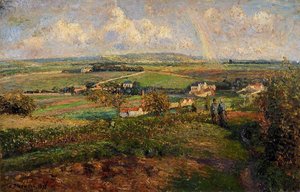
After The Rain

Explore 'After The Rain' by Robert Bruce Crane – an evocative Tonalist landscape painting capturing a post-storm rainbow in impressionistic style. Discover serene nature scenes & American art.
A master of the Tonalist movement, Robert Bruce Crane captured the serene beauty of autumn and winter landscapes in works like Snow Scene, inviting you to discover the evocative atmosphere of his timeless oil paintings.
 Ler mais
Obtenha um arquivo pronto para impressão que vai muito além da visualização na web. Cada imagem digital que vendemos provém de um arquivo mestre de alta resolução em nosso banco de dados — geralmente entre 5.000 e 15.000 pixels de largura — para que você possa imprimir em grandes formatos, realizar cortes precisos ou reproduzir detalhes minuciosos com total confiança.
Nenhum arquivo sai do nosso estúdio sem passar por um cuidadoso processo de revisão. Um especialista digital verifica as cores em relação à pintura original e as corrige se necessário, aumentando então a clareza e o detalhe com ferramentas profissionais de retoque — sempre mantendo a fidelidade às pinceladas e ao estilo do artista. O resultado é uma imagem que se assemelha à pintura, e não a um scan com filtros.
Aprovação antes da finalização: nosso especialista enviará a imagem por e-mail em até 72 horas para sua revisão. Não ficou satisfeito? Solicite melhorias ou correções, ou peça o reembolso caso a qualidade não atenda às suas expectativas.
Esta é a qualidade em que confiam editoras, estúdios de design, galerias e gráficas.
Imagem Digital
Baixe um arquivo de alta resolução para exibição pessoal, impressão e projetos criativos. ( Alternar para Impressão Comprar pintura feita à mão)
Incluído em cada compra de imagem digital
Entrega Digital Especializada e Garantida
Ao escolher o TopImpressionists.com, você não está apenas adquirindo uma imagem — você está recebendo uma obra de arte digital profissionalmente aprimorada, elaborada com precisão e com garantia de satisfação. Aqui está tudo o que acompanha seu pedido, automaticamente:

Entrega rápida por e-mail
O seu arquivo de imagem digital em alta resolução será enviado por e-mail em até 72 horas após o pedido — pronto para uso imediato.

Arquivo Digital com IA Otimizado
Sua obra de arte é otimizada profissionalmente por meio de ferramentas avançadas de IA e edição manual, garantindo o máximo de detalhes, clareza e precisão de cores.

Reenvio gratuito vitalício
Apagou ou perdeu o seu ficheiro acidentalmente? Não se preocupe – nós reenviamos para si a qualquer momento, gratuitamente.

Sem Taxas de Importação - Sempre
Desfrute da sua obra de arte instantaneamente, sem taxas alfandegárias, impostos ou custos de entrega — downloads digitais são sempre isentos de taxas.

Garantia de Fidelidade de Cores
Garantimos que sua imagem digital reflita as cores originais com a maior fidelidade possível, utilizando ferramentas profissionais e gerenciamento de cores.

Garantia de satisfação de 100 dias
Se não estiver satisfeito com a sua imagem digital, nós a revisaremos ou reembolsaremos 100% dentro de 100 dias — sem perguntas.

Garantia de Reembolso 100%
Não está satisfeito? Receba o reembolso total em até 100 dias após o recebimento do seu arquivo digital — sem perguntas.

Descontos para pedidos em lote
Compre 3 imagens, economize 10% - Compre 5, economize 15% - Compre 10+, economize 20%. Ideal para projetos criativos, galerias e agências.
Obras Relacionadas


Biografia do Artista
The Ethereal Landscapes of Robert Bruce Crane
In the quiet, mist-laden corners of American art history, few names evoke the serene melancholy of the Tonalist movement as poignantly as Robert Bruce Crane. Born in New York City, Crane’s journey into the heart of landscape painting was shaped by a deep connection to the natural world and an early exposure to the vibrant New York art scene through his father, Solomon Crane. His path was not merely one of spontaneous inspiration but of disciplined refinement; after working briefly as a draftsman in an architect's office, he sought the mentorship of the esteemed Alexander H. Wyant. This apprenticeship laid the foundation for a career defined by a delicate mastery of atmosphere and light, allowing him to transform simple observations of nature into profound emotional experiences.
Crane’s artistic evolution was deeply influenced by his time in Europe, particularly under the guidance of Jean-Charles Cazin at Grez-sur-Loing. This exposure helped him refine a style that would become his hallmark: a Tonalist approach characterized by subtle gradations of color and a focus on mood over meticulous detail. While he was an active member of the prestigious Lyme Art Colony in Connecticut, much of his most evocative work was born from memory. Retreating to his studio in Bronxville, New York, Crane would conjure the essence of the outdoors—the dampness of a post-storm afternoon or the crisp chill of a winter morning—relying on his extensive oil sketches of woods, meadows, and hills to guide his brush.
A Mastery of Season and Light
The true soul of Crane’s oeuvre lies in his devotion to the transitional seasons. He possessed an uncanny ability to capture the fleeting beauty of autumn and winter, often utilizing a palette dominated by soft yellows, earthy tones, and muted greys. His mature works frequently explore the following themes:
- The Golden Glow of Autumn: Many of his pieces, such as Autumn Uplands, celebrate the warmth and texture of falling leaves through a sophisticated use of light.
- Winter’s Solitude: In works like Snow Scene, Crane captures the stillness and contemplative silence of a landscape blanketed in white, evoking a sense of peaceful isolation.
- Atmospheric Transitions: Through paintings like After The Rain, he demonstrates an impressionistic flair, capturing the ephemeral magic of a rainbow emerging from a storm.
His technique was never about the mere depiction of scenery; it was about the capture of a feeling. By utilizing textured brushstrokes and a carefully controlled tonal range, Crane invited viewers into a world where the boundaries between reality and memory blur. His ability to evoke the scent of damp earth or the biting cold of a frost-covered meadow remains his greatest achievement as a painter.
Legacy and Recognition
Throughout his prolific career, Robert Bruce Crane earned significant acclaim within the American art community. He was a respected figure in several prestigious institutions, serving as an associate and later a full academician of the National Academy of Design. His contributions to the arts were recognized through numerous honors, including the Webb Prize from the Society of American Artists and medals at the International Exposition of 1904 in Saint Louis. Beyond his individual accolades, his presence in the Lyme Art Association and his leadership within the Salmagundi Club cemented his status as a pillar of the American Tonalist tradition.
Today, the works of Crane continue to resonate in major collections, such as the Newark Museum and the Florence Griswold Museum, serving as enduring testaments to his ability to find the infinite within the intimate. His legacy is one of quiet strength, reminding us that the most powerful art often speaks in whispers, capturing the fleeting, beautiful moments of the natural world that might otherwise be lost to time.

Robert Bruce Crane
1857 - 1937 , United States of America
Breve Biografia
- Artistic Movement Or Style: Tonalism
- Artists Who Influenced This Artist:
- Alexander H. Wyant
- Jean-Charles Cazin
- Full Name: Robert Bruce Crane
- Nationality: American
- Notable Artworks:
- Snow Scene
- Late Autumn
- After The Rain
- Autumn Uplands
- Place Of Birth: New York City, United States of America
- Date Of Birth: 1857
- Date Of Death: 1937