

Exibido: · Com a moldura:
 Visualizar na parede
 Compartilhar
 Compartilhar
 Detalhes
 Guia
Guia

 Baixar imagem
 Semelhantes
 Raio X
 Ver diaporama
 Perguntas e Respostas
 Estatísticas
- 20.0 x 12.0 cm


€ 240
Reprodução em Óleo Feita à Mão
Óleo sobre tela pintado à mão no tamanho e moldura de sua escolha, feito sob encomenda pelos nossos artistas. ( Alternar para Impressão Alternar para Imagem Digital)
Tamanho
·Tamanho padrão
personalizado
CM
INCH
Escolha entre os nossos tamanhos pré-definidos que respeitam as proporções originais da obra de arte.
Carregando tamanhos...

largura
altura
Insira a largura e a altura desejadas para se ajustarem à sua moldura ou parede. Como esta obra é pintada à mão, para um tamanho com proporções diferentes, o artista poderá pintar um pouco mais ao redor da imagem ou reduzir ligeiramente a composição — você escolhe. Enviamos uma maquete digital para sua aprovação antes de iniciar a pintura. A imagem exibida nesta página não representa o resultado real — apenas a maquete mostra o resultado final.
 Leia mais
Finalizar
·
Branco €1

Bordas esfumaçadas €1

Bordas estendidas €1

P118B €10

P118H €10

P118W €10

P438Z €10

P508JH €12

P508YH €12

P805H €10

P805Z €10

P919BZ €10

P919G €10

P919XJ €10

P959ZH €10

P968JZ €12

W106C €8

W218G €10

W218JH €8

W218Y €10

W307PJ €10

W316G €10

W316PJ €8

W316Y €10

W398PJ €8

W4111J €10

W500HY €15

W500JH €15

W692G €12

W849H €8

W940BG €15

W953PJ €8

H24-GOLD €30

H24-SILVER €30

H36-GOLD €45

H36-SILVER €45
Enviado em um tubo protetor, pronto para ser emoldurado por você.
Extras
opcionalO que os extras incluem?
Exemplos do que pode ser alterado: Substituir o rosto pela foto do cliente; Adicionar um animal de estimação (ex: substituir gato por cachorro); Incluir uma mensagem oculta no fundo; Alterar a paisagem ou elementos do fundo.
Após o pedido, a equipe da TopImpressionists.com enviará um e-mail ao cliente para instruções e fornecerá uma prévia da montagem
Após o pedido, a equipe da TopImpressionists.com enviará um e-mail ao cliente para instruções e fornecerá uma prévia da montagem
Entrega mundial () em 3 a 4 semanas, em vez das 5 semanas padrão. (8 Novembro). Sem comprometer a qualidade.
Verniz de Proteção
Etiqueta de identificação
Detalhes da Placa de Bronze Gravada
This elegant plaque features the artist's name and the title of the artwork, finely engraved for a timeless presentation.
It is made from bronze with a refined, elegant finish. The text is precisely laser-engraved for a sharp and permanent result. Measuring 9x2 cm, the plaque is compact yet easy to read. It's built to be durable and scratch-resistant, offering a professional, museum-quality look. Mounting is simple thanks to the included adhesive backing.
Detalhes da Placa de Acrílico Transparente
The plaque includes essential engraved details such as the artist's name, the title of the artwork, the date it was created, the type of media used-like oil on canvas or watercolor-a brief description of the piece, and a QR code that links to the complete artwork information.
It is crafted from clear acrylic, offering a sleek, modern appearance. The text is UV-engraved in black to ensure strong visual contrast. With a size of 10x15 cm, it ensures optimal readability. It comes equipped with two metal hooks for secure wall mounting. The plaque is designed to be weather-resistant, making it suitable for various environments, and it includes interactive features that work seamlessly with smartphone scanning.
Detalhes da Placa de Acrílico Preto
This elegant plaque includes engraved information such as the artist's name, the title of the artwork, the date it was created, the type of media used (like oil on canvas or watercolor), a short description of the artwork, and a QR code for quick access to more information.
The plaque itself is made from refined black acrylic with a premium finish. The text is laser-engraved in white for high contrast and readability. Its size is 10x15 cm, designed to be easy to read. It comes with two metal hooks for professional mounting. The design is sleek and fits any interior style. It is also weather-resistant and durable, with built-in digital integration for mobile compatibility.
A opção de vidro está disponível apenas para tamanhos inferiores a 110 cm
 A opção de vidro está disponível apenas para tamanhos inferiores a 110 cm
- Envio expresso gratuito para todo o mundo
- Tela de Linho de Alta Qualidade
- Seguro de transporte completo
- Garantia de Reembolso de Impostos Alfandegários
- Garantia de Fidelidade Cromática
- Política de Devolução em 100 Dias (Apenas para Defeitos)
- Garantia de reembolso de 100%
- Oferta de desconto por quantidade


Descrição do Item
Biografia do Artista
Rogier van der Weyden (1400-1464): Mestre da arte flamenga, conhecido por pinturas religiosas emotivas, cores ricas e detalhes naturalistas. Explore 'Lamentação' & mais!
Sobre a pintura
A Moment of Divine Revelation: Rogier van der Weyden’s Annunciation
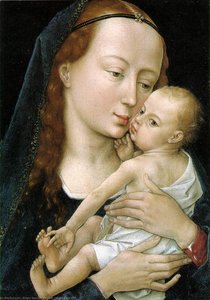
Rogier van der Weyden's "Annunciation," rendered here in a delicate 20 x 12 cm hand-painted reproduction, is more than just a depiction of a biblical event; it’s a profound meditation on faith, humility, and the transformative power of divine communication. Painted around 1464, this work stands as a testament to van der Weyden's mastery of Early Netherlandish painting – a style renowned for its meticulous realism, subtle emotional depth, and groundbreaking use of oil paint. The scene unfolds within a modestly furnished room, bathed in the soft glow of natural light streaming through a window, an element that immediately establishes a sense of intimacy and quiet contemplation. The artist’s skill isn't merely observational; it’s deeply expressive, capturing not just the appearance of figures but also the very essence of their interaction.
The Composition: A Dialogue of Grace
At the heart of the composition stands a kneeling figure, likely representing Mary, receiving the momentous news from the angel Gabriel. The posture – bowed head, hands clasped in prayer – speaks volumes about her receptive nature and profound humility. Gabriel, depicted with wings outstretched, is not presented as an imposing celestial being but rather as a messenger of grace, his expression conveying both solemnity and gentle reassurance. Note the careful attention to detail in Gabriel’s robes—a subtle indication of his elevated status while maintaining a dignified restraint. The positioning of the figures creates a dynamic triangle, drawing the viewer's eye from Mary’s receptive posture towards the angel and then back again, reinforcing the central theme of communication and revelation. The inclusion of a book, partially open on a table, subtly references scripture and the foundational importance of divine knowledge within Christian belief.
Van der Weyden’s Revolutionary Technique
Rogier van der Weyden was a pioneer in the use of oil paint, a relatively new medium at the time. This allowed him to achieve an unprecedented level of detail and luminosity – particularly evident in the rendering of fabrics, textures, and facial expressions. Observe how the folds of Mary’s garment are depicted with astonishing realism, each thread and crease meticulously rendered. The subtle variations in light and shadow create a sense of three-dimensionality, bringing the scene to life with remarkable immediacy. Van der Weyden's technique wasn’t simply about replicating reality; it was about capturing its essence – the way light interacts with surfaces, the nuances of human emotion, and the weight of spiritual significance. The use of *sfumato*, a technique borrowed from Leonardo da Vinci, is subtly employed to soften edges and create an atmospheric haze, contributing to the painting’s overall sense of serenity.
Symbolism and Spiritual Resonance
Beyond its immediate narrative, “Annunciation” is rich in symbolic meaning. The window, a recurring motif in van der Weyden's work, represents divine illumination – the light of God entering into human experience. The book symbolizes knowledge and faith, suggesting that Mary’s acceptance of the angel’s message is rooted in her understanding of scripture and her devotion to God. The muted color palette—predominantly blues, browns, and ochres—evokes a sense of solemnity and reverence, aligning with the gravity of the event depicted. The overall effect is one of profound spiritual contemplation, inviting viewers to reflect on their own relationship with faith and the mysteries of divine grace.
A Timeless Masterpiece: Bringing Van der Weyden Home
This hand-painted reproduction captures the essence of van der Weyden’s genius, offering a tangible connection to one of the most significant works in Early Netherlandish painting. Whether adorning a study, a chapel, or simply gracing a wall, this “Annunciation” serves as a constant reminder of the beauty and power of faith, the importance of humility, and the enduring legacy of a master artist. TopImpressionists’s meticulous attention to detail ensures that you receive a faithful representation of this iconic image, allowing its timeless message to resonate within your space.
Perguntas e Respostas
O que retrata "Annunciation" e qual é a sua atmosfera?
"Annunciation" apresenta annunciation, religious scene, angel, prophet, mary, dialogue, reflection, detail, e o seu estado de espírito registrado é Calm.
Quão saturada é a paleta de "Annunciation"?
As cores de "Annunciation", de Rogier van der Weyden possuem uma saturação Muted. A saturação descreve o quão vívidas ou suaves são as cores.
A que fase da trajetória de Rogier van der Weyden "Annunciation" pertence?
Dentro da trajetória de Rogier van der Weyden, "Annunciation" pertence ao período Early Netherlandish. Esta fase permite compará-la com outras obras do artista.
Informações rápidas e quiz de arte
Sobre Rogier van der Weyden

Rogier van der Weyden
1400 - 1464, Bélgica
Biografia do Artista
A Master of Emotion: The Life and Legacy of Rogier van der Weyden
Rogier van der Weyden, a pivotal figure in the burgeoning world of Early Netherlandish painting, emerged from the vibrant city of Tournai around 1400. While details surrounding his early life remain somewhat shrouded in mystery, it’s believed he initially honed his skills not with brush and pigment alone, but as a goldsmith – a training that instilled within him an unwavering dedication to meticulous detail and a refined sensibility for craftsmanship, qualities that would become hallmarks of his artistic style. The precision demanded by working with precious metals undoubtedly translated into the exquisite rendering of textures, fabrics, and expressions that define his masterpieces. He wasn’t merely depicting reality; he was recreating it with painstaking accuracy, imbued with an almost reverent attention to detail.From Tournai to Brussels: A Rising Star
By 1427, van der Weyden had ascended to the rank of master within the Guild of Saint Luke in Tournai – a significant turning point that solidified his position as a professional artist and opened doors to important commissions. His ascent continued when he entered the service of Philip the Good, Duke of Burgundy, in 1435 – a patronage that would profoundly shape his career for the remainder of his life. Serving as court painter afforded him not only financial security but also access to an elite circle of influence and exposure to some of the most discerning eyes of the era. It was during this period that van der Weyden’s artistic vision truly began to mature, moving away from the somewhat rigid conventions of earlier Netherlandish painters towards a more emotionally resonant and naturalistic approach. He wasn't simply painting religious scenes; he was striving to evoke genuine feeling in the viewer, to create an experience that transcended mere observation.The Language of Feeling: Style and Technique
Rogier van der Weyden’s artistic signature is immediately recognizable through several defining characteristics. His palette was remarkably rich and diverse, a vibrant tapestry of colors carefully chosen to avoid repetition and create depth and complexity within his compositions. He possessed an extraordinary ability to convey profound emotion – *pathos* – particularly in depictions of religious subjects like the Lamentation, where grief and sorrow are palpable. This emotional intensity wasn’t achieved through dramatic gestures or exaggerated expressions; rather, it was subtly woven into the very fabric of the painting, conveyed through delicate nuances of facial expression, body language, and composition. His figures, while adhering to the conventions of the time, demonstrate a growing interest in realistic representation – not just in anatomy and drapery, but also in capturing the psychological states of his subjects. They possess a dignified, almost sculptural quality, particularly evident in his grand triptychs, lending them an air of solemnity and reverence. He masterfully employed oil paint, building up layers of translucent glazes to achieve luminous effects and create a sense of depth and realism that was revolutionary for its time.Notable Works and Enduring Masterpieces
Throughout his prolific career, van der Weyden produced numerous works that stand as testaments to his artistic prowess. *St Luke Drawing a Portrait of the Madonna*, housed in the Museum of Fine Arts, Boston, showcases his mastery of oil on panel and meticulous observation. The *Lamentation*, residing in the Musée des Beaux-Arts Tournai, Belgium, is perhaps his most celebrated work – a powerfully emotive depiction of Christ’s mourning, renowned for its dramatic use of *chiaroscuro* and its ability to evoke profound sorrow in the viewer. Multiple versions of *The Deposition* exist, each demonstrating his skill in conveying grief and drama with breathtaking sensitivity. The *Annunciation*, a masterpiece of refined style and attention to detail, exemplifies his ability to imbue even the most traditional subjects with a sense of freshness and vitality. And finally, the intricate and richly detailed *Bladelin Triptych* stands as a monumental achievement – a complex altarpiece that showcases the full range of van der Weyden’s artistic abilities. These works, and many others, continue to captivate audiences today, solidifying his position as one of the most important painters of the 15th century.Lasting Influence: A Legacy Forged in Paint
Van der Weyden’s influence extended far beyond the borders of his native Flanders. His works were highly sought after throughout Europe, particularly in Italy and Spain, where they introduced a new level of emotional depth and naturalism to local artistic traditions. Although his fame experienced a period of relative decline in the 17th century, a rediscovery during the 19th century cemented his place as one of the most important painters of the 15th century. He stands alongside Jan van Eyck and Robert Campin as one of the “three great” Early Flemish masters, each contributing uniquely to the development of Northern Renaissance art. His innovative techniques and emotionally charged compositions paved the way for future generations of artists, inspiring countless imitators and influencing the course of Western painting for centuries to come. He helped establish oil painting as the dominant medium and elevated the status of the artist within society, transforming them from skilled craftsmen into revered creators. Rogier van der Weyden’s legacy continues to resonate today, a testament to his enduring genius and his profound understanding of the human condition.Informações rápidas sobre Rogier van der Weyden
- Artistic Movement Or Style: Pintura Flamenga
- Artists Or Movements Influenced By This Artist:
- Renascença Italiana
- Pintura Espanhola
- Artists Who Influenced This Artist:
- Campin
- Van Eyck
- Date Of Birth: c. 1400
- Date Of Death: 1464
- Full Name: Rogier van der Weyden
- Nationality: Beldica
- Notable Artworks:
- Lamentação
- Deposição
- Anunciação
- Triptique Bladelin
- Place Of Birth: Tournai, Bélgica
Explore obras de arte organizadas por temas, estilos e características.




Rogier van der Weyden
Annunciation
() ·
Com a moldura: · Pintura a óleo sobre linho feita à mão
Total