

 Visualizar na parede
 Compartilhar
 Compartilhar
 Detalhes
 Guia
Guia

 Baixar imagem
 Semelhantes
 Raio X
 Ver diaporama
 Q&A
Q&A Estatísticas
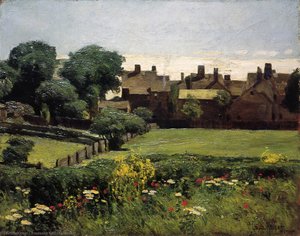
Carrick


Experience the warm charm of this hillside village scene by Ronald Donoughe, capturing light and life with masterful realism; bring this quaint view home today.
 Ler mais
O artista de Pittsburgh Ronald Donoughe captura paisagens e cenas urbanas realistas en plein air. Conhecido por representações detalhadas de cenas da Pensilvânia, luz e sombra.
A obra de arte exibida nesta página é protegida por leis de direitos autorais, o que significa que não podemos criar ou vender legalmente uma reprodução idêntica. Esta proteção é aplicada por meio de acordos internacionais, tais como a Convenção de Berna e pelas leis nacionais, incluindo as estabelecidas por Lei de Direitos Autorais dos EUA - Título 17.
Este método cumpre plenamente as regulamentações de direitos autorais, pois não envolve a cópia ou duplicação da obra protegida. Em vez disso, trata-se de uma reinterpretação criativa — uma nova pintura que é influenciada pela original, mas não idêntica a ela.
Giclée / Impressão de Arte
Impressão giclée ou em tela de qualidade de museu, com produção rápida e opções flexíveis de acabamento. ( Comprar pintura feita à mão Alternar para Imagem Digital)




P118B €10

P118H €10

P118W €10

P438Z €10

P508JH €12

P508YH €12

P805H €10

P805Z €10

P919BZ €10

P919G €10

P919XJ €10

P959ZH €10

P968JZ €12

W106C €8

W218G €10

W218JH €8

W218Y €10

W307PJ €10

W316G €10

W316PJ €8

W316Y €10

W398PJ €8

W4111J €10

W500HY €15

W500JH €15

W692G €12

W849H €8

W940BG €15

W953PJ €8




Tamanho padrão
personalizado
CM
INCH
Escolha entre os nossos tamanhos pré-definidos que respeitam as proporções originais da obra de arte.
Loading sizes...

largura
altura
Insira a largura e a altura desejadas para se ajustarem à sua moldura ou parede. Uma impressão pode ser apenas cortada, nunca ampliada além da imagem original; portanto, um tamanho com proporções diferentes resultará na perda de parte da imagem. Enviamos uma maquete digital para sua aprovação antes de realizarmos a impressão. A imagem exibida nesta página não mostra o corte real — apenas a maquete o faz.
Entrega mundial () em 2 semanas, em vez das 4/5 semanas padrão. (2 Novembro)

Envio expresso gratuito para todo o mundo

Tela de Linho de Alta Qualidade

Seguro de transporte completo

Garantia de Reembolso de Impostos Alfandegários

Garantia de Fidelidade Cromática

Política de Devolução em 100 Dias (Apenas para Defeitos)

Garantia de reembolso de 100%

Oferta de desconto por quantidade
 A opção de vidro está disponível apenas para tamanhos inferiores a 110 cm

Carrick
Giclée / Impressão de Arte
Tamanho da Reprodução
-


Preço Total
€ 61
A Sun-Drenched Embrace of Village Life
To gaze upon this depiction of Carrick is to be transported to a moment suspended in golden light—a quiet corner of the world where time seems to slow its hurried pace. The painting captures more than just stone and stucco; it embodies the enduring spirit of community nestled into the gentle slope of a hillside. One immediately feels the warmth emanating from the clustered yellow and white buildings, suggesting lives lived richly within these sun-drenched walls. It is an inviting tableau, masterfully composed to draw the viewer deep into its charming embrace.
Mastery in Light and Landscape
Ronald Donoughe’s technique here speaks volumes about his profound understanding of atmosphere. The way the light interacts with the varied architectural forms—from the prominent church anchoring the center to the smaller, more intimate dwellings scattered across the incline—is nothing short of breathtaking. He employs a realism that is both meticulous and dreamlike; every tree seems rooted in history, and every shadow possesses weight. This attention to natural depth, achieved through the careful placement of foliage against the built environment, gives the scene an almost palpable sense of three-dimensionality. It is a testament to his ability to capture not just what a place looks like, but how it feels at a specific, perfect moment.
The Symbolism of Place and Community
Beyond its immediate visual appeal, this artwork resonates with deep symbolic meaning. The village itself, clustered together against the vastness of the landscape, speaks to the fundamental human need for connection—the enduring comfort found in community. The church, often a focal point in such scenes, acts as a spiritual anchor, suggesting that tradition and shared belief bind these lives together. For the collector or designer, this piece offers more than mere decoration; it offers an idealized vision of belonging, a visual balm against the noise of modern life.
Bringing Pastoral Warmth Home
For those considering bringing this pastoral scene into your own sanctuary, know that reproductions capture the essence of Donoughe’s skilled hand. The warm palette—the creamy yellows juxtaposed with crisp whites and the deep greens of the scattered trees—is inherently uplifting. Imagine this piece gracing a living room or dining area; it acts as an instant focal point, injecting a sense of timeless, Mediterranean-tinged tranquility into any space. It is art that whispers stories of quiet afternoons and enduring beauty.
Perguntas e Respostas
A que movimento e a que época pertence "Carrick", de Ronald Donoughe?
Em "Carrick", de Ronald Donoughe, o movimento Contemporary Realism encontra a era Contemporâneo.
Em que ano foi criada a obra "Carrick", de Ronald Donoughe?
"Carrick", de Ronald Donoughe foi criado em 2013.
A obra "Carrick", de Ronald Donoughe, pertencente ao acervo do Senator John Heinz History Center, pode ser reproduzida legalmente?
O status de direitos autorais de "Carrick", de Ronald Donoughe é claro: a obra está em ainda protegido por direitos autorais. Sua presença no Senator John Heinz History Center não altera esse status.
Obras Relacionadas




Biografia do Artista
Ronald Donoughe: Capturando o Espírito do Oeste da Pensilvânia
Ronald Donoughe, um artista regional do sudoeste da Pensilvânia baseado em Pittsburgh, é muito mais do que apenas um pintor; ele é um cronista de lugares. Sua obra, caracterizada por um realismo meticuloso e uma sensibilidade aguda à luz e à atmosfera, oferece aos espectadores vislumbres íntimos da alma de sua amada região – desde paisagens urbanas movimentadas até cenários tranquilos e cobertos de neve. Nascido em Loretto, Pensilvância, em 1958, a jornada artística de Donoughe tem sido notavelmente diversa, moldada por uma curiosidade inquieta e um compromisso inabalável em capturar a essência do mundo ao seu redor. Sua carreira abrange quase quatro décadas, durante as quais ele documentou os 90 bairros distintos de Pittsburgh, cenas industriais e as sutis mudanças de cor através de vastas distâncias – tudo renderizado com uma atenção extraordinária aos detalhes.Primeiros Anos e Fundamentos Artísticos
A vida de Donoughe esteve longe de um caminho convencional para uma carreira artística. Crescer em uma família numerosa instilou nele uma forte ética de trabalho, mas sua fascinação inata pela arte começou ainda na infância. Ele desenvolveu um interesse aguçado tanto pela pintura quanto pelo desenho, o que o levou a buscar formação formal na Indiana University of Pennsylvania (IUP), onde obteve o bacharelado em Educação Artística. Enriquecendo ainda mais seu repertório artístico, ele estudou no California College of the Arts, em Oakland, Califórnia, ampliando sua exposição a diversas técnicas e abordagens. Essa educação inicial não se limitou aos ambientes acadêmicos tradicionais; a vida de Donoughe foi pontuada por uma série de trabalhos variados – desde paisagista e coveiro até professor de arte e montador de museus. Essas experiências, longe de serem desvios, moldaram profundamente sua perspectiva e informaram a rica tapeçaria de temas que ele escolhe retratar. Ele descreve esse histórico diversificado como “uma forma de ver”, permitindo-lhe abordar cada pintura com uma compreensão colhida de inúmeros encontros com as diferentes facetas da vida.Estilo Artístico e Técnicas
O estilo artístico de Donoughe é imediatamente reconhecível por seu realismo, mas ele transcende a mera replicação. Ele não busca simplesmente criar uma representação fotográfica; em vez disso, esforça-se para capturar o sentimento de um lugar – seu humor, sua energia, seu caráter único. Suas pinturas são caracterizadas por uma habilidade extraordinária de renderizar luz e sombra com precisão notável, observando meticulosamente como as cores se transformam com a distância. Isso é particularmente evidente em suas representações das paisagens industriais de Pittsburgh, onde mudanças sutis de matiz revelam a complexa interação entre atmosfera e arquitetura. Ele frequentemente utiliza um formato de pequeno painel (9”x12”), muitas vezes criando composições semelhantes a murais ao pendurar várias pinturas próximas umas das outras. Esta técnica não apenas maximiza o impacto visual, mas também permite que ele trabalhe rapidamente, respondendo diretamente às condições mutáveis da luz. O processo de Donoughe é intensamente focado; ele costuma completar uma pintura em um único dia, impulsionado pela urgência de capturar um momento fugaz antes que ele desapareça.Influências e Inspirações
A visão artística de Donoughe busca inspiração em uma gama diversificada de fontes. Ele cita a observação meticulosa e o uso magistral da luz de Leonardo da Vinci como uma influência fundamental, ao lado da perspectiva atmosférica defendida por Claude Monet e das paletas de cores evocativas de Paul Cézanne. No entanto, seu trabalho também está profundamente enraizado no movimento Regionalista Americano, particularmente nas pinturas de Walter Launt Palmer e William Merritt Chase, ambos que buscaram retratar as paisagens e o povo da América com um senso de autenticidade e ressonância emocional. Mais recentemente, Donoughe tem se sentido atraído pelo movimento artístico do excessivismo, que examina cada aspecto da vida em um estado de excesso – uma fascinação que se traduz em suas representações detalhadas de cenas cotidianas. Ele também está profundamente conectado ao oeste da Pensilvânia, encontrando inspiração em sua topografia única, herança industrial e na beleza silenciosa de suas paisagens rurais.Obras Notáveis e Reconhecimento
O trabalho de Donoughe tem sido exibido extensivamente por toda Pittsburgh e além, incluindo a Albright-Knox Art Gallery e outros museus. Seu projeto “90 Pittsburgh Neighborhoods” (90 Bairros de Pittsburgh) permanece como uma conquista monumental – um registro visual abrangente das diversas comunidades da cidade, agora exibido permanentemente no Heinz History Center. Este empreendimento ambicioso não apenas demonstrou sua habilidade técnica, mas também revelou seu profundo amor e compreensão pela identidade única de Pittsburgh. Ele recebeu inúmeros prêmios, incluindo o “Best Building Award” na competição April Plein Air Salon Art em 2024. Suas pinturas integram coleções privadas, corporativas e institucionais por todos os Estados Unidos, solidificando sua reputação como um respeitado artista regional. Seu trabalho também é destaque nas redes sociais, particularmente no Instagram (@rdonoughe), onde ele compartilha seu processo diário e percepções sobre sua prática criativa.Legado e Prática Contínua
O legado de Ronald Donoughe estende-se para além das telas que cria. Ele representa um fio vital na tapeçaria artística de Pittsburgh, documentando sua evolução com um olhar honesto e um profundo apreço por seu caráter. Seu compromisso com a pintura en plein air — trabalhando diretamente da natureza — garante que sua obra permaneça dinâmica e responsiva ao mundo em constante mudança ao seu redor. Enquanto continua a pintar, a arte de Donoughe serve como um lembrete pungente da beleza e complexidade do oeste da Pensilvânia, convidando os espectadores a pausar, observar e conectar-se com o espírito do lugar.
Ronald Donoughe
1958 - , Estados Unidos
Dados Rápidos
- Artistic Movement Or Style: Realismo, En plein air
- Artists Or Movements Influenced By This Artist: ['Georges Pierre Seurat']
- Artists Who Influenced This Artist:
- Leonardo da Vinci
- Claude Monet
- Paul Cezanne
- Walter Palmer
- Date Of Birth: 1958
- Full Name: Ronald Donoughe
- Nationality: Americano
- Notable Artworks:
- Perry South
- Middle Hill
- Perry North
- Place Of Birth: Loretto, EUA
Artigos Relacionados

Os 10 Mestres da Paisagem Romântica: Arte para Inspirar a Sua Casa
Descubra os 10 quadros mais emblemáticos da Paisagem Romântica! Explore a história de Turner, Friedrich e outros mestres. Encontre reproduções de arte exclusivas para inspirar sua decoração em TopImpressionists.com.

Evocations of Place: A Historical Journey Through Landscape Art
Explore the rich history of landscape art with TopImpressionists. Discover renowned artists, movements like Impressionism & Romanticism, and expert guidance for collecting timeless pieces. Find your perfect serene escape today!

Os 10 Quadros Mais Famosos Dominados pelo Branco: Arte e Decoração
Descubra os 10 quadros mais famosos dominados pelo branco, de Monet a Kandinsky! Explore a história da arte, técnicas e o poder da paleta neutra. Encontre reproduções de alta qualidade para sua decoração em TopImpressionists.com.

Capturing Nostalgia: The Timeless Allure and Art History of Village Scene Landscapes
Explore the profound beauty of village scene art. From Impressionist light to pastoral realism, discover how timeless landscapes capture nostalgia through expert artistry and historical depth. Perfect for collectors seeking evocative, museum-quality landscape inspirations.

John Constable: As 25 Obras-Primas que Definem o Mestre da Paisagem Inglesa | TopImpressionists
Descubra as 25 obras-primas de John Constable, o mestre da paisagem inglesa! Explore a arte romântica, cores vibrantes e histórias fascinantes por trás de 'Hay Wain' e outras pinturas icônicas. Encontre reproduções de alta qualidade para decorar sua casa com TopImpressionists.com.