


 Visualizar na parede
 Compartilhar
 Compartilhar
 Detalhes
 Guia
Guia

 Baixar imagem
 Semelhantes
 Raio X
 Ver diaporama
 Estatísticas
Study for 'The Ford'
 Oil On Canvas
- WallArt
- Impressionistic Landscape
 Modern
 114.0 x 104.0 cm
 The Munnings Art Museum
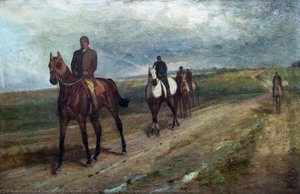
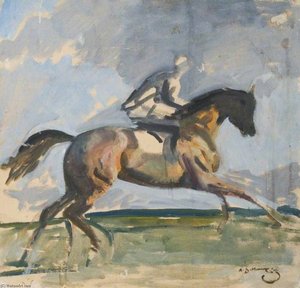
This evocative painting depicts a man riding atop three horses in a tranquil river setting, rendered in Munnings’ signature style—a celebration of equine grace and traditional landscapes.
 Ler mais
Sir Alfred Munnings: O mestre da pintura equina e retratista da vida rural inglesa! Celebre a beleza dos cavalos, caçadores e paisagens tradicionais com este artista icônico.
A obra de arte exibida nesta página é protegida por leis de direitos autorais, o que significa que não podemos criar ou vender legalmente uma reprodução idêntica. Esta proteção é aplicada por meio de acordos internacionais, tais como a Convenção de Berna e pelas leis nacionais, incluindo as estabelecidas por Lei de Direitos Autorais dos EUA - Título 17.
Este método cumpre plenamente as regulamentações de direitos autorais, pois não envolve a cópia ou duplicação da obra protegida. Em vez disso, trata-se de uma reinterpretação criativa — uma nova pintura que é influenciada pela original, mas não idêntica a ela.
Giclée / Impressão de Arte
Impressão giclée ou em tela de qualidade de museu, com produção rápida e opções flexíveis de acabamento. ( Comprar pintura feita à mão Alternar para Imagem Digital)




P118B €10

P118H €10

P118W €10

P438Z €10

P508JH €12

P508YH €12

P805H €10

P805Z €10

P919BZ €10

P919G €10

P919XJ €10

P959ZH €10

P968JZ €12

W106C €8

W218G €10

W218JH €8

W218Y €10

W307PJ €10

W316G €10

W316PJ €8

W316Y €10

W398PJ €8

W4111J €10

W500HY €15

W500JH €15

W692G €12

W849H €8

W940BG €15

W953PJ €8




Tamanho padrão
personalizado
CM
INCH
Escolha entre os nossos tamanhos pré-definidos que respeitam as proporções originais da obra de arte.
Loading sizes...

largura
altura
Insira a largura e a altura desejadas para se ajustarem à sua moldura ou parede. Uma impressão pode ser apenas cortada, nunca ampliada além da imagem original; portanto, um tamanho com proporções diferentes resultará na perda de parte da imagem. Enviamos uma maquete digital para sua aprovação antes de realizarmos a impressão. A imagem exibida nesta página não mostra o corte real — apenas a maquete o faz.
Entrega mundial () em 2 semanas, em vez das 4/5 semanas padrão. (25 Outubro)

Envio expresso gratuito para todo o mundo

Tela de Linho de Alta Qualidade

Seguro de transporte completo

Garantia de Reembolso de Impostos Alfandegários

Garantia de Fidelidade Cromática

Política de Devolução em 100 Dias (Apenas para Defeitos)

Garantia de reembolso de 100%

Oferta de desconto por quantidade
 A opção de vidro está disponível apenas para tamanhos inferiores a 110 cm

Study for 'The Ford'
Giclée / Impressão de Arte
Tamanho da Reprodução
-


Preço Total
€ 61
A Moment Frozen in Time: The Soul of the English Landscape
In the quiet, mist-laden corners of the British countryside, there exist moments of profound stillness that seem to hold the breath of history itself. Sir Alfred James Munnings, a master of the equine form and a titan of 20th-century British art, captured such a moment in his evocative work, Study for 'The Ford'. This piece is far more than a mere depiction of animals crossing water; it is an immersive sensory experience that transports the viewer to the edge of a riverbank, where the air is thick with the scent of damp earth and the rhythmic splashing of hooves. Through his masterful command of light and movement, Munnings invites us into a world where the boundaries between man, beast, and nature blur into a singular, poetic expression of life in motion.
The composition centers on a striking scene of strength and grace: a solitary figure, dressed with an unexpected touch of formal elegance in a suit and tie, guides three horses through the shallow currents of a ford. The contrast between the man's structured attire and the raw, untamed energy of the animals creates a captivating tension. Each horse is rendered with distinct character—a snowy white, a deep chestnut, and a midnight black—emerging from the water like specters from a dream. As they traverse the river, the water breaks around their legs in delicate ripples, reflecting the muted, atmospheric tones of the sky above. It is a scene that balances the heavy physicality of the horses with the ethereal, fleeting quality of light dancing upon the surface of the stream.
The Impressionistic Touch and Technical Mastery
Munnings’s technique in this study reveals the heart of the Impressionist movement applied to the rugged textures of rural life. Eschewing the sterile precision of photographic realism, the artist employs a vigorous, impasto application of oil paint. His brushstrokes are bold and deliberate, layered upon the canvas to create a palpable texture that mimics the very elements he depicts. One can almost feel the weight of the horses' muscles and the cool, fluid resistance of the river through the thick, tactile ridges of paint. This method allows for a brilliant play of light; the highlights on the horses' coats and the shimmering reflections in the water are not merely painted, but sculpted onto the surface.
The color palette is a sophisticated study in subtlety, dominated by earthy browns, slate greys, and soft silvers. These tones evoke the "grey-weather" days that Munnings so cherished—those overcast, serene moments when the light is diffused and the landscape takes on a melancholic, timeless quality. By prioritizing atmosphere over minute detail, the artist achieves a sense of immediacy. The viewer does not just observe the scene; they feel the dampness of the riverbank and the quiet anticipation that precedes the movement of the herd. This mastery of tone ensures that the painting possesses a depth that remains captivating even upon repeated viewings.
A Legacy of Tradition and Timeless Elegance
Historically, Study for 'The Ford' serves as a poignant tribute to a vanishing way of life. Created during a period when the traditional rhythms of the English countryside were beginning to face the pressures of modernity, Munnings’s work acts as a preservation of heritage. The horse, a symbol of nobility and an unbreakable bond with the land, stands at the center of his artistic mission. For the collector or the interior designer, this piece offers more than just aesthetic beauty; it brings a sense of historical weight and pastoral tranquility to any space. It is a work that commands attention through its quiet dignity rather than through loud or jarring colors.
Whether placed in a grand library, a sophisticated study, or a contemporary living space, this reproduction serves as a window into the romanticized soul of the United Kingdom. It provides an anchor of stability and grace, making it an ideal choice for those looking to infuse their surroundings with a sense of cultured nostalgia and enduring strength. To own such a piece is to possess a fragment of the English pastoral tradition—a permanent reminder of the beauty found in the simplest, most fleeting moments of nature.
Perguntas e Respostas
Que atmosfera "Study for 'The Ford'", de Alfred Munnings traz a um ambiente?
Com sua atmosfera Romantic, "Study for 'The Ford'" é sugerida para um(a) Living Room.
"Study for 'The Ford'" é uma boa ideia de presente?
Como presente, sugere-se "Study for 'The Ford'", de Alfred Munnings para Anniversary. Outras ocasiões também podem ser adequadas.
Como "Study for 'The Ford'" equilibra luz e sombra?
"Study for 'The Ford'" apresenta um brilho geral de balanced, com uma luminância de Soft Shadow.
Obras Relacionadas





Biografia do Artista
A Life Immersed in Equine Grace
Sir Alfred James Munnings, a name inextricably linked to the vibrant depiction of horses and the romantic allure of rural England, occupies a pivotal position within 20th-century British art. Born in 1878 amidst the rolling landscapes of Suffolk, his life was profoundly shaped by an enduring connection with the equine world – a bond that would define his artistic vision and propel him to prominence. Munnings wasn’t simply recording what he saw; he was preserving a feeling, an atmosphere, a world poised on the brink of irreversible change. He captured a vanishing way of life, a keenly observed portrait of Britain steeped in tradition, hunting, and the rhythms of the countryside. His early works often depicted rural scenes, particularly those featuring gypsies and horses roaming the Suffolk countryside, imbued with a romantic sensibility that showcased his growing mastery of color and light. These paintings weren’t merely representations; they were expressions of a deep affection for the land and its inhabitants.From Rural Beginnings to Artistic Development
Munnings’s artistic journey began not within the formal confines of an academy, but in the practical world of a Norwich printing house. This apprenticeship honed his skills in design and observation while simultaneously allowing him to pursue studies at the Norwich School of Art. It was a formative period, instilling a discipline that would serve him well as he navigated the challenges of establishing himself as an artist. Early influences included the plein air painters of the Newlyn School in Cornwall, where he embraced their commitment to capturing light and atmosphere directly from nature. This immersion in Impressionistic techniques laid the groundwork for his signature style – loose brushwork, a vibrant palette, and a palpable sense of movement. He was particularly drawn to the work of Henri de Toulouse-Lautrec, whose depictions of Parisian nightlife influenced his later compositions. Munnings’s early subjects often included scenes of rural life, capturing the essence of working horses and the traditions associated with farming and hunting. His ability to convey both the physical beauty of these animals and the emotional connection between humans and horses quickly established him as a distinctive voice in British art.War, Recognition, and a Champion of Tradition
The First World War profoundly shaped both Munnings's artistic perspective and his public profile. Though initially deemed unfit for combat due to an eye injury sustained in 1908, he was nonetheless commissioned by the Canadian War Memorials Fund to document the role of horses in the conflict. This led him to France, where he spent several months meticulously painting scenes of the Canadian Cavalry Brigade – not glorifying battle but capturing the quiet dignity and resilience of both men and animals amidst the horrors of war. These paintings, characterized by their understated realism and poignant emotional depth, garnered significant acclaim and brought Munnings national recognition. Following the war, Munnings continued to paint extensively, establishing a studio in Dedham, Essex, where he created a prolific body of work depicting hunting scenes, racing events, and portraits of prominent figures from the aristocracy and sporting world. He became known for his ability to capture not only physical likeness but also the character and spirit of his subjects. However, Munnings was also a staunch defender of traditional artistic values, often expressing his disapproval of modern art movements such as Cubism and Surrealism with outspokenness and conviction.Major Achievements
- Royal Academy President: Elected President of the Royal Academy in 1944, serving until 1949.
- Knighthood: Knighted Bachelor in 1944 and appointed a Knight Commander of the Royal Victorian Order in 1947.
- War Artist Commissions: Recognized for his work documenting the Canadian Cavalry during WWI.
- Sculptural Work: Created sculptures, including an equestrian statue of Edward Horner.
His legacy endures not only through his masterful paintings but also as a passionate advocate for artistic tradition in a rapidly modernizing world.

Alfred Munnings
1878 - 1959 , Reino Unido
Dados Rápidos
- Artistic Movement Or Style: Impressionismo
- Artists Or Movements Influenced By This Artist: ['Modernismo']
- Artists Who Influenced This Artist: ['Escola de Newlyn']
- Date Of Birth: 1878
- Date Of Death: 1959
- Full Name: Sir Alfred James Munnings
- Nationality: Britânico
- Notable Artworks:
- A Fancy Dress Ball
- A Piper
- Sky Study -
- Place Of Birth: Mendham, Reino Unido
Artigos Relacionados

Capturing Motion: The Timeless Beauty of Sir Alfred James Munnings' Equestrian Masterpieces
Discover the breathtaking equestrian mastery of Sir Alfred James Munnings. Explore an art-history journey through his impressionistic captures of motion, light, and rural elegance, perfect for the discerning classic art enthusiast and collector.

The Noble Steed on Canvas: A Historical & Artistic Exploration of Horse Painting Across Cultures
Explore the rich history of horse painting! Discover masterpieces from Stubbs to Munnings & learn about symbolism, techniques & artists. Find museum-quality reproductions at TopImpressionists.

Alfred Worthington: Bridging Victorian Realism & Early Modern Landscape Painting
Explore the captivating landscapes of Alfred Worthington (1834-1927), a pivotal figure bridging Victorian realism & early Impressionism. Discover his Welsh hunting scenes, artistic evolution, and collecting guide.

As 25 Obras-Primas de Alfred Munnings: Arte Equina e a Alma Inglesa | TopImpressionists
Descubra as 25 obras-primas de Alfred Munnings, o mestre da pintura equina e da alma inglesa. Explore a história, técnica e beleza atemporal de cada quadro. Reproduções de arte exclusivas em TopImpressionists.com! Explore a coleção online.

Alfred I. Glendening: Capturing Rural England's Poetic Essence
Explore the captivating rural landscapes of Alfred I. Glendening, a master of British sporting paintings. Discover his life, artistic style, and place within the American Regionalist movement. Expert insights & high-quality reproductions at TopImpressionists.
Explore obras de arte organizadas por temas, estilos e características.


