


 Visualizar em escala
 Enviar
 Compartilhar
 Ver detalhes
 Guia
Guia

 Baixar imagem
 Semelhantes
 Raio X
 Apresentação de slides
 Estatísticas
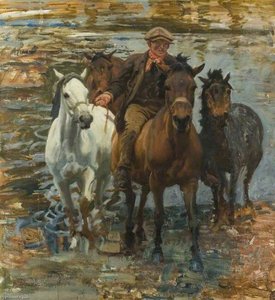
The Ford
 Acrylic On Canvas
- WallArt
- Newlyn School
 19th Century
 139.0 x 165.0 cm
 Wolverhampton Art Gallery
Experience 'The Ford' by Sir Alfred Munnings – a captivating 1910 painting of a man and horses navigating floodwaters. A stunning depiction of rural England’s adventurous spirit, rendered in rich detail.
 Ver mais
Sir Alfred Munnings: O mestre da pintura equina e retratista da vida rural inglesa! Celebre a beleza dos cavalos, caçadores e paisagens tradicionais com este artista icônico.
Adquira uma imagem digital de alta resolução e aprimorada, muito superior à prévia online.
Cada arquivo é meticulosamente preparado por nossos especialistas internos, utilizando ferramentas avançadas e retoques manuais de alta precisão. Garantimos que cada imagem apresente clareza excepcional, fidelidade de cores e detalhes minuciosos.
O arquivo final é entregue por e-mail em até 72 horas, otimizado para uso imediato em ambientes profissionais, editoriais e de impressão. Esta é a mesma qualidade utilizada por estúdios de design de alto nível, editoras e galerias.
Imagem Digital
Baixe um arquivo de alta resolução para exibição pessoal, impressão e projetos criativos. ( Alternar para Impressão Encomendar reprodução pintada à mão)
Incluído em cada pedido de imagem digital
Entrega Digital Especializada e Garantida
Ao escolher o TopImpressionists.com, você não está apenas adquirindo uma imagem — você está recebendo uma obra de arte digital profissionalmente aprimorada, elaborada com precisão e com garantia de satisfação. Aqui está tudo o que acompanha seu pedido, automaticamente:

Entrega rápida por e-mail
O seu arquivo de imagem digital em alta resolução será enviado por e-mail em até 72 horas após o pedido — pronto para uso imediato.

Arquivo Digital com IA Otimizado
Sua obra de arte é otimizada profissionalmente por meio de ferramentas avançadas de IA e edição manual, garantindo o máximo de detalhes, clareza e precisão de cores.

Reenvio gratuito vitalício
Apagou ou perdeu o seu ficheiro acidentalmente? Não se preocupe – nós reenviamos para si a qualquer momento, gratuitamente.

Sem Taxas de Importação - Sempre
Desfrute da sua obra de arte instantaneamente, sem taxas alfandegárias, impostos ou custos de entrega — downloads digitais são sempre isentos de taxas.

Garantia de Precisão de Cores
Garantimos que sua imagem digital reflita as cores originais com a maior fidelidade possível, utilizando ferramentas profissionais e gerenciamento de cores.

Garantia de satisfação de 100 dias
Se não estiver satisfeito com a sua imagem digital, nós a revisaremos ou reembolsaremos 100% dentro de 100 dias — sem perguntas.

Garantia de Reembolso 100%
Não está satisfeito? Receba o reembolso total em até 100 dias após o recebimento do seu arquivo digital — sem perguntas.

Descontos para pedidos em lote
Compre 3 imagens, economize 10% - Compre 5, economize 15% - Compre 10+, economize 20%. Ideal para projetos criativos, galerias e agências.
A Moment Frozen in Time: The Ford by Sir Alfred Munnings
Sir Alfred James Munnings’s “The Ford,” painted in 1910, isn't merely a depiction of horses and riders; it’s a vibrant snapshot of a vanishing world – the heartland of rural England on the cusp of profound change. More than just a landscape painting, it’s an immersive experience, transporting the viewer to a flooded field teeming with life, action, and a palpable sense of camaraderie. Munnings, a master of capturing the essence of equine grace and the spirit of the countryside, skillfully renders this chaotic scene with remarkable precision and emotional depth.
The painting immediately draws the eye to the central figure on horseback, a man confidently leading a group through the turbulent waters. His posture exudes authority and leadership, while his attire – a crisp tie against the muddy backdrop – subtly anchors him in a world of gentlemanly pursuits. The horses themselves are rendered with breathtaking realism; each muscle flexes, each stride is captured with an almost photographic accuracy. Munnings’s ability to convey the power and movement of these animals is truly remarkable, highlighting their vital role within this community.
The Painter's Technique: Impressionism Meets Equestrian Detail
Munnings’s style seamlessly blends elements of Impressionism with his deep understanding of horses. He employs loose brushstrokes and a vibrant palette – dominated by earthy browns, greens, and blues – to create an atmosphere of immediacy and dynamism. The water itself is depicted not as a static element but as a swirling vortex of color and movement, reflecting the light and adding to the sense of unrestrained energy. Notice how he uses broken color to suggest depth and texture, particularly in the wet ground and the flowing garments of the riders.
The painting’s composition is carefully constructed to draw the viewer into the scene. The diagonal lines created by the horses and riders lead the eye across the canvas, while the use of atmospheric perspective – with distant figures appearing paler and less distinct – reinforces the sense of depth. Munnings' meticulous attention to detail extends beyond the horses; he captures the expressions on the faces of the riders, conveying a range of emotions from determination to amusement.
A Window into a Disappearing World
“The Ford” offers more than just a beautiful landscape; it’s a poignant reminder of a bygone era. Painted in 1910, the scene depicts a time when rural life was deeply intertwined with agriculture and hunting – activities that were increasingly threatened by industrialization and urbanization. The flooded field itself speaks to the unpredictable nature of the countryside, highlighting its vulnerability to the elements.
The painting’s historical context is crucial to understanding its significance. Munnings was a staunch defender of traditional rural values, and his work often served as a visual chronicle of a disappearing way of life. “The Ford” captures this sentiment perfectly, offering a glimpse into a world where horses were not just animals but essential partners in the daily rhythms of life. The painting’s enduring appeal lies in its ability to evoke a sense of nostalgia for a time when community and connection with nature held greater importance.
Symbolism and Emotional Resonance
Beyond its technical brilliance, “The Ford” is rich in symbolism. The flooded field represents both challenge and opportunity – a test of skill and resilience. The central figure on horseback embodies leadership and determination, while the other riders represent community and shared experience. The painting’s overall mood is one of optimism and camaraderie, suggesting that even amidst adversity, there is always reason for hope.
Ultimately, “The Ford” is a powerful testament to Munnings' artistic vision and his ability to capture the essence of rural England. It’s a timeless masterpiece that continues to resonate with viewers today, reminding us of the beauty and importance of preserving our cultural heritage.
Obras Relacionadas




Biografia do Artista
A Life Immersed in Equine Grace
Sir Alfred James Munnings, a name inextricably linked to the vibrant depiction of horses and the romantic allure of rural England, occupies a pivotal position within 20th-century British art. Born in 1878 amidst the rolling landscapes of Suffolk, his life was profoundly shaped by an enduring connection with the equine world – a bond that would define his artistic vision and propel him to prominence. Munnings wasn’t simply recording what he saw; he was preserving a feeling, an atmosphere, a world poised on the brink of irreversible change. He captured a vanishing way of life, a keenly observed portrait of Britain steeped in tradition, hunting, and the rhythms of the countryside. His early works often depicted rural scenes, particularly those featuring gypsies and horses roaming the Suffolk countryside, imbued with a romantic sensibility that showcased his growing mastery of color and light. These paintings weren’t merely representations; they were expressions of a deep affection for the land and its inhabitants.From Rural Beginnings to Artistic Development
Munnings’s artistic journey began not within the formal confines of an academy, but in the practical world of a Norwich printing house. This apprenticeship honed his skills in design and observation while simultaneously allowing him to pursue studies at the Norwich School of Art. It was a formative period, instilling a discipline that would serve him well as he navigated the challenges of establishing himself as an artist. Early influences included the plein air painters of the Newlyn School in Cornwall, where he embraced their commitment to capturing light and atmosphere directly from nature. This immersion in Impressionistic techniques laid the groundwork for his signature style – loose brushwork, a vibrant palette, and a palpable sense of movement. He was particularly drawn to the work of Henri de Toulouse-Lautrec, whose depictions of Parisian nightlife influenced his later compositions. Munnings’s early subjects often included scenes of rural life, capturing the essence of working horses and the traditions associated with farming and hunting. His ability to convey both the physical beauty of these animals and the emotional connection between humans and horses quickly established him as a distinctive voice in British art.War, Recognition, and a Champion of Tradition
The First World War profoundly shaped both Munnings's artistic perspective and his public profile. Though initially deemed unfit for combat due to an eye injury sustained in 1908, he was nonetheless commissioned by the Canadian War Memorials Fund to document the role of horses in the conflict. This led him to France, where he spent several months meticulously painting scenes of the Canadian Cavalry Brigade – not glorifying battle but capturing the quiet dignity and resilience of both men and animals amidst the horrors of war. These paintings, characterized by their understated realism and poignant emotional depth, garnered significant acclaim and brought Munnings national recognition. Following the war, Munnings continued to paint extensively, establishing a studio in Dedham, Essex, where he created a prolific body of work depicting hunting scenes, racing events, and portraits of prominent figures from the aristocracy and sporting world. He became known for his ability to capture not only physical likeness but also the character and spirit of his subjects. However, Munnings was also a staunch defender of traditional artistic values, often expressing his disapproval of modern art movements such as Cubism and Surrealism with outspokenness and conviction.Major Achievements
- Royal Academy President: Elected President of the Royal Academy in 1944, serving until 1949.
- Knighthood: Knighted Bachelor in 1944 and appointed a Knight Commander of the Royal Victorian Order in 1947.
- War Artist Commissions: Recognized for his work documenting the Canadian Cavalry during WWI.
- Sculptural Work: Created sculptures, including an equestrian statue of Edward Horner.
His legacy endures not only through his masterful paintings but also as a passionate advocate for artistic tradition in a rapidly modernizing world.

Alfred Munnings
1878 - 1959 , Reino Unido
Informações Rápidas
- Artistic Movement Or Style: Impressionismo
- Artists Or Movements Influenced By This Artist: ['Modernismo']
- Artists Who Influenced This Artist: ['Escola de Newlyn']
- Date Of Birth: 1878
- Date Of Death: 1959
- Full Name: Sir Alfred James Munnings
- Nationality: Britânico
- Notable Artworks:
- A Fancy Dress Ball
- A Piper
- Sky Study -
- Place Of Birth: Mendham, Reino Unido