

 Visualizar na parede
 Compartilhar
 Compartilhar
 Detalhes
 Guia
Guia

 Baixar imagem
 Semelhantes
 Raio X
 Ver diaporama
 Perguntas e Respostas
 Estatísticas
T. G. Arthur


Admire Sir John Lavery's 'T. G. Arthur,' a striking portrait capturing the distinguished figure of a military officer. Experience the elegance and authority conveyed through masterful brushstrokes and a captivating composition.
 Ler mais
Sir John Lavery (1856-1941): Pintor irlandês renomado por retratos da alta sociedade e cenas de guerra. Influenciado por Whistler, figura chave da arte britânica.
Giclée / Impressão de Arte
Impressão giclée ou em tela de qualidade de museu, com produção rápida e opções flexíveis de acabamento. ( Comprar pintura feita à mão Alternar para Imagem Digital)




P118B €10

P118H €10

P118W €10

P438Z €10

P508JH €12

P508YH €12

P805H €10

P805Z €10

P919BZ €10

P919G €10

P919XJ €10

P959ZH €10

P968JZ €12

W106C €8

W218G €10

W218JH €8

W218Y €10

W307PJ €10

W316G €10

W316PJ €8

W316Y €10

W398PJ €8

W4111J €10

W500HY €15

W500JH €15

W692G €12

W849H €8

W940BG €15

W953PJ €8




Tamanho padrão
personalizado
CM
INCH
Escolha entre os nossos tamanhos pré-definidos que respeitam as proporções originais da obra de arte.
Loading sizes...

largura
altura
Insira a largura e a altura desejadas para se ajustarem à sua moldura ou parede. Uma impressão pode ser apenas cortada, nunca ampliada além da imagem original; portanto, um tamanho com proporções diferentes resultará na perda de parte da imagem. Enviamos uma maquete digital para sua aprovação antes de realizarmos a impressão. A imagem exibida nesta página não mostra o corte real — apenas a maquete o faz.
Entrega mundial () em 2 semanas, em vez das 4/5 semanas padrão. (6 Novembro)

Envio expresso gratuito para todo o mundo

Tela de Linho de Alta Qualidade

Seguro de transporte completo

Garantia de Reembolso de Impostos Alfandegários

Garantia de Fidelidade Cromática

Política de Devolução em 100 Dias (Apenas para Defeitos)

Garantia de reembolso de 100%

Oferta de desconto por quantidade
 A opção de vidro está disponível apenas para tamanhos inferiores a 110 cm

T. G. Arthur
Giclée / Impressão de Arte
Tamanho da Reprodução
-


Preço Total
€ 63
The Commanding Presence: Sir John Lavery’s T.G. Arthur
Sir John Lavery's 1890 portrait of Thomas George Arthur, a prominent figure in British military and colonial administration, is more than just a likeness; it’s a carefully constructed tableau of authority, confidence, and the subtle complexities of Victorian society. Painted during a period of significant imperial expansion and burgeoning social reform, the painting captures Arthur not merely as a man, but as an embodiment of the power and responsibility held within the British Empire. Lavery, deeply embedded in the Glasgow School movement yet increasingly influenced by Parisian Impressionism, masterfully blends realistic detail with a loose, evocative brushstroke – a technique that breathes life into the subject while simultaneously hinting at the artist’s own evolving style.
- Subject and Context: T.G. Arthur (1840-1907) served as Chief Secretary for Ireland from 1886 to 1888, a role marked by considerable political tension and ultimately unsuccessful attempts at reconciliation with Irish nationalists. His position demanded both strategic acumen and a measured approach, qualities subtly conveyed in the portrait’s composition. The backdrop, deliberately blurred and indistinct, suggests a vastness of responsibility – mirroring the expansive reach of the British Empire under his stewardship.
- Lavery's Technique: Notice the interplay of light and shadow, characteristic of Lavery’s approach. He employs broken brushstrokes to create a sense of movement within Arthur’s uniform, suggesting both military precision and underlying energy. The muted palette – dominated by browns, blues, and greys – reinforces the seriousness of the subject while preventing the portrait from becoming overly formal or static.
Decoding the Symbolism: Uniform, Gesture, and Gaze
Beyond mere representation, Lavery imbues the painting with layers of symbolic meaning. Arthur’s military uniform, meticulously rendered, is not simply a garment; it's a visual shorthand for his role as a soldier and administrator – a symbol of order, discipline, and control. The gold stripe on his sleeve, a clear indicator of rank, subtly elevates him within the social hierarchy. However, Lavery doesn’t present Arthur as an unapproachable figure of absolute power. Instead, he captures a moment of relaxed contemplation, with Arthur’s hand resting casually on his hip and his gaze directed directly at the viewer. This direct engagement invites a connection, suggesting a willingness to engage in dialogue – a surprisingly human element within this portrait of authority.
The subtle tilt of Arthur's head adds an air of intelligence and perhaps even a hint of weariness, reflecting the burdens of his position.A Window into Victorian Society
To understand Lavery’s portrait fully, it’s crucial to consider the broader social context of 1890. The Victorian era was characterized by rapid industrialization, imperial expansion, and a complex interplay of social classes. Portraits like this were not merely commissioned; they served as powerful statements of status and influence within a society obsessed with appearances. Lavery's skill lies in his ability to capture the essence of this era – its formality, its ambition, and its underlying anxieties – all within the confines of a single canvas.
- The Glasgow School Influence: While rooted in the realism of the Glasgow School, Lavery’s work increasingly embraced Impressionistic techniques, particularly his use of light and color. This fusion reflects the artistic currents of the time – a blending of traditional academic training with modern experimentation.
- Social Commentary: The portrait can be interpreted as a subtle commentary on the role of the British Empire in Ireland. Arthur’s position as Chief Secretary highlights the complexities of colonial administration and the ongoing tensions between Britain and its Irish subjects.
Collecting a Legacy: Reproduction and Appreciation
TopImpressionists offers meticulously crafted hand-painted reproductions of Sir John Lavery's “T.G. Arthur,” ensuring that this significant work of art is accessible to collectors and enthusiasts worldwide. Each reproduction captures the nuances of Lavery’s original technique, faithfully recreating the painting’s evocative atmosphere and symbolic depth. Whether adorning a study or a grand salon, this portrait remains a compelling testament to Victorian power, diplomacy, and the enduring legacy of Sir John Lavery.
Perguntas e Respostas
"T. G. Arthur", de Sir John Lavery, está em domínio público? E por quê?
"T. G. Arthur", de Sir John Lavery, está em em domínio público — seus direitos autorais expiraram. Os termos de direitos autorais são calculados a partir do falecimento do artista, e Sir John Lavery faleceu em 1941.
Qual é o tom emocional de "T. G. Arthur", de Sir John Lavery?
"T. G. Arthur" está associada a um sentimento Nostalgic. O tom emocional descreve a impressão que a obra transmite.
Onde posso encontrar um guia sobre "T. G. Arthur"?
O guia para "T. G. Arthur" é a página de Ficha informativa da obra — uma ficha informativa imprimível que apresenta a obra com sua legenda, autoria e tabela de identificação (artista, datas, técnica, tamanho original, coleção).


Biografia do Artista
A Vida Imersa em Retratos e Sociedade
Sir John Lavery, nascido em Belfast em 1856, foi um pintor que capturou com maestria o espírito de sua época – uma era definida tanto pela opulência da sociedade eduardiana quanto pelas sombrias realidades da guerra. Sua jornada de origens humildes até se tornar um dos pintores de retratos mais requisitados da Grã-Bretanha é um testemunho de seu talento, ambição e habilidade para navegar nas complexas correntes sociais de sua vida. Órfão ainda criança, Lavery foi transplantado para a Escócia, onde recebeu treinamento fundamental na Haldane Academy em Glasgow durante os anos 1870. Essa exposição inicial acendeu uma paixão que o levaria a estudos posteriores na Académie Julian em Paris no início dos anos 1880, imergindo-o no coração da inovação artística europeia. Após retornar à Escócia, Lavery rapidamente se associou ao influente movimento Glasgow School, absorvendo seus princípios estéticos e forjando conexões que moldariam seu desenvolvimento inicial. Um momento crucial ocorreu em 1888, quando obteve uma comissão prestigiosa: pintar a visita da Rainha Vitória à Exposição Internacional de Glasgow. Isso marcou um ponto de virada, catapultando-o para o círculo da alta sociedade e levando-o a se mudar para Londres pouco tempo depois. A comissão não foi apenas uma vitória profissional; sinalizou a chegada de Lavery como um pintor capaz de capturar não apenas a semelhança, mas também a grandiosidade e a autoridade de seus assuntos.Influências e Desenvolvimento Artístico
As sensibilidades artísticas de Lavery foram profundamente moldadas por várias influências-chave, sendo as mais notáveis James McNeill Whistler. Ele admirava a ênfase de Whistler na harmonia tonal, nos efeitos atmosféricos e em uma estética refinada – qualidades que se tornariam marcas registradas do próprio estilo de Lavery. A influência é visível no delicado traço e nas sutis paletas de cores encontradas em sua obra. Além de Whistler, Lavery absorveu lições do Impressionismo francês, incorporando elementos de seu uso fragmentado da cor e de sua ênfase em capturar os momentos fugazes de luz. No entanto, ele nunca abraçou totalmente a radical ruptura do Impressionismo com a forma tradicional; em vez disso, sintetizou essas influências em um estilo pessoal único que equilibrava elegância com modernidade. Seu trabalho inicial frequentemente apresentava cenas da vida cotidiana e paisagens, mas foi sua maestria na pintura de retratos que realmente estabeleceu sua reputação. Lavery possuía uma habilidade excepcional para capturar a essência de seus modelos – sua personalidade, posição social e vidas interiores – em tela. Ele combinava com destreza técnicas impressionistas com um olhar atento ao detalhe, criando retratos que eram tanto esteticamente agradáveis quanto psicologicamente perspicazes. Ele não estava simplesmente registrando aparências; ele estava interpretando o caráter.Depoimentos de Guerra e Reconhecimento Nacional
O início da Primeira Guerra Mundial trouxe uma nova dimensão à prática artística de Lavery. Assim como William Orpen, ele foi nomeado artista oficial do exército, encarregado de documentar o conflito. No entanto, devido a problemas de saúde persistentes e a um trágico acidente de carro – consequência de um ataque de dirigível –, ele não pôde servir na Frente Ocidental. Implacável, Lavery concentrou sua atenção em cenas dentro da Grã-Bretanha, capturando a atmosfera da vida de guerra por meio de pinturas de barcos, aviões e dirigíveis. Essas obras oferecem uma perspectiva única sobre o esforço de guerra, focando não nos horrores da guerra de trincheiras, mas nos avanços tecnológicos e nos desafios logísticos que definiram o conflito em casa. Após a guerra, suas contribuições foram formalmente reconhecidas com um título de cavaleiro em 1921 e eleição para a Royal Academy. Sua vida se tornou cada vez mais entrelaçada com as elites sociais e políticas, particularmente as famílias Asquith. Ele passou muito tempo em sua residência à beira do Tâmisa, criando retratos e cenas idílicas que ofereciam vislumbres de seu mundo privilegiado. Também se viu envolvido nos turbulentos eventos que cercaram a independência da Irlanda, fornecendo sua casa em Londres como um terreno neutro para negociações cruciais de tratado.Características Chave de Sua Arte
- Técnicas Impressionistas: Incorporou elementos do Impressionismo em seu trabalho, particularmente em seu uso de luz e cor.
- Especialidade em Retratos: Conhecido por capturar tanto a semelhança física quanto a profundidade psicológica em seus retratos.
- Temas-chave: Retratos, cenas sociais, depoimentos de guerra, paisagens.
- Estilo Elegante: Suas pinturas são frequentemente caracterizadas por sua elegância, vivacidade e estética refinada.
Legado e Impacto Duradouro
A herança de Sir John Lavery se estende além de seu impressionante corpo de trabalho. Ele foi uma figura carismática que se movia com facilidade entre os círculos artísticos e da alta sociedade, tornando-se um símbolo da dinâmica cultural da época. Seus retratos são altamente valorizados por sua elegância, habilidade técnica e caracterizações perspicazes. Notavelmente, sua figura alegórica da Irlanda apareceu nas notas de dinheiro irlandesas de 1928 até 1975 – um testemunho de sua importância nacional duradoura. A arte de Lavery, caracterizada por sua combinação de técnicas impressionistas e atenção ao detalhe, continua a inspirar artistas hoje. Sua capacidade de capturar a essência de seus assuntos, combinada com seu domínio da luz e da cor, garante que seu trabalho continue a cativar o público por gerações. Ele foi um pintor que não apenas documentou sua época, mas também ajudou a defini-la, deixando uma marca indelével na história da arte britânica.
Sir John Lavery
1856 - 1941 , Irlanda
Dados Rápidos
- Artistic Movement Or Style: Impressionismo, Retratos
- Artists Who Influenced This Artist: ['James Whistler']
- Date Of Birth: 1856
- Date Of Death: 1941
- Full Name: Sir John Lavery
- Nationality: Irlandês
- Notable Artworks:
- Mrs Lavery
- Michael Collins
- Ponte na Grès
- Place Of Birth: Belfast, Irlanda
Artigos Relacionados

John Singer Sargent: As 25 Obras-Primas que Definem um Ícone da Arte
Descubra as 25 obras-primas de John Singer Sargent, o mestre do retrato e do impressionismo americano. Explore a história, técnica e beleza atemporal de seus quadros mais famosos. Encontre reproduções de arte exclusivas para decorar sua casa com elegância em TopImpressionists.com.

As 25 Obras-Primas de Alfred Munnings: Arte Equina e a Alma Inglesa | TopImpressionists
Descubra as 25 obras-primas de Alfred Munnings, o mestre da pintura equina e da alma inglesa. Explore a história, técnica e beleza atemporal de cada quadro. Reproduções de arte exclusivas em TopImpressionists.com! Explore a coleção online.

John Constable: As 25 Obras-Primas que Definem o Mestre da Paisagem Inglesa | TopImpressionists
Descubra as 25 obras-primas de John Constable, o mestre da paisagem inglesa! Explore a arte romântica, cores vibrantes e histórias fascinantes por trás de 'Hay Wain' e outras pinturas icônicas. Encontre reproduções de alta qualidade para decorar sua casa com TopImpressionists.com.
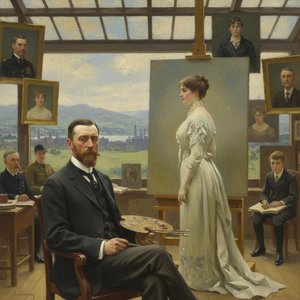
Sir John Lavery: A Study in Scottish Impressionism & the Portraiture of a Generation
Explore the life & art of Sir John Lavery, a master of Scottish Impressionism and renowned portraitist. Discover his captivating works, Irish heritage, and lasting legacy with TopImpressionists.

Sir Joshua Reynolds: 25 Obras-Primas que Definem um Ícone da Arte Britânica | TopImpressionists
Descubra as 25 obras-primas de Sir Joshua Reynolds, o mestre dos retratos ingleses do século XVIII. Explore a elegância neoclássica e a história por trás de cada pintura. Reproduções de arte exclusivas em TopImpressionists.com!
Explore obras de arte organizadas por temas, estilos e características.


