

Shown: · With its frame:
 Visualizar na parede
 Compartilhar
 Compartilhar
 Detalhes
 Guia
Guia

 Baixar imagem
 Semelhantes
 Raio X
 Ver diaporama
 Q&A
Q&A Estatísticas
- 66.0 x 91.0 cm


€ 239
Reprodução em Óleo Feita à Mão
Óleo sobre tela pintado à mão no tamanho e moldura de sua escolha, feito sob encomenda pelos nossos artistas. ( Alternar para Impressão Alternar para Imagem Digital)
Esta obra está protegida por direitos autorais
A obra de arte exibida nesta página é protegida por leis de direitos autorais, o que significa que não podemos criar ou vender legalmente uma reprodução idêntica. Esta proteção é aplicada por meio de acordos internacionais, tais como a Convenção de Berna e pelas leis nacionais, incluindo as estabelecidas por Lei de Direitos Autorais dos EUA - Título 17.
Como uma alternativa respeitosa e legal, oferecemos obras de arte personalizadas e pintadas à mão, inspiradas na obra original. Nossos artistas profissionais e experientes estudam cuidadosamente o estilo, a atmosfera e a essência artística da obra original para criar uma peça nova e única que evoque a mesma sensação — permanecendo como uma criação original por direito próprio.
Este método cumpre plenamente as regulamentações de direitos autorais, pois não envolve a cópia ou duplicação da obra protegida. Em vez disso, trata-se de uma reinterpretação criativa — uma nova pintura que é influenciada pela original, mas não idêntica a ela.
 Leia mais
Size
·Tamanho padrão
personalizado
CM
INCH
Escolha entre os nossos tamanhos pré-definidos que respeitam as proporções originais da obra de arte.
Loading sizes...

largura
altura
Insira a largura e a altura desejadas para se ajustarem à sua moldura ou parede. Como esta obra é pintada à mão, para um tamanho com proporções diferentes, o artista poderá pintar um pouco mais ao redor da imagem ou reduzir ligeiramente a composição — você escolhe. Enviamos uma maquete digital para sua aprovação antes de iniciar a pintura. A imagem exibida nesta página não representa o resultado real — apenas a maquete mostra o resultado final.
Finish
·
White €1

Blurside €1

Extended €1

P118B €10

P118H €10

P118W €10

P438Z €10

P508JH €12

P508YH €12

P805H €10

P805Z €10

P919BZ €10

P919G €10

P919XJ €10

P959ZH €10

P968JZ €12

W106C €8

W218G €10

W218JH €8

W218Y €10

W307PJ €10

W316G €10

W316PJ €8

W316Y €10

W398PJ €8

W4111J €10

W500HY €15

W500JH €15

W692G €12

W849H €8

W940BG €15

W953PJ €8

H24-GOLD €30

H24-SILVER €30

H36-GOLD €45

H36-SILVER €45
Shipped in a protective tube, ready for your own framer.
Above 105 cm the frame is shipped as a kit for a professional framer — read the details.
Extras
optionalWhat do the extras include?
Examples of what can be changed: Replace face with customer photo; Add pet (e.g., replace cat with dog); Include hidden message in background; Change background landscape or elements.
After order, TopImpressionists.com team will email client for instructions and provide a mockup preview
After order, TopImpressionists.com team will email client for instructions and provide a mockup preview
Entrega mundial () em 3 a 4 semanas, em vez das 5 semanas padrão. (31 Outubro). Sem comprometer a qualidade.
Verniz de Proteção
Etiqueta de identificação
Detalhes da Placa de Bronze Gravada
This elegant plaque features the artist's name and the title of the artwork, finely engraved for a timeless presentation.
It is made from bronze with a refined, elegant finish. The text is precisely laser-engraved for a sharp and permanent result. Measuring 9x2 cm, the plaque is compact yet easy to read. It's built to be durable and scratch-resistant, offering a professional, museum-quality look. Mounting is simple thanks to the included adhesive backing.
Detalhes da Placa de Acrílico Transparente
The plaque includes essential engraved details such as the artist's name, the title of the artwork, the date it was created, the type of media used-like oil on canvas or watercolor-a brief description of the piece, and a QR code that links to the complete artwork information.
It is crafted from clear acrylic, offering a sleek, modern appearance. The text is UV-engraved in black to ensure strong visual contrast. With a size of 10x15 cm, it ensures optimal readability. It comes equipped with two metal hooks for secure wall mounting. The plaque is designed to be weather-resistant, making it suitable for various environments, and it includes interactive features that work seamlessly with smartphone scanning.
Detalhes da Placa de Acrílico Preto
This elegant plaque includes engraved information such as the artist's name, the title of the artwork, the date it was created, the type of media used (like oil on canvas or watercolor), a short description of the artwork, and a QR code for quick access to more information.
The plaque itself is made from refined black acrylic with a premium finish. The text is laser-engraved in white for high contrast and readability. Its size is 10x15 cm, designed to be easy to read. It comes with two metal hooks for professional mounting. The design is sleek and fits any interior style. It is also weather-resistant and durable, with built-in digital integration for mobile compatibility.
A opção de vidro está disponível apenas para tamanhos inferiores a 110 cm
 A opção de vidro está disponível apenas para tamanhos inferiores a 110 cm
- Envio expresso gratuito para todo o mundo
- Tela de Linho de Alta Qualidade
- Seguro de transporte completo
- Garantia de Reembolso de Impostos Alfandegários
- Garantia de Fidelidade Cromática
- Política de Devolução em 100 Dias (Apenas para Defeitos)
- Garantia de reembolso de 100%
- Oferta de desconto por quantidade


Descrição do Item
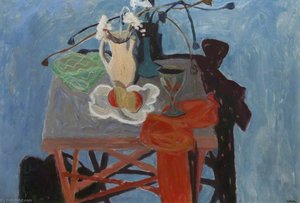
Sir William George Gillies’ "Florence" captures the vibrant Italian city with its iconic bridge and bustling scene. A stunning example of his artistic style, this painting showcases a beautiful representation of Florence's charm.
Biografia do Artista
W.G. Gillies: paisagista e mestre da vida escocesa em cores vibrantes. Conheça o grupo 1922, suas influências cubistas e seu legado na arte moderna britânica.
About the painting
The Heart of Tuscany Captured: An Exploration of Gillies’ “Florence”
William George Gillies' "Florence," painted in 1924, isn’t merely a depiction of an Italian city; it’s a vibrant distillation of its spirit – a testament to the enduring beauty and bustling life of one of Europe’s most historically significant urban centers. This captivating canvas transports us directly to the heart of Tuscany, offering a glimpse into a world brimming with energy, commerce, and artistic resonance. The painting immediately draws the eye towards the graceful bridge that dominates the composition, its arched form acting as a visual anchor amidst the dynamic scene below. This isn’t a photographic representation; rather, Gillies employs a masterful blend of observation and imagination to create an atmosphere thick with movement and light.
Gillies, a key figure in the 1922 Group – a collective dedicated to promoting modern art in Scotland – was deeply influenced by both the Impressionists and the burgeoning Cubist movement. His early travels to Paris and Italy exposed him to these revolutionary styles, which he skillfully integrated into his own distinctive approach. “Florence” showcases this evolution; while retaining elements of traditional landscape painting, it’s imbued with a sense of fractured perspective and flattened planes reminiscent of Cubism, particularly in the treatment of the buildings lining the riverbank. The careful layering of color and brushstrokes creates an illusion of depth, inviting the viewer to lose themselves within the bustling cityscape.
A Symphony of Color and Light
The painting’s palette is remarkably rich and evocative. Gillies masterfully utilizes a range of warm ochres, deep blues, and vibrant reds to capture the essence of Florentine light. The sun, though not explicitly depicted, casts a golden glow across the scene, illuminating the reflections shimmering on the river's surface. Notice how he employs broken color – small dabs and strokes of contrasting hues – to suggest texture and form, particularly in the details of the buildings and boats. This technique adds a dynamic quality to the composition, preventing it from feeling static or overly formal.
- Dominant Colors: Warm ochres, deep blues, vibrant reds, and touches of green.
- Light & Shadow: Gillies expertly utilizes light and shadow to create a sense of depth and atmosphere.
- Brushwork: Loose, expressive brushstrokes contribute to the painting’s dynamic feel.
Symbolism and Historical Context
Beyond its aesthetic qualities, “Florence” is steeped in historical significance. The city itself represents a pivotal moment in Western civilization – the birthplace of the Renaissance, a period marked by an unprecedented flourishing of art, science, and culture. The bridge, a recurring motif in Gillies’ work, symbolizes connection and transition, linking the past with the present. The numerous boats navigating the river evoke the importance of trade and commerce to Florence's prosperity during this era. Furthermore, the painting subtly references the city’s architectural grandeur – the imposing buildings lining the riverbank are reminiscent of the palaces and churches that define Florence’s iconic skyline.
Painted in 1924, “Florence” reflects a period of renewed interest in classical art and culture following World War I. Gillies' work embodies a spirit of optimism and renewal, capturing the vibrant energy of a city poised to embrace the future while honoring its rich heritage. The painting’s enduring appeal lies not only in its technical brilliance but also in its ability to transport us back in time and evoke the timeless beauty of Florence.
Bringing “Florence” Home: A Reproduction for Your Space
TopImpressionists offers meticulously crafted, hand-painted reproductions of William George Gillies’ "Florence," ensuring that you can experience the full impact of this remarkable artwork within your own home. Our skilled artisans use traditional techniques and high-quality materials to faithfully recreate Gillies' unique style and color palette. Whether you are an art collector, a design enthusiast, or simply someone seeking to add a touch of timeless elegance to your space, our reproduction of “Florence” is the perfect choice. It’s more than just a print; it’s a window into the heart of Tuscany, capturing the spirit and beauty of one of the world's most beloved cities.
Perguntas e Respostas
Qual origem nacional fundamenta o Cubist Modernism de "Florence"?
"Florence" conecta o movimento Cubist Modernism a Reino Unido por meio do local de nascimento de seu criador.
O que retrata "Florence" e qual é a sua atmosfera?
"Florence", de William George Gillies retrata florence, italy, cityscape, bridge, river, buildings, boats, people, em uma atmosfera Calm. O tema e a ambientação descrevem, juntos, a obra.
Existe uma ficha informativa sobre "Florence", de William George Gillies para estudantes?
Uma página de Ficha informativa está disponível para "Florence", de William George Gillies: uma ficha informativa imprimível sobre a obra, projetada para estudantes e uso em sala de aula.
Quick facts and art quiz
About William George Gillies

William George Gillies
1898 - 1973, Reino Unido
Biografia do Artista
Early Life and Education
Nascido em Haddington, na região de East Lothian, no Reino Unido, em 1898, William George Gillies iniciou sua jornada artística com uma inscrição no Edinburgh College of Art. No entanto, seus estudos foram interrompidos pelo serviço militar durante a Primeira Guerra Mundial, onde atuou como engenheiro da cavalaria do exército real. Após o conflito, retornou à instituição para completar sua formação, graduando-se e, posteriormente, dedicando mais de 40 anos à docência ali, moldando as futuras gerações de artistas escoceses.
Artistic Development and Influences
A trajetória artística de Gillies começou com uma exploração do Cubismo após um período de estudo sob a orientação de André Lhote em Paris (1923) e uma viagem à Itália (1924). Suas primeiras obras, como “Two Pots, Saucer and Fruit” (1933), revelam essa influência, apresentando uma disposição inspirada em Cézanne, com as sutilezas de cores e paletas de Picasso. Um momento crucial ocorreu em 1934, quando encontrou a obra de Paul Klee, que o impulsionou a adotar um uso mais imaginativo da cor e qualidades infantis em suas composições. Gradualmente, afastou-se do Cubismo rígido, desenvolvendo um estilo distinto enraizado nas tradições escocesas de paisagem e natureza morta.
The 1922 Group and Collaborative Spirit
Em 1922, Gillies co-fundou o “1922 Group” juntamente com outros artistas como William Crozier, William Geissler e William MacTaggart. Essa sociedade de exposições forneceu uma plataforma para artistas emergentes da Escócia exibirem suas obras na New Gallery em Edimburgo por uma década. O grupo fomentou um senso de comunidade e inovação no cenário artístico escocês, promovendo a colaboração e o intercâmbio de ideias entre seus membros.
Themes and Subject Matter
Gillies é reconhecido por suas representações dos distritos de Lothian, Fife e Border da Escócia. Ele capturou a essência desses paisagens com um olhar sensível, buscando transmitir não apenas a aparência física, mas também a atmosfera e o espírito do lugar. As naturezas mortas foram outro foco significativo, frequentemente apresentando cerâmicas criadas por sua irmã mais jovem, Emma Smith Gillies, cuja morte prematura em 1936 o afetou profundamente. Embora tenha experimentado com retratos no início de sua carreira, paisagens e naturezas mortas se tornaram seus temas principais.
Major Achievements and Legacy
Sir William George Gillies serviu como principal do Edinburgh College of Art de 1959 até sua aposentadoria em 1966. Sua produção prolífica e dedicação à docência tiveram uma influência profunda em várias gerações de pintores escoceses. Ele foi eleito um Academico Real (RA), um reconhecimento significativo dentro do mundo da arte. Gillies é considerado um dos pintores mais importantes da Escócia do século XX, cuja obra conecta o início do modernismo com uma identidade artística escocesa distinta. Sua influência se estende além de suas pinturas, moldando a direção da arte escocesa através de seu ensino e orientação. Ele faleceu em 1973, deixando para trás um rico corpo de trabalho que continua sendo celebrado por sua beleza, sensibilidade e relevância duradoura.
Quick facts about William George Gillies
- Artistic Movement Or Style:
- Cubismo
- Coloristas Escoceses
- Artists Or Movements Influenced By This Artist:
- Gillies influenciou...
- Gillies foi influenciado...
- Artists Who Influenced This Artist:
- André Lhote
- Cézanne
- Picasso
- Paul Klee
- Date Of Birth: 1898
- Date Of Death: 1973
- Full Name: Sir William George Gillies
- Nationality: Escocês
- Notable Artworks:
- Jovem com Chávena
- Paisagem Mediterrânea
- Natureza Morta – Jogo de Azulejos
- Place Of Birth: Haddington, Reino Unido


Explore obras de arte organizadas por temas, estilos e características.




William George Gillies
Florence
() ·
With its frame: · Hand-painted in oil on linen
Total