


 Visualizar em escala
 Enviar
 Compartilhar
 Ver detalhes
 Guia
Guia

 Baixar imagem
 Semelhantes
 Raio X
 Apresentação de slides
 Estatísticas
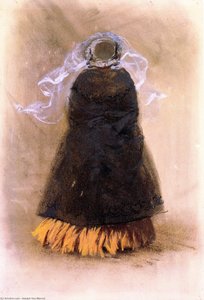
Lady in a Veil


Captivating portrait by Theo van Rysselberghe (1886). 'Lady in a Veil' showcases Post-Impressionism with mystery, elegance & rich textures at Kunsthalle Bremen.
 Ver mais
Descubra as vibrantes pinturas neoimpressionistas de Théo van Rysselberghe! Explore seus paisagens, retratos e cenas marroquinas – uma figura-chave dos Les XX, misturando luz e cor.
Adquira uma imagem digital de alta resolução e aprimorada, muito superior à prévia online.
Cada arquivo é meticulosamente preparado por nossos especialistas internos, utilizando ferramentas avançadas e retoques manuais de alta precisão. Garantimos que cada imagem apresente clareza excepcional, fidelidade de cores e detalhes minuciosos.
O arquivo final é entregue por e-mail em até 72 horas, otimizado para uso imediato em ambientes profissionais, editoriais e de impressão. Esta é a mesma qualidade utilizada por estúdios de design de alto nível, editoras e galerias.
Imagem Digital
Baixe um arquivo de alta resolução para exibição pessoal, impressão e projetos criativos. ( Alternar para Impressão Encomendar reprodução pintada à mão)
Incluído em cada pedido de imagem digital
Entrega Digital Especializada e Garantida
Ao escolher o TopImpressionists.com, você não está apenas adquirindo uma imagem — você está recebendo uma obra de arte digital profissionalmente aprimorada, elaborada com precisão e com garantia de satisfação. Aqui está tudo o que acompanha seu pedido, automaticamente:

Entrega rápida por e-mail
O seu arquivo de imagem digital em alta resolução será enviado por e-mail em até 72 horas após o pedido — pronto para uso imediato.

Arquivo Digital com IA Otimizado
Sua obra de arte é otimizada profissionalmente por meio de ferramentas avançadas de IA e edição manual, garantindo o máximo de detalhes, clareza e precisão de cores.

Reenvio gratuito vitalício
Apagou ou perdeu o seu ficheiro acidentalmente? Não se preocupe – nós reenviamos para si a qualquer momento, gratuitamente.

Sem Taxas de Importação - Sempre
Desfrute da sua obra de arte instantaneamente, sem taxas alfandegárias, impostos ou custos de entrega — downloads digitais são sempre isentos de taxas.

Garantia de Precisão de Cores
Garantimos que sua imagem digital reflita as cores originais com a maior fidelidade possível, utilizando ferramentas profissionais e gerenciamento de cores.

Garantia de satisfação de 100 dias
Se não estiver satisfeito com a sua imagem digital, nós a revisaremos ou reembolsaremos 100% dentro de 100 dias — sem perguntas.

Garantia de Reembolso 100%
Não está satisfeito? Receba o reembolso total em até 100 dias após o recebimento do seu arquivo digital — sem perguntas.

Descontos para pedidos em lote
Compre 3 imagens, economize 10% - Compre 5, economize 15% - Compre 10+, economize 20%. Ideal para projetos criativos, galerias e agências.
Lady in a Veil: A Glimpse of Post-Impressionist Elegance
The Lady in a Veil is a captivating portrait painted by Theo Van Rysselberghe in 1886. This oil on canvas masterpiece currently resides at the Kunsthalle Bremen in Germany. The painting showcases a woman wearing a hat with a veil over her face, exuding an air of mystery and elegance. It's more than just a likeness; it’s a study in light, color, and subtle emotion characteristic of the Post-Impressionist movement.
Post-Impressionist Style and Technique
The Lady in a Veil exemplifies Post-Impressionism, an art movement that emerged as a reaction against the naturalistic depiction of light and color. This style, roughly between 1886 and 1905, emphasizes distortion, exaggeration, and primitivism. Van Rysselberghe’s approach moves beyond simply capturing what he saw; he uses color and brushwork to convey mood and atmosphere. Notice the loose, visible brushstrokes that create a sense of movement and vibrancy. The layering of colors—warm browns, ochres, and reds—contributes to an intimate yet somewhat melancholic feeling. The technique isn't about precise detail but rather about capturing a fleeting impression.
A World Within the Frame: Objects and Symbolism
Beyond the central figure, the painting incorporates several objects that enrich its narrative depth. A clock on the wall above the woman’s head suggests the passage of time and perhaps a sense of reflection. Two bowls nearby add to the domestic setting, hinting at everyday life. The book positioned towards the right implies intellectual pursuits or quiet contemplation. The veil itself is symbolic—it obscures part of her face, creating an aura of mystery and suggesting hidden depths. It could represent modesty, privacy, or even a sense of detachment from the world.
Comparison with Contemporaries
Van Rysselberghe’s work shares affinities with other prominent Post-Impressionist artists. Consider Vincent Van Gogh's L'Arlesienne, Madame Joseph-Michel Ginoux and Paul Gauguin's The Meal (The Bananas). While each artist developed a unique style, they all explored similar themes of emotion, subjectivity, and the expressive potential of color. Van Rysselberghe’s approach is perhaps more restrained than Van Gogh’s or Gauguin’s, but his mastery of light and subtle detail creates an equally compelling visual experience.
Emotional Impact and Lasting Appeal
The Lady in a Veil evokes a sense of quiet introspection. The woman's gaze is averted, inviting the viewer to project their own interpretations onto her expression. The painting’s enduring appeal lies in its ability to capture a moment of stillness and contemplation, offering a glimpse into the inner world of its subject. It serves as a testament to Van Rysselberghe’s skill as a portraitist and his contribution to the Post-Impressionist movement.
Obras Relacionadas




Biografia do Artista
A Pioneer of Light: The Life and Art of Théo van Rysselberghe
Théophile “Théo” van Rysselberghe, born in Ghent, Belgium, in 1862, stands as a pivotal figure bridging the vibrant currents of Impressionism and the groundbreaking principles of Neo-Impressionism. His artistic journey wasn’t defined by immediate stylistic allegiance but rather by a continuous exploration fueled by travel, intellectual exchange, and an unwavering dedication to capturing the essence of light itself. Rooted in a comfortable bourgeois French-speaking family, van Rysselberghe's initial artistic training unfolded within the rigorous structure of the Ghent Academy under Theo Canneel, followed by further studies at the prestigious Académie Royale des Beaux-Arts in Brussels – institutions that instilled in him a foundational understanding of traditional realism. Early works like *Self-Portrait with Pipe* (1880) reveal this early grounding, characterized by meticulous detail and somber tones—a reflection of the prevailing artistic climate within Belgium at the time. Yet, even within these initial pieces, subtle hints began to emerge: a burgeoning sensitivity to light and color, foreshadowing the radical shifts that would characterize his later career. *Child in an Open Spot of the Forest* (1880) serves as a particularly poignant example, hinting at a brighter palette and looser brushwork—a nascent departure from the established norms.Moroccan Impressions: A Catalyst for Transformation
A truly transformative period commenced with van Rysselberghe’s extended sojourns in Morocco between 1882 and 1888. These immersive experiences acted as a profound catalyst, plunging him into a world saturated with vibrant colors, intense sunlight, and exotic landscapes—a dramatic contrast to the subdued tones of his earlier work. Paintings such as *Arabian Street Cobbler* (1882), *Arabian Boy* (1882), and *Resting Guard* (1883) vividly demonstrate this burgeoning fascination with capturing the effects of light upon form, moving decisively away from strict realism towards a more impressionistic sensibility. However, these travels were not merely acts of visual observation; they represented an immersion into a distinct culture—a broadening of his artistic horizons and a lifelong embrace of travel as a source of inspiration. The Moroccan experience fundamentally altered his perception of color and light, laying the groundwork for his future innovations. It was during this period that he began to experiment with capturing the fleeting effects of sunlight on surfaces, anticipating the techniques of Seurat and Signac.The Birth of Les XX: A Hub for Avant-Garde Art
Returning to Brussels in 1888, van Rysselberghe became a central figure in the burgeoning avant-garde scene. He played a crucial role in establishing *Les XX* (Les Vingt), an influential group of artists and writers dedicated to promoting innovative art forms—a collective that would profoundly shape the artistic landscape of Belgium. Alongside Octave Maus and Émile Verhaeren, van Rysselberghe spearheaded this movement, creating a platform for showcasing radical ideas and challenging established conventions. *Arabian Phantasia* (1884), a monumental painting depicting an exotic scene, stands as a testament to the group’s ambition and van Rysselberghe's growing confidence in his own artistic vision. The establishment of Les XX marked a turning point, providing him with a supportive environment for experimentation and collaboration—a space where he could refine his techniques and engage with fellow artists pushing the boundaries of contemporary art.Embracing Neo-Impressionism: A Scientific Approach to Color
The pivotal moment in van Rysselberghe’s artistic evolution arrived with his encounter with Georges Seurat's *A Sunday on La Grande Jatte* (1884–86) at the eighth Impressionist exhibition in Paris. Initially skeptical of Seurat’s meticulously planned “pointillist” technique—the systematic application of tiny dots of pure color—van Rysselberghe gradually came to appreciate its underlying scientific principles and potential for achieving luminous effects. He began experimenting with divisionism, the Neo-Impressionist method of separating colors into their constituent parts and allowing the viewer’s eye to blend them optically. This wasn't simply a technical shift; it represented a fundamental change in his approach to painting—a move towards a more analytical and objective representation of light and color. He forged close friendships with other Neo-Impressionist painters like Paul Signac, traveling with him along the French Riviera and exchanging ideas about technique and theory. Van Rysselberghe distinguished himself within the movement by applying pointillism not only to landscapes but also to portraiture, creating strikingly vibrant and psychologically insightful likenesses of his family and friends—works such as *Madame Charles Maus* (1890) are prime examples.Beyond Pointillism: A Lasting Legacy
While deeply committed to Neo-Impressionism for a significant period, van Rysselberghe eventually moved beyond its strict tenets in the late 1890s. He sought greater freedom in his brushwork and compositions, exploring new ways to express emotion and atmosphere. He continued to be a prolific artist, working in various media including furniture design, book illustration, and decorative arts. His influence extended far beyond Belgium, impacting artists like Piet Mondrian and Jan Toorop who were inspired by his innovative use of color and light. Van Rysselberghe’s legacy lies not only in his beautiful paintings but also in his role as a catalyst for artistic change—a champion of modernism who helped introduce new ideas and techniques to the Belgian art world. His works are now held in prominent museum collections worldwide, including the Musée du Luxembourg in Paris and the Museum voor Schone Kunsten in Ghent, ensuring that his contribution to the history of art continues to be celebrated and appreciated by generations to come. His dedication to exploring the interplay of light, color, and form cemented his place as a true pioneer of modern painting.
Théo van Rysselberghe
1862 - 1926 , Bélgica
Informações Rápidas
- Artistic Movement Or Style: Neo-Impressionismo
- Artists Or Movements Influenced By This Artist:
- Les XX
- Piet Mondrian
- Artists Who Influenced This Artist:
- Georges Seurat
- Paul Signac
- Date Of Birth: 23 Nov 1862
- Date Of Death: 13 Dez 1926
- Full Name: Théophile van Rysselberghe
- Nationality: Bélgica
- Notable Artworks:
- Arabian Phantasia
- Madame Charles Maus
- Place Of Birth: Gante, Bélgica