Visualizar em escala
 Enviar
 Compartilhar
 Ver detalhes
 Guia de Obras do Aluno

 Baixar imagem
 Semelhantes
 Raio X
 Apresentação de slides
 Estatísticas
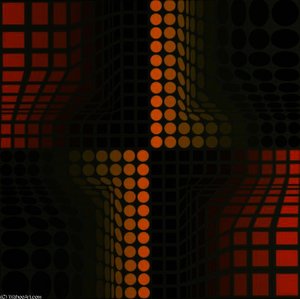
Kaglo II


Explore Victor Vasarely's mesmerizing 'Kaglo II,' a vibrant geometric print inspired by natural forms like waves and architectural structures found in Provence and Gordes. Discover the artist’s Bauhaus influence and his pioneering role in Op Art.
 Ver mais
Explore o universo geométrico de Victor Vasarely (1906-1997), pioneiro da Op Art e da arte cinética! Descubra suas abstrações óticas, ilusões visuais e influência duradoura na arte moderna.
A obra de arte exibida nesta página é protegida por leis de direitos autorais, o que significa que não podemos criar ou vender legalmente uma reprodução idêntica. Esta proteção é aplicada por meio de acordos internacionais, tais como a Convenção de Berna e pelas leis nacionais, incluindo as estabelecidas por Lei de Direitos Autorais dos EUA - Título 17.
Como uma alternativa respeitosa e legal, oferecemos obras de arte personalizadas e pintadas à mão, inspiradas na obra original. Nossos artistas profissionais e experientes estudam cuidadosamente o estilo, a atmosfera e a essência artística da obra original para criar uma peça nova e única que evoque a mesma sensação — permanecendo como uma criação original por direito próprio.
Este método cumpre plenamente as regulamentações de direitos autorais, pois não envolve a cópia ou duplicação da obra protegida. Em vez disso, trata-se de uma reinterpretação criativa — uma nova pintura que é influenciada pela original, mas não idêntica a ela.
Reprodução em Óleo Feita à Mão
Óleo sobre tela pintado à mão no tamanho e moldura de sua escolha, feito sob encomenda pelos nossos artistas. ( Alternar para Impressão Ver Imagem Digital)




P118B €10

P118H €10

P118W €10

P438Z €10

P508JH €12

P508YH €12

P805H €10

P805Z €10

P919BZ €10

P919G €10

P919XJ €10

P959ZH €10

P968JZ €12

W106C €8

W218G €10

W218JH €8

W218Y €10

W307PJ €10

W316G €10

W316PJ €8

W316Y €10

W398PJ €8

W4111J €10

W500HY €15

W500JH €15

W692G €12

W849H €8

W940BG €15

W953PJ €8




Padrão
sob medida
CM
INCH
Escolha entre os nossos tamanhos pré-definidos que respeitam as proporções originais da obra de arte.
Loading sizes...

largura
altura
Pode inserir as suas próprias dimensões para se adequar a uma moldura ou espaço específico. Se o tamanho selecionado não corresponder às proporções da imagem original, iremos cortar a obra de arte ou estender a pintura com elementos adicionais pintados à mão. Um esboço digital será enviado para sua aprovação antes do início da produção.
Tenha em atenção que a pré-visualização no ecrã não reflete o corte ou extensão real. Apenas o esboço mostrará com precisão a composição final.
Embora tamanhos personalizados estejam disponíveis, recomendamos selecionar uma dimensão da lista predefinida para preservar as proporções originais.
Exemplos do que pode ser personalizado: Substituir o rosto pela foto do cliente; Adicionar um animal de estimação (ex: substituir gato por cão); Incluir uma mensagem oculta no fundo; Alterar a paisagem ou elementos do fundo.
Após o pedido, a equipa TopImpressionists.com enviará um e-mail ao cliente para solicitar instruções e fornecer uma prévia do esboço.
Após o pedido, a equipa TopImpressionists.com enviará um e-mail ao cliente para solicitar instruções e fornecer uma prévia do esboço.
Entrega mundial () em 3 a 4 semanas, em vez das 5 semanas padrão. (10 Outubro). Sem comprometer a qualidade.

Envio expresso gratuito para todo o mundo

Tela de Linho Premium

Seguro de transporte total

Garantia de Reembolso de Impostos Alfandegários

Garantia de Fidelidade de Cor

Política de Devolução em 100 Dias (Apenas para Defeitos)

Garantia de reembolso de 100%

Desconto para múltiplas unidades
 A opção de vidro está disponível apenas para tamanhos inferiores a 110 cm

Kaglo II
Técnica de Reprodução
Dimensões da Reprodução
-


Preço Total
€ 232
A Symphony of Circles: The Pulsating Vision of Kaglo II
To stand before Victor Vasarely’s Kaglo II is to enter a realm where the boundaries between the static and the kinetic dissolve into a rhythmic dance of light and color. Created in 1986, this masterful print serves as a profound testament to the enduring power of geometric abstraction. At first glance, the eye is drawn to a central, commanding red sphere, which acts as the sun within a private cosmos. Surrounding this core is an intricate constellation of smaller circles, rendered in a vibrant palette of blue, green, orange, and yellow. This arrangement does not merely sit upon the surface; it breathes. Through the meticulous application of Op Art principles, Vasarely orchestrates a visual symphony that challenges our very understanding of depth and stability, inviting the viewer into an active dialogue with the canvas.
The magic of Kaglo II lies in its ability to transform passive observation into an immersive sensory experience. Vasarely, often revered as the "grandfather" of the Op Art movement, was a pioneer who sought to engineer experiences rather than simply paint images. In this work, he utilizes a technique characteristic of kinetic art, where the interplay of contrasting colors and precise geometric placement creates a subtle illusion of motion. As one moves before the piece, the retinal distortion causes the patterns to shift and vibrate, as if the circles are undulating like waves on an ocean surface. This deliberate manipulation of visual stimuli forces the viewer to confront the mechanics of their own perception, making the artwork a living, breathing entity that refuses to remain still.
Nature’s Geometry and the Legacy of Perception
While the forms in Kaglo II are strictly mathematical, their soul is deeply rooted in the organic rhythms of the natural world. Vasarely found profound inspiration in the textures of Gordes, France—the rugged limestone formations and the undulating patterns of waves that define the landscape. By translating these complex, organic movements into simplified geometric shapes, he bridged the gap between the wild unpredictability of nature and the structured precision of human intellect. This translation creates a sense of harmony that is both intellectually stimulating and emotionally soothing, making it an ideal centerpiece for those seeking to bring a sense of dynamic balance to a modern interior.
For the discerning collector or interior designer, Kaglo II offers more than mere decoration; it offers a portal into a mid-century revolution. The piece carries the weight of history, echoing the functionalist energy of the Bauhaus movement and the radical shifts in 20th-century aesthetics. It is a work that demands attention, acting as a focal point that can energize a minimalist room or add a layer of sophisticated complexity to a contemporary gallery space. To possess a reproduction of such a piece is to hold a fragment of art history—a piece that continues to pulse with the same vibrant energy that Vasarely first captured decades ago, reminding us all that even in the most rigid shapes, there is infinite movement and life.
Perguntas e Respostas
A que fase do desenvolvimento de Victor Vasarely "Kaglo II" pertence?
Dentro da carreira de Victor Vasarely, "Kaglo II" pertence ao período Mature Period. Esta fase ajuda a compará-la com outras obras do artista.
Qual é o uso recomendado de uma impressão de "Kaglo II"?
O uso sugerido para "Kaglo II" de Victor Vasarely é Accent. Também pode servir para outros fins.
Em que ano foi criado "Kaglo II"?
"Kaglo II" de Victor Vasarely foi criado em 1986.
Quem é o artista por trás de "Kaglo II"?
O artista por trás de "Kaglo II" é Victor Vasarely. A obra está catalogada sob o nome de Victor Vasarely.
Qual é o tom emocional de "Kaglo II" de Victor Vasarely?
"Kaglo II" está associada a um sentimento Calm. O tom emocional descreve a impressão que a obra transmite.
"Kaglo II" de Victor Vasarely está entre as obras de Op Art mais procuradas?
"Kaglo II" é classificada como Iconic entre as obras do Op Art no catálogo.
Qual era a idade de Victor Vasarely ao criar "Kaglo II" em 1986?
Victor Vasarely tinha 80 anos quando criou "Kaglo II" em 1986. A idade é calculada a partir do ano de nascimento do artista, 1906.
Biografia do Artista
A Life Forged in Geometry: The World of Victor Vasarely
Victor Vasarely (Pécs, 9 de abril de 1906 — Paris, 15 de março de 1997) foi um pintor e artista gráfico húngaro-francês, cuja jornada para se tornar um pioneiro do Op Art e da arte cinética não foi predeterminada. Sua vida inicial prenunciava um caminho distante da tela; inicialmente, estudou medicina na Universidade Eötvös Loránd em Budapeste. No entanto, o fascínio pela expressão visual provou ser mais forte, levando-o a abandonar a medicina para o mundo da pintura em 1927, matriculando-se na Academia Podolini-Volkmann. Essa decisão marcou não apenas uma mudança de vocação, mas o início de uma exploração contínua dos princípios fundamentais que governam a percepção e a forma. Um momento crucial foi sua inscrição no workshop de Sándor Bortnyik – Műhely, uma escola profundamente influenciada pelo movimento Bauhaus. Ali, Vasarely absorveu os preceitos do design funcional e da abstração geométrica, sementes que floresceriam em seu estilo característico. Esses anos formativos não foram apenas sobre adquirir técnica; eram sobre desmontar as convenções artísticas tradicionais e abraçar uma nova linguagem visual enraizada na lógica e na precisão.Early Abstraction and the Dawn of Op Art
As décadas de 1920 e 1930 testemunharam a gradual partida de Vasarely da arte representacional, mergulhando mais profundamente no reino da abstração geométrica. Obras como “Estudo Azul” e “Estudo Verde”, criadas em 1929, exemplificam essa transição – uma renúncia deliberada do conteúdo narrativo em favor da forma pura e das relações de cores. Influenciado por mestres como Piet Mondrian e Kazimir Malevich, Vasarely não se contentava em simplesmente imitar seus estilos. Ele buscava transcender as composições estáticas de seus predecessores, visando uma dinâmica que engajaria ativamente a percepção do espectador. Essa busca o levou a Paris em 1930, onde se estabeleceu como designer gráfico e artista publicitário, aprimorando suas habilidades enquanto continuava a desenvolver sua visão artística única. Foi durante este período que começou a experimentar técnicas que mais tarde se tornariam marcas registradas do Op Art – manipulando formas e cores para criar ilusões de movimento e profundidade. As sementes foram plantadas para uma revolução na experiência visual.The Systematic Illusion: Defining a Movement
Na década de 1960, Victor Vasarely emergiu plenamente como uma figura proeminente no emergente movimento Op Art. Ao contrário de muitos artistas que se baseavam na intuição e na expressão espontânea, Vasarely abordava seu trabalho com uma metodologia distinta. Ele empregava grades e princípios matemáticos para gerar padrões que criavam poderosas ilusões ópticas – vibrações visuais, efeitos giratórios e sensações de profundidade onde não existiam fisicamente. Não se tratava de truque; era sobre revelar a dinâmica inerente à percepção em si. Ele acreditava na reprodutibilidade e no apelo popular, buscando democratizar a arte tornando-a acessível além dos limites das galerias e museus. Sua obra desafiou os espectadores a questionar sua própria experiência visual, forçando-os a participar ativamente da criação de significado. Essa interação deliberada com a percepção o diferenciava e consolidava seu lugar na vanguarda desse movimento. Ele não estava simplesmente pintando imagens; ele estava construindo experiências.Historical Significance
A contribuição de Vasarely à história da arte é multifacetada. Ele se moveu além das técnicas tradicionais de pintura para criar obras que engajam ativamente a percepção do espectador. Sua abordagem sistemática desafiou as noções convencionais de criatividade artística e abriu o caminho para a arte gerada por computador e o design digital. Ao abraçar a reprodutibilidade e as aplicações comerciais, Vasarely borrou os limites entre a arte fina e a cultura popular, deixando uma marca duradoura tanto em ambos os campos. Ele não estava simplesmente criando objetos esteticamente agradáveis; ele estava conduzindo experimentos visuais que revelaram verdades fundamentais sobre como vemos o mundo. Sua obra continua a ressoar hoje, lembrando-nos do poder da abstração, da beleza da geometria e das infinitas possibilidades da criatividade humana.Key Achievements and Legacy
A carreira de Vasarely foi marcada por inúmeras conquistas e um legado duradouro. Ele recebeu o Prêmio Guggenheim em Nova York em 1964 e o Prêmio de Melhor Exposição na Bienal de São Paulo em 1970. Sua obra influenciou profundamente a área do design gráfico, da moda, do design de interiores e até mesmo dos primeiros gráficos digitais. A Fundação Vasarely, estabelecida em Aix-en-Provence, garante a preservação e promoção de sua extensa obra, enquanto um evento notável – a inclusão de serigrafias a bordo da nave espacial soviético-francesa Salyut 7 em 1982 – simbolizou o reconhecimento global de sua arte e sua conexão com o empreendimento humano mais amplo de exploração.
Victor Vasarely
1906 - 1997 , Croácia
Informações Rápidas
- Artistic Movement Or Style: Op Art, Arte Cinética
- Artists Or Movements Influenced By This Artist:
- Design gráfico
- Design de interiores
- Artists Who Influenced This Artist:
- Piet Mondrian
- Kazimir Malevich
- Date Of Birth: 9 de abril de 1906
- Date Of Death: 15 de março de 1997
- Full Name: Victor Vasarely
- Nationality: Húngaro-Francês
- Notable Artworks:
- Zebra
- Markeb-Neg
- Vega
- Place Of Birth: Pécs, Croácia
Artigos Relacionados

Mastering Illusion: The Vibrant World of Victor Vasarely's Op Art and the Geometry of Perception
Explore the mesmerizing world of Victor Vasarely. Discover how his Bauhaus-inspired Op Art masters the science of perception through geometric abstraction and vibrant color. A sophisticated guide for discerning art collectors seeking to understand the legacy of optical illusion.

Abstração Geométrica: 10 Obras-Primas que Moldaram a Arte Moderna | TopImpressionists.com
Descubra as 10 obras-primas da Abstração Geométrica que revolucionaram a arte moderna! Explore Kandinsky, Mondrian e outros artistas icônicos. Encontre reproduções de alta qualidade para decorar sua casa com TopImpressionists.com.

Op Art Unveiled: The Science of Optical Illusion and Kinetic Movement in Geometric Abstraction
Explore the science of Op Art through the lens of masters like Victor Vasarely. Discover how geometric abstraction uses optical illusions to create movement and delve into the neuroaesthetics of perception with our expert art history guide.

Victor Vasarely: Pioneering Op Art & Democratizing Visual Experience
Explore the revolutionary world of Victor Vasarely, father of Op Art. Discover his geometric masterpieces, artistic system, & lasting impact on modern design. A guide for discerning art collectors.

Neo-Abstract Art: The High-Impact Evolution of Modern Visual Energy and Geometric Sophistication
Discover the power of Neo-Abstract art. Explore how bold geometric forms and high-impact visual energy are redefining modern design. Learn to curate sophisticated, high-energy spaces with the latest trends in contemporary abstraction and structural color.
Explore obras de arte organizadas por temas, estilos e características.