

Shown: · With its frame:
 Visualizar na parede
 Compartilhar
 Compartilhar
 Detalhes
 Guia
Guia

 Baixar imagem
 Semelhantes
 Raio X
 Ver diaporama
 Q&A
Q&A Estatísticas
- 61.0 x 48.0 cm


€ 239
Reprodução em Óleo Feita à Mão
Óleo sobre tela pintado à mão no tamanho e moldura de sua escolha, feito sob encomenda pelos nossos artistas. ( Alternar para Impressão Alternar para Imagem Digital)
Size
·Tamanho padrão
personalizado
CM
INCH
Escolha entre os nossos tamanhos pré-definidos que respeitam as proporções originais da obra de arte.
Loading sizes...

largura
altura
Insira a largura e a altura desejadas para se ajustarem à sua moldura ou parede. Como esta obra é pintada à mão, para um tamanho com proporções diferentes, o artista poderá pintar um pouco mais ao redor da imagem ou reduzir ligeiramente a composição — você escolhe. Enviamos uma maquete digital para sua aprovação antes de iniciar a pintura. A imagem exibida nesta página não representa o resultado real — apenas a maquete mostra o resultado final.
 Leia mais
Finish
·
White €1

Blurside €1

Extended €1

P118B €10

P118H €10

P118W €10

P438Z €10

P508JH €12

P508YH €12

P805H €10

P805Z €10

P919BZ €10

P919G €10

P919XJ €10

P959ZH €10

P968JZ €12

W106C €8

W218G €10

W218JH €8

W218Y €10

W307PJ €10

W316G €10

W316PJ €8

W316Y €10

W398PJ €8

W4111J €10

W500HY €15

W500JH €15

W692G €12

W849H €8

W940BG €15

W953PJ €8

H24-GOLD €30

H24-SILVER €30

H36-GOLD €45

H36-SILVER €45
Shipped in a protective tube, ready for your own framer.
Above 105 cm the frame is shipped as a kit for a professional framer — read the details.
Extras
optionalWhat do the extras include?
Examples of what can be changed: Replace face with customer photo; Add pet (e.g., replace cat with dog); Include hidden message in background; Change background landscape or elements.
After order, TopImpressionists.com team will email client for instructions and provide a mockup preview
After order, TopImpressionists.com team will email client for instructions and provide a mockup preview
Entrega mundial () em 3 a 4 semanas, em vez das 5 semanas padrão. (31 Outubro). Sem comprometer a qualidade.
Verniz de Proteção
Etiqueta de identificação
Detalhes da Placa de Bronze Gravada
This elegant plaque features the artist's name and the title of the artwork, finely engraved for a timeless presentation.
It is made from bronze with a refined, elegant finish. The text is precisely laser-engraved for a sharp and permanent result. Measuring 9x2 cm, the plaque is compact yet easy to read. It's built to be durable and scratch-resistant, offering a professional, museum-quality look. Mounting is simple thanks to the included adhesive backing.
Detalhes da Placa de Acrílico Transparente
The plaque includes essential engraved details such as the artist's name, the title of the artwork, the date it was created, the type of media used-like oil on canvas or watercolor-a brief description of the piece, and a QR code that links to the complete artwork information.
It is crafted from clear acrylic, offering a sleek, modern appearance. The text is UV-engraved in black to ensure strong visual contrast. With a size of 10x15 cm, it ensures optimal readability. It comes equipped with two metal hooks for secure wall mounting. The plaque is designed to be weather-resistant, making it suitable for various environments, and it includes interactive features that work seamlessly with smartphone scanning.
Detalhes da Placa de Acrílico Preto
This elegant plaque includes engraved information such as the artist's name, the title of the artwork, the date it was created, the type of media used (like oil on canvas or watercolor), a short description of the artwork, and a QR code for quick access to more information.
The plaque itself is made from refined black acrylic with a premium finish. The text is laser-engraved in white for high contrast and readability. Its size is 10x15 cm, designed to be easy to read. It comes with two metal hooks for professional mounting. The design is sleek and fits any interior style. It is also weather-resistant and durable, with built-in digital integration for mobile compatibility.
A opção de vidro está disponível apenas para tamanhos inferiores a 110 cm
 A opção de vidro está disponível apenas para tamanhos inferiores a 110 cm
- Envio expresso gratuito para todo o mundo
- Tela de Linho de Alta Qualidade
- Seguro de transporte completo
- Garantia de Reembolso de Impostos Alfandegários
- Garantia de Fidelidade Cromática
- Política de Devolução em 100 Dias (Apenas para Defeitos)
- Garantia de reembolso de 100%
- Oferta de desconto por quantidade


Descrição do Item
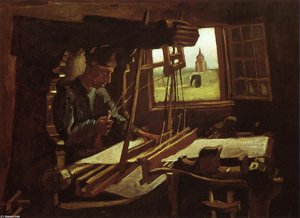
O ‘Weaver’ de Van Gogh captura a dedicação silenciosa da vida rural. Explore seu realismo inicial e sua representação tocante do trabalho na Kröller-Müller.
Biografia do Artista
Vincent van Gogh (1853-1890): Explore a vida e a arte do mestre pós-impressionista holandês por trás de 'A Noite Estrelada' e 'Os Girassóis'. Descubra seu estilo audacioso e o impacto duradouro na arte moderna.
About the painting
Weaver by Vincent van Gogh: A Glimpse into Rural Life
Vincent van Gogh’s “Weaver,” painted in 1884, stands as a cornerstone of his early artistic vision—a testament to his unwavering commitment to realism and an intimate portrayal of the hardships endured by rural communities during the mid-1880s. Currently residing within the Kröller-Müller Museum in Otterlo, Netherlands, this oil on canvas masterpiece transcends mere depiction; it embodies a profound empathy for the working class and captures the essence of a bygone era with remarkable sensitivity.Historical Context and Inspiration
The decade surrounding 1884 witnessed significant societal shifts across the Dutch countryside. The traditional cottage industries—including weaving—were steadily diminishing under the encroaching influence of industrialization, leaving countless laborers vulnerable to economic instability. Recognizing this plight, Van Gogh felt compelled to translate his compassion into artistic expression. “Weaver” is integral to a larger series documenting the lives of peasants and artisans, reflecting his fervent desire to preserve these fading traditions through honest observation and heartfelt emotion. The painting serves as a poignant visual chronicle of a community grappling with transformation—a reminder that beauty often resides alongside struggle within the fabric of daily existence. Influenced by Dutch Masters like Rembrandt and subtly mirroring the aesthetic principles of Japanese woodblock prints (Ukiyo-e), Van Gogh sought to convey not just what he saw but also how it felt.Composition, Technique, and Artistic Style
Measuring 61 x 48 cm, “Weaver” exemplifies Van Gogh’s distinctive approach to realism—characterized by bold colors juxtaposed with thick brushstrokes that generate palpable texture. The composition centers around a solitary weaver diligently engaged in his craft at a substantial loom, positioned prominently within the frame. Two additional figures occupy the periphery of the scene, subtly enriching the narrative and hinting at the communal spirit inherent in rural labor practices. Van Gogh’s technique deliberately eschews the vibrant hues he would later champion; instead, he employs a muted palette dominated by browns, grays, and reds—a deliberate choice to evoke the atmosphere of the weaver's workshop: a space permeated by dust motes dancing in shafts of sunlight and imbued with quiet determination. The meticulous attention to detail—particularly evident in the loom’s intricate mechanics and weathered surface—underscores the significance of this craft.Symbolism and Emotional Impact
Beyond its factual representation, “Weaver” resonates deeply with symbolic meaning. The weaver himself symbolizes perseverance, dedication, and the inherent dignity of labor—qualities that Van Gogh wished to convey through his artistic endeavors. His posture exudes composure and contemplation, reflecting the repetitive yet indispensable nature of his task. Simultaneously, the dimly lit interior and subdued color scheme evoke a palpable sense of melancholy and isolation—mirroring the hardships faced by rural populations during this transitional period. Ultimately, “Weaver” succeeds in forging an emotional connection with the viewer—eliciting empathy for those who strive to sustain their families through honest toil. It is more than just a depiction of a weaver; it’s an exploration of human resilience and unwavering spirit—a timeless reminder that beauty can emerge from even the most challenging circumstances.Notable Elements & Techniques
- Bold Colors: Despite its muted palette, Van Gogh utilizes strategic bursts of red to draw attention to key elements within the composition.
- Thick Brushstrokes: The characteristic impasto technique—applying paint thickly onto the canvas—creates a tactile surface that conveys movement and dynamism.
Movement
Realism – Van Gogh’s unwavering commitment to portraying subjects accurately aligns with the tenets of Realism, prioritizing observation over idealized representation.Perguntas e Respostas
A qual artista "Weaver" é atribuída?
"Weaver" foi criado por Vincent Van Gogh. As informações nesta página descrevem a obra original de Vincent Van Gogh.
Qual tamanho de impressão devo escolher para "Weaver" no meu quarto?
Para um(a) Sala de Estar, o tamanho de impressão recomendado para "Weaver", de Vincent Van Gogh é Médio.
Que tipo de obra é "Weaver"?
No catálogo, "Weaver", de Vincent Van Gogh está registrado como Arte de Parede. A categoria ajuda a encontrar obras semelhantes.
Quick facts and art quiz
About Vincent Van Gogh

Vincent Van Gogh
1853 - 1890, Países Baixos
Biografia do Artista
Uma Vida Pintada com Paixão: Vincent van Gogh
Vincent Willem van Gogh, um nome sinônimo de cores vibrantes e emoção pura, permanece como uma das figuras mais reconhecíveis e amadas da história da arte. Nascido em 30 de março de 1853, em Zundert, na Holanda, sua jornada — de um jovem atormentado em busca de propósito a um visionário artístico — é um conto comovente de dedicação, luta e, finalmente, um legado eterno. Embora tenha alcançado pouco sucesso comercial durante sua vida — vendendo apenas uma pintura, A Vinha Tinta, antes de sua morte — o impacto de Van Gogh na arte moderna é imensurável, abrindo caminho para o Expressionismo e influenciando inúmeros artistas que o sucederam. Sua história não trata apenas de pinceladas e telas; é um testemunho do poder da expressão humana diante da adversidade.
Anos Iniciais e o Despertar Artístico
A vida de Van Gogh foi marcada por uma série de aspirações não realizadas. Ele experimentou diversas profissões — negociante de arte, professor e até missionário — antes de finalmente se dedicar à pintura na idade relativamente tardia de 27 anos. Essas experiências anteriores moldaram profundamente sua visão de mundo e encontraram eco em sua arte. Suas obras iniciais, retratando cenas da vida camponesa na zona rural da Bélgica, refletem uma profunda empatia pela classe trabalhadora e uma paleta sombria que espelhava suas dificuldades. Influenciado por artistas como Jean-François Millet, Van Gogh buscou capturar a dignidade e a resiliência desses indivíduos através de um realismo cru. No entanto, foi sua mudança para Paris, em 1886, que se mostrou transformadora. Lá, ele encontrou o Impressionismo e o Pós-Impressionismo, absorvendo as técnicas de mestres como Monet, Renoir e Pissarro. Essa exposição ampliou seus horizontes artísticos, levando-o a experimentar cores mais brilhantes e pinceladas mais soltas, embora mantendo uma intensidade emocional distinta, ausente em muitos de seus contemporâês. Seu irmão Theo, um negociante de arte, desempenhou um papel crucial durante este período, fornecendo apoio financeiro e atuando como um elo vital com o mundo artístico parisiense. A extensa correspondência entre eles oferece percepções inestimáveis sobre o desenvolvimento artístico e as lutas pessoais de Van Gogh.
A Luz do Sul e a Criatividade Explosiva
Buscando uma paisagem mais vibrante e um senso de renovação, Van Gogh mudou-se para Arles, no sul da França, em 1888. Este movimento marcou um período de intensa produção criativa, caracterizado por uma explosão de cores e uma técnica de impasto distinta — aplicando a tinta generosamente sobre a tela, criando uma superfície texturizada que parece pulsar com energia. Foi aqui que ele produziu algumas de suas obras mais icônicas: Girassóis, O Café Noturno e A Noite Estrelada. A luz intensa da Provence parecia incendiar sua imaginação, levando-o a retratar paisagens e naturezas-mortas com uma vivacidade sem precedentes. Seu desejo por colaboração artística o levou a convidar Paul Gauguin para se juntar a ele em Arles, na esperança de estabelecer uma colônia utópica de artistas. No entanto, o relacionamento entre eles provou ser volátil, culminando em um confronto dramático que resultente na automutilação da própria orelha por Van Gogh. Este evento sublinhou a fragilidade de seu estado mental e marcou o início de um período de institucionalização e crescente sofrimento psicológico.
Anos Finais e Legado Duradouro
Após seu colapso, Van Gogh internou-se voluntariamente em um manicômio em Saint-Rémy, onde continuou a pintar profusamente, capturando as paisagens circundantes com beleza e turbulência. Obras como A Noite Estrelada, pintadas durante esse tempo, são imbuídas de um senso de maravilhamento cósmico e profunda profundidade emocional. Mais tarde, ele mudou-se para Auvers-sur-Oise sob os cuidados do Dr. Paul Gachet, mas suas lutas persistiram. Em 29 de julho de 1890, aos 37 anos, Van Gogh morreu tragicamente devido a um ferimento de arma de fogo autoinfligido. Apesar de ter alcançado pouco reconhecimento em vida, seu trabalho começou a ganhar aclamação póstuma graças, em grande parte, aos esforços incansáveis de sua cunhada, Johanna van Gogh-Bonger, que herdou seu espólio e dedicou-se a promover sua arte. Hoje, as pinturas de Van Gogh são celebradas mundialmente por sua intensidade emocional, técnicas inovadoras e beleza duradoura. Seu legado estende-se muito além da tela; ele tornou-se um símbolo da paixão artística, da perseverança diante da adversidade e do poder da arte em expressar as emoções humanas mais profundas.
Principais Influências e Desenvolvimento Artístico
- Realismo Inicial: As representações da vida camponesa de Jean-François Millet influenciaram os primeiros trabalhos de Van Gogh.
- Impressionismo e Pós-Impressionismo: A exposição a Monet, Renoir, Pissarro e outros em Paris ampliou sua paleta e técnica.
- Gravuras Japonesas: Van Gogh foi profundamente influenciado pelas xilogravuras japonesas, que colecionava avidamente. Suas composições ousadas e planos de cores chapados impactaram seu próprio estilo.
- Expressão Emocional: Acima de tudo, Van Gogh buscava transmitir emoção através de sua arte, priorizando a experiência subjetiva sobre a representação objetiva. Esse foco na intensidade emocional tornou-se uma característica definidora de seu trabalho e abriu caminho para o Expressionismo.
Quick facts about Vincent Van Gogh
- Artistic Movement Or Style: Pós-Impressionismo
- Artists Or Movements Influenced By This Artist:
- Expressionismo
- Fauvismo
- Artists Who Influenced This Artist:
- Rembrandt
- Millet
- Date Of Birth: 30 de Março de 1853
- Date Of Death: 29 de Julho de 1890
- Full Name: Vincent Willem van Gogh
- Nationality: Holandês
- Notable Artworks:
- O Pintor de Camponeses
- Girassóis
- Noite Estrelada
- Café à Noite
- Place Of Birth: Zundert, Holanda
Obras Relacionadas




Explore obras de arte organizadas por temas, estilos e características.


Vincent Van Gogh
Weaver
() ·
With its frame: · Hand-painted in oil on linen
Total