

Exibido: · Com a moldura:
 Visualizar na parede
 Compartilhar
 Compartilhar
 Detalhes
 Guia
Guia

 Baixar imagem
 Semelhantes
 Raio X
 Ver diaporama
 Perguntas e Respostas
 Estatísticas
- 68.0 x 90.0 cm


€ 240
Reprodução em Óleo Feita à Mão
Óleo sobre tela pintado à mão no tamanho e moldura de sua escolha, feito sob encomenda pelos nossos artistas. ( Alternar para Impressão Alternar para Imagem Digital)
Tamanho
·Tamanho padrão
personalizado
CM
INCH
Escolha entre os nossos tamanhos pré-definidos que respeitam as proporções originais da obra de arte.
Carregando tamanhos...

largura
altura
Insira a largura e a altura desejadas para se ajustarem à sua moldura ou parede. Como esta obra é pintada à mão, para um tamanho com proporções diferentes, o artista poderá pintar um pouco mais ao redor da imagem ou reduzir ligeiramente a composição — você escolhe. Enviamos uma maquete digital para sua aprovação antes de iniciar a pintura. A imagem exibida nesta página não representa o resultado real — apenas a maquete mostra o resultado final.
 Leia mais
Finalizar
·
Branco €1

Bordas esfumaçadas €1

Bordas estendidas €1

P118B €10

P118H €10

P118W €10

P438Z €10

P508JH €12

P508YH €12

P805H €10

P805Z €10

P919BZ €10

P919G €10

P919XJ €10

P959ZH €10

P968JZ €12

W106C €8

W218G €10

W218JH €8

W218Y €10

W307PJ €10

W316G €10

W316PJ €8

W316Y €10

W398PJ €8

W4111J €10

W500HY €15

W500JH €15

W692G €12

W849H €8

W940BG €15

W953PJ €8

H24-GOLD €30

H24-SILVER €30

H36-GOLD €45

H36-SILVER €45
Enviado em um tubo protetor, pronto para ser emoldurado por você.
Extras
opcionalO que os extras incluem?
Exemplos do que pode ser alterado: Substituir o rosto pela foto do cliente; Adicionar um animal de estimação (ex: substituir gato por cachorro); Incluir uma mensagem oculta no fundo; Alterar a paisagem ou elementos do fundo.
Após o pedido, a equipe da TopImpressionists.com enviará um e-mail ao cliente para instruções e fornecerá uma prévia da montagem
Após o pedido, a equipe da TopImpressionists.com enviará um e-mail ao cliente para instruções e fornecerá uma prévia da montagem
Entrega mundial () em 3 a 4 semanas, em vez das 5 semanas padrão. (9 Novembro). Sem comprometer a qualidade.
Verniz de Proteção
Etiqueta de identificação
Detalhes da Placa de Bronze Gravada
This elegant plaque features the artist's name and the title of the artwork, finely engraved for a timeless presentation.
It is made from bronze with a refined, elegant finish. The text is precisely laser-engraved for a sharp and permanent result. Measuring 9x2 cm, the plaque is compact yet easy to read. It's built to be durable and scratch-resistant, offering a professional, museum-quality look. Mounting is simple thanks to the included adhesive backing.
Detalhes da Placa de Acrílico Transparente
The plaque includes essential engraved details such as the artist's name, the title of the artwork, the date it was created, the type of media used-like oil on canvas or watercolor-a brief description of the piece, and a QR code that links to the complete artwork information.
It is crafted from clear acrylic, offering a sleek, modern appearance. The text is UV-engraved in black to ensure strong visual contrast. With a size of 10x15 cm, it ensures optimal readability. It comes equipped with two metal hooks for secure wall mounting. The plaque is designed to be weather-resistant, making it suitable for various environments, and it includes interactive features that work seamlessly with smartphone scanning.
Detalhes da Placa de Acrílico Preto
This elegant plaque includes engraved information such as the artist's name, the title of the artwork, the date it was created, the type of media used (like oil on canvas or watercolor), a short description of the artwork, and a QR code for quick access to more information.
The plaque itself is made from refined black acrylic with a premium finish. The text is laser-engraved in white for high contrast and readability. Its size is 10x15 cm, designed to be easy to read. It comes with two metal hooks for professional mounting. The design is sleek and fits any interior style. It is also weather-resistant and durable, with built-in digital integration for mobile compatibility.
A opção de vidro está disponível apenas para tamanhos inferiores a 110 cm
 A opção de vidro está disponível apenas para tamanhos inferiores a 110 cm
- Envio expresso gratuito para todo o mundo
- Tela de Linho de Alta Qualidade
- Seguro de transporte completo
- Garantia de Reembolso de Impostos Alfandegários
- Garantia de Fidelidade Cromática
- Política de Devolução em 100 Dias (Apenas para Defeitos)
- Garantia de reembolso de 100%
- Oferta de desconto por quantidade


Descrição do Item
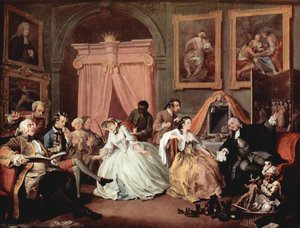
Experience the lively grandeur of 18th-century society with William Hogarth's 'The Ball,' capturing festive elegance; bring this masterpiece home today.
Biografia do Artista
Explore o mundo satírico de William Hogarth (1697-1764), pintor e gravur inglês pioneiro. Descubra *A Harlot's Progress* e comentários sociais perspicazes.
Sobre a pintura
A Glimpse into Georgian Grandeur: The Allure of "The Ball"
To stand before William Hogarth's depiction of "The Ball" is to be instantly transported across the threshold of time, directly into the glittering heart of an 18th-century London soirée. This painting is not merely a record of people gathered in one room; it is a vibrant tableau vivant, a meticulously observed slice of high society caught under the warm, diffused glow of crystal chandeliers. The scene pulses with an almost palpable energy—a delightful cacophony of silks rustling, whispered secrets, and the rhythmic tap of dancing feet. Hogarth, ever the keen social chronicler, has captured that intoxicating blend of gaiety and underlying human complexity that defined life in Georgian England.
Mastery of Social Observation and Technique
Hogarth’s genius lay not just in his ability to render a figure, but in capturing the very essence of their interaction. In "The Ball," we see at least thirteen figures, each rendered with remarkable individuality. Observe the dancers caught mid-twirl, their elaborate costumes seeming to float around them; notice the small clusters of conversationists whose gestures suggest deep engagement or perhaps just polite amusement. The technique employed speaks to a mastery of light and shadow, allowing the grandeur of the room—accented by those magnificent overhead chandeliers—to frame the human drama below. While Hogarth’s initial training was in engraving, his ability to translate complex social dynamics into paint is evident here, giving the scene both documentary accuracy and painterly romance.
The Historical Echo: Life Under the Chandeliers
Dating from 1745, this work situates itself perfectly within a period of immense cultural flourishing in London. The aristocracy and burgeoning merchant class were defining themselves through public display, and balls such as this were crucial arenas for networking, courtship, and the performance of status. Hogarth was fascinated by these very currents—the manners, the follies, and the enduring spirit of man amidst opulence. Owning a reproduction of "The Ball" allows one to bring that historical resonance into a modern setting, serving not just as decoration, but as a conversation starter steeped in cultural history.
Symbolism of Celebration and Society
Beyond the surface gaiety, there is a subtle symbolism at play. The sheer abundance of people suggests community and connection, yet every face hints at individual narratives—the longing glance, the detached smile, the absorbed focus on a dance partner. The lavish setting itself symbolizes the height of human achievement and material success during that era. For the collector or designer, this piece offers more than just aesthetic beauty; it embodies the romantic ideal of social connection, making it a powerful focal point for any grand drawing-room or gallery space.
Bringing the Festive Spirit Home
For those seeking to infuse their interior with the drama and elegance of a bygone era, this reproduction offers an unparalleled opportunity. The rich tonality and dynamic composition ensure that the artwork commands attention without overwhelming a sophisticated space. It invites the viewer to slow down, to observe the details—the texture of the lace, the gleam on a polished shoe, the fleeting moment of joy—and participate in Hogarth’s enduring celebration of human life at its most vibrant.
Perguntas e Respostas
Como o contraste e a harmonia se combinam em "The Ball"?
A composição cromática de "The Ball", de William Hogarth combina um contraste Bold com uma harmonia Strong Color Unity.
"The Ball" é típico do que William Hogarth costumava criar?
"The Ball" retrata ballroom scene, social gathering, 18th century life, dancing, fancy dress, chandeliers, people, enquanto os temas recorrentes de William Hogarth são social commentary on society, genre scenes of daily life, satire of human folly, observational study of people. A comparação entre ambos revela como a obra se relaciona com os temas habituais do artista.
Que sensação as cores de "The Ball", de William Hogarth transmitem?
Em "The Ball", cores de Earthy acompanham um sentimento Joyful.
Informações rápidas e quiz de arte
Sobre William Hogarth

William Hogarth
1697 - 1764, Reino Unido
Biografia do Artista
A London Life in Ink and Paint: The World of William Hogarth
William Hogarth, born into the bustling heart of 18th-century London in 1697, was more than just an artist; he was a visual historian, a keen observer of human nature, and a satirical commentator on the societal currents of his age. His life story is inextricably linked to the very fabric of England during a period of significant transformation – its burgeoning ambitions, underlying anxieties, and pervasive hypocrisies all finding potent expression in his remarkably detailed and often biting works. The son of a struggling Latin schoolmaster, Hogarth’s early experiences instilled within him both a love for learning and a sharp awareness of social inequalities, a foundation that would prove crucial to shaping his artistic vision. Initially apprenticed to an engraver, he quickly demonstrated a talent extending beyond mere technical skill; he possessed an innate ability to observe the nuances of human behavior and translate them into compelling visual narratives. However, he chafed against the constraints of traditional engraving, seeking a more expressive outlet for his burgeoning creativity. This led him to studies at both St Martin’s Lane Academy and under Sir James Thornhill, where he honed his skills in painting and composition, absorbing influences that would later inform his unique style.The Birth of Modern Moral Subjects
Hogarth's true innovation lay not simply *what* he painted, but *how*. He pioneered what he termed “modern moral subjects” – a series of pictures designed to tell a story, often imbued with a strong satirical edge. These weren’t isolated portraits or landscapes; they were visual novels unfolding before the viewer’s eyes, offering pointed commentary on contemporary society. A Harlot's Progress, created in 1742, stands as perhaps his most famous example. This series of six paintings meticulously follows the tragic downfall of Mary, a young woman arriving in London full of hope but quickly succumbing to the temptations and dangers of city life. Each scene is rendered with painstaking detail, filled with symbolic elements that reveal the moral decay surrounding her. The progression from hopeful innocence to desperate poverty and ultimately, despair, is depicted with unflinching honesty, forcing viewers to confront uncomfortable truths about social mobility and the consequences of unchecked desire. Similarly, A Rake's Progress, begun in 1733, charts the reckless decline of Tom Rakewell, a man who squanders his inheritance on gambling, debauchery, and ultimately, madness. These weren’t merely cautionary tales; they were unflinching portraits of a society grappling with issues of class, morality, and social mobility. Hogarth's genius resided in his ability to elevate everyday scenes – the bustling streets of London, the opulent interiors of the wealthy, the squalid lives of the poor – into works of art that resonated deeply with his audience. He didn’t shy away from depicting the harsh realities of life, presenting them with a blend of humor and pathos that forced viewers to confront uncomfortable truths about themselves and their society.Technique and Influences: A Synthesis of Styles
Hogarth's artistic style was a unique amalgamation of diverse influences. He greatly admired the realism and narrative detail found in the works of Dutch genre painters like Pieter de Hooch, evident in his meticulous depictions of interiors and everyday life. The satirical prints produced in France also played a role in shaping his approach to social commentary. However, Hogarth wasn’t simply imitating these sources; he was synthesizing them into something entirely new and distinctly his own. His technique was characterized by a masterful use of line and shading, particularly evident in his engravings. He employed a distinctive cross-hatching technique that created depth and texture, bringing his scenes to life with remarkable clarity. He also possessed an exceptional eye for composition, arranging figures and objects within the frame to create dynamic and engaging narratives. Beyond visual art, Hogarth was influenced by literary works, particularly those of Jonathan Swift and Henry Fielding, whose satirical wit informed his own social observations. He believed that art should not merely be beautiful but should also serve a moral purpose, challenging viewers to confront uncomfortable truths about themselves and their society. He sought to hold a mirror up to nature, reflecting both its beauty and its ugliness with unflinching honesty.The Foundling Hospital and the Rise of Public Art
Hogarth’s commitment to social reform extended beyond his paintings. He became a staunch supporter of the Foundling Hospital, established by Thomas Coram to care for abandoned children. Recognizing the importance of public engagement with art, he spearheaded efforts to display his works – and those of other artists – at the hospital, creating what is considered one of Britain’s first public art galleries. This initiative not only provided a platform for artistic expression but also fostered a sense of civic pride and social responsibility. His involvement in this project demonstrated his belief that art could be a powerful tool for promoting positive change within society. He was deeply moved by the plight of orphaned children, and his support for the hospital reflected his desire to alleviate suffering and improve the lives of those most vulnerable.Legacy and Lasting Impact
The impact of William Hogarth extends far beyond the realm of 18th-century art. His work gained immense popularity thanks to the mass production of prints based on his paintings, making his satirical commentary accessible to a wider audience than ever before. He is widely considered a precursor to political cartooning and comic strips, laying the groundwork for visual storytelling in popular culture. Artists like James Gillray and George Cruikshank were directly influenced by his style, carrying forward his tradition of social satire. Even Charles Lamb, the celebrated essayist, recognized the narrative power of Hogarth’s images, famously remarking that they were “like books to be read rather than merely looked at.”- Hogarth established a distinctly British artistic identity.
- His work provides invaluable insights into 18th-century English society.
- He influenced generations of artists and satirists.
Informações rápidas sobre William Hogarth
- Artistic Movement Or Style: Satírico, Realista
- Artists Or Movements Influenced By This Artist:
- Gillray
- Cartoonismo político
- Artists Who Influenced This Artist:
- Pieter de Hooch
- Jonathan Swift
- Date Of Birth: 1697
- Date Of Death: 1764
- Full Name: William Hogarth
- Nationality: Britânico
- Notable Artworks:
- A Harlot's Progress
- A Rake's Progress
- Marriage A-la-Mode
- Place Of Birth: Londres, Reino Unido
Explore obras de arte organizadas por temas, estilos e características.


William Hogarth
The Ball
() ·
Com a moldura: · Pintura a óleo sobre linho feita à mão
Total