


 Visualizar na parede
 Compartilhar
 Compartilhar
 Detalhes
 Guia
Guia

 Baixar imagem
 Semelhantes
 Raio X
 Ver diaporama
 Estatísticas
Children Roller Skating


William Glackens' "Children Roller Skating" (1918) captures a lively street scene of kids enjoying their pastime, showcasing the artist’s signature realism and vibrant style.
 Ler mais
Explore o mundo realista de William James Glackens (1870-1938), um pioneiro da Escola Ashcan! Admire cenas vibrantes da vida urbana em Nova York e Paris, capturando detalhes impressionantes com maestria artística.
Reprodução em Óleo Feita à Mão
Óleo sobre tela pintado à mão no tamanho e moldura de sua escolha, feito sob encomenda pelos nossos artistas. ( Alternar para Impressão Alternar para Imagem Digital)




P118B €10

P118H €10

P118W €10

P438Z €10

P508JH €12

P508YH €12

P805H €10

P805Z €10

P919BZ €10

P919G €10

P919XJ €10

P959ZH €10

P968JZ €12

W106C €8

W218G €10

W218JH €8

W218Y €10

W307PJ €10

W316G €10

W316PJ €8

W316Y €10

W398PJ €8

W4111J €10

W500HY €15

W500JH €15

W692G €12

W849H €8

W940BG €15

W953PJ €8




Tamanho padrão
personalizado
CM
INCH
Escolha entre os nossos tamanhos pré-definidos que respeitam as proporções originais da obra de arte.
Loading sizes...

largura
altura
Insira a largura e a altura desejadas para se ajustarem à sua moldura ou parede. Como esta obra é pintada à mão, para um tamanho com proporções diferentes, o artista poderá pintar um pouco mais ao redor da imagem ou reduzir ligeiramente a composição — você escolhe. Enviamos uma maquete digital para sua aprovação antes de iniciar a pintura. A imagem exibida nesta página não representa o resultado real — apenas a maquete mostra o resultado final.
Exemplos do que pode ser personalizado: Substituir o rosto pela foto do cliente; Adicionar um animal de estimação (ex: substituir gato por cão); Incluir uma mensagem oculta no fundo; Alterar a paisagem ou elementos do fundo.
Após o pedido, a equipa TopImpressionists.com enviará um e-mail ao cliente para solicitar instruções e fornecer uma prévia do esboço.
Após o pedido, a equipa TopImpressionists.com enviará um e-mail ao cliente para solicitar instruções e fornecer uma prévia do esboço.
Entrega mundial () em 3 a 4 semanas, em vez das 5 semanas padrão. (26 Outubro). Sem comprometer a qualidade.

Envio expresso gratuito para todo o mundo

Tela de Linho de Alta Qualidade

Seguro de transporte completo

Garantia de Reembolso de Impostos Alfandegários

Garantia de Fidelidade Cromática

Política de Devolução em 100 Dias (Apenas para Defeitos)

Garantia de reembolso de 100%

Oferta de desconto por quantidade
 A opção de vidro está disponível apenas para tamanhos inferiores a 110 cm

Children Roller Skating
Técnica de Reprodução
Tamanho da Reprodução
-


Preço Total
€ 236
William James Glackens’ “Children Roller Skating” – A Snapshot of Urban Joy
“Children Roller Skating,” painted in 1918 by William James Glackens, isn't merely a depiction of children enjoying an afternoon pastime; it’s a vibrant distillation of early 20th-century American life—a fleeting moment of unadulterated joy captured amidst the grit and bustle of New York City. Glackens, a key figure in the Ashcan School movement, rejected the idealized portrayals favored by the National Academy of Design, instead choosing to focus on the realities of everyday existence, often portraying it with a distinctive, almost frenetic energy. This painting exemplifies his talent for imbuing ordinary scenes with an extraordinary sense of life and movement.
The scene unfolds on a busy city street, likely in Greenwich Village, a neighborhood known for its bohemian spirit during this period. A group of children, rendered in Glackens’ characteristic bold brushstrokes and rich, dark palette, are engaged in spirited roller skating. Their faces are alight with laughter and excitement, their limbs moving with an infectious energy that spills out onto the canvas. The composition is dynamic—a swirling mass of movement and color—reflecting the lively atmosphere of the street. Glackens masterfully uses loose brushwork to convey a sense of spontaneity and immediacy, as if he’s capturing the scene in real-time.
A Window into the Ashcan School
Glackens' work is deeply rooted in the principles of the Ashcan School, an artistic movement that emerged in New York City around 1908. Rejecting the polished surfaces and mythological subjects favored by academic art, the Ashcan artists sought to portray the realities of urban life—the crowded streets, the working-class neighborhoods, and the everyday struggles of ordinary people. Glackens’ “Children Roller Skating” perfectly embodies this ethos. It's a far cry from the carefully staged portraits that dominated the art world at the time; instead, it offers an unfiltered glimpse into the lives of New Yorkers.
The painting’s style is distinctly American—a blend of realism and impressionism. Glackens employs a vibrant color palette, using dark blues, greens, and browns to create a sense of depth and atmosphere. He also utilizes broken brushstrokes and contrasting colors to capture the movement and energy of the scene. The figures are not rendered with meticulous detail but rather suggested through loose brushwork and expressive gestures. This technique contributes to the painting’s overall dynamism and immediacy.
Symbolism and Context
Beyond its immediate depiction of children roller skating, the painting carries a subtle layer of symbolism. Roller skating was a popular pastime in early 20th-century America, particularly among young people. It represented freedom, recreation, and a break from the constraints of Victorian society. The scene captures a moment of carefree joy—a reminder that even amidst the challenges of urban life, there is always room for laughter and play.
Furthermore, the painting reflects the changing social landscape of New York City at the turn of the century. The city was undergoing rapid industrialization and urbanization, leading to overcrowding, poverty, and social unrest. However, despite these challenges, there was also a sense of optimism and progress—a belief in the potential for a brighter future. “Children Roller Skating” captures this duality—the juxtaposition of hardship and hope, chaos and joy.
A Timeless Image of American Life
“Children Roller Skating” is more than just a painting; it’s a snapshot of a bygone era—a vibrant testament to the spirit of New York City in 1918. Glackens' masterful use of color, brushwork, and composition creates an image that is both captivating and emotionally resonant. It invites us to step back in time and experience the joy and energy of a group of children roller skating on a busy city street. Reproductions of this work offer a beautiful way to bring a piece of American history into your home or office, reminding us of the simple pleasures of life and the enduring power of art.
Perguntas e Respostas
As cores de "Children Roller Skating", de William James Glackens são vibrantes ou suaves?
As cores de "Children Roller Skating", de William James Glackens apresentam uma saturação Clear Color Presence com uma intensidade Vivid.
Qual cor mais se destaca em "Children Roller Skating"?
Walnut (#705535) é a cor predominante de "Children Roller Skating", de William James Glackens.
Com qual sentimento "Children Roller Skating" está associada?
"Children Roller Skating", de William James Glackens transmite um tom emocional Nostalgic.
Obras Relacionadas


Biografia do Artista
A Pionheira da Escola Ashcan
William James Glackens (1870 – 1938) foi um pintor americano cuja obra capturou a essência da vida urbana em seus momentos mais cruéis e sinceros, marcando profundamente o cenário artístico norte-americano do início do século XX. Sua trajetória artística é uma história de paixão pela realidade e compromisso com uma nova estética que desafiou as convenções da época.Infância e Influências
Nascido em Filadélfia, Pensilvânia, Glackens demonstrava desde cedo um talento nato pela arte, o que o levou a estudar na Pennsylvania Academy of the Fine Arts, onde encontrou o mentor Thomas Anshutz, um renomado realista que moldou seu estilo e visão artística. Foi sob sua orientação que Glackens se tornou um dos fundadores da Escola Ashcan, movimento artístico que rejeitou os padrões de beleza tradicionais em favor de uma representação honesta e despojada da vida cotidiana nas cidades americanas. Essa escola buscava romper com o academicismo dominante, buscando inspiração na pintura holandesa do século XVII e na obra de artistas como Jacob Isaakszoon van Ruysdael.Carreira Artística
Glackens dedicou sua vida à pintura, criando obras que retratam cenas da vida urbana em Nova York e Paris com uma atenção meticulosa aos detalhes e uma paleta cromática sombria, porém vibrante. Sua habilidade em capturar a atmosfera das ruas e dos espaços públicos o consagrou como um dos principais representantes da Escola Ashcan. Entre suas obras mais significativas destacam-se “A Compradora” (New Realism), que hoje encontra-se na coleção do Chrysler Museum of Art, e uma série de pinturas que exploram temas como pobreza, trabalho e vida cotidiana. Além disso, Glackens trabalhou como ilustrador para jornais e revistas importantes em Filadélfia e Nova York, consolidando sua presença no mundo da comunicação visual e ampliando seu público artístico. Sua obra influenciou artistas posteriores e permanece relevante até hoje por sua força expressiva e autenticidade emocional.Contribuições Históricas
Glackens desempenhou um papel crucial na história da arte americana ao colaborar com Albert C. Barnes para adquirir pinturas europeias para a Fundação Barnes em Filadélfia, enriquecendo o patrimônio artístico norte-americano e promovendo o diálogo entre diferentes tradições artísticas. Sua obra é considerada um marco do Realismo americano e uma referência para artistas que buscavam romper com os padrões estéticos estabelecidos. Uma das obras mais emblemáticas de Glackens é “A Compradora”, considerada uma obra-prima da Escola Ashcan e um testemunho da capacidade artística de capturar a beleza nas coisas simples da vida cotidiana. Sua arte continua inspirando artistas e estudiosos até hoje, perpetuando seu legado como um dos grandes nomes da pintura americana do século XX.
William James Glackens
1870 - 1938 , Estados Unidos da América
Dados Rápidos
- Artistic Movement Or Style: Ashcan School
- Artists Or Movements Influenced By This Artist: ['Pierre Auguste Renoir']
- Artists Who Influenced This Artist: ['Thomas Anshutz']
- Date Of Birth: Philadelphia, Estados Unidos (1870)
- Date Of Death: Westport, Connecticut (1938)
- Full Name: William James Glackens
- Nationality: Americano
- Notable Artworks:
- A Compradora
- Vista de Haarlem com campos de branqueamento
- Place Of Birth: Filadélfia, Pennsylvania
Artigos Relacionados

Capturing the Light: A Journey Through the Soul of American Impressionism and the Hudson River School
Explore the luminous beauty of American Impressionism and the Hudson River School. Discover a curated journey through light, landscape, and history, celebrating the enduring legacy of masters through exquisite, hand-painted oil reproductions for the discerning art lover.
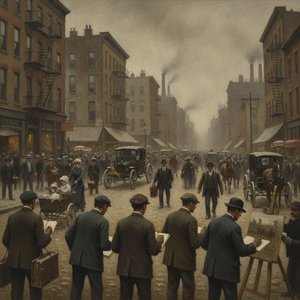
The Ashcan School: Capturing the Raw, Unfiltered Soul of Urban Life through American Realism
Discover the raw beauty of the Ashcan School. Explore how masters like Bellows and Henri captured the gritty, vibrant soul of early 20th-century New York through profound American Realism and evocative urban landscapes.

The Unvarnished Truth: A Cultural Journey Through the Soul of American Realism
Explore the profound beauty of American Realism. From the Ashcan School's urban grit to intimate portraits, discover how artists captured the authentic soul of a nation through unvarnished truth and masterful observation.
Explore obras de arte organizadas por temas, estilos e características.

