A Botanical Legacy in Watercolor
Caroline Maria Applebee remains a captivating figure from the nineteenth century, an English artist whose delicate watercolors serve as a vibrant window into the horticultural fascinations of her era. Though she operated largely within the realm of dedicated amateur painting, her work transcends simple pastime, offering a meticulous and scientifically keen record of the botanical world. Born in London, Applebee’s life was deeply intertwined with the changing landscapes of England, particularly around Colchester, where she spent much of her existence. Her artistry was not merely an aesthetic pursuit but a profound documentation of the most fashionable and exotic plants of the period, capturing the fleeting beauty of blooms with a precision that reveals both her artistic talent and her deep horticultural interest.
Her upbringing and social connections placed her at the heart of a culturally rich environment. As the eldest daughter of the Rev. John Applebee, a Church of England clergyman, she moved through circles that valued both intellect and taste. Her life was marked by a certain refined independence; she never married and lived with a level of distinction that saw her recorded in census records as a "Lady of merit." This period of her life was characterized by a quiet but significant engagement with the literary and scientific communities, evidenced by her friendships with figures such as Charles Lamb and her support for various botanical and literary publications. Her work flourished alongside the development of botanical gardens, which provided the living inspiration for her many studies of rare and exotic flora.
The Artistry of the Natural World
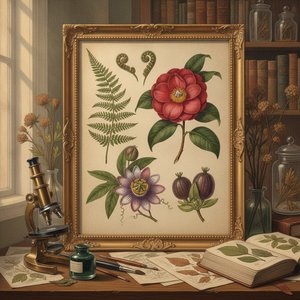
The essence of Applebee’s contribution to art lies in her ability to blend botanical accuracy with the soft, evocative qualities of the watercolor medium. Her paintings are more than mere illustrations; they are intimate portraits of nature. Through her brush, one can observe the intricate textures of petals and the delicate structure of stems, creating a unique historical record of plants that were highly sought after during the nineteenth century. This dedication to detail has ensured that her legacy survives through significant collections, most notably within the RHS Lindley Library, where a substantial number of her watercolors and drawings are preserved.
Her artistic development was deeply rooted in the observation of the natural world, specifically the rare specimens that graced the gardens of her time. The significance of her work extends beyond the visual pleasure it provides; it serves as a vital scientific and historical archive. By documenting these plants, she captured a specific moment in horticultural history, preserving the memory of species that were part of the era's botanical vogue. Her ability to translate the ephemeral beauty of a flower into a lasting pigment-on-paper record remains her most enduring achievement, making her a vital, if often understated, voice in the history of British botanical art.
Perguntas e Respostas
De onde é Caroline Maria Applebee?
Caroline Maria Applebee nasceu em United Kingdom.
Posso estudar o uso de cores de Caroline Maria Applebee em todas as suas obras?
O uso da cor em Caroline Maria Applebee, através das obras listadas em este site, pode ser estudado na página DNA da Paleta do artista.
Em que cidade e país Caroline Maria Applebee nasceu?
Caroline Maria Applebee nasceu em London, em United Kingdom.