Ateliê — Envio gratuito para todo o mundo — Entrega em 2–6 semanas
      Berthe Morisot, 1841 – 1895

      Berthe Morisot: The 100 Best-Known Paintings

      Of all Berthe Morisot's paintings, O Berço (1872) is the most famous; it hangs in the Musée d'Orsay, Paris. Close behind come Um canto do jardim de rosas (1885) and Thatched Cottage in Normandy (1865). Among the 361 works by Berthe Morisot in our catalogue, these 100 are the most celebrated, each shown with its date, its museum and its story.

      Ranked by our popularity score, which combines the searches, visits and orders for each work. Updated Outubro 2026. Each painting on this page can be ordered as an oil reproduction painted by hand on linen canvas, or as a fine art print, made to the size you choose.

      Portrait of Berthe Morisot
      Berthe Morisot · 1841 – 1895
      Born · died
      1841 – 1895, Bourges
      Movement
      Impressionist style
      Works in our catalogue
      361
      Most famous
      O Berço (1872)
      Most works at
      Musée Marmottan Monet

      Berthe Morisot's 10 most celebrated paintings

      O Berço (1872) by Berthe Morisot
      1

      O Berço

      1872 · Óleo sobre tela · Musée d'Orsay, Paris

      Em meio à vibrante, porém por vezes caótica, cena artística do final do século XIX, a obra “O Berço” (Le Berceau) de Berthe Morisot emerge como um oásis de tranquilidade e delicadeza. Pintada em 1872, esta pequena tela, agora graciosamente abrigada no Musée d’Orsay em Paris, transcende a mera representação de uma cena doméstica para se tornar um portal para a essência da maternidade e do amor incondicional. Morisot, uma…

      Um canto do jardim de rosas (1885) by Berthe Morisot
      2

      Um canto do jardim de rosas

      1885 · Óleo sobre tela

      Um Vislumbre da Serenidade Impressionista "A Corner of the Rose Garden" de Berthe Morisot convida os espectadores para uma cena de jardim tranquila, banhada pelos tons suaves e quentes do pôr do sol. Esta obra cativante é um testemunho do domínio de Morisot pelo estilo impressionista, capturando a beleza efêmera da natureza com pinceladas soltas e uma paleta de cores vibrante. A Essência da Natureza Capturada A pintura retrata um…

      Thatched Cottage in Normandy (1865) by Berthe Morisot
      3

      Thatched Cottage in Normandy

      1865 · Oil On Canvas

      To stand before Berthe Morisot’s depiction of a Thatched Cottage in Normandy is to step through a veil and into the gentle embrace of a bygone French afternoon. This painting, executed in 1865, is far more than a mere record of rural architecture; it is an immersion into the very spirit of life lived at the rhythm of the seasons. Morisot captures that quintessential joie de vivre found in the…

      Study, The Water's Edge (1864) by Berthe Morisot
      4

      Study, The Water's Edge

      1864 · Oil On Canvas

      Berthe Morisot’s “Study, The Water’s Edge,” painted in 1864, is more than just a depiction of a serene lakeside scene; it’s an intimate glimpse into the heart of Impressionism. This small canvas – measuring 60 x 73 cm – vibrates with a delicate energy, capturing not just what Morisot saw but also the fleeting emotions and sensations of that particular moment. The painting immediately draws the viewer in with its…

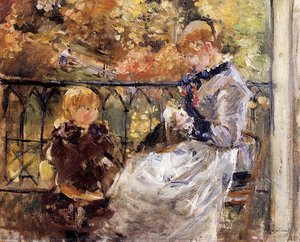
      In the Garden at Maurecourt (1884) by Berthe Morisot
      5

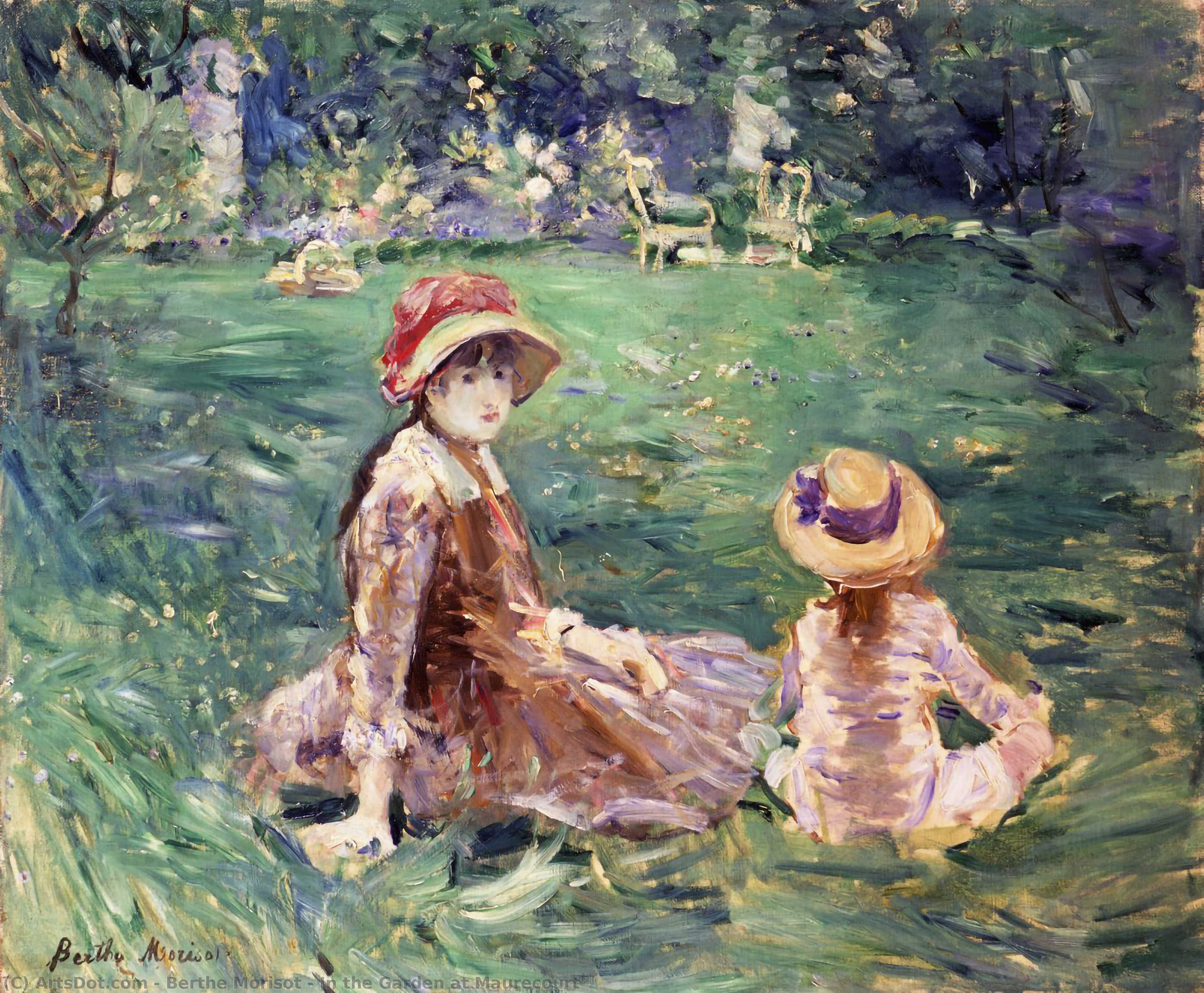
      In the Garden at Maurecourt

      1884 · Oil On Canvas · Toledo Museum of Art, Toledo

      In the soft, dappled sunlight of a French afternoon, Berthe Morisot’s “In the Garden at Maurecourt” invites the viewer into a sanctuary of profound stillness. Completed in 1884, this masterpiece serves as a window into the Belle Époque, capturing a moment that feels both fleeting and eternal. The scene unfolds within a lush, verdant garden—likely the Morisot estate near Maurecourt—where two young figures, including the artist’s daughter Julie, are nestled…

      Portrait of Edma (1870) by Berthe Morisot
      6

      Portrait of Edma

      1870 · Oil On Canvas · Courtauld Gallery, Londres

      In the soft, flickering light of a Parisian afternoon, Berthe Morisot captures more than just a likeness in her 1871 masterpiece, Portrait of Edma. This painting serves as a profound window into the intimate domesticity that defined much of the Impressionist movement’s early explorations. The subject, Edma Pontillon—Morisot’s own sister-in-law—is not presented with the stiff, formal grandeur typical of academic portraiture. Instead, she is nestled within a private, quiet moment,…

      The Bath (1886) by Berthe Morisot
      7

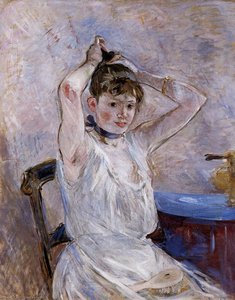
      The Bath

      1886 · Oil On Canvas

      To stand before Berthe Morisot’s The Bath is to step into a moment suspended in time—a breath held within the soft glow of an afternoon indoors. This painting, executed in 1886, transcends a mere depiction of daily routine; it captures the very essence of private contemplation. The scene unfolds with remarkable delicacy: a woman seated amidst the quiet rituals of self-care, brushing her hair. Morisot does not merely record what…

      The Quay at Bougival (1883) by Berthe Morisot
      8

      The Quay at Bougival

      1883 · Oil On Canvas · Nasjonalgalleriet, Oslo

      To gaze upon Berthe Morisot’s “The Quay at Bougival” is to step through a portal into the heart of French Impressionism, where the boundaries between reality and perception begin to dissolve. Completed in 1883, this exquisite oil on canvas serves as much more than a mere landscape; it is a rhythmic, breathing snapshot of life along the Seine. The scene captures the bustling waterfront of Bougival, a serene suburb of…

      Daffodils (1885) by Berthe Morisot
      9

      Daffodils

      1885 · Oil On Canvas

      To stand before Berthe Morisot’s Daffodils is not merely to observe a still life; it is to step directly into a sun-drenched, breathlessly beautiful moment captured by the brush. Painted in 1885, this work radiates the delicate spirit of Impressionism, inviting the viewer into an intimate contemplation of nature’s cyclical promise. The composition centers on a simple arrangement: vibrant yellow daffodils gathered within a vase accented with cool blue hues,…

      Young Woman Picking Oranges (1889) by Berthe Morisot
      10

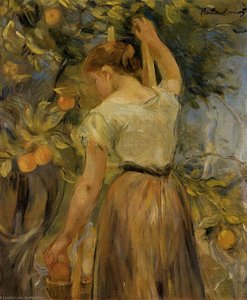
      Young Woman Picking Oranges

      1889 · Oil On Canvas

      To stand before Berthe Morisot's Young Woman Picking Oranges is to step directly into a sun-dappled moment suspended in time. This exquisite oil on canvas, dating from 1889, is not merely a depiction of an afternoon chore; it is a lyrical meditation on leisure, femininity, and the very nature of light itself. Morisot, a central figure whose genius blossomed within the vibrant currents of Impressionism, captures life with an almost…

      Berthe Morisot paintings ranked 11 to 100

      The Garden at Bougival (1884) by Berthe Morisot
      #11

      The Garden at Bougival

      1884 · Musée Marmottan Monet

      Berthe Morisot’s “The Garden at Bougival,” painted in 1884, is more than just a depiction of a sun-drenched garden; it's an intimate glimpse into the heart of the…

      Bring this light home →
      Woman in Black (1878) by Berthe Morisot
      #12

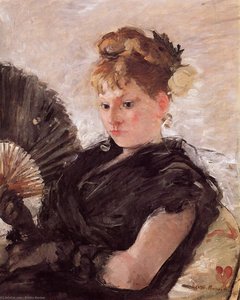
      Woman in Black

      1878 · National Gallery of Ireland

      To stand before Berthe Morisot's Woman in Black is to step directly into the luminous, fleeting moments of late nineteenth-century Parisian life. This portrait, painted in 1878, transcends…

      Have it painted by hand →
      Little Dancer (1885) by Berthe Morisot
      #14

      Little Dancer

      1885

      To stand before Berthe Morisot's Little Dancer is not merely to observe a painting; it is to step into a suspended moment of quiet contemplation. This exquisite oil…

      Order this canvas →
      Roses (1894) by Berthe Morisot
      #15

      Roses

      1894

      In this 1894 oil on canvas, Berthe Morisot presents us with Roses, a quiet study within the flower painting genre. This work emerged during a period when the…

      Have it painted by hand →
      Mother and Sister of the Artist (1869) by Berthe Morisot
      #17

      Mother and Sister of the Artist

      1869 · National Gallery of Art

      In the quiet corners of art history, few works capture the ephemeral beauty of domestic life as tenderly as Berthe Morisot’s 1869 masterpiece, "Mother and Sister of the…

      Order this canvas →
      Young Girl with Basket (1892) by Berthe Morisot
      #18

      Young Girl with Basket

      1892 · Philadelphia Museum of Art

      In this 1892 oil on canvas, we find ourselves in a private, intimate space, observing a young girl seated in a wicker chair. She is captured in profile,…

      Have it painted by hand →
      Portrait of a Child (1894) by Berthe Morisot
      #19

      Portrait of a Child

      1894 · Philadelphia Museum of Art

      A Luminous Encounter with Innocence Portrait of a Child unfolds in a soft, golden glow that seems to emanate from within the canvas itself. A young subject sits…

      Have it painted by hand →
      Young Girl with Hat (1891) by Berthe Morisot
      #23

      Young Girl with Hat

      1891 · Art Institute of Chicago

      A young girl is captured in a moment of quietude, her form emerging from a dark, indistinct background. She is positioned slightly off-center, viewed from the waist up…

      Order this canvas →
      The Port of Nice (1882) by Berthe Morisot
      #33

      The Port of Nice

      1882

      Painted during a pivotal moment in art history, “The Port of Nice” reflects the burgeoning Impressionist movement’s challenge to traditional academic painting. Berthe Morisot, alongside artists like Monet…

      Have it painted by hand →
      Port of Gorey (1886) by Berthe Morisot
      #34

      Port of Gorey

      1886

      The Port of Gorey is a stunning oil on canvas painting by the renowned French artist Berthe Morisot, created in 1886. This beautiful representation of the ocean, measuring…

      Bring this light home →
      O Bowl de Leite (1890) by Berthe Morisot
      #35

      O Bowl de Leite

      1890

      Berthe Morisot’s “The Bowl of Milk” stands as a quintessential embodiment of Impressionism—a movement that revolutionized painting by prioritizing fleeting sensations and capturing the ephemeral beauty of everyday…

      Have it painted by hand →
      Girl with a Dog (1887) by Berthe Morisot
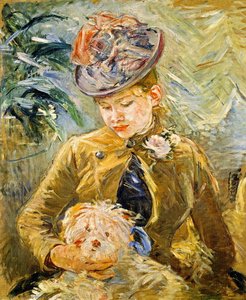
      #65

      Girl with a Dog

      1887

      Berthe Morisot's "Girl with a Dog," painted in 1887, is a captivating portrait that showcases her unique style and skill as an artist. This oil on canvas painting…

      Have it painted by hand →
      Hide and Seek (1873) by Berthe Morisot
      #68

      Hide and Seek

      1873

      “Hide and Seek” is an oil on canvas painting created by Berthe Morisot in 1873, showcasing a beautiful depiction of everyday life in the 19th century. This artwork…

      Have it painted by hand →
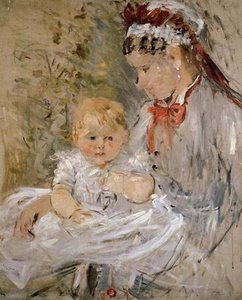
      Julie with Her Nurse (1880) by Berthe Morisot
      #75

      Julie with Her Nurse

      1880 · Glyptotèque Ny Carlsberg

      Berthe Morisot's Julie with Her Nurse, painted in 1880, is more than just a portrait; it’s a tender exploration of motherhood and domestic life within the burgeoning Impressionist…

      Have it painted by hand →
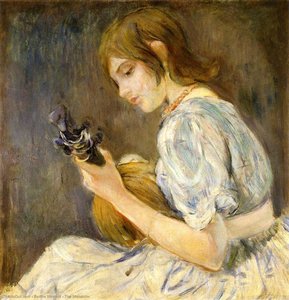
      The Mandolin (1889) by Berthe Morisot
      #78

      The Mandolin

      1889

      In the delicate brushstrokes of Berthe Morisot’s The Mandolin, we find ourselves transported to a private, melodic moment captured within the fleeting essence of the Impressionist era. The…

      Order this canvas →
      Haying at Mezy (1891) by Berthe Morisot
      #79

      Haying at Mezy

      1891

      Berthe Morisot's "Haying at Mezy," painted in 1891, is a captivating example of Impressionist art that transports viewers to the serene landscapes of rural France. This oil on…

      Have it painted by hand →
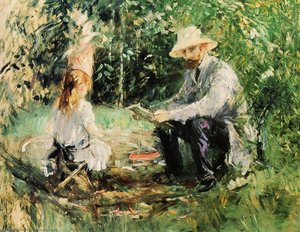
      Julie and Eugene Manet (1883) by Berthe Morisot
      #80

      Julie and Eugene Manet

      1883

      To gaze upon Berthe Morisot’s Julie and Eugene Manet is to step directly into the luminous, fleeting moments of late nineteenth-century Parisian life. This oil on canvas, dating…

      Order this canvas →
      Rosbras (Finistere) (1866) by Berthe Morisot
      #81

      Rosbras (Finistere)

      1866

      Berthe Morisot was a French painter and one of the leading figures in the Impressionist movement. Her painting, Rosbras (Finistère), created in 1866, is a beautiful representation of…

      Order this canvas →
      Child in the Rose Garden (1881) by Berthe Morisot
      #86

      Child in the Rose Garden

      1881 · Museu Wallraf-Richartz

      Berthe Morisot's Child in the Rose Garden, painted in 1881, is a quintessential example of Impressionism, capturing a fleeting moment of childhood innocence within a tranquil garden setting.…

      Have it painted by hand →
      The Basket Chair (1882) by Berthe Morisot
      #87

      The Basket Chair

      1882 · Museum of Fine Arts

      The Basket Chair is an oil on canvas created by Berthe Morisot. This work emerged in 1882, capturing a quiet moment within the garden. The paint settles upon…

      Have it painted by hand →
      Peasant Girl among Tulips (1890) by Berthe Morisot
      #88

      Peasant Girl among Tulips

      1890

      To gaze upon this depiction, Peasant Girl among Tulips, is to step directly into a sun-dappled moment suspended in time. The scene unfolds with an exquisite intimacy, centering…

      Order this canvas →
      Portrait of Jeanne Pontillon (1894) by Berthe Morisot
      #89

      Portrait of Jeanne Pontillon

      1894 · Musée d'Art et d'Histoire de Genève

      The Portrait of Jeanne Pontillon is a stunning oil on canvas painting created by the renowned French artist Berthe Morisot in 1894. This beautiful piece of art measures…

      Order this canvas →

      Berthe Morisot's canvases, period by period

      What Berthe Morisot painted most

      The four subjects that return most often on these canvases, each with its best-loved example.

      Where Berthe Morisot's canvases hang

      The 8 museums that hold the most of the paintings on this page.

      Museum City Works by Berthe Morisot Paintings from this list
      Musée Marmottan Monet, ParisMusée Marmottan Monet Paris 15 The Garden at Bougival, On the edge of the lake, In the apple tree
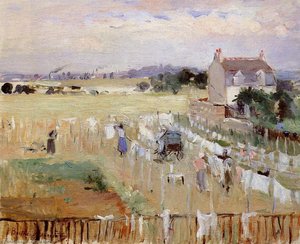
      National Gallery of Art, WashingtonNational Gallery of Art Washington 13 Two Sisters on a Couch (also known as The Sisters), Mother and Sister of the Artist, Hanging the Laundry out to Dry
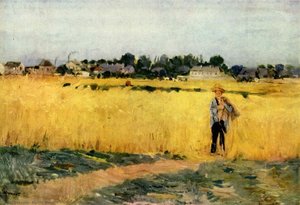
      Musée d'Orsay, ParisMusée d'Orsay Paris 10 O Berço, On a Bench in the Bois de Boulogne, In the Wheatfield at Gennevilliers
      Museu Wallraf-Richartz, ColôniaMuseu Wallraf-Richartz Colônia 3 Child among the Hollyhocks, Child in the Rose Garden
      Philadelphia Museum of Art, FiladélfiaPhiladelphia Museum of Art Filadélfia 2 Young Girl with Basket, Portrait of a Child
      Museum of Fine Arts, HoustonMuseum of Fine Arts Houston 2 Young Woman, The Basket Chair
      Yale University Art Gallery, New HavenYale University Art Gallery New Haven 2 Young Woman and Child, The Harbor at Cherbourg
      Art Institute of Chicago, ChicagoArt Institute of Chicago Chicago 4 Young Girl with Hat

      Decade by decade: Berthe Morisot's most celebrated canvas

      1. 1860s
        Thatched Cottage in Normandy (1865) by Berthe Morisot
        3 of 100

        Thatched Cottage in Normandy

        Age 19 – 28

        To stand before Berthe Morisot’s depiction of a Thatched Cottage in Normandy is to step through a veil and into the gentle embrace of a bygone French afternoon.…

      2. 1870s
        O Berço (1872) by Berthe Morisot
        Ranked 1 of 100

        O Berço

        Age 29 – 38 · Musée d'Orsay

        Em meio à vibrante, porém por vezes caótica, cena artística do final do século XIX, a obra “O Berço” (Le Berceau) de Berthe Morisot emerge como um oásis…

      3. 1880s
        Um canto do jardim de rosas (1885) by Berthe Morisot
        2 of 100

        Um canto do jardim de rosas

        Age 39 – 48

        Um Vislumbre da Serenidade Impressionista "A Corner of the Rose Garden" de Berthe Morisot convida os espectadores para uma cena de jardim tranquila, banhada pelos tons suaves e…

      4. 1890s
        Roses (1894) by Berthe Morisot
        Canvas 15 of 100

        Roses

        Age 49 – 54

        In this 1894 oil on canvas, Berthe Morisot presents us with Roses, a quiet study within the flower painting genre. This work emerged during a period when the…

      Your questions on Berthe Morisot's paintings, answered

      Which is the most celebrated painting by Berthe Morisot?Read the answer

      O Berço (1872), Musée d'Orsay, Paris. Um canto do jardim de rosas (1885) and Thatched Cottage in Normandy (1865) follow.

      How old was Berthe Morisot at the time of O Berço?Read the answer

      Berthe Morisot, born in 1841, was 31 years old: O Berço dates from 1872.

      Which ten paintings is Berthe Morisot most famous for?Read the answer

      O Berço, Um canto do jardim de rosas, Thatched Cottage in Normandy, Study, The Water's Edge, In the Garden at Maurecourt, Portrait of Edma, The Bath, The Quay at Bougival, Daffodils and Young Woman Picking Oranges. Each canvas in the ranking above comes with its year and its museum.

      How many paintings by Berthe Morisot are known?Read the answer

      361 works by Berthe Morisot are in our catalogue, dated 1863 to 1894.

      Which museums hold Berthe Morisot's best-known canvases?Read the answer

      Mostly in Musée Marmottan Monet (Paris), National Gallery of Art (Washington) and Musée d'Orsay (Paris); the list above names each museum and its canvases.

      In which years did Berthe Morisot paint the most celebrated canvases?Read the answer

      In 1880s, which gave 35 of the 100 works on this page, Um canto do jardim de rosas among them.

      What are the first and the last of Berthe Morisot's famous canvases?Read the answer

      The earliest canvas here is Memory of the Banks of l'Oise (1863); the latest is Roses (1894).

      Which subjects return most often in Berthe Morisot's paintings?Read the answer

      Portrait (15), Women (12) and Domestic scene (10), across the 100 works on this page.

      What did Berthe Morisot usually paint with?Read the answer

      Oil On Canvas, used in 39 of the 100 works on this page.

      To which art movement does Berthe Morisot belong?Read the answer

      Impressionist style, as the canvases on this page show.

      What can I see by Berthe Morisot at the Musée Marmottan Monet?Read the answer

      The Musée Marmottan Monet, Paris holds 4 of the works on this page, among them The Garden at Bougival, On the edge of the lake and In the apple tree.

      Can I order a hand-painted copy of a painting by Berthe Morisot?Read the answer

      Yes. Every painting on this page can be ordered from its own page as an oil reproduction painted by hand, or as a fine art print, in the size you choose.

      Berthe Morisot: the painter's story

      Infância, Família e Formação Artística

      Berthe Morisot nasceu em 14 de janeiro de 1841, em Bourges, na França. Criada no seio de uma próspera família burguesa, ela cresceu em um ambiente onde as fronteiras entre a vida doméstica e a expressão artística eram frequentemente tênues e entrelaçadas. Seu pai, Edmé Tiburce Morisot, ocupava o prestigiado cargo de prefeito do departamento de Cher. Já sua mãe, Marie-Joseph-Cornélie Thomas, trazia consigo um elo com a tradição Rococó, sendo sobrinha-neta de Jean-Honoré Fragonard. Essa linhagem conferiu à artista um cenário de familiaridade artística desde os seus primeiros anos de vida.

      Sua jornada de aprendizado teve início com lições particulares ministradas por Geoffroy-Alphonse Chocarne e Joseph Guichard. Por volta de 1858, Morisot já dedicava grande parte de seu tempo ao Louvre, mergulhando na mecânica da pintura ao copiar as obras dos Mestres Antigos. Esse período de intenso estudo foi enriquecido pela orientação de Jean-Baptiste-Camille Corot e Achille-Francois Oudinot. Durante o inverno de 1863–64, ela também voltou seu olhar para a forma física, explorando o estudo da escultura sob a tutela de Aimé Millet.

      O Movimento Impressionista e as Exposições

      Em 1864, Morisot apresentou sua obra pela primeira vez no Salão de Paris. Este foi um passo de enorme importância, uma vez que o Salão atuava como o guardião oficial do mundo das artes. No entanto, ela não se permitiu ficar confinada a esses espaços tradicionais. Em vez disso, tornou-se parte integrante do círculo de pintores em Paris que viria a ser conhecido como os Impressionistas. Sua presença neste grupo foi constante e vital; entre 1874 e 1886, ela participou de quase todas as oito exposições impressionistas realizadas durante aquele período, faltando apenas uma.

      O primeiro desses encontros históricos teve lugar no estúdio do fotógrafo Nadar. A mostra abriu as suas portas em 15 de abril e estendeu-se até 15 de maio de 1874, marcando um ponto de ruptura com as normas estabelecidas da época. Morisot estava presente ao lado dos outros pioneiros, ajudando a definir uma nova forma de enxergar o mundo. Ela continuou a expor com o grupo, imprimindo sua perspectiva única e singular nas diversas mostrares realizadas ao longo da década seguinte.

      Vida Pessoal e a Conexão Manet

      As fronteiras entre a vida privada de Berthe Morisot e a sua arte eram frequentemente tênues e fluidas. Ela cresceu em um ambiente familiar acolhedor, acompanhada por suas duas irmãs mais velhas, Yves e Edma, e seu irmão mais novo, Tiburce. Em 1868, iniciou seu convívio com Édouard Manet, uma conexão que evoluiu para uma profunda influência mútua. Ele a retratou inúmeras vezes, capturando-a em diversos estados de espírito e trajes, enquanto ela encontrava seu próprio caminho através da luz mutável de Paris. A relação entre ambos era pautada pelo intercâmbio intelectual e por um propósito artístico compartilhado.

      Em 1874, Morisot casou-se com Eugène Manet, irmão de Édouard. Esta união a inseriu ainda mais profundamente no círculo de artistas que estavam redefinindo a pintura moderna. Em 1878, nasceu em Paris sua filha, Julie Manet. Julie cresceria em um lar onde os limites entre a vida doméstica e os debates radicais da vanguarda eram quase inexistentes, sendo muitas vezes uma presença constante nas mesmas salas onde a arte era criada e debatida.

      Técnica e Estilo Artístico

      A abordagem de Berthe Morisot em relação à tela fundamenta-se em uma leveza de toque quase etérea. Frequentemente, ela trabalhava ao ar livre, utilizando o método plein air para capturar as qualidades mutáveis da luz e da atmosfera diretamente da natureza. Esse hábito de pintar em espaços abertos permitiu que ela traduzisse as nuances transitórias da cor através de pinceladas soltas e confiantes. Sua pincelada é fluida, movendo-se pela superfície com um senso de imediatismo que evita camadas pesadas ou excessivamente trabalhadas. Ela não dependia exclusivamente do óleo; sua prática incluía o uso de aquarelas e pastéis para explorar diferentes texturas e efeitos luminosos.

      Existe uma forma muito particular como ela trata as bordas de seus temas. Em vez de contornos rígidos e definidos, ela utiliza a cor fragmentada e pequenos toques de pigmento para construir a forma. Essa técnica cria um efeito cintilante, fazendo com que o ar entre os objetos pareça tão tangível quanto os próprios objetos. Em suas representações da vida doméstica, esse método captura o brilho suave sobre a pele ou a maneira como a luz filtra através de um jardim. O resultado é uma sensação de espontaneidade, como se a cena estivesse sendo registrada em um único e tranquilo momento de observação.

      Obras-Chave e Pinturas Icônicas

      Em 1872, Morisot pintou O Berço, uma tela a óleo que captura sua irmã Edma zelando por sua filha adormecida, Blanche. A composição utiliza uma linha diagonal, formada pelo olhar da mãe e pelo tecido do berço, para conduzir o olhar do espectador em direção ao bebê. Esta obra marca a primeira vez que ela explorou o tema da maternidade, utilizando uma paleta de cores reduzida e pinceladas fluidas para criar uma atmosfera de amor silencioso e protetor.

      Sua presença surge com frequência nas obras de outros artistas, sendo mais notável em 1872, quando Édouard Manet pintou Berthe Morisot com um Buquê de Violetas. Neste retrato, ela veste trajes de luto pretos, com um buquê de violetas quase imperceptível próximo ao decote. A luz incide sobre ela lateralmente, deixando a outra metade de seu rosto mergulhada em uma sombra profunda. Este estudo em tons de preto realça o contraste entre suas vestes escuras e o fundo mais luminoso.

      Entre suas outras peças significativas, destacam-se:

      • O Repouso, retrato de Berthe Morisot, 1870
      • A Hortênsia, 1894

      Já em uma fase posterior de sua carreira, ela produziu A Hortênsia em 1894. Sua habilidade de traduzir as nuances de luz e cor através de pinceladas soltas e confiantes permaneceu como uma constante ao longo de todos os seus anos de pintura.

      Onde Contemplar sua Obra Hoje

      Para testemunhar a delicadeza de suas pinceladas pessoalmente, o ponto de partida ideal é Paris. O Musée d'Orsay abriga seis de suas pinturas, incluindo a emblemática The Cradle. Esta obra, executada em 1872, retrata sua irmã Edma zelando por uma criança adormecida, capturando um instante de ternura pura. Além disso, o Musée Marmottan Monet também preserva cinco de suas obras em sua coleção permanente.

      Para além das fronteiras francesas, a presença de Berthe Morisot ressoa com força em Washington, D.C. A National Gallery of Art detém seis de suas telas, onde é possível encontrar Mother and Sister of the Artist, pintada em 1869. Outras peças que integram o acervo em Washington incluem In the Dining Room e Hanging the Laundry out to Dry, ambas datadas de 1875.

      Algumas de suas outras criações encontram-se em diferentes partes do mundo, como no Thyssen-Bornemisza Museum, em Madri, e no Nationalmuseum, em Estocolmo. Essas obras convidam a um olhar contemplativo sobre a maestria com que a artista manipulou a luz e as cenas domésticas em diversos cenários, revelando a essência de sua visão artística.

      All 361 works by Berthe Morisot →